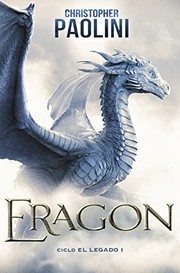
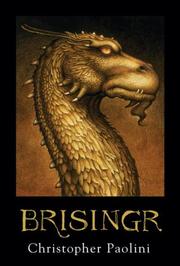
Start with Eragon. The Inheritance Cycle is four books read in publication order — Eragon, Eldest, Brisingr, Inheritance — and there is no chronological alternative, no side-entry and no reason to deviate. A farm boy finds a dragon egg; the standard shape of the genre proceeds from there.
The honest stopping point is Inheritance. It resolves the war, the prophecy and Eragon's own arc, and the two later Alagaësia books were written more than a decade afterwards as returns rather than continuations. Read them if you want more of the world. Nothing is unfinished if you do not.
The four core books, and the split nobody warns you about
Eragon was written beginning when Paolini was fifteen and first self-published before Knopf picked it up in 2003, and it reads like it: the debts to Tolkien, to Star Wars and to Anne McCaffrey are visible on almost every page, and this is the near-universal critical observation about it rather than a minority view. Whether that is a problem depends entirely on whether you want a well-executed version of a familiar shape or something new.
Eldest splits the narrative between Eragon's training among the elves and his cousin Roran leading a village across a continent. Most readers find the Roran chapters the stronger half, which surprises people.
Here is the useful warning. The cycle was announced and sold as a trilogy. Book three grew past what one volume could hold and was published as two, which is why Brisingr is the book people most often stall in — it carries a great deal of travel, politics and setup that was originally meant to be compressed. Push through it; Inheritance is where all of it lands, and it is a genuinely large finale.
After the cycle
The Fork, the Witch, and the Worm is three short pieces set after Inheritance. It is a bridge, not a novel, and it is the most skippable thing on this list.
Murtagh is a full novel following the cycle's most interesting character — a man whose entire arc was compulsion and complicity — through the aftermath. It is darker and more inward than anything in the four books, and it is the one post-cycle volume worth treating as essential if you cared about that character.
Eragon's Guide to Alagaesia is an illustrated in-world companion, not narrative. Buy it as a gift or as an artefact; it will not advance any story.
The science fiction, which is a different writer
To Sleep in a Sea of Stars is an adult space opera of around eight hundred pages: a xenobiologist touches something on a survey world and the consequences run to first contact and interstellar war. It is more ambitious in its ideas than Alagaësia and slower in its middle. Fractal Noise is a prequel to it, set on the same world generations earlier, and is a much smaller and stranger book — a survey team walking toward an anomaly. It divides readers sharply and is not the place to start with either sequence.
Where the rest of the list comes from
The comparisons are on the path because the influences are the point. J.R.R. Tolkien's The Hobbit is the ancestor of the whole shape. Anne McCaffrey's Dragonflight is where the bonded-dragon-and-rider relationship comes from. David Eddings's Pawn of Prophecy is the same farm-boy-to-chosen-one structure executed a generation earlier. For readers who want more after the cycle, John Flanagan's The Ruins of Gorlan is the closest match in tone and reading level, Garth Nix's Sabriel is the sharper and more original book, and Robert Jordan's The Eye of the World is the obvious step up in scale and commitment.
Reading level and content
These are young-adult fantasy novels with substantial battle violence, torture and named characters dying. They are commonly read from around eleven upward, but the books get longer and darker as the cycle proceeds — Inheritance is well over eight hundred pages. Browse more fantasy reading orders on Discover.
Follow the full ordered path here: Inheritance Cycle books in order: where to start with Christopher Paolini.