Bonds have a reputation as the boring, safe corner of investing, and that reputation causes real losses, because fixed income hides genuine complexity: prices move opposite to yields, duration governs interest-rate risk, and credit quality can turn a "safe" bond into a defaulting one. The literature runs from friendly primers to graduate-level mathematics, and reading it out of order either bores you or buries you.
The order that works builds intuitive fundamentals, then the analytical machinery, then the strategy of assembling a portfolio.
The fundamentals
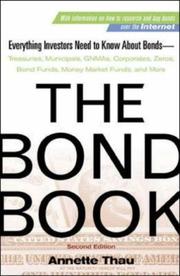
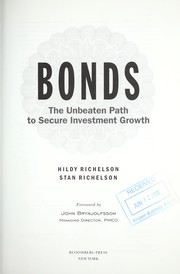
Start with clear explanations. The Bond Book by Annette Thau is the ideal first read, covering how bonds work, the major types, and the risks in plain language for individual investors. Bonds by Hildy Richelson is a practical companion focused on building income with individual bonds. Inside the yield book by Sidney Homer is a classic that made the core relationships between price, yield, and time intuitive rather than intimidating — a bridge from the primers to the math ahead.
The mathematics and analytics
Fixed income is quantitative at its core. Fixed income mathematics by Frank Fabozzi teaches the calculations behind pricing, yield, and duration. The Handbook of Fixed Income Securities, also by Fabozzi, is the encyclopedic reference covering every instrument and sector in depth. Risk deserves its own study: Credit risk measurement by Anthony Saunders covers modeling the chance of default, and High Yield Bonds by Theodore Barnhill focuses on the riskier, higher-yielding end where credit analysis matters most. Fixed Income Analysis, once more by Fabozzi, ties the analytics together into a coherent framework.
Building a portfolio
The final arc is putting it to work. The only guide to a winning bond strategy you'll ever need by Larry Swedroe makes the evidence-based case for how ordinary investors should actually hold bonds — favoring high quality and short-to-intermediate maturities for most portfolios.
A serious caution: all investing carries risk of loss, bond prices fall when rates rise, and these books are education, not personalized financial advice. Consider a fee-only advisor for decisions specific to your situation. Read in this order and fixed income becomes a discipline you understand rather than a black box you trust. Follow the full path from bond basics to a deliberately constructed portfolio.
Follow the full reading path →
Ready to learn something deeply?
Build a reading path — free