Building healthy soil: essential books for fertile, living garden earth
This curriculum takes a beginner from the basic "why" of soil health all the way through the advanced science of soil biology, cover cropping, and precision amendments. Each stage builds on the last — starting with intuition and observation, moving into hands-on practice, then diving into the living microbial world beneath your feet, and finally mastering the systems-level thinking that ties it all together.
Foundations: Understanding What Soil Really Is
BeginnerGrasp why healthy soil matters, what it's made of, and develop an intuitive feel for the living system underfoot before touching a single amendment or compost pile.
▸ Study plan for this stage
Pace: 4–5 weeks, ~25–30 pages/day. Start with "Dirt" (Montgomery's narrative-driven approach, ~330 pages, 2.5–3 weeks), then move to "The Soul of Soil" (Gershuny's more technical guide, ~150 pages, 1.5–2 weeks). Allow 2–3 days between books for reflection and initial exercises.
- Soil is a living ecosystem, not inert dirt—it contains billions of organisms (bacteria, fungi, arthropods, nematodes) that drive nutrient cycling and plant health
- The geological and evolutionary history of soil formation: how parent material, climate, organisms, topography, and time interact to create soil profiles and horizons
- Soil structure and texture (sand, silt, clay) determine water retention, aeration, and root penetration; aggregation is the key to healthy soil architecture
- Organic matter and humus are the foundation of soil fertility, water-holding capacity, and biological activity—not just a nutrient source but a living carbon bank
- The soil food web: how plants feed microbes through root exudates, and how microbes break down organic matter to make nutrients available to plants (the symbiotic relationship)
- Erosion and soil degradation are consequences of poor management and misunderstanding soil's living nature; soil loss is irreversible on human timescales
- Soil health indicators: color, smell, structure, water infiltration, and biological activity are observable signs of a functioning soil system
- What is soil, and why is it more than just weathered rock? How does Montgomery's narrative in 'Dirt' illustrate the consequences of treating soil as a non-living resource?
- Describe the soil food web. How do plants, microbes, and larger organisms interact, and what role does organic matter play in sustaining this network?
- What are the main factors that determine soil formation (parent material, climate, organisms, topography, time), and how do they interact over different timescales?
- Explain the relationship between soil texture (sand, silt, clay), soil structure, and soil aggregation. Why does structure matter more than texture alone for plant growth and water movement?
- What is humus, and how does it differ from raw organic matter? Why is humus critical for soil fertility and water retention?
- What are the primary causes of soil erosion and degradation discussed in 'Dirt,' and what do they reveal about how soil is typically mismanaged?
- Soil texture jar test: Collect soil from your yard or a local site, layer it in a jar with water and dish soap, shake vigorously, and observe settling rates over 24–48 hours. Estimate sand, silt, and clay percentages and compare to your region's typical soil type. Reflect on what this tells you about water drainage and root penetration.
- Soil smell and color assessment: Examine fresh soil from different depths (surface, 6 inches, 12 inches). Note color changes, smell (earthy = healthy microbial activity), and texture. Photograph and journal observations. Compare to degraded soil (compacted, gray, odorless) if available.
- Dig a soil pit (12–18 inches deep) in your yard or a local garden. Observe and sketch the soil horizons (O, A, B, C layers). Identify organic matter, root penetration, color changes, and texture shifts. This makes the soil profile from 'Dirt' and 'The Soul of Soil' tangible.
- Observe soil organisms: Use a white plate or tray to collect soil samples and examine with a hand lens or magnifying glass. Look for visible arthropods (springtails, mites, beetles), earthworms, and fungal threads. Count and sketch what you find. Repeat weekly to track seasonal changes.
- Water infiltration test: Pour water into a marked circle on undisturbed soil and time how long it takes to infiltrate 1 inch. Repeat on compacted soil and in a compost-rich area. Record results and discuss what soil structure differences explain the variation.
- Read and annotate key chapters: Mark passages in 'Dirt' (e.g., chapters on soil formation, erosion, the Dust Bowl) and 'The Soul of Soil' (e.g., the soil food web, organic matter) that illustrate core concepts. Write 1–2 sentence summaries in the margins to deepen retention.
Next up: This stage builds the conceptual and sensory foundation—understanding soil as a living, dynamic system—so that the next stage (amendments, composting, and management practices) will be grounded in *why* those interventions work, not just *how* to apply them.
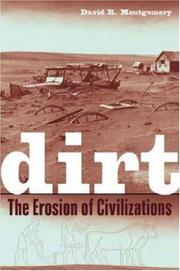
A compelling, accessible history of how soil loss has shaped human civilization — it answers the crucial 'why does this matter?' question and motivates everything that follows.
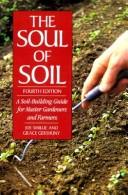
A gentle, practical introduction to soil ecology and organic matter that gives beginners the vocabulary — texture, structure, pH, organic matter — needed for all later reading.
Hands-On Practice: Composting & Organic Matter
BeginnerLearn to make and use compost confidently, understand the carbon-to-nitrogen ratio, and begin feeding the soil food web with organic matter.
▸ Study plan for this stage
Pace: 2–3 weeks, ~15–20 pages/day (approximately 150–200 pages total)
- The carbon-to-nitrogen (C:N) ratio and how to balance 'browns' and 'greens' for efficient decomposition
- The role of microorganisms, bacteria, fungi, and decomposers in breaking down organic matter
- Different composting methods (hot composting, cold composting, passive piling) and when to use each
- How to layer materials, manage moisture and aeration, and troubleshoot common composting problems
- The finished compost product: appearance, smell, texture, and readiness indicators
- How compost feeds the soil food web and improves soil structure, water retention, and nutrient cycling
- Practical sourcing and preparation of compostable materials from household and garden waste
- What is the ideal carbon-to-nitrogen ratio for composting, and how do you identify which materials are 'browns' versus 'greens'?
- Describe the differences between hot composting, cold composting, and passive piling—what are the advantages and drawbacks of each?
- What conditions (moisture, aeration, temperature) must be maintained for microorganisms to work effectively in a compost pile?
- How do you know when your compost is finished and ready to use in the garden?
- What are three common composting problems (e.g., odors, slow decomposition, pests) and how does Campbell recommend solving them?
- Explain how finished compost improves soil health and feeds the soil food web.
- Build or assemble a compost bin or pile using materials from your home or garden; document the setup with photos and notes on dimensions and design choice
- Collect and sort one week's worth of household and garden waste into 'browns' and 'greens'; weigh or estimate quantities and calculate your C:N ratio
- Layer and start your first compost pile using the hot composting method described in Campbell's book; record initial moisture, temperature (if you have a thermometer), and aeration approach
- Monitor your compost pile weekly for 4–6 weeks: check moisture, turn or aerate as recommended, observe decomposition progress, and log any problems and solutions
- Conduct a 'finished compost assessment': examine color, smell, texture, and presence of original materials; compare your results to Campbell's descriptions of ready compost
- Apply finished compost (or well-aged material) to a small garden bed or potted plant; observe and document changes in soil structure, plant growth, or water retention over 2–4 weeks
Next up: This stage equips you with the practical skills and understanding of organic matter decomposition needed to move into the next stage, where you'll learn how to integrate compost and other soil amendments into a comprehensive soil-building strategy and monitor soil health indicators over time.
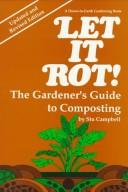
The classic beginner's guide to composting — short, clear, and practical. Establishes the core mechanics (heat, moisture, C:N ratio) before moving to more complex soil-building strategies.
Expands composting thinking beyond the bin to whole-garden organic recycling, reinforcing and broadening the principles from the previous book with real-world creativity.
Going Deeper: Cover Crops & Amendments
IntermediateUnderstand how cover crops fix nitrogen, suppress weeds, and build organic matter, and learn how to diagnose and correct soil deficiencies with targeted amendments.
▸ Study plan for this stage
Pace: 6–8 weeks, ~25–30 pages/day, with 1–2 week breaks between books for integration and practice
- Nitrogen fixation mechanisms: how legume cover crops (alfalfa, clover, vetch) partner with rhizobia bacteria to convert atmospheric nitrogen into plant-available forms
- Cover crop selection and timing: matching species to climate, season, and soil goals (winter vs. summer crops, termination windows, residue management)
- Weed suppression strategies: allelopathy, biomass accumulation, and competitive exclusion through cover crop density and timing
- Organic matter accumulation and soil structure: how cover crop residues decompose to build humus, improve water-holding capacity, and enhance microbial activity
- Soil nutrient testing and interpretation: reading soil test results to identify deficiencies in macronutrients (N, P, K) and micronutrients (Ca, Mg, B, Zn, etc.)
- Amendment selection and application: matching specific amendments (lime, rock phosphate, kelp, compost, manure) to diagnosed deficiencies and soil pH
- Nutrient density in food: understanding how soil nutrient status directly impacts the mineral content and nutritional quality of harvested crops
- Integration of cover crops and amendments: designing a multi-year rotation that builds soil while meeting crop nutrient demands
- How does nitrogen fixation work in legume cover crops, and what conditions must be present for rhizobia bacteria to establish and function effectively?
- What are the key differences between winter and summer cover crops, and how do you choose which species to plant based on your climate and soil goals?
- How do cover crops suppress weeds, and what management practices (timing, density, residue handling) maximize this benefit?
- How do you interpret a soil test report, and what specific amendments would you apply to correct common deficiencies (low phosphorus, low potassium, low calcium, low magnesium)?
- What is the relationship between soil nutrient status and the nutrient density of food crops, and why does this matter for human health?
- How would you design a 3-year rotation plan that integrates cover crops and targeted amendments to build soil while maintaining productivity?
- Obtain a soil test from your local extension office or a commercial lab; interpret the results using Solomon's framework and identify 3–4 amendments you would apply based on deficiencies found
- Select two cover crop species suited to your climate and create a planting calendar showing when to plant, terminate, and incorporate each; document expected nitrogen fixation and biomass production
- Visit a local farm or garden using cover crops; observe residue management, weed suppression, and soil structure changes; interview the manager about their cover crop selection and amendment strategy
- Conduct a simple germination test: plant seeds of your chosen cover crop species in soil samples from your garden to assess seedbed conditions and viability
- Design a 3-year rotation plan for a 1-acre plot that alternates cover crops with cash crops and includes targeted amendments based on your soil test results
- Track the decomposition of cover crop residue over 8–12 weeks by collecting and weighing samples; correlate changes with soil temperature, moisture, and microbial activity
Next up: This stage equips you with the practical tools to diagnose and rebuild soil health through biological and chemical means; the next stage will likely focus on integrating these practices into a complete farm or garden system, monitoring long-term soil trends, and adapting management based on real-world outcomes.

The definitive, research-backed guide to cover crops — covers species selection, seeding, termination, and soil benefits. Reads naturally after composting basics are in place.
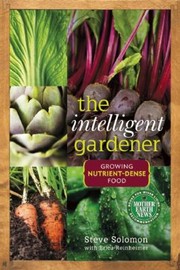
Teaches how to read a soil test and apply precise mineral amendments to achieve true soil balance — a logical next step once organic matter management is understood.
The Living Soil: Microbiology & the Soil Food Web
IntermediateUnderstand the bacteria, fungi, nematodes, and other organisms that drive nutrient cycling, and learn to manage for a thriving soil food web rather than just adding inputs.
▸ Study plan for this stage
Pace: 8–10 weeks, ~25–30 pages/day. Read "Teaming with Microbes" (weeks 1–5), then "Teaming with Fungi" (weeks 6–10). Allocate 2–3 days per major chapter to absorb concepts before moving forward.
- The soil food web as an interconnected system: bacteria, fungi, protozoa, nematodes, and arthropods work together to cycle nutrients and build soil structure
- Bacterial and fungal roles in nutrient cycling: how microbes break down organic matter, solubilize minerals, and make nutrients available to plants
- Fungal networks and mycorrhizal associations: the symbiotic relationships between fungi and plant roots, including arbuscular and ectomycorrhizal fungi
- Predator-prey dynamics in the soil food web: how protozoa and nematodes regulate bacterial and fungal populations while releasing nutrients
- Organic matter as the foundation: how compost, mulch, and plant residues feed the food web and sustain microbial communities
- Management practices that support soil biology: building soil food webs through compost additions, reduced tillage, and diverse plant material rather than relying solely on synthetic inputs
- Indicators of soil health: recognizing signs of a thriving food web (aggregation, water infiltration, disease suppression) versus degraded soil
- Applying microbial knowledge to gardening and farming: translating food web understanding into practical decisions about amendments, cultivation, and plant selection
- Explain the role of bacteria and fungi in breaking down organic matter and making nutrients available to plants. How do their strategies differ?
- What is a mycorrhizal association, and how do arbuscular and ectomycorrhizal fungi differ in their relationships with plants?
- How do protozoa and nematodes regulate microbial populations, and why is this regulation important for nutrient cycling?
- Why is organic matter (compost, mulch, plant residues) essential for building and maintaining a healthy soil food web?
- What management practices support soil food web development, and why are they preferable to relying solely on synthetic fertilizers?
- How can you recognize signs of a thriving soil food web in your garden or farm, and what do these signs tell you about soil health?
- Build or source high-quality compost and observe its decomposition over 4–6 weeks. Document changes in texture, temperature, and smell as microbial communities establish themselves.
- Create a simple soil food web diagram for your own garden or farm, identifying the organisms you expect to find based on your soil conditions and management practices.
- Conduct a basic soil aggregation test: wet a soil sample slowly and observe how it holds together. Compare samples from areas with different management histories and relate results to food web activity.
- Start a compost tea experiment: brew aerated compost tea and observe microbial activity under a microscope (or with a basic hand lens). Compare treated and untreated soil samples in a potted plant trial.
- Apply compost or organic mulch to a test plot and monitor changes over 8–12 weeks: measure water infiltration, observe earthworm and arthropod activity, and note changes in plant vigor.
- Interview a local gardener, farmer, or soil scientist about their soil management practices and how they support (or neglect) soil biology. Relate their practices to concepts from the books.
Next up: This stage establishes the biological foundation of soil health, preparing you to move into practical management strategies—such as crop rotation, cover cropping, and integrated pest management—that leverage soil food web dynamics to build resilience and productivity without heavy external inputs.

The landmark accessible guide to soil biology — explains the soil food web in plain language and reframes every earlier practice (compost, cover crops) through a microbial lens.

Drills into mycorrhizal networks specifically, showing how to cultivate fungal partnerships that dramatically extend plant nutrient and water uptake — a natural sequel to the first Lowenfels book.
Mastery: Systems Thinking & Regenerative Soil Management
ExpertSynthesize everything into a whole-farm or whole-garden regenerative system, understanding how to observe, measure, and continuously improve soil health over the long term.
▸ Study plan for this stage
Pace: 8–10 weeks, ~40–50 pages/day, with 1–2 weeks between books for integration and planning
- Soil as a living system: understanding microbial communities, organic matter cycling, and nutrient dynamics as interconnected processes rather than isolated inputs
- Regenerative agriculture principles: how practices like cover cropping, reduced tillage, and crop rotation rebuild soil structure and fertility over time
- Farm-scale systems thinking: recognizing feedback loops between soil health, crop productivity, pest management, and profitability
- Intensive market gardening on small land: applying high-density production, succession planting, and soil-building techniques to maximize yields while maintaining soil integrity
- Observation and measurement: developing skills to assess soil health visually, through simple tests, and via yield/quality metrics to guide adaptive management
- Economic viability of regeneration: understanding how soil-building practices integrate with market demands, labor efficiency, and long-term profitability
- Continuous improvement cycles: implementing plan-observe-adjust loops to refine practices based on local conditions and real-world results
- How does the concept of soil as a living ecosystem change the way you approach soil management compared to viewing soil primarily as a growing medium?
- What are the key regenerative practices described in 'Growing a Revolution,' and how do they address the root causes of soil degradation rather than just symptoms?
- How does Jean-Martin Fortier's market gardening system demonstrate that intensive food production and soil health are compatible, and what specific practices make this possible?
- What metrics or observations would you use to assess whether your soil is genuinely improving over a season or year, and how would you adjust practices based on those findings?
- How do the economic constraints and opportunities of a small-scale market garden differ from large-scale commodity farming, and how does this shape soil management decisions?
- Describe a complete feedback loop in your own farm or garden system: how would a change in one practice (e.g., cover cropping) ripple through soil biology, crop health, pest pressure, and profitability?
- Conduct a baseline soil assessment: perform a simple jar test (texture), observe earthworm and microbial activity, measure soil temperature and moisture, and document current organic matter levels; repeat every 4 weeks to track changes
- Design a 12-month crop rotation and cover crop plan for your garden or a hypothetical plot, mapping how each crop builds or depletes specific nutrients and how cover crops will restore them
- Implement one regenerative practice (e.g., no-till beds, a cover crop mix, or succession planting) on a test plot and keep a detailed log of inputs, observations, and yields to compare against a control area
- Create a visual farm/garden map showing all major elements (beds, paths, water sources, compost areas) and draw arrows indicating nutrient flows, water movement, and pest/predator habitat—identify 2–3 leverage points for improvement
- Interview or shadow a local regenerative farmer or gardener; document their soil management practices, measurement methods, and decision-making process; compare their approach to the books' principles
- Develop a simple monitoring dashboard (spreadsheet or notebook) tracking 4–6 key metrics (soil color/structure, crop yield, pest pressure, cover crop biomass, compost production) and use it to make one adaptive management decision
Next up: This stage equips you with both the ecological understanding and practical tools to manage soil as a regenerative system; the next stage will likely deepen your ability to scale these principles, troubleshoot complex challenges, or specialize in specific contexts (e.g., restoration of degraded land, integration with livestock, or regional adaptation).

Montgomery returns with farm-scale evidence for no-till, cover crops, and compost working together — perfect for synthesizing all prior knowledge into a coherent regenerative system.

Shows how intensive, soil-first growing works in practice at a productive scale — a grounding, real-world capstone that ties biological knowledge to measurable, fertile results.
Discussion
Keep reading
Paths that share books, cover the same subject, or open a related topic.