Seed starting and propagation: the best books to grow plants from scratch
This curriculum takes a beginner from the absolute basics of seed biology and soil preparation all the way through advanced propagation techniques like cuttings, layering, and grafting. Each stage builds on the last — first establishing core vocabulary and confidence, then refining technique, and finally mastering the science behind why plants grow the way they do.
Foundations: Soil, Seeds & First Sprouts
BeginnerUnderstand the basic biology of seeds, how to prepare growing media, and how to successfully germinate your first seeds indoors and outdoors.
▸ Study plan for this stage
Pace: 4–5 weeks, ~25–30 pages/day. Start with "The Vegetable Gardener's Bible" (weeks 1–2, focusing on soil preparation and seed fundamentals), then move to "Seed to Seed" (weeks 3–5, emphasizing germination techniques and propagation methods). Allocate time for hands-on practice between reading sessions.
- Seed structure and physiology: understanding embryo, endosperm, seed coat, and how seeds germinate
- Soil composition and preparation: creating ideal growing media with proper drainage, aeration, and nutrient balance for seed starting
- Moisture, temperature, and light requirements: how these environmental factors trigger and support germination indoors and outdoors
- Stratification and dormancy: recognizing which seeds need cold treatment, scarification, or other pre-treatment methods
- Hardening off and transplanting: transitioning seedlings from controlled indoor conditions to outdoor growing environments
- Seed viability and storage: assessing seed quality and maintaining germination rates through proper storage techniques
- Indoor vs. outdoor germination strategies: selecting appropriate methods based on plant species and climate
- What are the key components of a seed, and how does each part function during germination?
- How do you prepare and amend soil to create an ideal growing medium for seed starting, and what role does each component (peat, compost, perlite, etc.) play?
- What are the critical environmental conditions (temperature, moisture, light) needed to germinate different types of seeds, and how do these vary between species?
- Which seeds require pre-treatment such as stratification or scarification, and why?
- What is hardening off, and what steps should you follow to successfully transition seedlings from indoors to outdoors?
- How do you assess seed viability, and what storage methods preserve germination rates over time?
- Mix and prepare three different seed-starting soil recipes (using guidance from 'The Vegetable Gardener's Bible'), test their drainage and aeration, and compare results
- Start seeds indoors using at least three different plant varieties, tracking germination rates, timing, and environmental conditions daily in a journal
- Perform a seed viability test (float test, cut test, or germination test) on stored seeds from your collection to assess quality before planting
- Germinate seeds requiring different pre-treatments (one requiring stratification, one requiring scarification, one requiring soaking) and document the differences in germination success
- Harden off a batch of indoor seedlings over 7–10 days, gradually increasing outdoor exposure, and record observations on plant stress and recovery
- Start seeds both indoors and outdoors for the same plant species, compare germination rates and seedling vigor, and reflect on which method works best for your climate
Next up: Mastering these foundational skills in seed biology, soil preparation, and germination techniques equips you to move into the next stage—selecting and propagating specific plant varieties suited to your garden, understanding seed saving, and scaling up production for a full growing season.
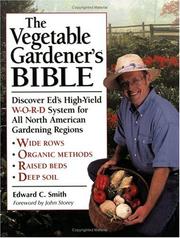
A highly accessible, illustrated entry point that covers soil preparation, seed starting basics, and transplanting in plain language — perfect for building core vocabulary before anything else.
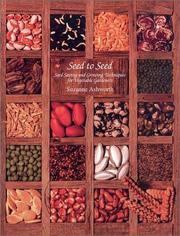
The definitive beginner-to-intermediate guide on saving and starting seeds by species; reading it early establishes a strong mental model of seed biology, timing, and plant families that underpins everything that follows.
Vegetative Propagation: Cuttings, Division & Layering
IntermediateGo beyond seeds to propagate plants from cuttings, division, and layering — understanding the hormonal and environmental triggers that make each method work.
▸ Study plan for this stage
Pace: 6–8 weeks, ~25–30 pages/day (alternating between both books; start with Toogood for foundational techniques, then deepen with Dirr's reference material on woody plants)
- Auxins, cytokinins, and other plant hormones that trigger rooting and callus formation in cuttings
- Physiological maturity stages (hardwood, semi-hardwood, softwood cuttings) and how they affect propagation success rates
- Cutting preparation techniques: leaf retention, wounding, hormone application, and media selection (sand, peat, perlite blends)
- Division methods for herbaceous and woody plants—timing, tool sterilization, and root/shoot balance restoration
- Layering techniques (air layering, ground layering, tip layering) and their advantages over cuttings for difficult-to-root species
- Environmental controls: humidity, temperature, light, and moisture that optimize rooting without promoting disease
- Callus formation and differentiation—the cellular bridge between wounding and root initiation
- Aftercare and hardening off: transitioning propagated plants from controlled propagation environments to independent growth
- What is the difference between hardwood, semi-hardwood, and softwood cuttings, and why does the timing of collection matter for rooting success?
- How do auxins and cytokinins work together to initiate rooting in cuttings, and what commercial products deliver these hormones?
- When is division preferable to cuttings, and what are the key steps to ensure both root and shoot systems recover after division?
- Explain the process of air layering: why does it work, when should you apply rooting hormone, and how do you know when roots are ready for severance?
- What environmental conditions (humidity, temperature, light, media moisture) are critical during the first 2–4 weeks of cutting propagation, and how do they prevent failure?
- How does callus formation relate to root initiation, and what signs indicate that a cutting is progressing toward successful rooting?
- Take softwood cuttings from 3–5 herbaceous plants (e.g., coleus, impatiens, begonia) using Toogood's techniques; treat half with rooting hormone and half without to observe the difference in rooting speed and quality
- Collect hardwood cuttings from dormant woody plants (e.g., willow, dogwood, privet) in late fall/winter; store them in moist sand over winter and plant in spring to observe delayed rooting
- Divide an established perennial or shrub (e.g., hosta, daylily, or forsythia) using Dirr's guidance; document root and shoot recovery over 4–6 weeks with photos
- Perform air layering on a difficult-to-root woody plant (e.g., magnolia, camellia, or rhododendron); track callus and root development weekly until severance
- Set up a simple propagation bench with controlled humidity (using a clear plastic dome or misting system) and compare rooting success in cuttings under high vs. moderate humidity
- Prepare and test different rooting media blends (sand alone, peat/perlite 1:1, sand/peat/perlite 1:1:1); propagate identical cuttings in each to measure rooting percentage and speed
Next up: This stage equips you with multiple vegetative propagation pathways—cuttings, division, and layering—that you'll now apply selectively based on plant species, season, and desired scale, preparing you for the next stage on commercial and advanced propagation techniques (tissue culture, micropropagation, and scaling production).
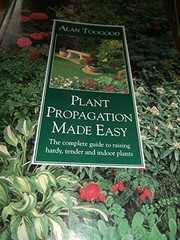
The Royal Horticultural Society's comprehensive, step-by-step propagation manual covering every major technique; its visual format makes it the ideal first intermediate reference after seed basics are solid.

A species-by-species deep dive into propagating trees and shrubs that introduces rooting hormones, wounding, and mist systems — essential for anyone moving beyond annuals and vegetables.
Soil Science & Growing Media
IntermediateUnderstand the chemistry and biology of growing media — from seed-starting mixes to potting soils to in-ground amendments — so you can diagnose problems and optimize conditions for any plant.
▸ Study plan for this stage
Pace: 8–10 weeks, ~25–30 pages/day. Start with "Teaming with Microbes" (4–5 weeks), then move to "The Intelligent Gardener" (4–5 weeks). Allow 1–2 weeks for overlap and hands-on experimentation.
- Soil food web structure: bacteria, fungi, protozoa, nematodes, and arthropods and their ecological roles in growing media
- Fungal networks (mycorrhizal associations and saprophytic fungi) and how they enhance nutrient availability and plant health
- Bacterial communities: decomposers, nutrient cyclers, and plant-growth-promoting rhizobacteria (PGPR)
- Organic matter decomposition pathways and humus formation in growing media
- Nutrient density and mineral balance: macro and micronutrient ratios required for optimal plant growth
- Soil chemistry fundamentals: pH, cation exchange capacity (CEC), and nutrient availability windows
- Building custom growing media: ingredient selection, ratios, and testing for seed starting vs. potting vs. in-ground amendments
- Diagnosing soil problems through biological and chemical indicators: nutrient deficiencies, compaction, imbalance, and microbial dysfunction
- How do bacteria, fungi, and protozoa interact in the soil food web, and what role does each group play in making nutrients available to plants?
- What is the relationship between mycorrhizal fungi and plant roots, and how does this partnership improve nutrient uptake?
- How does organic matter decompose in growing media, and what conditions optimize the formation of stable humus?
- What are the key mineral nutrients plants need, and how do soil pH and CEC affect nutrient availability?
- How would you design a custom growing medium for seed starting versus a potting soil for long-term container growth, and what ingredients would you choose?
- What visual, chemical, and biological indicators would you use to diagnose a nutrient deficiency or microbial imbalance in your soil?
- Create a soil food web diagram from 'Teaming with Microbes' showing energy flow from organic matter through bacteria, fungi, and predators; label each organism's role
- Conduct a simple jar test (layer sand, silt, clay, organic matter) on three different growing media samples and compare their composition and drainage
- Prepare a custom seed-starting mix using ingredients from 'The Intelligent Gardener' (peat/coco, perlite, compost ratios); document the recipe and test germination rates
- Prepare a custom potting soil blend for long-term container growth; compare its performance against a commercial mix over 8–12 weeks with a test plant
- Perform a basic soil pH test on 3–4 different growing media; research and adjust pH using recommendations from both books
- Observe and document microbial activity: create a compost pile or bokashi bucket, photograph decomposition stages, and note temperature changes over 4–6 weeks
- Collect soil samples from your garden or a local source; examine under a magnifying glass for visible organisms (earthworms, arthropods, fungal threads) and describe what you observe
- Interview a local gardener or farmer about their soil amendment practices; compare their approach to the principles in both books and write a 1–2 page reflection
Next up: This stage equips you with the biological and chemical literacy to understand how growing media directly influences plant health, preparing you to move into the next stage where you'll apply these principles to specific plant types, seasonal timing, and propagation techniques.

Explains the soil food web in accessible terms, giving propagators the biological framework to understand why certain mixes and amendments produce stronger, healthier transplants.
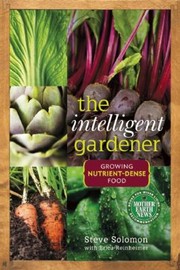
Builds on soil biology with practical soil-testing and amendment guidance, allowing the reader to tailor growing media precisely — a critical skill for scaling up propagation.
Advanced Propagation & the Science Behind Growth
ExpertSynthesize everything into a deep understanding of plant physiology, grafting, tissue culture concepts, and professional-level propagation systems for a truly thriving, self-sustaining garden.
▸ Study plan for this stage
Pace: 8–10 weeks, ~40–50 pages/day (Hartmann & Kester's is dense; allow extra time for re-reading technical sections; The Market Gardener is faster-paced)
- Plant physiology fundamentals: photosynthesis, respiration, water uptake, and nutrient transport as they relate to propagation success
- Propagation by cuttings: hormone physiology, callus formation, rooting mechanisms, and environmental optimization (temperature, humidity, light)
- Seed propagation science: dormancy mechanisms, germination physiology, stratification, and seed viability testing
- Grafting and budding: anatomical compatibility, cambium union, scion-rootstock interactions, and healing physiology
- Tissue culture and micropropagation: meristem culture, explant selection, growth regulator ratios, and scaling from lab to production
- Professional propagation systems: mist systems, heating mats, propagation benches, and environmental monitoring for commercial-scale production
- Market-driven propagation: crop selection, timing, cost efficiency, and integrating propagation into a profitable market garden operation
- Troubleshooting propagation failures: diagnosing physiological disorders, pest/disease management in nursery conditions, and quality control
- Explain the physiological process of callus formation and root initiation in cuttings, and how auxin-to-cytokinin ratios influence these outcomes
- What are the major seed dormancy types (physical, physiological, combinational), and what stratification or scarification methods would you use for specific species?
- Describe the anatomical requirements for successful graft union formation and explain why rootstock-scion compatibility matters physiologically
- How do you design and operate a mist propagation system to maintain optimal humidity and temperature for different propagation methods?
- What are the key steps in micropropagation from explant selection through acclimatization, and why is each step critical?
- How would you select, time, and propagate crops specifically for market demand in a commercial market garden, balancing propagation costs with selling prices?
- Conduct a rooting trial with 3–4 species using different auxin concentrations (0 ppm, 1000 ppm, 3000 ppm IBA) and document callus formation, root count, and root quality over 4–6 weeks
- Design and build a small mist propagation bench with automated misting, heating mat, and environmental monitoring (thermometer/hygrometer); propagate cuttings and track success rates
- Perform seed dormancy testing on 3–5 species: conduct germination trials with and without stratification, scarification, or soaking; calculate germination percentages and vigor
- Execute a grafting project on at least two species (e.g., tomato, fruit tree, ornamental); document union healing over 4–8 weeks with photos and notes on graft success rates
- Set up a small tissue culture experiment (if access available) or detailed study: prepare media, select explants, document growth stages, and compare growth regulator ratios
- Develop a propagation schedule for 5–6 crops aligned with your local market season; calculate propagation costs, timing, and projected revenue to optimize crop selection
Next up: This stage equips you with the physiological and operational mastery to diagnose and solve any propagation challenge, setting the foundation for the next stage—whether that's scaling to commercial production, specializing in rare/heirloom varieties, or integrating advanced propagation into a fully optimized market garden ecosystem.

The gold-standard university-level textbook on propagation science, covering the physiology of rooting, grafting, budding, and tissue culture — the capstone text that explains the 'why' behind every technique learned so far.

Grounds advanced propagation knowledge in real-world, high-output practice — transplanting schedules, succession sowing, and seedling production systems that tie the entire curriculum together in a productive garden context.
Discussion
Keep reading
Paths that share books, cover the same subject, or open a related topic.