Beverly Cleary books in order: where to start with Ramona
Almost everything Beverly Cleary is remembered for happens on one street in Portland, Oregon, and the books were published in an order that no longer makes sense to read them in — the Henry Huggins novels and the Ramona novels were written in parallel across thirty years, and Ramona was a minor irritant in someone else's series for over a decade before she took it over. The useful rule is to follow Ramona by her age rather than by publication date, which mainly means resisting the urge to start with Ramona Quimby, Age 8 because it is the famous one. This path does the Henry books first, then the Ramona sequence in age order, then the books that stand outside Klickitat Street entirely, including the one that won the Newbery.
Klickitat Street: Henry First
BeginnerMeet the neighbourhood in the order Cleary built it, and see Ramona introduced as a supporting nuisance before she becomes the subject.
▸ Study plan for this stage
Pace: About two weeks read aloud, or a few afternoons for a child reading alone — Henry Huggins is 155 pages, Henry and Beezus 192, Beezus and Ramona 159, all in short episodic chapters that stop cleanly at bedtime. This stage covers only two of the six Henry books; the path uses them to establish the nei
- Klickitat Street as a fixed setting: the same few houses, the same dog, the same shortcut, which is what lets the later books skip exposition entirely
- The episodic chapter structure of the Henry books — each chapter a self-contained problem — against the more continuous shape the Ramona books take later
- Ramona introduced as an antagonist in someone else's story, seen entirely from outside and never sympathetically
- Beezus as the reasonable older child, and the fact that Beezus and Ramona is told from her point of view rather than Ramona's
- Cleary's rule that a child's problem is treated with the same seriousness the child gives it, without adult irony over the top
- Publication order versus reading order: these three books were written across five years, and the series changed hands somewhere inside them
- What does Henry Huggins establish about the neighbourhood that the later books never have to explain again?
- How is Ramona presented in Henry and Beezus, and what does the reader know about her inner life at that point?
- Whose point of view is Beezus and Ramona told from, and what does that choice make possible that a Ramona-narrated book could not?
- What is the actual problem in Beezus and Ramona, stated as Beezus would state it?
- How does a Henry chapter end, compared with a chapter in Beezus and Ramona?
- Mark every appearance of Ramona in Henry Huggins and Henry and Beezus and note what she is doing in each; the list is short, and it shows exactly how little Cleary had invested in her before Beezus and Ramona
- Read the first chapter of Henry Huggins and the first chapter of Beezus and Ramona back to back and write down what changes in how much the narrator knows and whose side it takes
- Chart the chapters of Henry Huggins as separate problems — what goes wrong, who fixes it, what is left over — and see whether anything carries from one to the next
- If you are reading aloud, note where a child laughs in Henry and where they laugh in Beezus and Ramona; the comedy sources are different, and the difference is the series changing shape
Next up: Beezus and Ramona hands the series to the younger sister; the next stage follows her from five to seven with the point of view now inside her head.
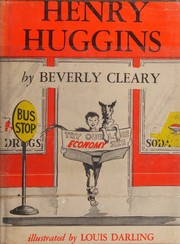
Cleary's first book, from 1950, and the origin of everything else: a boy finds a stray dog on the way home and cannot get it onto the bus. Start here because it establishes the street, the tone and the fact that these are books about ordinary problems taken entirely seriously.

The book that brings the Quimby sisters properly into the series. Beezus is the sensible friend and Ramona is the four-year-old who ruins things, which is exactly how Cleary saw her at this point.
The hinge of the whole bibliography, and the first book told from a Quimby point of view — Beezus's, not Ramona's. It is about the specific guilt of not always liking your own sister. Read it third: it is where the series changes hands.
Ramona Takes Over
BeginnerFollow Ramona from five to seven, and notice how Cleary keeps the narration inside a child's understanding while the reader sees the adult situation around it.
▸ Study plan for this stage
Pace: Three weeks at a book a week — Ramona the Pest is 192 pages, Ramona the Brave 183, Ramona and Her Father 186 — and these are the ones most worth reading aloud, because the misunderstandings depend on hearing what Ramona hears. Ramona and Her Father covers her father losing his job, the family's mone
- The switch to Ramona's point of view, and the specific technique of narrating only what she understands while the adult situation stays visible around it
- The comic engine of Ramona the Pest: a literal-minded child in a world of adult figures of speech, from the dawnzer to the seat she is told to sit in for the present
- Ramona as a character who is not naughty on purpose — Cleary's insistence that every misbehaviour has a reason Ramona could state
- Ramona the Brave as the first book in which an adult simply does not like her, and what that does to the tone
- Ramona and Her Father as the point where the series takes on an adult-sized problem without leaving the child's viewpoint
- The recurring device of Ramona's projects and campaigns — she is always working on something, which is what keeps the plots moving
- How the reading level and chapter length rise across the three books
- Name three of Ramona's misunderstandings in Ramona the Pest and say, in each case, what she actually thought was meant
- What does Ramona want in Ramona the Brave, and what is the first-grade teacher doing that frustrates it?
- In Ramona and Her Father, what does Ramona understand about her father's situation and what does she only half-hear?
- Where does Cleary let the reader see something Ramona does not, and how is it done without a narrator explaining it?
- Which of the three books would you hand to a child first if they had never heard of Ramona, and why?
- Keep a list of every literal misunderstanding in Ramona the Pest and mark which ones an adult character notices and which pass unremarked; the ratio is the book's comic method
- Find three passages in Ramona and Her Father where an adult conversation is reported through Ramona and rewrite one of them as the adults would have said it — the gap between the two versions is the whole technique
- Compare Miss Binney in Ramona the Pest with Mrs Griggs in Ramona the Brave, listing what each does when Ramona misbehaves; this is where the series stops being purely funny
- Track Ramona's campaign to stop her father smoking from first mention to resolution, noting what she is actually afraid of underneath it
- Read the opening page of Beezus and Ramona from the last stage against the opening page of Ramona the Pest and write one sentence on what changed when Cleary moved inside Ramona's head
Next up: The next stage carries Ramona from seven to nine, where the family's difficulties get larger and the books stop protecting her from them.
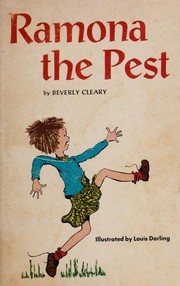
Ramona at five, in kindergarten, and the first book that is hers. This is the one to give a child who has only heard the name — it is the funniest, and the misunderstandings are constructed with real precision.
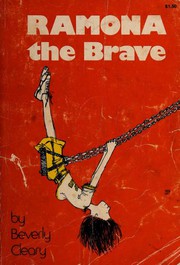
Age six, first grade, and a teacher who does not find her charming. The books start getting harder from here, and this is where Ramona first experiences being disliked by an adult.
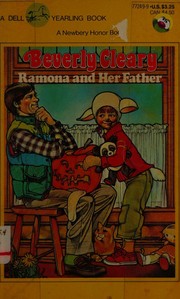
Her father loses his job. Cleary keeps the whole thing at Ramona's eye level — the arguments she half-hears, the campaign to make him stop smoking — and it is the book where the series proves it can carry real weight.
The Rest of Ramona
BeginnerFinish the sequence from seven to nine, and see a series that ages its protagonist realistically rather than freezing her.
▸ Study plan for this stage
Pace: Four weeks. Ramona and Her Mother is 208 pages, Ramona Quimby, Age 8 is 190, Ramona Forever 182 and Ramona's World 192 — similar lengths, but the middle two are the densest. Read Ramona and Her Mother immediately after Ramona and Her Father, since they are built as a pair. Ramona Forever covers the
- The paired structure of Ramona and Her Father and Ramona and Her Mother — the same family strain examined through each parent
- The specific fear at the centre of Ramona and Her Mother, which is not about anything her mother does but about what Ramona concludes
- Ramona Quimby, Age 8 as the book that puts the third-grade world — a new school, the bus, a hard-boiled egg — against a family under real financial pressure
- Cleary ageing her protagonist rather than freezing her, and what that costs a series commercially and gains it artistically
- Ramona Forever as a designed ending: the closing chapters resolve threads opened as far back as Beezus and Ramona
- Ramona's World as a coda in a different key — friendship rather than family, and a gentler set of problems
- The shift in Beezus across the sequence from antagonist to ally, which happens gradually and is never announced
- What does Ramona believe about her mother in Ramona and Her Mother, and what single moment resolves it?
- What is happening to the Quimby family's finances in Ramona Quimby, Age 8, and how much of it does Ramona state directly?
- Which threads from earlier books does Ramona Forever close, and how far back do they reach?
- How is Ramona's World different in subject matter from the four books before it?
- At what point in the sequence does Beezus stop being an obstacle, and can you point to the scene?
- Read the two parent books as a pair and write out, in two columns, what Ramona wants from her father and what she wants from her mother; the books are constructed so the answers are not symmetrical
- Track Beezus across all eight Ramona books, noting one line per book that shows where the sisters stand; laid out together this is the series' quietest plot
- Chart the family's money situation from Ramona and Her Father through Ramona Quimby, Age 8, listing what changes in the household — a child following the series absorbs this without it ever being explained
- Reread the last chapter of Ramona Forever against the first chapter of Beezus and Ramona and write down what has and has not changed about Ramona herself
- Note which problems in Ramona's World a younger Ramona would have had, and which are new to nine; this is the clearest way to see what the fifteen-year gap did to the character
Next up: With Klickitat Street finished, the last stage takes the books that stand outside it, including Cleary's most serious novel and the memoir the whole neighbourhood came out of.
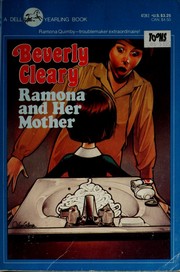
The companion to the previous book with the other parent, and a harder one — Ramona is convinced her mother prefers Beezus. Read it straight after; the two are designed as a pair.
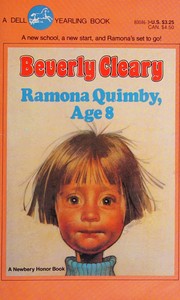
The most widely read of the eight, a Newbery Honor book, and the one people wrongly start with. It is better in place: third grade, a new school, and a family under financial strain that you have already watched arrive.

A death in the family, a wedding, a new baby. Written as the conclusion of the series and it reads like one — the closing chapters are the emotional payoff of everything since Beezus and Ramona.
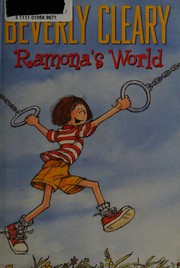
Written fifteen years after what was meant to be the last book, with Ramona at nine and mostly concerned with friendship rather than family. Read it as a coda; it is gentler and less necessary than the four before it.
Away From Klickitat Street
IntermediateRead the books outside the neighbourhood series, including Cleary's most serious novel and her account of where the material came from.
▸ Study plan for this stage
Pace: Four to five weeks, and this stage mixes reading levels deliberately. The Mouse and the Motorcycle is 158 pages and the easiest book on the whole path — usable for a younger sibling while an older child is elsewhere. Dear Mr. Henshaw is 134 pages, the shortest and by some distance the most demanding
- The epistolary and diary form of Dear Mr. Henshaw, and what a first-person written record lets Cleary do that her third-person narration cannot
- Leigh Botts as a narrator who is unreliable about his own feelings rather than about facts
- The shift in register from the Ramona books — the same close attention to a child's reasoning, applied to grief instead of embarrassment
- Strider as a continuation in the same voice with a lower emotional charge, and what it adds about the father
- The Mouse and the Motorcycle as Cleary's only fully fantastic premise, and how she keeps its logic as concrete as the realistic books
- A Girl from Yamhill as the source material: the Depression-era Oregon childhood, the mother, and Cleary's account of being a child who could not find books about children like herself
- Why the memoir explains the founding decision of the whole bibliography — writing the books she wanted and could not find
- What does the change from letters to diary entries in Dear Mr. Henshaw mark, and why does Cleary make it happen when she does?
- What is Leigh wrong about, and how does the reader find out?
- What does Strider add to Leigh's situation, and what does it leave where it was?
- Which episodes in A Girl from Yamhill turn up, transformed, in the Klickitat Street books?
- What does Cleary say in the memoir about why she started writing, and how is that visible in Henry Huggins?
- Mark the point in Dear Mr. Henshaw where Leigh stops writing to Mr Henshaw and starts writing to himself, and write a paragraph on what changes in the prose after it
- Find three moments where Leigh says he is fine and the writing shows otherwise, and identify what in the sentence gives it away
- Read A Girl from Yamhill with the Klickitat Street books beside you and list every incident, object or person you recognise from the fiction — the correspondences are direct and numerous
- Compare the first page of Dear Mr. Henshaw with the first page of Ramona Quimby, Age 8 and write down what is different about how much the narrator is willing to tell you
- Set The Mouse and the Motorcycle against Henry Huggins and note how Cleary makes a talking mouse obey the same rules of consequence a real boy does
Next up: This closes the path: the neighbourhood series in the order that makes sense of it, the Newbery book that stands apart, and the memoir that shows where all of it came from.

The talking-animal series, and the easiest reading level on this path — a hotel mouse and a boy's toy motorcycle. Useful for a younger sibling, and the one Cleary book with no realism in it at all.
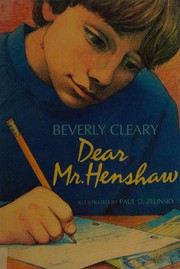
The Newbery Medal winner, and a different writer at work: a boy processing his parents' divorce through letters and then a diary, with almost no comedy. Read it after the Ramona books so the shift in register registers, and know that it is the most emotionally demanding book here.

The sequel to Dear Mr. Henshaw, with the same boy older and sharing custody of a dog. Slighter than its predecessor but the right next book if the first one landed.
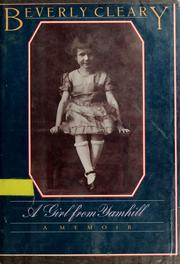
Her memoir of a Depression-era Oregon childhood, and the source of most of what you have just read — including the specific memory of being a child who could not find books about children like herself, which is why she started writing. For an adult reader, or an older child who has finished the series.
Discussion
Keep reading
Paths that share books, cover the same subject, or open a related topic.