Best Books to Become a Life Coach (in Order)
This curriculum takes a beginner from the core mindset and language of coaching, through proven frameworks and the art of powerful questioning, to the practical business of building a sustainable coaching practice. Each stage builds on the last — you'll develop the inner coach first, then the professional toolkit, then the entrepreneurial skills — so that certification training lands on already-fertile ground.
Foundations: The Coaching Mindset
BeginnerUnderstand what coaching truly is (vs. therapy, consulting, or mentoring), absorb the foundational philosophy, and develop the empathetic listening skills every coach must have.
▸ Study plan for this stage
Pace: 8–10 weeks, ~25–30 pages/day (approximately 2–3 weeks per book, with overlap for integration)
- The Co-Active Model: the distinction between coaching, therapy, consulting, and mentoring, and how coaching partners with clients as equals to unlock their own wisdom
- The Coaching Relationship: establishing trust, maintaining client autonomy, and the coach's role as a catalyst rather than an expert or advice-giver
- Powerful Questions: how to ask open-ended, curiosity-driven questions that shift perspective and empower clients to find their own answers (the foundation of The Coaching Habit)
- Active and Empathetic Listening: listening for what is said and unsaid, suspending judgment, and creating psychological safety so clients feel truly heard
- Emotional Intelligence (EI) in Coaching: self-awareness, self-regulation, empathy, social skills, and motivation as essential tools for reading and responding to clients authentically
- The Coaching Stance: balancing curiosity with compassion, staying present without fixing, and managing your own emotions to hold space for the client
- Clearing and Completion: addressing unfinished business and emotional blocks that prevent clients from moving forward (Co-active Coaching concept)
- The Habit Loop: recognizing how small behavioral shifts and reflective questions create lasting change (The Coaching Habit framework)
- What are the key differences between coaching, therapy, consulting, and mentoring? Why does this distinction matter for your identity as a coach?
- Describe the Co-Active Model and explain why the coach-client relationship is fundamentally a partnership of equals.
- What makes a question 'powerful' in coaching? Give examples of powerful questions vs. closed or advice-laden questions.
- How does empathetic listening differ from passive listening, and why is it critical to the coaching process?
- What are the five domains of Emotional Intelligence, and how does each one apply to your effectiveness as a coach?
- How can you use the Coaching Habit's question framework (especially the 'Kickstart Question' and 'AWE Question') to shift client conversations from problem-focused to possibility-focused?
- Record yourself in a mock coaching conversation (with a friend or volunteer) for 15 minutes. Listen back and count how many times you gave advice, interrupted, or asked closed questions vs. powerful open questions. Reflect on patterns.
- Practice the 'Kickstart Question' from The Coaching Habit ("What's on your mind?") in three real conversations this week. Notice how it opens space compared to leading with your own assumptions.
- Complete a personal Emotional Intelligence self-assessment (use Goleman's framework or a free EI quiz online). Identify one EI domain to strengthen and commit to one micro-practice (e.g., naming your emotions daily for self-awareness).
- Conduct a 20-minute 'clearing' conversation with a peer or mentor: ask them about an unfinished situation or emotional block, and practice listening without fixing. Afterward, ask them what it felt like to be heard that way.
- Read one chapter from each book per week and create a one-page 'coaching principle' summary that synthesizes an idea across all three (e.g., how Co-active Coaching's 'listening' connects to Goleman's empathy and Stanier's question framework).
- Role-play three different coaching scenarios (career transition, relationship conflict, personal goal-setting). In each, deliberately practice one EI skill (e.g., self-regulation, empathy, social awareness) and note how it changes the dynamic.
Next up: This foundation in mindset, listening, and emotional intelligence equips you with the relational bedrock needed to move into the next stage—learning specific coaching models, frameworks, and techniques—because you'll now understand *why* those tools work and *how* to deploy them with genuine presence and client-centered intent.

The single most widely used coaching framework in the world and required reading for many certification programs (ICF-aligned). Start here to get the vocabulary, principles, and model that the rest of the curriculum builds on.

A highly accessible, practical introduction to coaching conversations built around seven essential questions. Read second to immediately internalize the habit of asking rather than telling — a mindset shift every new coach needs early.

Coaching lives or dies on emotional awareness — yours and your client's. This foundational text gives you the psychological grounding to understand what's really happening beneath the surface in any coaching conversation.
Frameworks & Models: The Coach's Toolkit
BeginnerMaster the structured models (GROW, solutions-focus, ontological coaching) that give sessions direction and help clients move from insight to action.
▸ Study plan for this stage
Pace: 4–5 weeks, ~25–30 pages/day. Week 1–2: "Coaching for Performance" (primary focus on GROW model and performance fundamentals); Week 3–4: "The Solutions Focus" (solutions-focused techniques and reframing); Week 5: Review, integration, and model comparison exercises.
- The GROW model (Goal, Reality, Options, Will) as a structured framework for coaching conversations
- Performance coaching principles: how awareness and responsibility drive client change
- Solutions-focused approach: building on what works rather than fixing problems
- The power of powerful questions to shift client perspective and unlock insight
- Reframing and positive psychology in coaching: moving from problem-saturated to possibility-focused language
- The coach's role as facilitator, not expert or advice-giver
- Integration of GROW and solutions-focus models for flexible, client-centered sessions
- What are the four stages of the GROW model, and how does each stage move a client toward action?
- How does Whitmore's concept of 'awareness and responsibility' differ from traditional directive coaching, and why does it matter?
- What is the core principle of solutions-focused coaching, and how does it differ from problem-focused approaches?
- How can you use powerful questions to help clients generate their own solutions rather than offering advice?
- When and how would you combine GROW and solutions-focus techniques in a single coaching session?
- What are the key differences in language and mindset between problem-focused and solutions-focused coaching?
- Practice scripting: Write out a full GROW-model coaching conversation (5–7 exchanges) on a realistic client scenario, labeling each stage
- Record yourself: Conduct a 15-minute mock coaching session using the GROW model with a partner or friend, then listen back and identify where you asked powerful questions vs. gave advice
- Solutions-focus translation: Take 5 problem statements (e.g., 'I'm disorganized') and reframe each into solutions-focused language and questions
- Question bank creation: Build a personal library of 20+ powerful questions organized by GROW stage and by solutions-focus themes
- Comparative analysis: Map out a single client scenario using both GROW and solutions-focus approaches side-by-side; note where they overlap and where they diverge
- Live practice with feedback: Coach 2–3 willing volunteers (15 min each) using these frameworks, and ask them to give feedback on what shifted their thinking
Next up: This stage equips you with two foundational structural models that will serve as your coaching backbone; the next stage will build on these frameworks by introducing specialized techniques for specific client challenges (e.g., goal-setting, accountability, emotional resilience) and deepening your ability to adapt and personalize your approach.
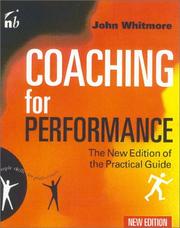
The book that introduced the GROW model — the most widely taught coaching framework globally. Reading it now gives you a second, complementary model to Co-Active and deepens your understanding of goal-setting and accountability.

Introduces the solutions-focused approach, which trains coaches to orient clients toward what's working rather than what's broken. This reframe is a powerful addition to any coaching toolkit and pairs naturally with GROW.
The Art of Powerful Questions
IntermediateDevelop mastery of deep listening and transformational questioning — the skills that separate good coaches from great ones and are heavily weighted in ICF competency assessments.
▸ Study plan for this stage
Pace: 6–7 weeks, ~25–30 pages/day. Week 1–3: "A More Beautiful Question" (approx. 400 pages); Week 4–7: "The Prosperous Coach" (approx. 250 pages), with 2–3 days per week reserved for reflection and exercise practice.
- The power of open-ended questions to unlock creative thinking and shift perspective — moving from 'Why?' to 'What if?' and 'How might we?'
- Deep listening as a prerequisite for powerful questioning — suspending judgment, staying curious, and creating psychological safety
- The difference between closed questions (that shut down exploration) and open questions (that expand possibility and agency)
- Question design in coaching: how to ask questions that illuminate blind spots, challenge assumptions, and catalyze client-generated solutions
- The role of vulnerability and authenticity in the coach-client relationship — how genuine curiosity builds trust and accelerates transformation
- Abundance mindset and prosperity consciousness as the foundation for coaching conversations that empower clients toward their goals
- Practical frameworks for structuring coaching conversations using strategic questioning sequences
- The neuroscience and psychology behind why certain questions create breakthroughs while others create resistance
- What is the difference between a 'beautiful question' and a leading question, and why does this distinction matter in coaching?
- How does deep listening change the quality of the questions a coach asks, and what are the barriers to truly listening without judgment?
- Describe a situation where a closed question would shut down a client's exploration. How would you reframe it as an open question?
- What is the relationship between the coach's own mindset (especially around abundance and prosperity) and the quality of transformation they facilitate?
- How do the questioning frameworks from both books help a coach move a client from problem-focused thinking to possibility-focused thinking?
- What role does vulnerability play in asking powerful questions, and how does a coach balance curiosity with appropriate boundaries?
- Daily listening practice: Have three 10-minute conversations where you practice listening without planning your response. Record observations about what you noticed, what you resisted, and what opened up.
- Question audit: Record yourself in a mock coaching session (or real conversation with permission). Transcribe 10 of your questions and categorize them as closed, open, leading, or beautiful. Rewrite each closed/leading question as an open question.
- Beautiful question journal: For one week, capture one 'beautiful question' daily from your reading or life. Write why it's beautiful and what it opens up.
- Coaching conversation simulation: Conduct 3–4 recorded practice coaching sessions (with a peer, friend, or volunteer). Focus on asking 3–5 strategic questions per session that move the client from problem to possibility. Review recordings and assess question quality.
- Mindset audit: Reflect on your own beliefs about abundance, prosperity, and client potential. Write a personal manifesto on the mindset you want to embody as a coach, grounded in concepts from 'The Prosperous Coach.'
- Question sequence design: Create 2–3 coaching conversation templates (5–7 questions each) for common client scenarios (e.g., career transition, confidence, goal-setting). Test one template in a real or simulated session and refine based on results.
Next up: This stage equips you with the foundational listening and questioning skills that ICF assessments measure; the next stage will build on this by teaching you how to integrate these skills into structured coaching models, manage client resistance, and navigate complex emotional dynamics that arise when powerful questions create real transformation.

Explores the science and art of asking breakthrough questions that shift perspective and unlock possibility. Read first in this stage to expand your sense of what a question can do.

Though it also touches on business, its core teaching is about creating deep, transformational coaching conversations through bold, direct questions and presence. It bridges questioning mastery with real client work.
Advanced Practice: Deeper Coaching Approaches
IntermediateIntegrate more sophisticated psychological and ontological tools — including working with beliefs, identity, and values — so you can coach clients at a deeper level of transformation.
▸ Study plan for this stage
Pace: 6–7 weeks, ~40–50 pages/day (approximately 3–4 hours of reading + reflection per day)
- Immunity to change: how people's competing commitments and hidden assumptions prevent transformation, and how to uncover them
- Developmental stages and mental complexity: how clients' cognitive capacity evolves and why coaching must meet them at their current stage
- The role of beliefs in shaping behavior and identity: how fixed vs. growth mindsets determine resilience, learning, and performance
- Mindset shifts as foundational change: how helping clients move from fixed to growth mindsets unlocks deeper transformation
- Ontological coaching: working with how clients construct meaning, identity, and possibility through language and interpretation
- Belief systems and values alignment: how to help clients examine and reshape the beliefs that drive their choices and self-concept
- Coaching for identity-level change: moving beyond behavior change to transformation of how clients see themselves
- What is immunity to change, and how do competing commitments create invisible barriers to transformation in your clients?
- How can you use the Immunity to Change map (from Berger) to help a client uncover their hidden assumptions and big assumptions?
- What is the difference between a fixed mindset and a growth mindset, and why does this distinction matter for coaching?
- How does Carol Dweck's research on mindset apply to your coaching practice, particularly when clients face setbacks or challenges?
- What is ontological coaching, and how does it differ from behavioral or skill-based coaching?
- How can you help clients examine and shift the beliefs and values that shape their identity and life choices?
- Map your own immunity to change: identify a goal you've struggled to achieve, use Berger's framework to uncover your competing commitments and big assumptions, and reflect on how this shapes your coaching presence
- Practice the Immunity to Change interview: conduct a mock coaching session with a peer using Berger's diagnostic questions to help them surface their competing commitments and hidden assumptions
- Assess mindset in a real coaching scenario: record or write up a coaching session, then analyze where your client showed fixed or growth mindset language, and plan how you would have coached them toward a growth mindset
- Reframe limiting beliefs: take 3–5 client statements that reflect fixed mindsets or limiting beliefs, and practice reframing them as growth-oriented possibilities
- Explore your own mindset: identify 2–3 areas where you hold a fixed mindset (e.g., about your coaching abilities, intelligence, or capacity to change), and design a personal experiment to shift toward growth
- Conduct a values and beliefs audit with a client: help them articulate their core values and examine which beliefs support or undermine those values, then coach them toward alignment
Next up: This stage equips you with psychological depth and ontological sophistication to work with clients' beliefs, identity, and mindsets—preparing you to integrate these tools with advanced systems-level coaching, emotional intelligence, and relational dynamics in the next stage.

Introduces adult developmental theory (building on Kegan's work) in a highly practical coaching context. This gives you a powerful lens for understanding where clients are developmentally and how to meet them there.
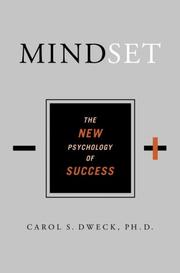
The fixed vs. growth mindset framework is one of the most useful tools for helping clients identify limiting beliefs. Reading it at this stage lets you apply it with nuance after you've already built your core coaching skills.
Building Your Practice: The Business of Coaching
ExpertLearn how to attract ideal clients, price and position your services, build credibility, and create a financially sustainable coaching business — turning your skills into a real practice.
▸ Study plan for this stage
Pace: 4–5 weeks, ~25–30 pages/day, with 2–3 days per week dedicated to exercises and business planning
- The Red Velvet Rope Policy: defining and attracting your ideal client through clarity and specificity
- The 7 Core Self-Promotion Strategies: networking, speaking, writing, strategic partnerships, direct outreach, referral generation, and online presence
- Positioning yourself as the obvious choice by articulating your unique value and solving specific client problems
- Building credibility through testimonials, case studies, and demonstrable results
- Pricing psychology and value-based pricing models rather than hourly rates
- Creating a sustainable business model with predictable revenue streams and client pipelines
- The importance of visibility and consistent marketing to maintain a full practice
- Overcoming the mindset blocks that prevent coaches from promoting themselves authentically
- How do you define your ideal client using the Red Velvet Rope Policy, and why is specificity more profitable than a broad market?
- What are the 7 Core Self-Promotion Strategies, and which 2–3 are most aligned with your natural strengths and personality?
- How should you position yourself and your coaching services to stand out in a crowded market?
- What concrete evidence of your coaching results (testimonials, case studies, metrics) do you need to build credibility with prospects?
- How do you move from hourly or session-based pricing to value-based pricing that reflects the transformation you deliver?
- What does a realistic 90-day marketing and client-acquisition plan look like for your coaching practice?
- Complete the Red Velvet Rope Policy exercise: write a detailed profile of your ideal client (demographics, pain points, goals, values) and explain why you're the perfect coach for them
- Audit your current visibility across the 7 Core Self-Promotion Strategies; identify which 2–3 you'll focus on and create a 90-day action plan for each
- Develop a positioning statement and elevator pitch (30–60 seconds) that clearly articulates your unique value and the specific transformation you deliver
- Collect or create 3–5 client testimonials or case studies that demonstrate measurable results; write a 1-page case study for your strongest success story
- Design a value-based pricing model for your coaching services; calculate your target annual revenue and work backward to determine session fees, package prices, or retainer rates
- Create a 90-day client acquisition plan that includes specific marketing activities, networking events, outreach targets, and expected conversion rates
Next up: This stage equips you with the business fundamentals and client-attraction systems needed to launch and sustain a coaching practice; the next stage will deepen your ability to deliver transformational results and scale your impact through advanced coaching methodologies and client retention strategies.

The definitive guide to filling a service-based practice with ideal clients. Its step-by-step system for positioning, networking, and marketing is perfectly suited to coaches and rounds out the curriculum with concrete business strategy.
Discussion
Keep reading
Paths that share books, cover the same subject, or open a related topic.