Best Books for a Physician Assistant Career (in Order)
This curriculum takes an intermediate learner from PA-school application strategy through clinical science mastery and into board-exam readiness. Each stage builds directly on the last: you first understand the profession and how to get in, then develop the clinical reasoning and foundational knowledge demanded in didactic year, and finally sharpen exam technique for the PANCE/PANRE.
PA School Prep & the Profession
IntermediateUnderstand the PA profession deeply, craft a competitive application, and enter PA school with realistic expectations of what lies ahead.
▸ Study plan for this stage
Pace: 6–8 weeks, ~40–50 pages/day with reflection days every 3–4 days
- The PA profession's scope of practice, history, and role in healthcare delivery
- PA school admission requirements, prerequisites, and competitiveness metrics (GPA, GRE, PCE hours)
- Strategies for building a compelling personal statement and crafting application narratives
- Interview preparation techniques and common PA school interview formats and questions
- Healthcare experience pathways (EMT, scribe, CNA, clinical volunteer roles) and how to maximize their value
- Time management and strategic planning for the application cycle timeline
- Understanding PA school curriculum expectations and the transition from applicant to student
- What are the core responsibilities and scope of practice for physician assistants, and how does the PA role differ from physicians and nurse practitioners?
- What are the typical admission requirements for PA schools, and what makes an application competitive?
- How should you structure your personal statement to tell a compelling story that demonstrates commitment to the PA profession?
- What are the most effective ways to prepare for PA school interviews, and what types of questions should you anticipate?
- What types of healthcare experience are most valuable for PA school applications, and how do you gain and document them?
- What is the realistic timeline for the PA school application cycle, and what should you accomplish in each phase?
- What should you expect during your first year of PA school, and how can you prepare mentally and academically?
- Create a detailed self-assessment: map your current qualifications against PA school prerequisites and identify gaps (GPA, GRE score targets, PCE hours needed)
- Shadow or interview 2–3 practicing PAs in different specialties; document their daily responsibilities, career satisfaction, and advice for applicants
- Draft 3 versions of your personal statement (rough, revised, polished) focusing on your 'why PA' narrative and unique experiences
- Conduct mock interviews with a mentor, peer, or using recorded practice sessions; record yourself and review for clarity, confidence, and authenticity
- Develop a healthcare experience plan: identify 1–2 roles to pursue in the next 6–12 months and create a timeline for gaining hours
- Create a PA school application tracker spreadsheet: list target schools, deadlines, requirements, and application status; update weekly
- Read and annotate 5–10 real PA school interview questions and write out full responses; have someone critique them for depth and relevance
Next up: This stage equips you with a clear understanding of PA school expectations, a polished application, and interview readiness—preparing you to navigate the actual application submission process and succeed in interviews, which then leads to acceptance and enrollment in PA school itself.

The canonical PA-school admissions guide — covers the application, essays, and interviews. Read this first to map the entire path before diving into content.
Clinical Foundations — Anatomy & Physiology
IntermediateBuild the anatomical and physiological framework that every clinical course in PA school assumes you already own.
▸ Study plan for this stage
Pace: 12–14 weeks, ~40–50 pages/day (Gray's: 6–7 weeks, ~35 pages/day; Guyton & Hall: 6–7 weeks, ~45 pages/day)
- Anatomical planes, directional terminology, and regional organization of the human body as the foundation for clinical communication
- Organ system structure and spatial relationships: cardiovascular, respiratory, nervous, musculoskeletal, gastrointestinal, and urogenital systems
- Cell physiology, homeostasis, and the role of negative feedback in maintaining internal stability
- Cardiovascular and respiratory physiology: pressure gradients, gas exchange, and hemodynamics that drive clinical assessment
- Nervous system organization and function: central vs. peripheral, somatic vs. autonomic, and reflex arcs underlying patient responses
- Renal and fluid/electrolyte physiology: filtration, reabsorption, and acid-base balance critical to clinical decision-making
- Endocrine system and hormonal regulation of metabolism, growth, and stress response
- Integration of systems: how anatomical structures enable physiological processes and how disruption leads to pathology
- Using anatomical terminology, how would you describe the location and relationships of the heart, lungs, and great vessels in the thorax, and why does this matter for physical examination?
- Explain the pathway of blood flow through the heart and lungs, including pressures at each stage, and predict how a septal defect would alter this flow
- How do the sympathetic and parasympathetic nervous systems antagonistically control heart rate, blood pressure, and bronchial tone, and which neurotransmitters mediate these effects?
- Describe the mechanism of action potential generation in cardiac myocytes and how this electrical activity coordinates mechanical contraction
- How does the kidney filter blood, reabsorb essential substances, and concentrate urine, and what happens to electrolyte balance when this process fails?
- Explain the role of the renin-angiotensin-aldosterone system in blood pressure regulation and fluid homeostasis
- Dissect and label 3–5 anatomical diagrams from Gray's (e.g., thoracic cavity, abdominal organs, brachial plexus) without reference, then verify against the text; repeat weekly
- Create a one-page systems map for cardiovascular physiology linking anatomy (chambers, valves, vessels) to physiology (pressures, flow, regulation) using Guyton & Hall data
- Work through 10–15 clinical vignettes (e.g., 'A patient presents with acute MI; trace the coronary anatomy and explain the ECG changes') integrating Gray's anatomy with Guyton & Hall physiology
- Use a virtual anatomy tool or 3D model to trace neural pathways (e.g., vagus nerve, spinal reflexes) and predict autonomic responses to stimuli
- Solve 5–8 quantitative problems on renal clearance, fluid shifts, and acid-base balance from Guyton & Hall; show all work and explain physiological implications
- Record yourself explaining one organ system (e.g., respiratory) aloud using proper anatomical terminology and physiological mechanisms; listen back for gaps and clarity
Next up: Mastery of anatomy and physiology establishes the mechanistic foundation needed to understand pathophysiology and pharmacology—you will now learn how disease disrupts these normal structures and processes, and how drugs target specific physiological pathways to restore homeostasis.
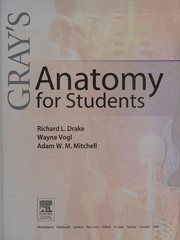
The gold-standard student anatomy atlas; its clinical notes bridge pure anatomy to the bedside thinking PA programs expect.
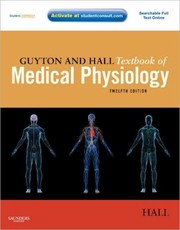
The definitive physiology reference — read after anatomy so organ structure and function reinforce each other before you tackle pathophysiology.
Pathophysiology & Clinical Medicine
IntermediateConnect normal physiology to disease mechanisms and learn to reason through patient presentations the way a PA clinician does.
▸ Study plan for this stage
Pace: 12–14 weeks, ~40–50 pages/day. Start with Pathophysiology of Disease (6–7 weeks), transition to CURRENT Medical Diagnosis and Treatment (4–5 weeks), then Bates' Guide (2–3 weeks with concurrent review).
- Disease mechanisms: how normal physiology breaks down (from Pathophysiology of Disease) and the cellular/molecular basis of common conditions
- Clinical reasoning: connecting pathophysiologic mechanisms to observable signs, symptoms, and diagnostic findings in real patients
- Differential diagnosis: using clinical presentation to narrow possibilities by understanding which pathophysiologic processes produce which symptom clusters
- Physical examination skills: systematic assessment techniques from Bates' Guide that reveal pathophysiologic abnormalities (e.g., heart murmurs reflecting valvular disease)
- Evidence-based diagnosis and management: using CURRENT Medical Diagnosis and Treatment to translate pathophysiology into actionable clinical decisions
- History-taking as a diagnostic tool: eliciting information that illuminates the underlying disease mechanism and timeline
- Integration of lab/imaging findings with pathophysiology: understanding why specific tests confirm or refute suspected diagnoses
- Common disease patterns: recognizing how similar pathophysiologic processes (e.g., inflammation, necrosis, fibrosis) manifest across different organ systems
- How does the pathophysiologic mechanism of a disease (e.g., atherosclerosis, autoimmune destruction) explain the clinical presentation you observe in a patient?
- Given a patient's symptoms and physical exam findings, what are the top 3 differential diagnoses and how would you use pathophysiology to rank them?
- What specific questions in the history (from Bates' Guide framework) would help you confirm or exclude a particular pathophysiologic process?
- How do the physical examination findings you elicit (e.g., hepatomegaly, peripheral edema, crackles) reflect the underlying pathophysiology?
- What diagnostic tests (lab, imaging) would you order for a suspected diagnosis, and how do the expected results connect to the disease mechanism?
- How would you explain a patient's condition and treatment plan to them using your understanding of the pathophysiology?
- Case study analysis (weekly): Select 5–10 real patient cases from CURRENT Medical Diagnosis and Treatment; for each, write out the pathophysiologic mechanism, differential diagnosis, and how the history/exam/labs support the final diagnosis.
- Pathophysiology-to-presentation mapping: Create concept maps linking pathophysiologic mechanisms from Pathophysiology of Disease to the clinical signs/symptoms and diagnostic findings described in CURRENT Medical Diagnosis and Treatment for 3–4 conditions per week.
- Simulated patient interviews: Practice taking a focused history using Bates' Guide framework on a peer or standardized patient; record which history elements help you narrow the differential based on pathophysiology.
- Physical exam skill drills: Practice 2–3 organ system exams per week (cardiovascular, respiratory, abdominal, neurologic) using Bates' Guide; correlate abnormal findings with pathophysiologic explanations (e.g., 'this murmur suggests mitral regurgitation because…').
- Diagnostic reasoning worksheets: For 10–15 conditions, document: (1) pathophysiologic mechanism, (2) expected history/exam/lab findings, (3) how you'd differentiate from similar conditions, using all three books as references.
- Teaching-back exercise: Explain the pathophysiology, clinical presentation, and management of 2–3 conditions per week to a peer or mentor as if they were a patient or student; refine your explanations based on feedback.
Next up: This stage transforms you from understanding *how* diseases work to *recognizing and managing* them in real clinical settings, preparing you to apply this knowledge in clinical rotations, patient encounters, and evidence-based decision-making in the next stage.

Bridges basic science to clinical medicine organ-system by organ-system; the ideal transition text after Guyton because it reuses the same physiology to explain disease.
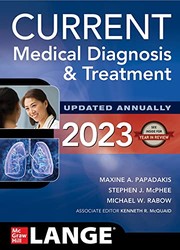
The annually updated clinical bible used by PA and medical students alike; read alongside pathophysiology to see how diseases present, are diagnosed, and are managed in practice.
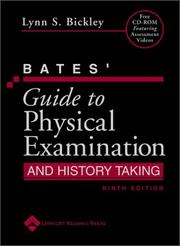
The standard reference for the physical exam and clinical interviewing skills tested throughout PA school and on the PANCE; read here so clinical reasoning and exam technique develop together.
PANCE Board Review & Exam Mastery
ExpertConsolidate all clinical knowledge into a high-yield, exam-ready framework and practice the question strategies needed to pass the PANCE.
▸ Study plan for this stage
Pace: 8–10 weeks, ~45–60 pages/day with 3–4 full-length practice exams interspersed
- High-yield clinical pearls and mnemonics from PANCE Prep Pearls to rapidly recall diagnosis and management across all specialties
- Question-parsing strategies: identifying the clinical stem, recognizing distractor patterns, and eliminating wrong answers systematically
- Time management under exam conditions: balancing speed and accuracy across 360 questions in 5.25 hours
- Differential diagnosis frameworks organized by presentation (e.g., chest pain, dyspnea, abdominal pain) rather than by organ system
- Evidence-based management protocols and guideline-aligned treatment decisions tested in LANGE Q&A scenarios
- Common PANCE pitfalls: recognizing when the 'textbook' answer differs from the exam's expected response
- Integration of pharmacology, pathophysiology, and clinical decision-making in complex multi-system cases
- Test-taking psychology: managing test anxiety, pacing, and maintaining focus across a 5+ hour exam
- What are the high-yield clinical pearls and mnemonics from PANCE Prep Pearls, and how do you apply them to rapidly narrow a differential diagnosis in a timed setting?
- How do you identify and eliminate distractor answer choices in LANGE Q&A questions, and what patterns do wrong answers follow?
- Can you explain your approach to managing time across 360 questions, including when to flag and return to difficult items?
- How do you construct a differential diagnosis framework for common presentations (chest pain, dyspnea, abdominal pain, etc.) and use it to select the best answer?
- What are the most common PANCE pitfalls highlighted in LANGE Q&A, and how do they differ from standard textbook knowledge?
- After completing a full-length practice exam, can you identify your weak knowledge areas and design a targeted review plan using both books?
- Read PANCE Prep Pearls chapter-by-chapter (specialty by specialty) and create a personal high-yield flashcard deck with mnemonics and clinical pearls; review daily for rapid recall
- Complete 50–75 questions per day from LANGE Q&A, timing yourself to ~5 minutes per question; after each block, review incorrect answers and identify the distractor pattern
- Take a full-length LANGE Q&A practice exam (or PANCE-style mock exam) under timed conditions every 2 weeks; score and analyze by specialty to identify weak areas
- For each weak specialty identified in practice exams, re-read the corresponding section in PANCE Prep Pearls and complete 20–30 targeted LANGE Q&A questions in that area
- Create a personal 'PANCE Pitfalls' document as you work through LANGE Q&A, noting questions where the correct answer surprised you or differed from standard teaching
- Perform timed 'speed drills': answer 30 consecutive LANGE Q&A questions in 2.5 hours (matching the exam's pace of ~52 seconds per question) to build stamina and pacing confidence
Next up: This stage transforms you from a clinically knowledgeable student into an exam-ready test-taker, equipping you with the high-yield frameworks, question-parsing strategies, and timed practice necessary to confidently approach the actual PANCE and transition into clinical practice as a newly credentialed PA.

The most widely used PA-specific board review book; its concise, high-yield summaries are best absorbed after you have the clinical foundation from earlier stages.

A large bank of PANCE-style questions with detailed explanations; use it last as active retrieval practice to identify gaps and simulate real exam conditions.
Discussion
Keep reading
Paths that share books, cover the same subject, or open a related topic.