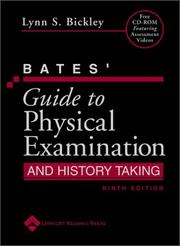
Best Books to Prepare for a Police Career (in Order)
This curriculum takes a beginner from zero to career-ready across three tightly focused stages: first, cracking the written entrance exam; second, building the ethical and legal mindset that defines professional policing; and third, mastering community-oriented strategies that complement academy training and set you apart as a modern officer. Each stage builds the vocabulary and judgment needed for the next, so read them in order.
Entrance Exam Mastery
BeginnerPass the written police officer entrance exam with confidence — covering reading comprehension, memory/observation, math, and situational judgment.
▸ Study plan for this stage
Pace: 6–8 weeks, ~40–50 pages/day, with 2–3 full-length practice exams per week
- Reading comprehension strategies: identifying main ideas, supporting details, and inference questions under timed conditions
- Memory and observation skills: visual recall, detail retention, and witness statement accuracy techniques
- Police math fundamentals: percentages, ratios, distance/speed/time, and practical law enforcement calculations
- Situational judgment and judgment calls: analyzing realistic police scenarios and selecting appropriate responses
- Test-taking mechanics: time management, question prioritization, and eliminating wrong answers effectively
- Common exam question patterns and traps specific to police entrance exams
- Physical fitness and medical requirements context as they relate to exam prerequisites
- What are the three most effective strategies for answering reading comprehension questions under time pressure, and how do you apply them?
- How do you approach memory and observation questions when you must recall details from a passage or image you've seen only once?
- Walk through the steps to solve a distance-speed-time problem and a percentage problem typical of police officer exams.
- Given a realistic police scenario (e.g., responding to a complaint, handling a conflict), how do you evaluate multiple-choice options to select the best judgment call?
- What are the most common wrong-answer traps in police entrance exams, and how do you recognize and avoid them?
- How do you manage your time across different question types to maximize your score in a 3–4 hour exam?
- Complete all reading comprehension drills in Foster's 'Police Officer Exam for Dummies,' timing yourself to match actual exam pace (typically 1–2 minutes per question).
- Work through Schroeder's memory and observation practice sections; cover a page, then write down as many details as you can recall without looking back.
- Solve 20–30 math problems per week from both books, categorizing by type (percentages, ratios, distance/speed/time) and tracking error patterns.
- Take a full-length practice exam from each book under strict timed conditions (no breaks, no notes), then review every wrong answer to identify the reasoning gap.
- Create flashcards for situational judgment scenarios from both books; quiz yourself daily on how you would respond and why.
- Perform weekly timed drills on your weakest question type (e.g., if observation is weak, do 15-minute observation-only sprints 3× per week).
- Simulate test-day conditions: take a full practice exam in the morning, in a quiet room, with no distractions, once per week in weeks 5–8.
Next up: Mastering the entrance exam mechanics and content in this stage equips you with the foundational knowledge and test-taking confidence needed to move into the next stage, which typically focuses on the physical agility test, the oral interview, and the background investigation—where you'll apply judgment and communication skills in real-time scenarios.

The ideal first book for a complete beginner — it demystifies every section of the exam, explains what departments are looking for, and includes full practice tests to build baseline familiarity.

A deeper, more rigorous exam-prep workbook by a veteran author in the field; after the Dummies overview, this book sharpens your skills with extensive drills and timed practice sets.
Ethics & the Law Enforcement Mindset
BeginnerUnderstand the ethical obligations, legal boundaries, and professional values that define lawful, trustworthy policing — essential before academy and throughout a career.
▸ Study plan for this stage
Pace: 8–10 weeks, ~25–30 pages/day (approximately 3–4 hours/week of focused reading and reflection)
- Noble cause corruption: how good intentions can justify unethical or illegal actions, and why it undermines public trust and the rule of law
- The ethical frameworks (deontological, consequentialist, virtue ethics) and how they apply to real police decisions
- Legal boundaries and constitutional constraints on police authority: what officers can and cannot do, and why these limits exist
- The police code of silence and institutional culture: how peer pressure and loyalty can conflict with ethical obligations
- Accountability mechanisms: internal affairs, civilian oversight, and professional standards as safeguards against abuse
- Discretion and its dangers: how individual officer judgment can lead to bias, discrimination, or inconsistent application of the law
- Professional values and character: integrity, honesty, impartiality, and courage as non-negotiable foundations of legitimate policing
- What is noble cause corruption, and why is it particularly dangerous in law enforcement even when officers believe they are serving justice?
- How do deontological, consequentialist, and virtue ethics frameworks differ, and which ethical approach would you apply to a scenario where bending the rules might catch a guilty person?
- What are the key constitutional and legal boundaries that constrain police authority, and what happens when officers exceed them?
- How does the police code of silence undermine accountability, and what institutional or personal strategies can an officer use to resist it?
- What role do discretion and implicit bias play in creating unequal treatment, and how can officers make more ethical decisions under pressure?
- What are the strengths and limitations of internal affairs, civilian oversight, and professional standards in preventing police misconduct?
- Case study analysis: Read 3–4 real or hypothetical scenarios from Pollock's *Ethical Dilemmas* and write a 1–2 page response identifying the ethical framework(s) at play, the legal constraints, and your recommended course of action with justification.
- Noble cause corruption audit: Identify one example from Crank's *Police Ethics* of noble cause corruption and map out how it escalated, what warning signs were missed, and what accountability measures could have prevented it.
- Constitutional boundary mapping: Create a one-page reference guide of key legal limits on police authority (search, seizure, interrogation, use of force) based on Skolnick's *Above the Law* and your own research, then test yourself weekly.
- Peer pressure role-play: With a study partner, act out a scenario where one officer is pressured to cover up a colleague's misconduct (inspired by the code of silence discussion in Crank and Skolnick). Afterward, reflect on what ethical principles and legal obligations should guide the decision.
- Discretion journal: Over 2–3 weeks, document 3–5 hypothetical or real-world situations where police discretion could lead to different outcomes. For each, analyze how bias, pressure, or institutional culture might influence the decision, and what safeguards could promote fairness.
- Accountability mechanism comparison: Create a comparison table of internal affairs, civilian review boards, and professional standards bodies (drawing from all three books). Evaluate the strengths, weaknesses, and real-world effectiveness of each based on evidence in the texts.
Next up: This stage establishes the ethical and legal foundation that underpins all operational decision-making; the next stage will build on this mindset by exploring specific high-stakes scenarios (use of force, community relations, investigations) where these principles must be applied under real pressure and uncertainty.

Start here for ethics — it introduces the foundational concept of 'noble-cause corruption' and explains how good intentions can lead officers into serious ethical failures, giving you a framework for every moral decision ahead.

Builds directly on Caldero by presenting real-world ethical dilemmas across policing, courts, and corrections, training you to reason through ambiguous situations systematically rather than by instinct alone.
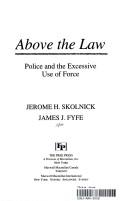
A landmark, evidence-based examination of use-of-force culture; reading this after the ethics texts gives concrete, documented context for why professional restraint and accountability matter so deeply.
Community Policing & Modern Practice
IntermediateApply community-oriented policing strategies, problem-solving frameworks, and communication skills that complement academy tactics and build lasting public trust.
▸ Study plan for this stage
Pace: 8–10 weeks, ~25–35 pages/day (mix of study guide, case studies, and reflection)
- Community policing philosophy: shifting from enforcement-only to partnership-based crime prevention and quality-of-life improvement
- Problem-oriented policing (SARA model): Scanning, Analysis, Response, Assessment as a systematic framework for identifying and solving recurring community issues
- Broken windows theory and environmental design: how visible disorder and physical decay signal neglect and escalate crime, and how targeted intervention reverses this
- Police-community partnerships: building trust through visibility, accountability, and collaborative problem-solving rather than reactive enforcement
- Emotional intelligence and officer wellness: recognizing occupational stress, vicarious trauma, and burnout as threats to effective policing and personal resilience
- Communication skills for de-escalation and dialogue: active listening, empathy, and tactical communication that preserves officer safety while building legitimacy
- Problem-solving frameworks: moving beyond arrest-focused metrics to outcome-based success (reduced repeat calls, improved neighborhood perception, sustainable solutions)
- What are the core differences between traditional enforcement-based policing and community policing, and why does Trojanowicz argue that community partnerships are essential to long-term crime reduction?
- Explain the SARA model (Scanning, Analysis, Response, Assessment) from Goldstein's problem-oriented policing framework and apply it to a specific recurring community problem (e.g., street-level drug activity, repeat burglaries in a neighborhood).
- How does the broken windows theory inform community policing strategy, and what are examples of environmental design or visible disorder interventions that Trojanowicz discusses?
- What does Gilmartin identify as the primary sources of occupational stress and emotional trauma in law enforcement, and how do these affect officer decision-making and community interactions?
- Describe three communication or de-escalation techniques that support both officer safety and community trust-building, drawing on examples from the texts.
- How would you measure success in a community policing initiative—what metrics or outcomes matter beyond arrest numbers, according to these authors?
- Read Trojanowicz's study guide (Weeks 1–2) and create a one-page comparison chart: traditional policing vs. community policing across five dimensions (goals, officer role, community role, success metrics, timeline).
- Select a real neighborhood or district you know; apply Goldstein's SARA model to a specific recurring problem (e.g., noise complaints, youth loitering, shoplifting). Document each phase: what you'd scan for, how you'd analyze root causes, what response you'd design, and how you'd assess results.
- Watch or read case studies from Trojanowicz's text on successful community policing initiatives; write a 2–3 page reflection on one program, noting how it built trust and what barriers it overcame.
- Conduct a mock community listening session: interview 3–5 people (neighbors, local business owners, or community members) about a local safety concern; practice active listening and collaborative problem-solving, then document what you learned and how you'd adjust your approach.
- After reading Gilmartin, complete a personal stress audit: identify 3–4 occupational stressors you've witnessed or experienced in policing; journal on how they affect decision-making and community interactions, and brainstorm one coping or resilience strategy for each.
- Role-play a de-escalation scenario with a peer: practice communication techniques from the texts (empathy, clear boundaries, tactical patience) in a tense community encounter; record feedback on what worked and what felt awkward.
Next up: This stage equips you with the philosophical foundation, systematic problem-solving tools, and emotional resilience needed to implement community policing in real contexts; the next stage will likely focus on specialized skills—such as crisis intervention, cultural competency, or advanced tactical communication—that deepen your ability to serve diverse communities and navigate complex scenarios wh

The canonical textbook on community policing — read this first in the stage to get the full theoretical and historical foundation of the philosophy you will be expected to practice on the street.
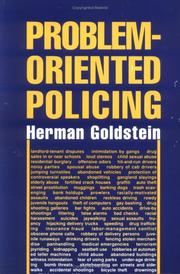
Goldstein invented the SARA problem-solving model used by departments worldwide; this book teaches you to move beyond incident response to address the root causes of crime — a direct complement to academy procedure training.
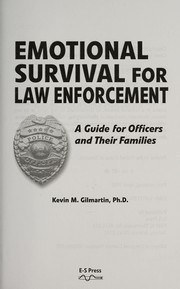
Closes the curriculum by addressing the psychological demands of the job — understanding hypervigilance and emotional resilience prepares you to sustain a long, healthy career and maintain the community relationships you have just learned to build.
Discussion
Keep reading
Paths that share books, cover the same subject, or open a related topic.