Best Books on the Bauhaus, in Reading Order
This curriculum builds from a solid historical and biographical grounding in the Bauhaus school, through its pedagogical core (the preliminary course and workshops), into the Dessau period and eventual closure, and finally out to its global legacy. Starting at an intermediate level, each stage assumes the vocabulary and context built by the previous one, allowing the reader to move from narrative history toward critical and theoretical depth.
The School in Full: History, People & Context
IntermediateEstablish a confident, well-rounded narrative of the Bauhaus from its 1919 founding through closure — who ran it, who taught there, and what it stood for.
▸ Study plan for this stage
Pace: 8–10 weeks, ~40–50 pages/day (approximately 2–3 weeks per book, with overlap for reflection and note-taking)
- The Bauhaus founding vision (1919): merging craft, art, and industrial design under Walter Gropius's leadership
- The school's three distinct phases: Weimar (1919–1925), Dessau (1925–1932), and Berlin (1932–1933), each with different priorities and pressures
- Key figures and their roles: Gropius, Kandinsky, Klee, Moholy-Nagy, Albers, and others as both teachers and artistic innovators
- The pedagogical philosophy: the integration of theory and practice, the workshop system, and the rejection of fine art/craft hierarchy
- Bauhaus responses to political and economic crises: the school's navigation of Weimar instability, the Depression, and Nazi pressure
- The diaspora effect: how Bauhaus members scattered globally after 1933, spreading its principles internationally
- The tension between utopian ideals and practical constraints: how the school balanced artistic experimentation with commercial viability
- What was Walter Gropius's original vision for the Bauhaus, and how did it differ from traditional art academies?
- How did the Bauhaus change across its three locations (Weimar, Dessau, Berlin), and what external factors drove these changes?
- Who were the most influential teachers at the Bauhaus, and what did each contribute to the school's philosophy and output?
- How did the Bauhaus approach the relationship between art, craft, and industrial production, and why was this revolutionary?
- What role did politics and economics play in the school's evolution, particularly during the Weimar period and under Nazi pressure?
- How did individual Bauhaus members influence design and art after leaving the school, and what was their global impact?
- Create a timeline of the Bauhaus (1919–1933) marking key events, leadership changes, and external pressures; annotate how each affected the school's direction
- Build a 'faculty map' for each phase (Weimar, Dessau, Berlin) listing key teachers, their disciplines, and their major contributions or innovations
- Select three Bauhaus figures from *The Bauhaus Group* and write one-page profiles connecting their personal backgrounds to their artistic philosophies and teaching methods
- Analyze one Bauhaus design object or artwork (e.g., a chair, poster, or textile) from Whitford's book; trace its design philosophy back to the school's pedagogical principles
- Compare and contrast the Weimar and Dessau phases using primary evidence from both books: what shifted in priorities, aesthetics, and constraints?
- Create a 'diaspora map' showing where key Bauhaus members emigrated after 1933 and what they established (schools, studios, publications) in their new locations
Next up: This stage provides the historical and biographical foundation necessary to understand Bauhaus's specific design disciplines and methodologies in depth, enabling the next stage to explore how individual workshops (typography, furniture, textiles, etc.) translated the school's unified philosophy into distinct practices.

The single best one-volume introduction: clear, chronological, and authoritative. It covers Gropius's founding vision, the key masters, and the political pressures that shaped every phase — essential vocabulary for everything that follows.
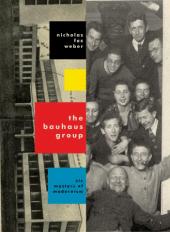
Intimate, deeply researched portraits of Anni Albers, Josef Albers, Herbert Bayer, Marcel Breuer, Xanti Schawinsky, and Gropius himself. Reading it second fleshes out the human drama behind the institutional history.
The Preliminary Course & Pedagogical Core
IntermediateUnderstand the Vorkurs (preliminary course) as the intellectual engine of the Bauhaus — its exercises, its theory of form and color, and how it shaped every student who passed through.
▸ Study plan for this stage
Pace: 8–10 weeks, ~25–30 pages/day, with 2–3 days per week reserved for practical exercises and reflection
- The Vorkurs as a systematic method for retraining perception and unlearning academic conventions
- Klee's theory of generative form: how basic elements (point, line, plane) build complex visual structures through logical progression
- Kandinsky's spiritual abstraction: the inner sound of color and form, and how non-objective art communicates emotion directly
- Itten's color theory as both science and psychology: complementary relationships, color temperature, and the subjective experience of color harmony
- The role of disciplined experimentation and hand-based learning in developing intuitive design judgment
- How the Preliminary Course unified diverse students (painters, sculptors, craftspeople) around shared foundational principles
- The relationship between material exploration and conceptual understanding in Bauhaus pedagogy
- What was Klee's pedagogical goal in the Vorkurs, and how does his concept of 'taking a line for a walk' relate to the development of form?
- How does Kandinsky distinguish between objective and non-objective art, and what does he mean by the 'inner sound' of a form or color?
- Explain the relationship between point, line, and plane in Kandinsky's system. How do these elements create visual tension and movement?
- What is the difference between simultaneous and successive color contrast in Itten's theory, and why does this matter for composition?
- How did the Preliminary Course serve as a unifying foundation for students from different artistic backgrounds, and what made it radical for its time?
- Describe Itten's approach to color harmony. How does his theory move beyond purely mathematical relationships to include psychological and subjective factors?
- Work through Klee's linear exercises: create 10 variations of a single line exploring direction, weight, speed, and gesture without lifting your pencil
- Conduct a point-to-line-to-plane progression study: begin with a single point, extend it into a line, then develop that line into a bounded plane, documenting each transformation
- Create a series of non-objective compositions using only Kandinsky's primary elements (point, line, plane) in black and white, focusing on achieving different emotional qualities (tension, calm, chaos, order)
- Execute Itten's color wheel exercises: mix and arrange colors to demonstrate complementary pairs, color temperature shifts, and simultaneous contrast effects
- Perform a material exploration study: select 3–5 different materials (paper, fabric, wood, wire, clay) and document how the same formal concept (e.g., a spiral, a grid, a gradient) translates across materials
- Design a simple object or composition using only the principles learned from all three texts: justify each formal and color choice by referencing Klee, Kandinsky, or Itten's theoretical framework
Next up: This stage establishes the shared visual language and disciplined perceptual foundation that allowed Bauhaus students to move into specialized workshops—you now understand the underlying principles that governed all subsequent design work, from typography to furniture to architecture.
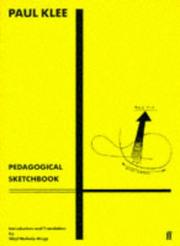
Klee's own distillation of his Bauhaus teaching: line, plane, and movement rendered as visual thinking. Reading it first in this stage shows what a master's course actually felt like from the inside.
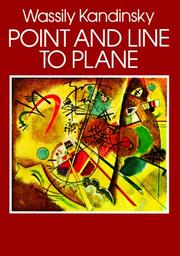
Kandinsky's systematic theory of pictorial elements, developed directly from his Bauhaus lectures. It pairs with Klee to give the full theoretical framework students encountered in the preliminary course.

Itten founded the preliminary course and color theory was its cornerstone. This book transmits his teaching directly and explains why color remained central to Bauhaus pedagogy long after he left.
Dessau, Workshops & the Object
IntermediateGrasp the Dessau years (1925–1932) as the Bauhaus's most productive and internationally visible phase — the new building, the workshop output, and the turn toward industrial production.
▸ Study plan for this stage
Pace: 4–5 weeks, ~40–50 pages/day. Week 1–2: Bergdoll's Dessau chapters (roughly 150–200 pages); Week 3: Tschichold's *New Typography* (approximately 150–180 pages); Week 4–5: Review, cross-reference, and synthesis exercises.
- The Dessau school building (1925–1926) as a manifesto in architecture: its functional design, transparency, and integration of workshops as a pedagogical statement
- The workshop system at Dessau: how craft instruction evolved toward industrial design and mass production (metals, textiles, furniture, graphic design)
- The shift from Weimar's craft-centered ethos to Dessau's emphasis on standardization, industrial prototyping, and commercial viability
- Jan Tschichold's *New Typography* as a codification of modernist graphic design principles emerging from Bauhaus practice: asymmetry, sans-serif typefaces, grid systems, and functional clarity
- The role of key Dessau masters (Moholy-Nagy, Breuer, Albers, Joost Schmidt) in translating Bauhaus theory into reproducible, marketable objects
- International visibility and influence: how Dessau-era Bauhaus products and design philosophy circulated globally and shaped modernism
- The tension between artistic experimentation and industrial constraint: balancing avant-garde vision with production feasibility and commercial demand
- Typography and visual communication as integral to the Bauhaus project: how graphic design unified the school's aesthetic across all media
- How did the Dessau building itself embody Bauhaus principles, and what role did its architecture play in the school's pedagogy and public image?
- Describe the evolution of one workshop (e.g., metals, textiles, or furniture) from Weimar to Dessau. What changed in its approach to design and production?
- What does Tschichold mean by 'new typography,' and how do his principles reflect the Bauhaus workshop ethos and the move toward industrial standardization?
- How did Dessau-era Bauhaus products achieve international visibility, and what made them commercially viable while remaining avant-garde?
- Identify three specific design innovations or objects from the Dessau workshops. What makes them exemplary of the Dessau philosophy?
- How did the tension between craft and industrial production play out in Dessau, and how did designers resolve it in their work?
- Map the Dessau building: sketch or annotate the layout of the main building, workshops, and living quarters (from Bergdoll). Annotate how form follows function and how spaces encourage collaboration.
- Comparative workshop analysis: choose one workshop (metals, textiles, furniture, or graphic design) and trace its evolution from Weimar to Dessau using Bergdoll's text. Document the shift in materials, methods, and commercial goals.
- Typography audit: collect 3–5 examples of Dessau-era graphic design (posters, publications, advertisements) and analyze them against Tschichold's *New Typography* principles. Identify asymmetry, typeface choices, grid logic, and functional clarity.
- Design a single object (a chair, a poster, a typeface specimen) using Dessau principles: industrial reproducibility, geometric clarity, functional form, and modernist aesthetics. Write a brief rationale grounding it in Bergdoll and Tschichold.
- Create a visual timeline: plot 8–10 key Dessau workshop products (1925–1932) with images and dates. Annotate each with its master(s), materials, production method, and international reach.
- Close reading: select one passage from Tschichold on asymmetry or sans-serif typefaces and one from Bergdoll on a specific workshop. Write a 500-word synthesis explaining how they illuminate the same design principle from different angles.
Next up: This stage establishes the Bauhaus's mature design language and its global influence through Dessau's workshops and typography, preparing you to examine how these principles were disseminated, adapted, and contested in the school's final years and diaspora.

The catalogue of MoMA's landmark 2009 exhibition, organized by workshop. It is the richest visual and scholarly survey of actual Bauhaus objects — furniture, weaving, typography, ceramics — and belongs here once the reader understands the pedagogy behind them.
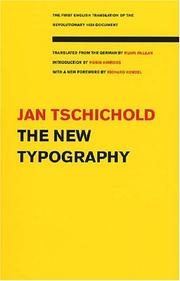
Though not a Bauhaus insider, Tschichold codified the typographic revolution the Bauhaus workshops ignited. Reading it here shows how Dessau-era graphic work radiated outward into professional practice almost immediately.
Closure, Diaspora & Global Influence
ExpertTrace the forced closure under Nazi pressure, the scattering of masters and students across the world, and how Bauhaus ideas were transplanted — and transformed — in America, Israel, and beyond.
▸ Study plan for this stage
Pace: 4–5 weeks, ~40–50 pages/day (approximately 250–300 pages total)
- The ideological conflict between Bauhaus's modernist vision and Nazi totalitarianism, and why the regime targeted the school for closure
- The mechanisms of institutional pressure and political persecution that forced Bauhaus's shutdown in 1933
- The strategic dispersal of Bauhaus masters and students as a survival strategy and its role in spreading design philosophy globally
- How Bauhaus pedagogy and principles were adapted and transformed in emigrant communities, particularly in America and Israel
- The role of key figures (Gropius, Moholy-Nagy, Albers, Anni Albers, and others) in transplanting and reinterpreting Bauhaus ideas in new cultural contexts
- The distinction between Bauhaus as a historical institution versus Bauhaus as a living, evolving set of ideas that transcended geography
- How diaspora communities negotiated between fidelity to original Bauhaus principles and the practical demands of new national, economic, and cultural environments
- Why did the Nazi regime view Bauhaus as a threat, and what specific ideological conflicts made the school a target for closure?
- What were the key phases and pressures that led to Bauhaus's final shutdown in 1933, and how did institutional leadership respond?
- How did the forced diaspora of Bauhaus masters and students become a vehicle for spreading modernist design principles globally?
- What were the major destinations and communities where Bauhaus émigrés established themselves, and how did they adapt their teaching and practice?
- How did Bauhaus ideas transform when transplanted to America—what was preserved, what was modified, and why?
- What role did Bauhaus play in shaping design culture in Israel and other non-Western contexts, and how were principles adapted to local needs?
- How does Forgács characterize the relationship between Bauhaus as a closed historical institution and Bauhaus as a continuing intellectual and artistic movement?
- Create a timeline mapping the key pressure points and decisions leading to Bauhaus's 1933 closure, citing specific passages from Forgács that document the political escalation
- Write a biographical sketch of at least three Bauhaus masters (e.g., Gropius, Moholy-Nagy, Albers), documenting their emigration routes, destinations, and the institutions they founded or influenced abroad
- Analyze a specific design project or pedagogical approach from the American Bauhaus diaspora (e.g., Black Mountain College, Yale) and compare it to its Weimar-era precedent using textual evidence from Forgács
- Create a visual map or diagram showing the geographic dispersal of Bauhaus figures and the networks they formed across continents; annotate with key dates and institutional affiliations
- Select one country or region (America, Israel, Latin America, etc.) and research how Bauhaus principles were reinterpreted there; write a 2–3 page synthesis comparing Forgács's account with your findings
- Design a mock exhibition catalog or curatorial statement that frames Bauhaus closure and diaspora as a single historical narrative, using Forgács's framework to explain how loss became transmission
Next up: Understanding how Bauhaus survived and mutated through diaspora prepares you to examine the specific aesthetic, pedagogical, and ideological legacies that continue to shape contemporary design, architecture, and art education globally.

A rigorous intellectual history of the internal ideological tensions and the external political forces that ultimately destroyed the school. It reframes the closure not as an accident but as an almost inevitable collision.
Discussion
Keep reading
Paths that share books, cover the same subject, or open a related topic.