Best Books on Automotive Engineering and Vehicle Dynamics, in Reading Order
Vehicle dynamics is where tire physics, weight transfer and suspension geometry meet the driver's hands, and it rewards readers who understand the whole machine before they open a textbook. This path starts with an orientation to how a car is engineered end to end, moves through the plain-language chassis books that racers actually use, then arrives at Gillespie and Milliken — the two texts every serious dynamicist owns — before branching into aerodynamics and materials.
How the whole machine fits together
BeginnerUnderstand what every major automotive subsystem does and how engineering decisions in one propagate into the others, so the dynamics texts later on land in context rather than in isolation.
▸ Study plan for this stage
Pace: Six to eight weeks, but only one of these books is read through. Stone's Automotive Engineering Fundamentals is 612 pages of undergraduate survey — take it a subsystem at a time, roughly a chapter a sitting, over six weeks, and do not skip the engine and transmission chapters even though this path i
- The powertrain as a torque source with a specific curve: what an engine's torque and power curves mean, why gearing exists, and how the final drive ratio sets what the tires are asked to do
- Brake system fundamentals — bias, proportioning, thermal capacity — and the reason front-rear brake balance is a dynamics problem rather than a hydraulics one
- Structure and stiffness: why torsional rigidity of the body or frame determines whether your suspension settings do anything at all, which Stone introduces and Herb Adams will hammer
- The subsystem coupling that makes this stage necessary — a spring rate change alters ride frequency, ride height, roll centre, camber curve and brake dive simultaneously, and no single-subsystem book will tell you that
- Unit systems and sign conventions. Stone and Bosch are SI, Puhn and Smith are imperial, and Gillespie and Milliken have specific axis conventions. Decide now how you will handle the conversions
- What the Bosch Handbook actually contains: material properties, standard test procedures, fluid specifications, tolerance classes, legislation summaries and the formulas for every subsystem. Knowing its structure is the point of this stage
- The distinction between road-car engineering constraints (cost, durability, noise, legislation, packaging) and race constraints (regulation, weight, one-season life), which explains why the two literatures give different advice about the same physics
- Trace the torque path from combustion chamber to contact patch and name every ratio and loss along the way.
- Why does body torsional stiffness set an upper limit on how much your suspension tuning can achieve? Answer with the load path, not the slogan.
- Name three ways a decision made for packaging or cost reasons constrains suspension geometry on a production car.
- Where in the Bosch Handbook would you find a brake fluid boiling point specification, a tire load index table, and a standard air density value? If you cannot answer without a search, you have not spent enough time with the contents pages.
- What are the main differences in design priority between a road car and a race car, and which of them are legislative rather than physical?
- Write a one-page block diagram of a complete vehicle with every major subsystem and an arrow for every interface where one constrains another. Keep it; you will annotate it for the rest of this path.
- Time yourself finding five specific data points in the Bosch Handbook — a rolling resistance coefficient, a typical aerodynamic drag coefficient, a steel fatigue limit, a brake pad friction range, and a standard fuel energy density. Repeat until each takes under a minute.
- Pick a car you can actually look at and write down its layout, drive configuration, suspension type at each end, and brake configuration, from observation rather than from a spec sheet. Every later stage is easier with one concrete vehicle in mind.
- Work through Stone's chapter-end problems for the brakes and transmission chapters. They are straightforward and they establish whether your algebra is ready for Gillespie.
Next up: With every subsystem named and a reference book on the shelf, the next stage builds physical intuition for handling before any differential equations appear — so that the theory later confirms something you already feel.
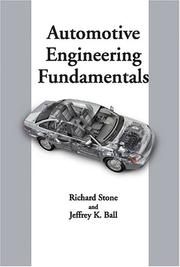
A single readable survey of the whole vehicle — engines, transmissions, brakes, structure, dynamics — written as an undergraduate first course. Read it first so you know which subsystem a later book is actually talking about.
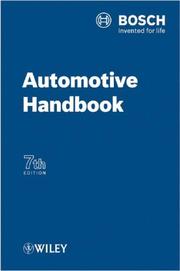
The industry's reference brick: every formula, tolerance and standard an automotive engineer reaches for. It is not read cover to cover but acquired early, because every subsequent book on this path assumes you can look something up.
Handling in plain language
BeginnerBuild real intuition for understeer, oversteer, roll couple and weight transfer using the practical chassis literature, so the mathematics in the next stage confirms something you already feel rather than introducing it cold.
▸ Study plan for this stage
Pace: Five to six weeks for three short books totalling about 505 pages. Puhn's How to Make Your Car Handle is 200 pages and reads in a week; Herb Adams's Chassis Engineering is 133 and can be read in two evenings but deserves a week of thinking; Carroll Smith's Tune to Win is 172 pages and is the one to
- Tire slip angle and the fact that a cornering tire is always sliding — the single idea that separates people who understand handling from people who do not
- Lateral load transfer as a function of lateral acceleration, weight, centre of gravity height and track width, and the crucial point that total transfer does not depend on springs at all — only its front-rear distribution does
- Roll couple distribution as the primary balance adjustment: stiffening one end transfers more load across that axle, reduces its grip, and pushes the balance away from it
- Understeer and oversteer defined by front and rear slip angles rather than by what the car feels like, which is Puhn's most useful correction to common usage
- Roll centres, the roll axis, and jacking forces — the geometry Herb Adams covers and the reason roll centre height is not a free parameter
- Camber change with suspension travel and body roll, and why the tire's camber relative to the road is what matters rather than its camber relative to the chassis
- Carroll Smith's diagnostic discipline: change one variable, record the change, drive a consistent test, and reason from the response. This is the actual transferable skill in this stage
- The corner-phase vocabulary — corner entry, mid-corner, corner exit — because a car can understeer in one phase and oversteer in another, and a complaint that does not name the phase is unactionable
- Why does a tire generate lateral force only when it is slipping, and what does the slip angle versus lateral force curve look like up to and beyond its peak?
- Derive, in words, why total lateral load transfer is independent of spring rate. Then explain what springs and anti-roll bars actually change.
- If a car understeers on corner entry and oversteers on exit, what does that tell you, and what would you change first?
- What does raising the front roll centre do to front roll stiffness, to jacking, and to camber gain? Name all three effects; most sources mention only one.
- Carroll Smith insists on changing one thing at a time. What specifically goes wrong when you change two, beyond the obvious ambiguity?
- Calculate total lateral load transfer for a real car at 1.0 g using measured or published mass, centre of gravity height and track width. Then compute how it splits front to rear for two different anti-roll bar configurations.
- Measure or estimate the front suspension hardpoints on a car you can access and construct the roll centre graphically, following Herb Adams's method. Doing this once with a tape measure teaches more than reading it five times.
- Write a setup change sheet in Carroll Smith's format — baseline, single change, driver comment by corner phase, measured lap or section time — and use it for three consecutive changes on a track day, an autocross, or even a consistent stretch of private road.
- Take one handling complaint stated in ordinary language ('it feels lazy turning in') and translate it into slip angle terms and a specific setup hypothesis. Do this for five complaints.
- Draw the tire lateral force curve from memory, mark the peak, and annotate what a driver feels on each side of it. You will meet this curve again as real data in Milliken.
Next up: You now have physical intuition and a diagnostic method; the next stage puts equations under both, so that you can predict from parameters what you have so far only been able to observe.
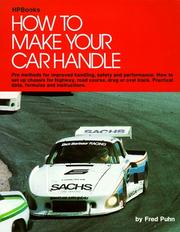
The classic accessible entry to chassis behaviour — springs, bars, roll centres and tire slip explained with diagrams and almost no calculus. Decades old and still the fastest route to intuition.
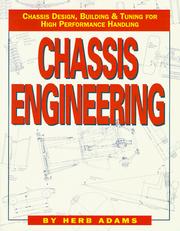
Picks up where Puhn leaves off with suspension geometry, frame stiffness and setup decisions on a real car. Read second because it assumes you already know what a roll centre is.

Smith's setup bible teaches the diagnostic discipline the theory books never do: change one thing, measure, and reason about why the car responded. The bridge from hobbyist tinkering to engineering method.
The core theory
IntermediateWork through the canonical vehicle-dynamics texts — tire models, ride and handling equations of motion, stability derivatives and the moment method — until you can predict a car's behaviour from its parameters rather than from experience.
▸ Study plan for this stage
Pace: Six to nine months, and this is the substance of the path. Gillespie's Fundamentals of Vehicle Dynamics is a semester course — three months at a chapter every week or two, working the examples rather than reading them. Jazar's Vehicle Dynamics is 1015 pages and is optional: take it only if you inten
- Gillespie's derivations of longitudinal performance: tractive force limits, longitudinal load transfer under acceleration and braking, and the resulting limits on drive and brake configuration
- The understeer gradient — degrees of additional steer per g — as the quantitative definition of understeer, and characteristic and critical speed as its consequences
- The bicycle model and its stability derivatives, which is the smallest model that predicts anything useful and the basis of nearly all control work
- Ride analysis: quarter-car model, sprung and unsprung natural frequencies, damping ratio, and why ride and handling requirements conflict
- Tire data as it actually exists — measured force and moment data from a flat-track machine, and the difference between a curve fit like the Magic Formula and the physical behaviour it approximates
- Aligning torque and pneumatic trail, which is where steering feel comes from and which the plain-language books cannot explain
- The Milliken Moment Method: plotting yaw moment against lateral acceleration over a grid of body slip and steer angles, producing the MMM diagram that characterises a car's stability and control authority in one picture
- Sign conventions and axis systems. Gillespie and Milliken use SAE conventions and getting a sign wrong silently inverts a conclusion — this is the most common source of error for self-taught readers
- Derive the understeer gradient from the bicycle model and state exactly which assumptions the derivation rests on.
- What are characteristic speed and critical speed, and what physically happens to a car with a negative understeer gradient as it approaches the second?
- Why do ride comfort and handling response pull spring and damper selection in opposite directions? Answer using natural frequency and load variation at the contact patch.
- What is pneumatic trail, how does it vary with slip angle, and why does steering feel go light before the front tires reach their peak?
- Explain what an MMM diagram shows. What do the boundaries of the plotted region represent, and how do you read stability and control off it?
- Take one result you learned intuitively from Puhn or Carroll Smith and show where Gillespie or Milliken derives it. Where does the derivation add a qualification the practical book omitted?
- Work every example problem in Gillespie's chapters on acceleration, braking and steering by hand before looking at the solution. This is not optional; the book is a textbook and reading it passively produces nothing.
- Build a bicycle-model simulation in a spreadsheet or in Python: inputs of mass, wheelbase, weight distribution and cornering stiffnesses; outputs of understeer gradient, yaw rate response and steady-state steer angle versus speed. Then sanity-check it against the hand calculations you did for a real car in stage two.
- Fit a Magic Formula curve to published tire force data and plot it against the raw points. Seeing where the fit diverges is the fastest way to understand what a tire model is and is not.
- Construct an MMM diagram by hand for a simple two-axle model at a fixed speed, using a coarse grid of body slip and steer angle. It is tedious and it is the only way the method becomes yours rather than a picture you have seen.
- Take the car you chose in stage one, estimate its parameters, and predict its understeer gradient. Then measure it with a constant-radius test in a safe, legal, empty space and compare. The discrepancy and its explanation are worth more than either number.
- Write a one-page list of every assumption in the bicycle model and rank them by which breaks first as lateral acceleration rises. Check your ranking against Milliken's treatment.
Next up: With the tire, the chassis and the equations of motion in hand, the last stage adds the two forces the core texts largely hold constant — the air the car moves through, and the materials that have to survive the loads you have just calculated.

The standard first textbook: acceleration, braking, ride, steering and rollover derived cleanly from first principles. Take this before Milliken — it establishes the vocabulary and sign conventions Milliken assumes.

A more mathematically formal treatment, heavy on kinematics and the equations of motion, and useful if you intend to build or read simulation models. Optional if Gillespie already reads comfortably.
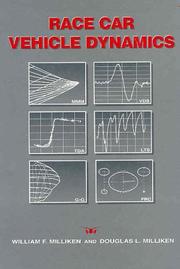
The deepest book in the field and the reason this path exists — tire data, the Milliken Moment Method, aerodynamic and suspension analysis at competition level. It is genuinely hard, which is why it comes eighth and not first.
Specialist domains
IntermediateExtend beyond the suspension into the two areas that dominate modern performance engineering — downforce and materials — and learn how a design survives contact with manufacture and fatigue.
▸ Study plan for this stage
Pace: Four to five months for about 1,110 pages. McBeath's Competition Car Aerodynamics is 224 pages and readable in three weeks. Katz's Automotive Aerodynamics is 608 pages of genuine fluid dynamics — allow two to three months and expect to want a fluid mechanics refresher for the boundary layer and vort
- Downforce and drag as components of the same pressure field, and the fact that every downforce device costs drag — the trade that defines aerodynamic setup
- Aerodynamic balance as a dynamics problem, not an aerodynamics one: centre of pressure position relative to the centre of gravity changes the effective weight distribution with speed, so a car can be balanced at one speed and not another
- Ground effect, diffusers and the underbody as the dominant modern source of downforce, and why ride height and rake sensitivity make it a suspension problem too
- Wings at automotive scale: aspect ratio, endplates, induced drag, and why aircraft aerofoil data transfers badly to a wing operating in ground effect near a bluff body
- Katz's formalisation — potential flow, boundary layers, separation, vortex generation and wake structure — and what CFD is actually solving when it produces a pretty picture
- The measurement problem: wind tunnel blockage and moving-ground correction, CFD validation, and on-track pressure tapping and rake testing. Aerodynamic claims are only as good as their measurement method
- Materials selection in Carroll Smith's terms: yield versus ultimate strength, fatigue life, stress concentration, and why the failure is almost always at a hole, a weld or a thread
- Fasteners as engineering components — grade, preload, thread engagement, safety wiring — which is the least glamorous and most consequential chapter in Engineer to Win
- Why does a car's aerodynamic balance shift with speed, and how does that interact with the understeer gradient you derived from Gillespie?
- Explain the mechanism of a diffuser in terms of pressure and flow, and why its performance is so sensitive to ride height.
- What is induced drag on a rear wing, and what design choices reduce it? Why do endplates help?
- What does a wind tunnel with a fixed floor get wrong, and what does a rolling road fix? Name the specific flow features affected.
- Where do suspension components actually fail, and why is it almost never in the middle of a tube?
- Carroll Smith argues that most failures are foreseeable. Take one failure mode he describes and explain how a designer would have caught it before the part was made.
- Estimate the downforce and drag of a simple rear wing at a chosen speed using McBeath's methods, then compute how much the resulting rear load change shifts the front-rear balance. This connects the aerodynamics stage directly back to your bicycle model.
- Take a published drag and lift coefficient set for any road car and calculate total aerodynamic force at 60, 100 and 150 mph. The nonlinearity is the whole reason aero matters only above a threshold.
- Add an aerodynamic term to the spreadsheet model you built in the previous stage, so downforce grows with the square of speed and load transfer follows. Plot understeer gradient against speed and see the balance shift you answered a question about.
- Design a simple loaded component on paper — a suspension pushrod or a wing mount — and size it for both static strength and fatigue life using Engineer to Win's tables. Then identify its three worst stress concentrations.
- Perform a fastener audit on any bolted assembly you have access to: identify grade markings, count thread engagement, and check whether preload is specified anywhere in the workshop manual. Most people are startled by what they find.
- Write a final two-page design brief for a suspension corner: geometry targets from stage two, load cases from stage three, aerodynamic loads from McBeath, and material and fastener selection from Smith. Producing one document that draws on all four stages is the real graduation exercise of this path.
Next up: This is the end of the path — from the whole vehicle down to the bolt that holds a wishbone together — and the natural next step is a set of real tire force and moment data plus a multibody simulation package, where everything derived here stops being a model and starts being a design tool.

The practical entry to downforce: wings, diffusers, splitters and how they trade against drag and balance. Read before Katz, because it gives the physical picture the fluid mechanics then formalises.

A proper fluid-dynamics treatment aimed at road and race vehicles, from a leading aerodynamicist. This is where downforce stops being a rule of thumb and becomes calculable.

Materials, fasteners, fatigue and failure — the subject that decides whether a beautifully calculated suspension survives a season. A fitting close: the point where dynamics meets the real, breakable world.
Discussion
Keep reading
Paths that share books, cover the same subject, or open a related topic.