Best Books on Karting, in Reading Order
This curriculum takes a complete beginner from their very first kart session all the way through professional-level chassis tuning, racecraft, and the pathway into single-seater motorsport. Each stage builds on the last — starting with the mental model and physical technique, then layering in setup science, advanced racecraft, and finally the broader motorsport ladder context.
Foundations — Getting Started in Karting
BeginnerUnderstand how a kart works, develop safe on-track habits, learn the basic vocabulary of karting (chassis, grip, lines, flags), and build confidence as a new driver.
▸ Study plan for this stage
Pace: 6–8 weeks total. Week 1–4: Read "Karting: A Complete Introduction" by David Sumeray at roughly 20–25 pages per day, pausing after each chapter to take notes on terminology and kart components. Week 5–8: Read "The Driving Book" by Karen Gravelle at a relaxed 15–20 pages per day, actively connecting i
- Kart anatomy and components — chassis flex, engine types (2-stroke vs. 4-stroke), axle, bodywork, and how each part affects handling as explained in Sumeray's introduction
- The racing line — understanding the geometric ideal of late apex, early apex, and how to link corners smoothly, as introduced by Sumeray
- Flag signals and track etiquette — the meaning of green, yellow, red, blue, black, and checkered flags and the safe on-track behaviors Sumeray outlines for beginners
- Grip and its limits — the concept of mechanical grip (tires, kart weight, track surface) and how Sumeray describes recognizing understeer and oversteer in a kart with no suspension
- Basic vehicle-control fundamentals — smooth steering inputs, progressive braking, and throttle control drawn from Gravelle's foundational driving principles and applied to a kart's direct, unforgiving feedback
- Situational awareness and hazard perception — Gravelle's framework for scanning the environment, anticipating other drivers, and reacting safely, translated to a busy kart track
- Karting vocabulary — building a working glossary of terms (chassis, grip, camber, toe, kart classes, scrutineering, transponder) so that future technical reading is accessible
- Driver fitness and posture — correct seating position, helmet and suit fit, and the physical demands of karting as covered by Sumeray
- After reading Sumeray, can you explain in plain language what chassis flex does and why a kart has no differential?
- What does each common flag color mean, and what immediate action should a driver take when each is shown?
- Using Sumeray's description of the racing line, how would you approach a 90-degree right-hand corner — where do you position the kart at turn-in, apex, and exit?
- How do Gravelle's principles of smooth, progressive braking translate specifically to a kart, which has no ABS and (often) rear-only brakes?
- What is the difference between understeer and oversteer, and what sensations in the kart (as described by Sumeray) would alert you to each?
- What safety equipment is required before you enter a kart track, and why does each item matter according to Sumeray?
- Glossary journal: After each reading session in Sumeray, write 5–10 new karting terms in a dedicated notebook with your own plain-English definition and a small sketch where helpful (e.g., draw the chassis and label each part).
- Flag-signal flashcards: Create a set of flashcards — one flag color per card — with the flag on the front and the required driver action on the back; drill them until response is instant.
- Track-walk or track-map exercise: Using a local kart track map (or one from Sumeray), draw the ideal racing line through each corner, marking turn-in, apex, and exit points, then compare your drawing to Sumeray's line descriptions.
- Smooth-inputs practice session: During your first or next rental kart session, focus exclusively on Gravelle's smooth-control principles — no sudden steering, progressive brake application, gradual throttle — and have a friend or coach observe and give feedback.
- Hazard-perception log: While watching karting footage online (club races, arrive-and-drive sessions), pause the video at random moments and write down every potential hazard you see on track, practicing the scanning habit Gravelle teaches.
- Self-assessment checklist: After finishing both books, write a one-page honest assessment of your current confidence level against each key concept, rating yourself 1–5, and identify the two weakest areas to revisit before moving to the next stage.
Next up: Mastering the vocabulary, kart anatomy, safe habits, and basic racing line from Sumeray and Gravelle gives you the essential mental framework and track confidence needed to absorb more advanced technique — such as chassis setup, data analysis, and racecraft — in the intermediate stage without being overwhelmed by unfamiliar terminology or safety concerns.
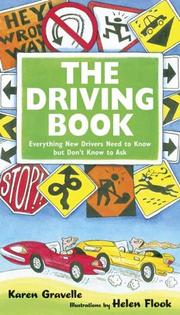
Builds essential vehicle-control intuition (vision, balance, smoothness) that transfers directly to kart driving, giving beginners a safe mental framework before they focus on speed.
Driving Technique — Racing Lines & Car Control
BeginnerMaster the geometric racing line, threshold braking, trail braking, weight transfer, and the smooth inputs that separate fast drivers from average ones.
▸ Study plan for this stage
Pace: 6–8 weeks total. Week 1–4: "Ultimate Speed Secrets" by Ross Bentley (~20–25 pages/day, reading in focused 30-minute sessions). Week 5–8: "The Perfect Corner" by Paradigm Shift Driver Development (~15–20 pages/day, with extra time for diagrams and mental exercises). Re-read key chapters from both boo
- The geometric racing line: late apex vs. early apex, and why the late apex maximizes corner exit speed (Bentley, Ultimate Speed Secrets)
- The 'slow in, fast out' principle and how corner exit speed compounds onto the following straight (Bentley)
- Threshold braking: finding and holding the maximum braking force just before wheel lock-up or ABS activation (Bentley)
- Trail braking: gradually releasing brake pressure while turning in, transferring weight to the front tires to maintain grip and tighten the radius (Bentley & The Perfect Corner)
- Weight transfer: how acceleration, braking, and steering inputs shift the car's weight across all four contact patches and how to use it intentionally (Bentley)
- The 'traction circle' (friction circle) concept: each tire has a finite grip budget that must be shared between lateral and longitudinal forces (The Perfect Corner)
- Smooth, deliberate inputs: why abrupt steering, throttle, and brake applications upset balance and destroy lap time (Bentley)
- Vision and reference points: where to look (turn-in point, apex, exit point) and how far ahead your eyes should be to execute a clean line (Bentley)
- After reading Bentley, can you explain in your own words why a late apex is almost always faster than an early apex on a single corner followed by a straight?
- What is the difference between threshold braking and trail braking, and at what point in the corner does each technique apply?
- How does the traction circle (as described in The Perfect Corner) explain why you must release the brakes progressively as you add steering lock?
- What are the three reference points Bentley identifies for every corner, and what should your eyes be doing at each one?
- How does weight transfer affect front and rear grip levels, and what driver inputs can you use to manage it deliberately?
- According to both books, what are the most common 'rough input' mistakes beginner drivers make, and what is the corrective technique for each?
- Reference Point Mapping (on-track or sim): Before a session, walk or drive the track slowly and physically mark (mentally or with notes) your turn-in point, apex cone, and exit point for every corner — directly applying Bentley's reference-point framework.
- Brake Marker Drill: Pick one corner and move your braking point one marker later each lap until you feel the limit, then back off one marker — this builds the feel for threshold braking Bentley describes without overdriving.
- Trail Braking Ramp: On a safe, low-speed corner, practice holding light brake pressure (10–20%) as you begin to turn in, then smoothly release to zero at the apex — log how corner entry rotation changes compared to full-release-before-turn-in.
- Traction Circle Visualization (desk exercise): Draw a circle on paper; for three phases of a corner (braking zone, apex, exit), shade in how much of the circle is used by longitudinal vs. lateral force — use The Perfect Corner's diagrams as your reference.
- Smooth Inputs Video Review: Record an onboard lap (GoPro or sim replay), then watch it with your hands visible; count every abrupt steering correction or throttle stab and set a target to reduce that count by 50% in the next session.
- Line Comparison Laps (sim or track): Run five laps deliberately using an early apex, then five laps with a late apex on the same corner; compare exit speeds and sector times to make Bentley's geometry tangible with real data.
Next up: Mastering the geometric line and smooth inputs gives you a stable, repeatable baseline from which the next stage — chassis setup and kart tuning — becomes meaningful, because you can now feel and diagnose handling imbalances (understeer, oversteer, push) rather than masking them with inconsistent driving.

The canonical entry into performance driving technique; Bentley's concepts of vision, lines, and smooth inputs are directly applicable to karts and are referenced by virtually every later technical book.

Introduces the physics-based 'Traction Circle' and optimal corner geometry in a very accessible way — read after Speed Secrets to add the 'why' behind the techniques already learned.
Kart Setup & Chassis Tuning
IntermediateUnderstand kart chassis geometry, caster, camber, axle selection, seat struts, tire management, and how to systematically diagnose and fix handling problems.
▸ Study plan for this stage
Pace: 6–8 weeks total. Week 1–4: "Kart Setup" by Diego Tonti (~20–25 pages/day, reading in focused sessions of 45–60 min). Week 5–8: "How to Make Your Car Handle" by Fred Puhn (~25–30 pages/day, cross-referencing Tonti's kart-specific notes as you go). Reserve the final 3–4 days of each book for review, n
- Chassis geometry fundamentals: how caster, camber, toe, and kingpin inclination interact to produce understeer or oversteer in a kart
- Axle selection and stiffness: how rear axle diameter and material affect rear-end grip release and chassis flex, as explained in Tonti's setup matrix
- Seat strut positioning and seat mounting: how seat height, lateral position, and strut configuration transfer driver weight and influence chassis twist
- Front-end geometry adjustments: Ackermann steering geometry, spindle height, and front width changes and their effect on corner entry behavior per Tonti
- Tire management and compound selection: heat cycles, tire pressure sensitivity, scrubbing-in procedures, and reading wear patterns to diagnose setup issues
- Chassis flex as a suspension substitute: understanding that a kart has no suspension and that controlled chassis flex IS the suspension, a concept reinforced by Puhn's first-principles handling theory
- Systematic diagnostic process: using a structured symptom → cause → adjustment loop (Tonti's setup charts) cross-validated with Puhn's physics-based explanations of weight transfer and tire slip angles
- Weight transfer and balance: how Puhn's treatment of longitudinal and lateral weight transfer applies directly to kart setup decisions around ballast placement and ride height
- After reading Tonti, can you explain what happens to rear-end grip when you switch from a soft to a stiff rear axle on a high-grip track, and why?
- Using Puhn's weight-transfer principles, why does increasing caster angle add front grip on corner entry but can induce understeer at the apex on a tight, slow circuit?
- How does seat strut removal or repositioning change chassis torsional stiffness, and what handling symptom would prompt you to make that change according to Tonti?
- What is tire slip angle (Puhn), and how does understanding it change the way you interpret a kart that 'pushes' in the middle of a long sweeper?
- Describe a step-by-step diagnostic session at the track: what data do you collect, what is your first adjustment priority, and how do Tonti's setup charts guide the sequence?
- How does Ackermann geometry (Puhn) manifest in kart-specific front-end tuning, and what are the practical limits of adjusting it on a standard club kart?
- Geometry mapping exercise: With the kart on a flat setup table, measure and record baseline caster, camber, toe, and front/rear track width. Then make one deliberate change (e.g., add 1° of caster) and re-measure to feel how adjustments interact — directly applying Tonti's measurement procedures.
- Axle swap drill: If you have access to two axles of different stiffness, install each in turn, do 5 identical laps, and write a half-page comparison of rear-end behavior. Map your observations onto Tonti's axle-selection chart.
- Tire pressure sensitivity test: Run three 5-lap stints with front and rear pressures varied by ±2 PSI from your baseline. Log lap times and driver feel. Use Puhn's slip-angle theory to explain the results in writing.
- Seat strut configuration experiment: Remove one rear seat strut, run 5 laps, then replace it and add a front strut brace. Document the change in chassis feel and correlate it to Tonti's strut-effect descriptions.
- Weight-transfer worksheet: Using Puhn's formulas for lateral weight transfer, calculate the load shift on your kart's front axle during a 1.2 g corner given your kart's weight, CG height, and track width. Compare the result to what you feel when ballast is moved.
- Fault-finding simulation: Ask a more experienced driver or coach to secretly make one setup change (e.g., add toe-out, soften the axle). Drive 10 laps, diagnose the problem using only Tonti's symptom checklist, then verify your diagnosis by inspection.
Next up: Mastering static chassis geometry and systematic tuning logic here builds the mechanical intuition needed to tackle the next stage's focus on data acquisition and lap-time analysis, where setup changes must be validated with objective telemetry rather than feel alone.
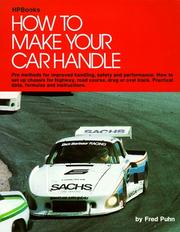
A classic vehicle dynamics primer that explains the physics of grip, weight transfer, and suspension geometry; reading this alongside Tonti gives you the engineering intuition to understand *why* setup changes work.
Discussion
Keep reading
Paths that share books, cover the same subject, or open a related topic.