Arthur Conan Doyle Reading Order: Where to Start
This curriculum takes you through Arthur Conan Doyle's fiction in a carefully sequenced order, starting with the most iconic and accessible Sherlock Holmes novels, then moving through the short story collections in publication order, and finally exploring Doyle's rich non-Holmes fiction. Each stage builds familiarity with Doyle's prose style, Victorian setting, and narrative voice, so that by the end you can appreciate the full range of his imagination beyond Baker Street.
The Holmes Novels: Foundations
BeginnerMeet Sherlock Holmes and Dr. Watson in long-form narrative, absorb Doyle's Victorian prose style, and understand the core detective formula before tackling the short stories.
▸ Study plan for this stage
Pace: 6–8 weeks total (~20–25 pages/day, reading casually but attentively): Week 1–2 — A Study in Scarlet; Week 3 — The Sign of Four; Week 4–5 — The Hound of the Baskervilles; Week 6–7 — The Valley of Fear; Week 8 — review, reflection, and exercises.
- The Holmes–Watson dynamic: Holmes as the brilliant, eccentric detective and Watson as the everyman narrator whose limited perspective controls what the reader knows at any given moment
- The 'two-part' novel structure: Doyle's habit (visible in A Study in Scarlet and The Valley of Fear) of interrupting the present-day mystery with a long historical flashback that explains the crime's origins
- Deductive (abductive) reasoning: Holmes's method of drawing confident conclusions from minute physical clues — first introduced systematically in A Study in Scarlet and refined across all four novels
- Victorian setting and atmosphere: London fog, hansom cabs, class distinctions, and imperial anxieties that shape character motivations and plot logistics across all four books
- The role of Gothic atmosphere: The Hound of the Baskervilles shows how Doyle grafts supernatural dread onto rational detective fiction, using Dartmoor's landscape as a character in its own right
- The 'locked-room' / impossible-crime logic: how Doyle constructs seemingly inexplicable situations (the spectral hound, Birdy Edwards's disappearance) and then dismantles them with rational explanation
- Secondary narrators and unreliable information: Watson's Baskerville journal, the historical Utah chapters in A Study in Scarlet, and the Pinkerton backstory in The Valley of Fear all show Doyle experimenting with whose voice tells the story
- Morality and justice vs. the law: across all four novels, Doyle repeatedly questions whether legal justice and moral justice are the same thing, often letting killers go free or sympathizing with vigilante motives
- In A Study in Scarlet, what specific physical observations does Holmes make when he first meets Watson, and what does this scene establish about Holmes's method and personality?
- Both A Study in Scarlet and The Valley of Fear use a dramatic structural break — a long flashback set in a different country and era. What is the purpose of each flashback, and how does it change your understanding of the villain's motivation?
- How does Doyle use Watson's absence from Holmes's side in The Hound of the Baskervilles to build suspense, and what does Holmes's secret presence on the moor reveal about his character?
- The Sign of Four introduces Irene… wait — it introduces Mary Morstan and the Agra treasure. How does the treasure function as both a plot engine and a moral symbol by the novel's end?
- Across all four novels, Holmes occasionally allows a guilty party to escape legal punishment. Identify at least one such instance and explain what it suggests about Doyle's view of justice.
- How does the Victorian imperial world — the Andaman Islands and the Indian Mutiny in The Sign of Four, the Mormon frontier in A Study in Scarlet, the Scowrers' America in The Valley of Fear — shape the crimes that arrive on Holmes's doorstep in London?
- Keep a 'Clue Log' as you read each novel: every time Holmes notices a physical detail (a tan line, a callus, a footprint), write it down alongside his conclusion. By the end of The Valley of Fear you should have a personal catalogue of Holmesian reasoning patterns.
- After finishing A Study in Scarlet, write a one-page 'Watson entry' in Watson's voice describing Holmes from scratch — then compare it to Watson's actual first impressions in Chapter 1. Notice where your instincts matched Doyle's prose style and where they diverged.
- Map the two-part structure: for both A Study in Scarlet and The Valley of Fear, draw a simple timeline showing (a) the present-day London investigation and (b) the historical flashback. Annotate where the two timelines intersect and ask yourself: could Doyle have told the same story in chronological order? What would be lost?
- Atmosphere close-reading: choose one scene from The Hound of the Baskervilles set on Dartmoor (e.g., the first night Watson hears the hound, or Holmes and Watson's pursuit in the fog). Underline every word that appeals to the senses. Write two sentences on how Doyle uses setting to manufacture dread without resorting to the supernatural.
- Justice debate: after completing all four novels, write a short (half-page) argument either defending or challenging this claim — 'Sherlock Holmes is not really interested in the law; he is interested in truth.' Use specific plot moments from at least two of the four novels as evidence.
- Character consistency check: list three personality traits Holmes displays in A Study in Scarlet (e.g., arrogance, boredom between cases, disdain for emotion). Then scan The Sign of Four, The Hound of the Baskervilles, and The Valley of Fear for moments that confirm or complicate each trait. This builds the habit of reading a series as a cumulative portrait.
Next up: Mastering these four novels gives you a firm grasp of Holmes's character, Doyle's prose rhythms, and the detective formula in its most expansive form — the perfect foundation for encountering the short stories, where Doyle strips the same formula down to its leanest, most concentrated expression.
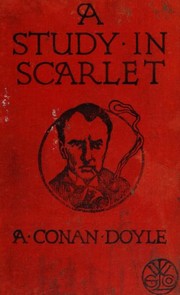
The very first Holmes story — it introduces Holmes, Watson, and 221B Baker Street from scratch, making it the essential starting point for any reader new to the canon.
The second novel deepens the Holmes-Watson relationship and raises the stakes with a more exotic plot; reading it here cements the dynamic before the short stories begin.
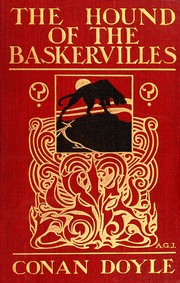
Widely considered the greatest Holmes novel, it blends Gothic atmosphere with detective logic and is best appreciated after the two earlier novels have established the characters.
The final Holmes novel introduces Moriarty and a dual-narrative structure; reading it last among the novels prepares you for the more complex storytelling in the short story collections.
The Holmes Short Stories: The Classic Era
BeginnerRead the two collections that defined Holmes as a cultural phenomenon, experiencing the short-story format at its peak and encountering the most famous individual cases.
▸ Study plan for this stage
Pace: 8–10 weeks total. Week 1–3: Read "The Adventures of Sherlock Holmes" (12 stories) at a relaxed pace of 2 stories every 2–3 days — roughly 20–30 pages per sitting. Week 4–10: Work through the Oxford Sherlock Holmes omnibus, prioritizing "The Memoirs of Sherlock Holmes" next (to follow Adventures chro
- The short-story form as Holmes's natural habitat: how Doyle structures each tale around a single mystery with a swift setup, investigation, and revelation — contrasting with the novel-length works also in the Oxford volume
- The 'deductive method' (actually abductive reasoning): how Holmes leaps from specific observations to confident conclusions, and why this was revolutionary for popular fiction
- Watson as narrative lens: his role as the admiring but limited narrator who controls reader information, creates suspense, and humanises Holmes
- Holmes's character contradictions: the cold logician vs. the passionate artist, the misanthrope vs. the champion of the vulnerable — tracking how these tensions evolve across Adventures and the Oxford collections
- The Victorian social world embedded in the stories: class, empire, gender roles, and the anxieties of late-19th-century London as backdrops to crime
- The 'canonical' story arc: Holmes's death at Reichenbach Falls (end of Memoirs), public pressure forcing his return (Return), and Doyle's increasingly ambivalent relationship with his creation through His Last Bow and The Case-Book
- Recurring structural formulas vs. innovation: identifying Doyle's reliable templates (the client arrives, the scene-of-crime visit, the dramatic reveal) and the stories that deliberately subvert them
- The cultural mythology of Baker Street: how specific details — 221B, Mrs. Hudson, the Irregulars, Irene Adler, Moriarty — became iconic and why they resonate beyond the page
- In 'A Scandal in Bohemia' (Adventures), Holmes is outwitted by Irene Adler — what does this story reveal about his attitude toward women and his own fallibility, and how does it set the tone for the entire Adventures collection?
- How does Doyle use Watson's narration to manage reader knowledge across the short stories? Pick two stories from Adventures and two from the Oxford volume and compare how Watson's perspective shapes the mystery's tension.
- The Memoirs ends with Holmes's apparent death at Reichenbach Falls. Based on 'The Final Problem' and the opening of 'The Empty House' (Return), how does Doyle handle the resurrection narratively, and does it feel earned?
- Identify at least three recurring structural elements Doyle uses across the Adventures and Memoirs stories. Then identify one story from each collection that deliberately breaks or subverts that formula — what effect does the deviation create?
- How does the Victorian social context (class hierarchy, colonial returns, the role of women, urban poverty) function as more than mere backdrop in at least three specific stories drawn from different collections in the Oxford volume?
- Comparing the early stories in Adventures to the later ones in His Last Bow and The Case-Book (both in the Oxford volume), how does Holmes's character and Doyle's narrative voice change? What might account for those shifts?
- Story mapping: After finishing each of the 12 Adventures stories, write a one-paragraph 'case file' — client, crime, key clue, Holmes's method, resolution. At the end of Adventures, review all 12 and identify which structural elements appear in every story and which vary.
- Deduction journal: Choose one story per week and pause just before Holmes reveals his solution. Write your own theory based only on the clues Watson has reported. Compare your reasoning to Holmes's — note where your logic diverged and why.
- Character-voice comparison: Select a pivotal scene from Adventures and rewrite it from Holmes's first-person perspective instead of Watson's. Reflect on what information would be revealed or withheld differently, and what that tells you about Doyle's narrative strategy.
- Chronological timeline: Using the Oxford volume's multiple collections, build a written timeline of Holmes's career from 'A Study in Scarlet' through 'His Last Bow,' noting the Reichenbach gap. Annotate which stories feel tonally different as Doyle's enthusiasm waxed and waned.
- Close-reading exercise on 'The Speckled Band' (Adventures) and 'The Adventure of the Bruce-Partington Plans' (Memoirs/Oxford): Write a 300–400 word comparison of how Doyle builds and releases tension in each, focusing on setting, pacing, and the moment of revelation.
- Cultural context research sprint: Pick any three stories that reference the British Empire, foreign lands, or returning colonials (e.g., stories involving India, America, or South Africa). Write a short note for each on how the imperial or foreign element drives the plot and what anxieties it might reflect for a Victorian reader.
Next up: Mastering the short-story format and Holmes's core mythology here gives the reader the essential baseline — character, method, and world — needed to critically engage with the novel-length works and later biographical or critical material that build on, challenge, or deconstruct that foundation.
![The Adventures of Sherlock Holmes [12 stories]](https://covers.openlibrary.org/b/id/6717853-M.jpg)
The first short-story collection (1892) contains twelve of the most beloved cases — 'A Scandal in Bohemia,' 'The Speckled Band,' and more — and is the natural next step after the novels.

The direct sequel collection ends with Holmes's apparent death at Reichenbach Falls; reading it immediately after Adventures preserves the dramatic arc Doyle intended.
The Holmes Short Stories: The Later Era
IntermediateFollow Holmes's return and late career through three more collections, noticing how Doyle's style and Holmes's character subtly evolve across decades of writing.
▸ Study plan for this stage
Pace: 10–12 weeks total: ~3–4 weeks per collection. "The Return of Sherlock Holmes" (13 stories, ~300 pp): read 2–3 stories per sitting, 3 sittings/week. "His Last Bow" (8 stories, ~180 pp): read 2 stories per sitting, 3 sittings/week. "The Case-Book of Sherlock Holmes" (12 stories, ~280 pp): read 2–3 sto
- Holmes's resurrection and narrative reintegration: how 'The Return' reconstructs Holmes's authority and Watson's trust after the Reichenbach hiatus
- Tonal and stylistic drift across decades: compare the crisp, confident prose of 'The Return' with the darker, more sensational or experimental tone of 'The Case-Book'
- Holmes's aging and retirement arc: track references to his age, energy, and eventual Sussex beekeeping retirement as foreshadowed across 'His Last Bow' and 'The Case-Book'
- Patriotism, espionage, and Edwardian/WWI anxieties: how 'His Last Bow' (especially the title story set in 1914) reflects Doyle's engagement with national crisis and spy fiction
- Narrative experimentation in 'The Case-Book': stories told from Holmes's own first-person perspective, a third-person omniscient narrator, and villain/client viewpoints — a departure from Watson's reliable voice
- The 'problem of explanation': how Doyle increasingly struggles to keep Holmes's deductions surprising and fresh, and the storytelling strategies he uses to compensate
- Recurring character dynamics: Watson's evolving role (more peripheral in later stories), Holmes's emotional range (rare warmth, fatigue, even vulnerability in 'The Case-Book')
- Legacy and self-awareness: moments where Doyle seems conscious of writing a cultural monument, including Holmes's own meta-commentary on his methods and reputation
- How does 'The Adventure of the Empty House' (The Return) manage the challenge of bringing Holmes back credibly, and what does Watson's reaction reveal about their relationship?
- Select two stories from 'His Last Bow' and explain how contemporary Edwardian social or political concerns (espionage, suffrage, colonial tension) surface in the plots.
- In what specific ways does 'The Case-Book' depart from the narrative conventions established in the earlier collections — and which stories best illustrate these departures?
- How does Holmes's characterization in the final stories of 'The Case-Book' differ from his portrayal in 'The Return'? Cite specific stories as evidence.
- What does the title story 'His Last Bow' (set on the eve of WWI) suggest about Doyle's view of Holmes as a national symbol, and how does Holmes's farewell speech function thematically?
- Across all three collections, which storytelling techniques does Doyle use when the central mystery is relatively weak — and how effective are they?
- Resurrection audit: After finishing 'The Return,' write a one-page analysis of 'The Adventure of the Empty House' focusing solely on how Doyle re-establishes Holmes's credibility — list every technique used (the disguise, the explanation of survival, Watson's faint, etc.) and evaluate each one's effectiveness.
- Tone timeline: Create a simple two-column chart for 10 stories spread across all three collections. Column A: adjectives describing the prose/mood (e.g., brisk, gothic, melancholy, lurid). Column B: one sentence of textual evidence. At the end, write a short paragraph summarizing the arc of tonal change.
- Narrator swap exercise: Choose one story from 'The Case-Book' that uses a non-Watson narrator. Rewrite the opening two paragraphs as Watson would have told it — then write a brief reflection on what is gained and lost by each narrative choice.
- Spy fiction comparison: Read the title story 'His Last Bow' closely and list every element that belongs to spy/thriller genre conventions rather than classic detective fiction. Then write a paragraph arguing whether this story 'fits' the Holmes canon or represents a genre departure.
- Character aging tracker: Go back through all three collections and collect every passage — however brief — that references Holmes's physical age, fatigue, retirement, or nostalgia. Arrange them chronologically and write a short character study: 'Holmes Growing Old.'
- Weak-case stress test: Identify one story from each collection where you feel the mystery itself is thin or unsatisfying. For each, write a paragraph explaining what Doyle substitutes for a strong puzzle (atmosphere, character, social commentary, humor) and whether the substitution works.
Next up: Completing these three collections gives the reader a full command of Holmes's short-story arc from triumphant return to elegiac farewell, providing the critical baseline needed to engage with Doyle's longer-form Holmes novels and non-Holmes writing with a mature, comparative eye.
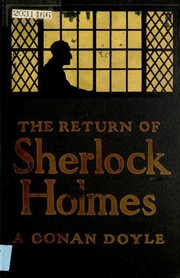
Holmes's resurrection after a decade-long hiatus — reading this after Memoirs makes the return feel earned and lets you compare the earlier and later styles directly.
![His Last Bow [8 stories]](https://covers.openlibrary.org/b/id/8243267-M.jpg)
A shorter, more varied collection spanning Holmes's twilight years, including the famous WWI spy story; it bridges the Victorian Holmes and the Edwardian one.
The final, darkest collection — some stories are narrated by Holmes himself rather than Watson — and is best read last in the canon to appreciate how far Doyle had drifted from his original formula.
Beyond Baker Street: The Non-Holmes Fiction
IntermediateDiscover Doyle as a versatile novelist beyond detective fiction, exploring adventure, science fiction, and historical romance to see the full scope of his literary ambition.
▸ Study plan for this stage
Pace: 8–10 weeks total: Week 1–3 — "The Lost World" (~25–30 pages/day); Week 4–7 — "The White Company" (~20–25 pages/day, slower pace to absorb medieval detail); Week 8–10 — "Micah Clarke" (~20–25 pages/day, with extra time for journaling and reflection exercises)
- Genre versatility: how Doyle moves fluidly between scientific adventure (The Lost World), medieval historical romance (The White Company), and 17th-century Puritan historical fiction (Micah Clarke), each demanding a different narrative register
- The Challenger archetype vs. the Holmes archetype: Professor Challenger's bombastic, physical, and combative personality as a deliberate contrast to the cerebral Holmes, revealing Doyle's range in protagonist design
- Doyle's use of the frame narrator: the journalist Edward Malone in The Lost World as an unreliable yet enthusiastic witness, and how first-person narration shapes reader trust and dramatic irony
- Historical authenticity and research: Doyle's meticulous reconstruction of 14th-century England in The White Company (the Hundred Years' War, chivalric codes, longbowmen) and 17th-century Monmouth Rebellion in Micah Clarke, and how he balances fact with fiction
- Adventure as moral education: how protagonists in all three books — Malone, Alleyne Edricson, and Micah Clarke — undergo coming-of-age journeys that test courage, loyalty, and conscience
- The Lost World as proto-science fiction: Doyle's engagement with Darwinian evolution, paleontology, and the 'hollow earth' tradition, anticipating later science fiction conventions
- Chivalry and masculine identity: The White Company's idealization of knightly virtue, martial brotherhood, and honor as a lens on late-Victorian anxieties about modern manhood
- Nonconformist faith and political conscience in Micah Clarke: how Doyle portrays Puritan religious conviction and the tension between personal belief and political rebellion
- How does Professor Challenger in The Lost World differ from Sherlock Holmes as a protagonist, and what does this contrast reveal about Doyle's broader conception of heroism and intellect?
- In The Lost World, how does Doyle use the journalist Malone as a frame narrator to manage reader skepticism about the fantastical premise, and where does this technique succeed or strain?
- How does The White Company use the Hundred Years' War setting to explore Victorian ideals of chivalry, duty, and masculine virtue — and does Doyle romanticize or critique these ideals?
- Compare the coming-of-age arcs of Alleyne Edricson (The White Company) and Micah Clarke: in what ways are their moral and physical trials similar, and how do their different historical contexts shape their choices?
- How does Doyle handle religious and political dissent in Micah Clarke, and does the novel present the Monmouth Rebellion sympathetically, critically, or ambivalently?
- Taken together, what do The Lost World, The White Company, and Micah Clarke reveal about Doyle's literary ambitions and the thematic preoccupations that run through his non-Holmes work?
- Character contrast journal: After finishing The Lost World, write a 400–600 word comparison of Professor Challenger and Sherlock Holmes — focus on temperament, method, and the type of 'problem' each is built to solve. Use specific scenes as evidence.
- Map the plateau: Draw or sketch a rough map of the Lost World plateau as Doyle describes it, annotating key locations (the pterodactyl lake, the ape-men's territory, the Indian village). This forces close reading of Doyle's descriptive geography and spatial storytelling.
- Research cross-check for The White Company: Choose one historical detail Doyle includes — a weapon, a battle, a social custom — and spend 30 minutes verifying it against a reference source. Write a short paragraph on where Doyle is accurate and where he takes creative license.
- Chivalric code analysis: Identify three moments in The White Company where a character must choose between personal desire and a code of honor. For each, write two sentences on what the character chooses and what Doyle seems to be saying about virtue.
- Micah Clarke's conscience diary: As you read Micah Clarke, keep a running log (one entry per reading session) written in Micah's voice — what moral dilemma did he face today, and how did his Puritan upbringing shape his response? Aim for 5–7 entries total.
- Synthesis essay: After completing all three books, write a 600–800 word essay responding to this prompt: 'Doyle's non-Holmes fiction is united by a single recurring hero — a young man tested by a world larger than himself.' Agree, disagree, or complicate this claim using evidence from all three novels.
Next up: By experiencing Doyle's full range as a novelist — his scientific imagination, his historical scholarship, and his moral storytelling — the reader is now equipped to return to the Holmes canon with a richer understanding of the thematic and stylistic choices Doyle made deliberately, setting the stage for a deeper critical analysis of the detective fiction itself.
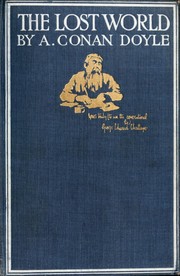
Doyle's most famous non-Holmes work introduces the irrepressible Professor Challenger on a dinosaur-filled plateau — a thrilling adventure that shows Doyle's gift for larger-than-life characters.
Doyle's beloved medieval historical novel, which he considered his finest work; it reveals the patriotic, chivalric side of his imagination that Holmes stories never required.

A rousing historical novel set during the Monmouth Rebellion, best read after The White Company as a companion piece showing Doyle's mastery of different periods of English history.
Discussion
Keep reading
Paths that share books, cover the same subject, or open a related topic.