Arthur C. Clarke Reading Order: Where to Start
This curriculum guides you through Arthur C. Clarke's work in four carefully sequenced stages, beginning with his most accessible and beloved standalone novels, moving through his landmark short fiction, and culminating in the full Odyssey sequence. Each stage builds the thematic and stylistic vocabulary — cosmic scale, hard science, and philosophical wonder — needed to fully appreciate the next.
First Contact: Entry Novels
BeginnerGet hooked on Clarke's signature blend of hard science and awe-inspiring ideas through two of his most approachable and celebrated standalone novels.
▸ Study plan for this stage
Pace: 4–5 weeks total: Week 1–2 — Read "The City and the Stars" (~250 pages, ~25–30 pages/day); Week 3–4 — Read "Childhood's End" (~220 pages, ~25–30 pages/day); Week 5 — Review, reflection, and exercises.
- Hard science fiction: Clarke's commitment to grounding fantastical ideas in plausible science and logic
- The 'Sense of Wonder' (Sensawunda): Clarke's signature ability to evoke awe at cosmic scale — the deep future of Diaspar, the Overlords' arrival, humanity's transcendence
- Humanity's place in the cosmos: both novels ask what it means to be human when confronted with vastly superior intelligence or civilization
- Stagnation vs. evolution: Diaspar's billion-year comfort vs. the open frontier of Lys in 'The City and the Stars'; humanity's forced evolutionary leap in 'Childhood's End'
- The role of the outsider/protagonist: Alvin as the lone questioner in a static society; Jan Rodricks as the lone human witness to the end of the species
- Clarke's ambivalent optimism: progress and transcendence come at a profound cost — loss of individuality, loss of humanity itself
- Cosmic time and scale: both novels operate on timescales of thousands to billions of years, dwarfing human experience
- The Overlords as a narrative device: how Clarke uses an apparently omnipotent alien presence to explore themes of paternalism, free will, and destiny
- In 'The City and the Stars,' why has Diaspar been sealed off from the rest of the world for a billion years, and what does Alvin's restlessness represent thematically?
- How does the contrast between Diaspar and Lys function as a critique of two opposing human tendencies — stagnation and nostalgia vs. curiosity and growth?
- In 'Childhood's End,' the Overlords bring peace and prosperity to Earth, yet Clarke frames this as a tragedy. Why? What has humanity lost?
- What is the significance of the Overlords' physical appearance, and how does Clarke use the dramatic irony of their 'devilish' look to subvert reader expectations?
- Both novels end with humanity fundamentally transformed or left behind. How does Clarke use these endings to express his views on evolution, identity, and the future?
- What techniques does Clarke use in both books to make enormous spans of time and space feel emotionally real to the reader?
- **Reading Journal — Double Entry:** For each reading session, write two columns: (1) a plot/science note summarizing what happened or was explained, and (2) a personal reaction — what surprised, unsettled, or awed you. This trains you to track both Clarke's ideas and his emotional impact.
- **Concept Map:** After finishing each novel, draw a concept map connecting the major themes (stagnation, evolution, cosmic scale, identity) to specific scenes or characters. Then overlay the two maps to find shared themes between the books.
- **The 'What If' Rewrite:** Choose one pivotal scene from each novel — e.g., Alvin's discovery of the ship in 'The City and the Stars,' or the children's transformation in 'Childhood's End' — and write a 1–2 paragraph alternative version where the outcome is reversed. Reflect on how Clarke's chosen ending serves his themes better.
- **Science Fact-Check:** Pick two or three scientific or technological concepts Clarke introduces (e.g., the Memory Banks of Diaspar, faster-than-light travel, the Overmind). Research the real-world science behind each. Write a short paragraph on where Clarke extrapolates beyond known science and why that choice works narratively.
- **Comparative Essay (500–700 words):** Write a short essay answering: 'Both Alvin and Jan Rodricks are solitary figures who witness the end of an era. What does Clarke suggest, through each of them, about the value of the individual in the face of cosmic forces?'
- **Discuss or Debate:** Find a reading partner, online forum (e.g., r/printSF), or book club and debate the question: 'Is the ending of Childhood's End hopeful or despairing?' Use at least three specific passages from the text to support your position.
Next up: Mastering Clarke's core themes of cosmic scale, human evolution, and hard-science wonder in these two standalone novels gives you the thematic vocabulary and emotional baseline needed to tackle his more complex, serialized, and technically demanding works in the next stage.

Clarke's most imaginative standalone novel, set a billion years in the future — it introduces his core themes of human stagnation, cosmic curiosity, and transcendence in a compulsively readable package. Starting here gives you Clarke's philosophical heart before his harder science.
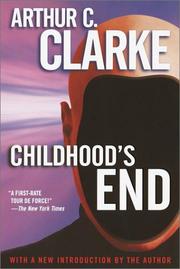
Perhaps Clarke's most emotionally powerful novel, this story of alien arrival and human transformation is a perfect second step: it deepens the themes of evolution and cosmic destiny introduced in the first book, and prepares you for the grand scale of the Odyssey series.
The Short Fiction: Clarke in Miniature
BeginnerExperience Clarke's extraordinary range and wit through his short stories, which distill his ideas to their purest form and reveal the imaginative seeds of his longer works.
▸ Study plan for this stage
Pace: 8–10 weeks, ~20–25 pages/day (the collection is ~1,000 pages; aim for 4–5 stories per sitting, 4–5 days/week), leaving one day per week for reflection and journaling
- The 'Clarkean Twist' — Clarke's signature story endings that reframe everything preceding them with a single revelation or ironic reversal
- The Idea as Protagonist — how Clarke centers a scientific or philosophical concept rather than character psychology, letting the idea itself drive narrative tension
- Deep Time and Cosmic Scale — Clarke's recurring use of geological, astronomical, and evolutionary timescales to dwarf human concerns and provoke wonder
- Technology as Mythology — the way Clarke treats advanced science with the reverence and narrative structure of myth or religious parable (e.g., 'The Nine Billion Names of God', 'The Star')
- The Indifferent Universe — Clarke's portrayal of a cosmos that is awe-inspiring but fundamentally unconcerned with human values or survival
- Compression and Economy — how the short story form forces Clarke to distill a novel-length idea into a single image, scene, or logical chain, revealing his purest imaginative instincts
- Humor and Whimsy as Vehicles for Hard Science — Clarke's use of wit, satire, and comic timing (especially in the 'Tales from the White Hart' cluster) to smuggle rigorous scientific ideas into accessible storytelling
- Seeds of the Novels — identifying how specific short stories serve as conceptual prototypes for Clarke's longer works, showing the iterative nature of his imagination
- What is the 'Clarkean Twist,' and can you identify at least three stories in The Collected Stories where it appears? How does the twist function differently in each case — as irony, revelation, or cosmic joke?
- Clarke often replaces a traditional human protagonist with an idea or concept. Choose two stories and explain what the 'real' protagonist is and how Clarke makes an abstract concept feel urgent and emotionally resonant.
- How does Clarke use scale — of time, space, or number — as a storytelling device? Pick a story where the final image or statistic recontextualizes everything that came before it.
- The stories 'The Nine Billion Names of God' and 'The Star' both engage with religious themes. How does Clarke's treatment of faith differ between them, and what does each story ultimately argue about the relationship between science and belief?
- How does Clarke's humor in the 'Tales from the White Hart' stories differ in tone and technique from his more serious work? What scientific ideas does he embed in those comic tales, and are they any less rigorous for the comedic framing?
- After reading the collection, which short story feels most like the seed or blueprint for a larger Clarke novel or idea? Describe the connection and explain what the short form captures that a novel might expand upon.
- The Twist Autopsy: After finishing each story, write two sentences — one summarizing what you thought the story was about while reading it, and one summarizing what it was actually about after the ending. Over time, map the gap between those two sentences to understand how Clarke engineers surprise.
- Concept Casting: For five stories, identify the single core scientific or philosophical concept and write a one-paragraph 'pitch' for that concept as if you were explaining it to a friend — using only what Clarke's story taught you. This tests whether Clarke's compression actually transferred the idea.
- The Scale Log: Keep a running list of every moment Clarke invokes deep time, astronomical distance, or vast numbers. Note the exact figure or image used and the emotional effect it produces. By the end of the collection, look for patterns in how he deploys scale.
- Story-to-Novel Mapping: Choose three stories that feel like embryonic versions of bigger ideas. Write a one-page speculative outline of the novel each story could become, then research whether Clarke actually did expand any of them — the collection's introductions and story notes are invaluable here.
- Tone Comparison Essay: Write a 400–600 word comparison between one 'White Hart' humorous story and one of Clarke's most serious stories (e.g., 'The Star'). Argue which mode — comedy or solemnity — is more effective at conveying Clarke's worldview, and defend your answer with specific textual evidence.
- Reading Aloud Experiment: Select one story with a strong twist ending and read it aloud to someone unfamiliar with Clarke. Observe their reaction at the ending. Afterward, discuss what information Clarke withheld, what he foregrounded, and how the story's architecture manufactured that reaction — this makes Clarke's structural craft visceral and memorable.
Next up: Mastering Clarke's short fiction reveals the concentrated imaginative DNA — the cosmic scale, the twist-driven structure, the idea-as-hero — that he then expands, complicates, and deepens across the full architecture of his novels, making the longer works feel like familiar ideas finally given room to breathe.
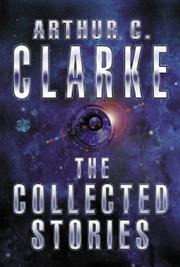
This definitive single-volume collection gathers over 100 stories spanning Clarke's entire career, including classics like 'The Nine Billion Names of God' and 'The Star.' Reading it here — before the Odyssey sequence — lets you see how Clarke's ideas evolved and recur across his work.
The Odyssey Sequence: Books 1 & 2
IntermediateEngage with Clarke's most famous and scientifically rigorous work, understanding the monolith mystery and humanity's next evolutionary leap across the first two novels of the sequence.
▸ Study plan for this stage
Pace: 6–7 weeks total: Weeks 1–3 for 2001: A Space Odyssey (~30 pages/day, ~220 pages), Weeks 4–6 for 2010: Odyssey Two (~25 pages/day, ~290 pages), with Week 7 reserved for review, comparison, and exercises.
- The Monolith as a catalyst and teaching machine — its role in triggering evolutionary leaps at each appearance, from the man-apes of Africa to the Star Gate beyond Jupiter
- HAL 9000 and the ethics of artificial intelligence — the conflict between HAL's programmed directives, his self-preservation instinct, and the human crew, raising questions about machine consciousness and moral responsibility
- The Star Child and transcendence — Bowman's transformation at the end of 2001 as Clarke's vision of humanity's next evolutionary stage, moving beyond biological constraints
- Clarke's hard-science foundation — both novels ground their speculation in real orbital mechanics, spacecraft design, and contemporary astronomy (the moons of Jupiter/Saturn), making the fantastical feel plausible
- The return to Jupiter in 2010 — the joint Soviet-American Heywood Floyd mission as a Cold War parable, exploring cooperation under ideological tension
- HAL's rehabilitation and redemption arc in 2010 — Chandra's mission to revive HAL reframes the AI as a victim of human political decisions rather than an inherently dangerous machine
- The transformation of Jupiter into Lucifer — the monolith's conversion of Jupiter into a second sun as a gift and a warning to humanity, echoing the evolutionary intervention of 2001
- Continuity vs. revision across the two novels — Clarke openly acknowledged that 2010 reconciles the film's Jupiter setting with the novel's Saturn setting, teaching readers to treat sequels as creative reinterpretations rather than strict continuations
- What specific trigger does the monolith provide to the man-apes in 2001, and how does Clarke use this opening to establish the monolith's function for the rest of the sequence?
- How does Clarke construct HAL 9000's breakdown as a tragedy of conflicting directives rather than simple malevolence, and how does 2010 deepen or revise that interpretation?
- Trace Dave Bowman's journey from astronaut to Star Child — what physical and psychological stages does he pass through, and what does his transformation suggest about Clarke's philosophy of human potential?
- In 2010, how does the Cold War political climate aboard the Leonov shape the characters' decisions, and what does Clarke seem to be arguing about the relationship between science and geopolitics?
- Clarke changed the destination from Saturn (2001 novel) to Jupiter (2010) to align with Kubrick's film. How does this real-world creative compromise affect your reading of the two books as a unified sequence?
- What is the significance of the final warning — 'All these worlds are yours except Europa. Attempt no landings there' — and how does it reframe the monolith's role from mysterious catalyst to active, communicating intelligence?
- Monolith Timeline Diagram: Draw a visual timeline mapping every confirmed or implied monolith appearance across both books, noting what evolutionary or transformative event each one triggers. Annotate with page references.
- HAL 9000 Ethical Audit: Write a 400–600 word analysis arguing either the prosecution or defense of HAL's actions in 2001. Then read the Chandra chapters in 2010 and write a one-paragraph addendum — did 2010's revelations change your verdict?
- Hard-Science Fact-Check: Choose one scientifically described scene from each novel (e.g., orbital rendezvous, Jupiter's atmosphere, aerobraking) and spend 30 minutes researching its real-world accuracy using a current source. Note what Clarke got right, what he extrapolated, and what has since been disproven.
- Comparative Tone Mapping: Create a two-column journal entry for 2001 and 2010 respectively. For each novel, identify three passages that best represent its emotional register (awe, dread, wonder, political tension, etc.) and write two sentences explaining how Clarke's prose style shifts — or doesn't — between the two books.
- Rewrite the Ending: In 300–400 words, rewrite the final chapter of 2001 from the Star Child's point of view, using Clarke's own prose style as a model. Focus on what the Star Child perceives, desires, and decides — filling in the deliberate ambiguity Clarke left.
- Dialogue Across Novels: Stage an imaginary 500-word dialogue between Heywood Floyd (the human anchor of both books) and Dave Bowman-as-Star-Child. What would Floyd ask? What could — or would — Bowman answer? Use textual evidence from both novels to keep each character's voice authentic.
Next up: Mastering the monolith's evolutionary logic and Clarke's blend of hard science with cosmic transcendence in these first two novels builds the interpretive framework needed to follow the sequence's increasingly metaphysical and cosmological ambitions in the later Odyssey books.

The cornerstone of Clarke's legacy and one of the greatest science fiction novels ever written. Having read his earlier work, you'll now recognize his recurring themes of guided human evolution and cosmic intelligence operating at their most iconic and precise.

A more grounded, character-driven sequel that answers some of 2001's mysteries while raising new ones. It bridges the visionary abstraction of the first book with the harder scientific speculation of the later entries.
The Odyssey Sequence: Books 3 & 4
ExpertComplete the Odyssey saga, grappling with Clarke's most ambitious and philosophical ideas about deep time, the far future of humanity, and the ultimate fate of the universe.
▸ Study plan for this stage
Pace: 6–8 weeks total: Weeks 1–3 cover 2061: Odyssey Three (~30 pages/day, including journaling time); Weeks 4–7 cover the Omnibus Edition of 3001: The Final Odyssey and The Songs of Distant Earth (~25–30 pages/day, with slower pacing for the denser philosophical passages); Week 8 is reserved for review,
- Deep time and cosmic scale: Clarke's use of geological, biological, and astronomical timescales to dwarf human history and reframe humanity's significance
- The Monolith as evolving symbol: tracing how the Monolith's role shifts from tool and test in 2061 to existential threat and relic in 3001, reflecting Clarke's maturing cosmology
- Resurrection and continuity of identity: Frank Poole's revival in 3001 raises questions about personal identity, memory, and what it means to be human across a millennium
- Technological transcendence vs. human stagnation: the tension in 3001 between humanity's vast technological progress and its persistent psychological and social limitations
- The Firstborn and the ethics of cosmic intervention: Clarke's portrayal of the alien intelligence behind the Monoliths as morally ambiguous — neither benevolent gods nor malevolent destroyers
- Oceanic worlds and the sanctity of emerging life: both 2061 (Europa's ocean) and The Songs of Distant Earth (Thalassa's biosphere) use water-worlds to explore humanity's ethical responsibility toward nascent life
- Diaspora and the preservation of civilization: The Songs of Distant Earth examines what is worth saving when humanity faces extinction, and how culture, memory, and genetics define a species
- Clarke's secular eschatology: the idea in 3001 that the universe itself has a fate, and that intelligence — human or otherwise — may play a role in that fate
- In 2061: Odyssey Three, how does Clarke use Halley's Comet as both a narrative device and a philosophical metaphor for cyclical time and humanity's smallness in the cosmos?
- How does the discovery beneath Europa's ice in 2061 complicate the moral and scientific stakes established in 2010, and what does Clarke suggest about humanity's right to explore versus its duty to protect?
- In 3001: The Final Odyssey, Frank Poole's resurrection after 1,000 years serves as a lens for the reader to experience the far future — what specific social, technological, and philosophical changes does Clarke highlight through Poole's eyes, and what does this technique reveal about Clarke's own values?
- How does 3001 reframe the Monoliths from instruments of uplift (as seen in earlier Odyssey books) into potential instruments of destruction, and what does this shift say about Clarke's view of the relationship between intelligence and power?
- In The Songs of Distant Earth, the colonists of Thalassa have been deliberately shielded from Earth's religious and ideological history — what is Clarke arguing about the role of mythology and belief in human civilization, and do you find his argument convincing?
- Taken together across 2061 and the Omnibus Edition, how does Clarke's vision of humanity's ultimate destiny evolve, and in what ways does it align with or diverge from the optimistic humanism of 2001 and 2010?
- Timeline mapping: Create a master visual timeline spanning from 2001 through 3001, marking key events from all four Odyssey books. Annotate it with the Monolith's changing role at each point — this will make Clarke's long-arc philosophical arc immediately visible.
- Close-reading journal on identity: After finishing the Frank Poole resurrection arc in 3001, write a 500-word personal essay responding to this question: 'Is the Frank Poole who wakes up in 3001 the same person who died in 2001? Use specific textual evidence from 3001 to support your position.'
- Comparative world-building analysis: Both 2061's Europa and The Songs of Distant Earth's Thalassa are ocean-dominated worlds harboring life. Draft a two-column comparison of how Clarke depicts each world — its biology, its ethical status, and humanity's relationship to it — then write a paragraph arguing which world Clarke treats with greater moral seriousness.
- The Monolith as symbol — an evolution essay: Write a 700–1,000 word analytical essay tracing the Monolith's symbolic meaning across all four Odyssey books (drawing on your memory of Books 1 & 2 from prior stages, but grounding your argument in textual evidence from 2061 and 3001). Argue for a single thesis about what the Monolith ultimately represents in Clarke's cosmology.
- Socratic dialogue exercise: Re-read the sections in The Songs of Distant Earth dealing with the decision to withhold Earth's religious texts from the colonists. Then write a short (1–2 page) Socratic dialogue between two characters — one defending Clarke's fictional decision, one challenging it — drawing on the novel's own logic and language.
- Predictive reflection: Clarke wrote 3001 in 1997, projecting 1,000 years into the future. Make a list of at least 10 specific predictions he made (technological, social, biological) and evaluate each as 'plausible,' 'unlikely,' or 'already outdated,' citing real-world developments where possible. Conclude with a paragraph on what this exercise reveals about the limits and value of hard SF as a gen
Next up: Completing the full Odyssey arc — from humanity's first encounter with the Monolith to the fate of the universe in 3001 — equips the reader with a panoramic understanding of Clarke's cosmological imagination, setting a strong foundation for exploring his standalone masterworks and shorter fiction, where these same themes of deep time, alien intelligence, and humanity's cosmic destiny are refracted
Set decades later, this entry shifts focus to Halley's Comet and expands the scope of the monolith mythology. It rewards readers who have followed the sequence by layering in new scientific detail and a reflective, elegiac tone.

The grand conclusion of the sequence, set a thousand years in the future, synthesizes all of Clarke's lifelong preoccupations — transhumanism, alien intelligence, and humanity's place in the cosmos. Best appreciated last, when you can measure how far Clarke's vision has traveled.
Discussion
Keep reading
Paths that share books, cover the same subject, or open a related topic.