Sherlock Holmes Reading Order: Where to Start
Arthur Conan Doyle's complete Sherlock Holmes canon consists of four novels and five short-story collections, published between 1887 and 1927. This curriculum reads them in a carefully chosen order — starting with the two most accessible novels to establish Holmes and Watson, then moving through the short-story collections in rough publication order, and finishing with the two later, slightly more demanding novels — so each stage builds familiarity with Doyle's style, the Baker Street world, and Holmes's methods before the next.
Meet Holmes & Watson: The First Novels
BeginnerGet introduced to Sherlock Holmes, Dr. Watson, and the core detective formula through the two most gripping and accessible full-length novels in the canon.
▸ Study plan for this stage
Pace: 4–5 weeks total: Week 1–2 — Read "A Study in Scarlet" (~90 pages, ~20–25 pages/day, including the Utah flashback section); Week 3–4 — Read "The Sign of Four" (~120 pages, ~25–30 pages/day); Week 5 — Review, reflection, and exercises.
- The Holmes–Watson dynamic: Watson as narrator and audience surrogate, Holmes as the brilliant but eccentric detective — established in their very first meeting in 'A Study in Scarlet'
- The 'science of deduction': Holmes's method of observation-to-inference, showcased in his cold readings of Watson and Jefferson Hope in 'A Study in Scarlet'
- The two-part novel structure: Conan Doyle's technique of interrupting the mystery with a dramatic backstory (the Utah chapters in 'A Study in Scarlet', the Agra treasure history in 'The Sign of Four')
- 221B Baker Street as a character: the shared lodgings as a stage that defines Holmes's habits, eccentricities, and working style
- The role of the client interview: how Holmes gathers data before ever leaving Baker Street, seen with Mary Morstan's visit in 'The Sign of Four'
- Moral complexity in villainy: Jefferson Hope's revenge-driven motive in 'A Study in Scarlet' and Jonathan Small's loyalty-and-greed in 'The Sign of Four' make the antagonists sympathetic, not simply evil
- Watson's evolution: from passive observer in 'A Study in Scarlet' to active participant and romantic lead in 'The Sign of Four'
- The limits of official police: Lestrade and Gregson's blundering in 'A Study in Scarlet' and Jones's over-confidence in 'The Sign of Four' establish Holmes as superior to institutional detection
- How do Holmes and Watson first meet, and what does Holmes's opening deduction about Watson immediately tell us about his method?
- In 'A Study in Scarlet', what is Jefferson Hope's motive for murder, and how does the Utah flashback reframe our judgment of him as a villain?
- How does Holmes's 'science of deduction' differ from lucky guessing — what specific steps does he demonstrate when reading a person or a crime scene?
- What is the Agra treasure, and how does its history (revealed in Jonathan Small's confession in 'The Sign of Four') explain every major event in that novel's plot?
- How does Watson's relationship with Mary Morstan in 'The Sign of Four' change his role in the story compared to his role in 'A Study in Scarlet'?
- What do the portrayals of Lestrade, Gregson, and Athelney Jones reveal about Conan Doyle's attitude toward official police institutions?
- **Deduction journal**: Each day while reading, pick one Holmes observation-to-conclusion moment (e.g., his reading of Watson's tan and posture, or the mud on a boot) and write it out as a logical syllogism — Observation → Inference → Conclusion. Aim for at least 6 entries across both books.
- **Character map**: Draw a relationship diagram for each novel separately. Include every named character, their connection to the crime, and a one-phrase motive label. Compare the two diagrams — note what structural roles recur (client, villain, police foil, victim).
- **Villain empathy essay**: After finishing 'A Study in Scarlet', write one paragraph from Jefferson Hope's point of view justifying his actions. After finishing 'The Sign of Four', do the same for Jonathan Small. Then write a short reflection: does Conan Doyle want us to sympathize with them? Why or why not?
- **Watson vs. Holmes narration swap**: Choose one scene where Watson describes Holmes solving something (e.g., the Lauriston Gardens crime scene, or the chase on the Thames). Rewrite the same scene in Holmes's first-person voice. What changes? What is lost or gained?
- **Plot-structure diagram**: Map both novels onto a simple two-act diagram — Act 1: the present-day mystery; Act 2: the backstory flashback. Identify the exact chapter where Conan Doyle 'cuts away' to the past in each book, and write two sentences on how the flashback changes your understanding of the crime.
- **Baker Street inventory**: Skim back through both novels and list every detail given about 221B Baker Street and Holmes's habits (the chemistry experiments, the violin, the tobacco, the indexes, etc.). Write a short paragraph describing what these details collectively tell us about Holmes's character before he ever solves a single crime.
Next up: Mastering the novel-length formula — Holmes's method, Watson's narrative voice, and the backstory structure — gives you the essential toolkit to appreciate how Conan Doyle distilled and sharpened these same elements into the short-story format, where every word must work harder and the detective formula becomes even more concentrated.
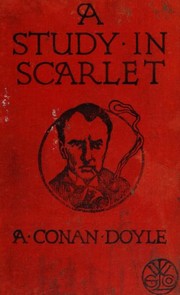
The very first Holmes story ever published — it introduces Holmes and Watson meeting for the first time and lays out Holmes's deductive method from scratch. The perfect starting point.
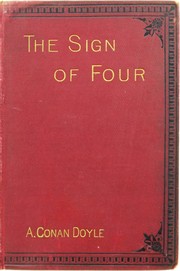
The second novel deepens the Holmes–Watson relationship (Watson even meets his future wife here) and delivers a richer, more confident adventure. Reading it second lets you see Doyle's rapid growth as a storyteller.
The Short Stories Begin: Adventures & Memoirs
BeginnerDiscover the short-story format that made Holmes a global phenomenon, meeting iconic characters and cases across two back-to-back collections published in The Strand Magazine.
▸ Study plan for this stage
Pace: 6–8 weeks total: Week 1–3 — Read all 12 stories in The Adventures of Sherlock Holmes (~2 stories per sitting, 3 sittings per week); Week 4–7 — Read the Memoirs of Sherlock Holmes section within the Oxford Sherlock Holmes omnibus (~2 stories per sitting, focusing on the Memoirs); Week 8 — Review, com
- The short-story format as Holmes's natural home: how Doyle structured each tale with a client visit, investigation, and revelation to satisfy readers in a single sitting
- The Watson narrative lens: understanding how Dr. Watson's first-person narration shapes reader perception, controls information, and builds suspense
- Holmes's deductive method: close observation of physical details (tan lines, posture, calluses, clothing) leading to confident inference — distinguishing 'deduction' from 'induction' as Doyle uses the terms
- The Baker Street world: 221B as a domestic anchor, the role of Mrs. Hudson, the Baker Street Irregulars, and Lestrade as recurring supporting cast
- Irene Adler and 'the Woman': how 'A Scandal in Bohemia' (Adventures) establishes the rare figure who outmaneuvers Holmes and what that reveals about his character
- Moriarty as the 'Napoleon of Crime': introduced in the Memoirs, how Doyle constructs Holmes's intellectual equal and uses him to attempt a permanent end to the series in 'The Final Problem'
- Victorian social context embedded in the cases: class, empire, gender roles, and the anxiety of modernity reflected in the crimes Holmes solves
- The story arc across both collections: tracking Holmes's evolution from eccentric consulting detective (Adventures) to celebrated legend facing mortality (Memoirs/Final Problem)
- In 'A Scandal in Bohemia' (Adventures), why does Holmes keep the photograph at the end, and what does his reaction to Irene Adler tell us about his attitude toward women and emotion?
- Choose any three stories from the Adventures and identify the single key physical clue Holmes uses in each — how does Doyle make sure the reader has access to that clue before Holmes explains it?
- How does Watson's role shift across the Adventures and into the Memoirs — is he purely a narrator, a foil, or an active partner, and can you cite specific stories to support your answer?
- What is the significance of 'The Final Problem' (Memoirs) as a conclusion to the Memoirs collection — why did Doyle want to kill Holmes, and how does the story reflect the pressures of serial publication?
- How does Doyle use the Oxford Sherlock Holmes omnibus edition's apparatus (introductions, notes) to place the Memoirs stories in their original Strand Magazine context, and why does that historical framing matter for a beginner reader?
- Across both collections, which recurring character (Lestrade, Mycroft, Irene Adler, Moriarty) do you find most essential to understanding Holmes himself, and why?
- Story map exercise: After each story in the Adventures, fill in a simple three-column table — (1) the client's problem as stated, (2) the real problem Holmes uncovers, (3) the single most important clue. After 12 stories, look for patterns in Doyle's plotting.
- Imitate the deduction: Pick any person you see daily (a classmate, a commuter). Write a one-paragraph 'Holmes-style' deduction about their recent activities based only on observable physical details, then reflect on where your reasoning was inference vs. assumption.
- Compare the opening paragraphs of the first story in the Adventures ('A Scandal in Bohemia') and the first story in the Memoirs ('Silver Blaze') — write a short paragraph on how Doyle sets tone, stakes, and character differently across the two collections.
- Moriarty close-read: Re-read Holmes's description of Moriarty in 'The Final Problem' (Memoirs). Highlight every word or phrase Doyle uses to mirror Moriarty to Holmes. Write a one-page analysis of why a villain who is a reflection of the hero is more threatening than one who is simply evil.
- Using the Oxford Sherlock Holmes edition's editorial notes and introduction for the Memoirs, identify two pieces of historical or biographical context the editor provides. Write a brief journal entry on how that context changed (or didn't change) your reading of a specific story.
- Rank and reflect: After finishing both collections, rank your top five stories and write two sentences per story explaining your choice. Share or discuss with a reading partner if possible — the goal is to articulate *why* certain narrative structures or mysteries feel more satisfying than others.
Next up: Completing the Adventures and Memoirs gives you a firm command of Holmes's short-story rhythm and his apparent death at Reichenbach, which makes the next stage — tackling the novels and Holmes's resurrection — feel like a natural, high-stakes continuation of the world you've already mapped.
![The Adventures of Sherlock Holmes [12 stories]](https://covers.openlibrary.org/b/id/6717853-M.jpg)
The first collection of twelve short stories — including 'A Scandal in Bohemia' and 'The Red-Headed League' — and the work that turned Holmes into a cultural icon. The short format is immediately addictive.

The direct sequel collection, culminating in 'The Final Problem' where Holmes faces Moriarty. Reading it right after Adventures maintains the narrative momentum and emotional payoff.
The Great Novel & The Return
IntermediateTackle the most celebrated Holmes novel of all time, then witness Holmes's dramatic return to active duty in the collection that followed his 'death.'
▸ Study plan for this stage
Pace: 6–8 weeks total: Weeks 1–3 for The Hound of the Baskervilles (~30 pages/day, including re-reading key chapters); Weeks 4–8 for The Return of Sherlock Holmes (~2–3 stories per sitting, 4–5 sittings per week), pausing after each story to reflect before moving on.
- Gothic atmosphere and setting: How Doyle uses Dartmoor and Baskerville Hall to generate dread and suspense in a way distinct from the London-based stories
- Holmes's absence as a narrative device: In Hound, Holmes operates in the shadows while Watson takes center stage — examining how point-of-view and information-withholding shape tension
- Watson as unreliable narrator and active detective: Watson's letters and journal in Hound elevate him beyond sidekick, raising questions about what he observes versus what he understands
- The mechanics of the 'impossible' mystery: How Doyle constructs a legend-based crime to seem supernatural, then methodically dismantles it with rational explanation
- The Reichenbach retcon and reader trust: The Return demands that readers accept Holmes's survival via 'Baritsu' and Moriarty's fall — analyzing how Doyle manages (or strains) credibility
- Character evolution across a gap: Comparing Holmes's demeanor, methods, and relationships in The Return to his pre-Reichenbach self, noting what has changed and what hasn't
- Story structure variety in The Return: Identifying how individual cases (e.g., 'The Adventure of the Empty House,' 'The Adventure of the Dancing Men,' 'The Adventure of the Six Napoleons') each deploy different mystery sub-genres (cipher, locked-room, revenge, etc.)
- Themes of loyalty and resurrection: How Watson's grief and reunion with Holmes in The Return mirror the reader's own emotional investment in the character
- In The Hound of the Baskervilles, why does Holmes send Watson to Dartmoor alone, and how does this choice affect both the plot's suspense and Watson's characterization?
- How does Doyle use the Baskerville legend itself — the supernatural hound — as a red herring, and at what point in the novel does the rational explanation begin to overtake the gothic one?
- In 'The Adventure of the Empty House,' how does Doyle justify Holmes's three-year disappearance, and do you find the explanation convincing? What does it reveal about Holmes's priorities?
- Across the stories in The Return, how does Holmes's relationship with Watson appear to have shifted (if at all) after the trauma of the apparent death at Reichenbach Falls?
- Choose one story from The Return that uses a cipher or coded message (e.g., 'The Dancing Men'). How does the decoding process reflect Holmes's broader deductive method as seen throughout both books?
- How do The Hound of the Baskervilles and The Return of Sherlock Holmes together redefine what a 'Sherlock Holmes story' can be — in terms of length, setting, tone, and narrative structure?
- Atmospheric mapping: Draw or diagram Dartmoor and Baskerville Hall as described in Hound, annotating key scenes to each location. Then write a one-paragraph reflection on how geography drives plot in the novel.
- Watson's perspective journal: After finishing Hound, write 2–3 journal entries from Watson's point of view during the chapters when he is alone on the moor — filling in his private doubts and fears that the text only hints at.
- Crack the Dancing Men cipher: Using the cipher key revealed in 'The Adventure of the Dancing Men,' encode a short original message (3–5 sentences) and challenge a friend or fellow reader to decode it. Reflect on how Holmes cracked it with far less information.
- Comparative story ranking: After finishing The Return, rank all 13 stories from most to least satisfying, writing one sentence of justification for each ranking. Identify which mystery sub-genre (revenge, cipher, imposture, theft, etc.) each story belongs to.
- The 'resurrection' pitch: Imagine you are Doyle's editor in 1903. Write a one-page editorial memo either approving or pushing back on the plan to bring Holmes back in 'The Empty House,' citing specific narrative and commercial reasons.
- Before/After character profile: Create a two-column character profile for Holmes — one column drawn exclusively from evidence in Hound, the other from The Return. Note at least five specific traits, habits, or attitudes and assess whether the 'gap years' changed him.
Next up: By mastering Holmes at his gothic and structural peak in Hound and witnessing his reinvention in The Return, the reader is now equipped to engage with the later, more varied and sometimes darker collections — where Doyle continues to test the formula's limits and Holmes's legend grows more complex.
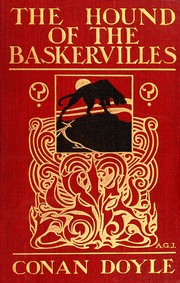
Widely considered the greatest Sherlock Holmes story ever written, this gothic thriller is best read after the Memoirs so the reader already feels the weight of Holmes's absence — making his presence here all the more satisfying.
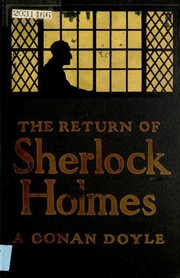
Thirteen stories marking Holmes's triumphant comeback after Reichenbach. Having read the Memoirs and Hound, the reader fully appreciates the joy and relief Doyle's audience felt at Holmes's return.
Later Adventures: His Last Bow & The Case-Book
IntermediateExperience the later, more varied and sometimes experimental short stories, including Holmes in his twilight years, rounding out the full short-story canon.
▸ Study plan for this stage
Pace: 6–7 weeks total: Week 1–2 — His Last Bow (8 stories, ~15–20 pages each; read 1–2 stories per sitting, ~4–5 sittings per week); Week 3–6 — The Case-Book of Sherlock Holmes (12 stories at a similar pace, ~2 stories per week); Week 7 — review, reflection, and exercises. Aim for ~25–35 pages per day on
- Tonal and stylistic evolution: how Doyle's writing voice shifts in these later collections compared to earlier Holmes stories, becoming darker, stranger, and more experimental
- Holmes in twilight: the characterization of an aging, mellowing Holmes — especially in 'His Last Bow' (the title story) where he serves British Intelligence on the eve of WWI — and what this reveals about heroism and duty
- Narrative perspective experimentation: stories like 'The Adventure of the Blanched Soldier' and 'The Adventure of the Lion's Mane' (both in The Case-Book) are narrated by Holmes himself, breaking the Watson frame entirely
- Darker and more gothic themes: The Case-Book stories frequently venture into horror, the macabre, and moral ambiguity (e.g., 'The Adventure of the Creeping Man,' 'The Adventure of Shoscombe Old Place')
- The spy/thriller genre blend: 'His Last Bow' (the story) and several others show Doyle grafting espionage and patriotic adventure onto the detective formula
- Watson's evolving role: across both collections Watson is sometimes peripheral, sometimes absent as narrator, signaling Doyle's restlessness with the established formula
- Canon closure and legacy: The Case-Book was Doyle's deliberate farewell to Holmes; recognizing how individual stories function as both standalone mysteries and as part of a larger farewell arc
- Uneven quality and critical reception: developing a reader's critical eye by identifying which stories are considered weaker or stronger within the canon and articulating why
- How does the title story 'His Last Bow' reframe Holmes as a patriotic national figure rather than a purely private detective, and what does this shift suggest about Doyle's intentions for the character at that point in history?
- In the two Case-Book stories narrated by Holmes himself ('The Adventure of the Blanched Soldier' and 'The Adventure of the Lion's Mane'), how does Holmes's self-narration differ in tone and reliability from Watson's narration, and what is gained or lost?
- The Case-Book is widely considered the most tonally inconsistent of the four short-story collections. Identify two stories you found strongest and two you found weakest, and defend your assessments with specific textual evidence.
- How do gothic or horror elements function in stories like 'The Adventure of the Creeping Man' or 'The Adventure of the Sussex Vampire'? Do these elements strengthen or undermine the detective story format?
- Doyle wrote a preface to The Case-Book bidding farewell to Holmes. What does this framing reveal about his relationship with the character, and how does it color your reading of the stories themselves?
- Across both His Last Bow and The Case-Book, how has Holmes's personality visibly aged or changed from the earlier collections, and which specific moments or details best illustrate this?
- Story-by-story log: Keep a running journal entry for each of the 20 stories. For each, note: the central mystery, the key deduction, the narrative perspective, the dominant tone (comic, dark, gothic, thriller, etc.), and one sentence of personal verdict. This builds the critical vocabulary needed to discuss the canon as a whole.
- Narration swap exercise: Choose one Watson-narrated story from His Last Bow and rewrite the opening two paragraphs as if Holmes were narrating it himself (as he does in the two Case-Book stories). Then reflect: what changes? What does Holmes notice or omit that Watson would not?
- Comparative timeline: Create a simple visual timeline placing each story's internal date (where determinable) against real-world historical events (e.g., WWI for 'His Last Bow'). Annotate how historical context shapes the story's stakes or atmosphere.
- Critical ranking exercise: After finishing The Case-Book, rank all 12 of its stories from strongest to weakest in your own judgment. Write 2–3 sentences justifying your top and bottom choices, then compare your ranking to published critical opinions (e.g., the Baker Street Irregulars' polls or Leslie Klinger's annotations) and note where you agree or disagree.
- Genre-blending analysis: Select 'His Last Bow' (the story) and one Case-Book story with gothic elements (e.g., 'The Adventure of the Creeping Man'). Write a one-page analysis for each identifying the non-detective genre conventions Doyle imports and evaluating how successfully they blend with the mystery formula.
- Farewell letter from Doyle: After reading Doyle's preface to The Case-Book, write a one-paragraph response 'from Holmes to Doyle' in Holmes's voice, reacting to being retired. This creative exercise forces close attention to Holmes's characterization across both collections.
Next up: Having now read all four short-story collections in full, the reader has a panoramic view of the entire Holmes short-story canon and is equipped to move into longer-form study — whether that means tackling the four novels (A Study in Scarlet, The Sign of the Four, The Hound of the Baskervilles, The Valley of Fear) with fresh comparative eyes, or engaging with Holmes's literary and cultural legacy
![His Last Bow [8 stories]](https://covers.openlibrary.org/b/id/8243267-M.jpg)
A shorter collection with a wider range of tones, including the moving WWI spy story that gives the book its title. Best read after Return so the reader has a mature feel for Holmes before seeing him age.
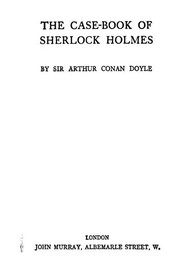
The final collection and the end of the canon — Doyle experiments with different narrators and darker themes. Saving it for last means the reader experiences the full arc of Holmes's career before this bittersweet farewell.
The Final Novel: Valley of Fear
IntermediateComplete the four-novel canon with the last and most structurally ambitious Holmes novel, now fully equipped to appreciate its dual-narrative construction and its place in the larger Holmes mythology.
▸ Study plan for this stage
Pace: 2–3 weeks, ~20–25 pages/day; Part One ("The Tragedy of Birlstone") in the first week, Part Two ("The Scowrers") in the second week, and the final chapters plus review in the third week
- Dual-narrative structure: The Valley of Fear is split into two distinct parts — a classic Holmes mystery set in England and a historical thriller set in America — and understanding how Doyle deliberately withholds the connection between them is central to appreciating the novel's architecture
- The locked-room / impossible-crime tradition: The Birlstone murder presents a seemingly impossible scenario (a body in a moat-surrounded manor), placing the novel squarely in the tradition of puzzle-box detective fiction and showcasing Holmes's deductive method at its most theatrical
- Moriarty as an offstage force: Although Moriarty never appears in person, his shadow drives the entire plot; studying how Doyle creates menace through absence and reputation deepens understanding of the Holmes mythology's greatest villain
- The Scowrers and historical fiction: Part Two is a fictionalized account of the Molly Maguires, a real 19th-century secret society; recognizing the blend of historical fact and invention is key to reading Doyle critically
- Birdy Edwards / John Douglas and the double identity: The novel's central twist hinges on a character who has lived under multiple identities; tracing the layers of disguise mirrors Holmes's own habit of assuming false personas
- Foreshadowing and retrospective reading: Doyle plants clues in Part One that only become legible after Part Two; practicing retrospective re-reading trains the skill of noticing what was hidden in plain sight
- Holmes's limits and the open ending: The novel ends on an ambiguous, even melancholy note — justice is not fully served and Moriarty's network endures — marking a tonal shift toward the darker, more fatalistic Holmes of the later canon
- Structural ambition vs. narrative cohesion: Critically evaluating whether the two-part structure succeeds or strains the novel prepares readers to form and defend their own literary judgments
- How does the dual-narrative structure of The Valley of Fear serve the mystery plot, and at what cost to narrative momentum? Use specific scenes from both parts to support your answer.
- What role does Professor Moriarty play in the novel, and how does Doyle make him feel threatening despite his near-total absence from the action?
- Trace the identity of Birdy Edwards / John Douglas across both parts of the novel. How does his double life echo broader themes of disguise and deception that run through the Holmes canon?
- How does Part Two ('The Scowrers') function as both a self-contained historical thriller and a necessary explanation for Part One? Where does the seam between the two narratives feel smooth, and where does it feel forced?
- What clues in Part One foreshadow the revelations of Part Two? Identify at least three specific details and explain how they read differently on a second pass.
- How does the ending of The Valley of Fear differ in tone from the conclusions of A Study in Scarlet, The Sign of the Four, and The Hound of the Baskervilles, and what does that difference suggest about the evolution of Doyle's Holmes?
- Structural diagram: Draw a two-column timeline — one for the Birlstone events (Part One) and one for the American backstory (Part Two) — then draw arrows showing every moment in Part One that is explained or recontextualized by Part Two. Note which connections feel earned and which feel contrived.
- Clue audit: Re-read the first three chapters of Part One after finishing the novel. Annotate every sentence that takes on new meaning once you know the full truth about Douglas. Write a one-paragraph reflection on Doyle's technique of hiding information in plain sight.
- Character identity map: Create a single-page character sheet for Birdy Edwards / John Douglas / the 'dead man,' listing every name, alias, and role he plays, who knows which identity, and at what point in the story each layer is revealed. Compare this to Holmes's own use of disguise in the novel.
- Moriarty profile: Using only the text of The Valley of Fear (plus any references you recall from earlier novels in your curriculum), write a one-page 'criminal dossier' on Moriarty as Watson might have compiled it — what is known, what is inferred, and what remains unknown. Reflect on how much of his menace is built on rumor and reputation.
- Comparative novel essay (300–400 words): The Valley of Fear and A Study in Scarlet share the same dual-narrative device (English mystery + American backstory). Write a structured comparison arguing which novel uses the device more effectively and why, citing at least two specific passages from The Valley of Fear.
- Reader-response journal: After finishing the novel's ambiguous ending, write a one-page personal response. Do you find the open, melancholy conclusion satisfying or frustrating? How does it change your sense of Holmes as a hero? This prepares you to articulate a critical stance on the canon as a whole.
Next up: Completing The Valley of Fear closes the four-novel arc and leaves the reader with unresolved questions about Moriarty and Holmes's ultimate fate — the perfect appetite for diving into the short-story collections, where those threads are picked up, the mythology deepens, and Doyle's craft can be studied in its most concentrated and varied form.
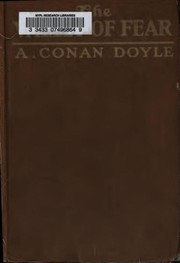
The fourth and final novel, saved for last because its two-part structure — a Holmes mystery followed by a long American flashback — is most rewarding once a reader is deeply comfortable with Doyle's style and the shadow of Moriarty established in the Memoirs.
Discussion
Keep reading
Paths that share books, cover the same subject, or open a related topic.