Start with The Adventures of Sherlock Holmes, the twelve stories collected in 1892. This is where Doyle found the form that made him — a client with an impossible problem, Holmes reading their sleeves, a solution in thirty pages — and it contains "A Scandal in Bohemia", "The Red-Headed League" and "The Speckled Band". You can read one story in twenty minutes and know immediately whether you want the other fifty-five.
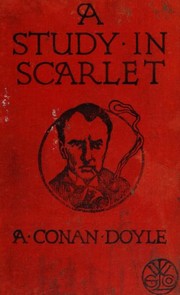
The conventional advice is to start with A Study in Scarlet because it is the first published and it is where Holmes and Watson meet. There is one very good reason not to: the middle of that novel abandons London entirely for a hundred-page flashback about Mormon settlers in Utah, with neither Holmes nor Watson present. It is the most notorious structural problem in the canon and it has stopped more first-time readers than anything else Doyle wrote. Come back to it once you are hooked — the opening and closing sections are excellent and the meeting scene is worth having.
The canon, in publication order
Doyle wrote four novels and fifty-six short stories. Publication order is the right order, for one specific reason given below.
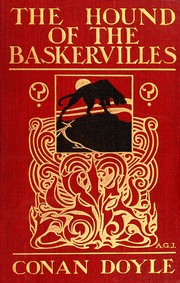
Novels: A Study in Scarlet, The Sign of Four, The Hound of the Baskervilles, The Valley of Fear. The Hound of the Baskervilles is the best of the four by a wide margin and is a perfectly good second book. Note that The Sign of Four and The Valley of Fear both repeat the long-flashback structure, though less damagingly.
Story collections: The Adventures of Sherlock Holmes, then The Memoirs of Sherlock Holmes, then The Return of Sherlock Holmes, His Last Bow and The Case-Book of Sherlock Holmes. The Memoirs collection is not separately listed in our catalogue, but you need it — it contains "The Final Problem", in which Doyle kills Holmes off at the Reichenbach Falls, and The Return of Sherlock Holmes opens by undoing that. That pair is the one place in the canon where order genuinely matters, and reading the resurrection before the death spoils the most famous event in detective fiction.
If you would rather buy once, The Oxford Sherlock Holmes collects the whole canon with scholarly annotation.
Publication order versus internal chronology
Enthusiasts have spent a century constructing internal chronologies of Holmes's career from Watson's dates, and the exercise is genuinely unresolvable — Watson's war wound moves between his shoulder and his leg, his marriage appears and disappears, and Doyle simply did not keep track. Several competing chronologies exist and none commands agreement.
Read in publication order. The chronological orderings are an entertaining game for people on a second pass, but they are built on contradictory evidence, and they break the Reichenbach sequence that publication order preserves.
Where the quality drops
The Case-Book of Sherlock Holmes, published in 1927, is the weakest collection. Doyle was in his late sixties, had long resented the character, and several stories in it are told by Holmes himself or are frankly odd. It is worth reading for completeness and it is not where anyone should form an opinion of him.
Beyond Holmes
Doyle wanted to be remembered for the historical novels, and The White Company and Micah Clarke are those books: medieval archers and the Monmouth Rebellion, researched heavily and written with real conviction. Modern readers largely do not share his assessment, and they are slow going.
The Lost World is the exception and genuinely holds up — Professor Challenger, a plateau in the Amazon with living dinosaurs, and a comic narrator. It is the non-Holmes book to read.
Browse more mystery and adventure reading paths on Discover.
Follow the full ordered path here: Arthur Conan Doyle Reading Order: Where to Start.