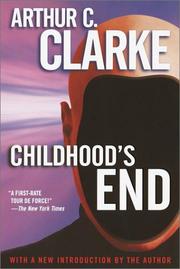
Start with Childhood’s End. It is short, it is self-contained, and it is the purest distillation of the thing Clarke does better than anyone: the slow reveal that human beings are a small part of something much larger, delivered with a coldness that becomes, by the last chapter, something close to awe. If Clarke is going to work on you, it will work here within fifty pages.
Do not start with 2001. It is his most famous title and it is a genuinely good novel, but it was written in parallel with Kubrick's film rather than adapted from or into it, and it explains things the film deliberately leaves mysterious. Reading it first tends to leave people with the impression that Clarke is a writer of expository science, which undersells him badly.
The other essential novel, and the short fiction
The City and the Stars is the other book to read early. A billion-year-old enclosed city, one inhabitant who wants to know what is outside, and a structure that keeps widening the frame until the scale is barely comprehensible. It is a rewrite of his earlier novella Against the Fall of Night, and the expanded version is the one to read.
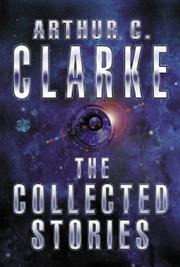
Then The Collected Stories of Arthur C. Clarke. This is not a completist's appendix — a strong case exists that Clarke was a better short story writer than novelist, and the collection contains "The Nine Billion Names of God", "The Star" and "The Sentinel", the last of which is the seed the film and the novel of 2001 both grew from. Dip rather than read straight through; there are over a hundred stories and the early ones are slight.
The Odyssey sequence, and its contradictions
Read 2001, full title 2001 A Space Odyssey, only after the above. Then 2010, odyssey two, then 2061 Odyssey three, then 3001, which our catalogue holds in an omnibus edition bundled with The Songs of Distant Earth.
Here is the concrete oddity nobody warns you about: the sequels do not follow the first novel, they follow the film. In the novel of 2001, the mission goes to Saturn; in the film it goes to Jupiter; and 2010, odyssey two opens at Jupiter, quietly overwriting its own predecessor. Clarke acknowledged this openly and treated the books as variations rather than a continuous canon. Do not spend energy reconciling them.
Where to stop
Stop after 2010, odyssey two. That is the honest recommendation. It is a real sequel with a genuine idea at its centre and a satisfying ending. 2061 Odyssey three is thinner, largely a travelogue with a rescue plot, and 3001 is a curiosity — a twenty-first-century man revived in the thirty-first, mostly touring a future that Clarke wanted to describe more than dramatise. Read them if you are committed to the sequence, but nobody should feel they have unfinished business.
What is not here
Two of his best books are absent from this path: Rendezvous with Rama, a first-contact novel that is arguably his most perfect single piece of construction, and The Fountains of Paradise, on building a space elevator. If Clarke works for you, those are the next two to find.
Honest warnings
Clarke's characters are functional. They exist to observe, explain and be present when something vast happens, and readers who need interiority in their fiction find him arid. That is a fair criticism and it does not change with which book you pick. What he offers instead is the sensation of scale — geological, cosmic, evolutionary — handled with more discipline than almost anyone in the genre. Read him for that, or do not read him.
More science fiction reading paths are on Discover.
Follow the full ordered path here: Arthur C. Clarke Reading Order: Where to Start.