Date smarter: modern relationships
This four-stage curriculum moves from self-understanding to partner selection, then to communication and relationship-building skills — each stage unlocking the vocabulary needed for the next. Starting with attachment theory and emotional patterns, the learner builds a clear inner foundation before ever swiping right, then learns to navigate modern dating intentionally, communicate authentically early on, and finally sustain a healthy, lasting partnership.
Know Yourself First
BeginnerUnderstand your own attachment style, emotional patterns, and what you unconsciously bring into relationships — the essential self-awareness layer before dating intentionally.
▸ Study plan for this stage
Pace: 5–6 weeks total: Weeks 1–3 for "Attached" (~25–30 pages/day, including reflection pauses after each part); Weeks 4–6 for "Adult Children of Emotionally Immature Parents" (~20–25 pages/day, journaling after each chapter).
- The three adult attachment styles — Anxious, Avoidant, and Secure — as defined in 'Attached', and how each style drives automatic thoughts, feelings, and behaviors in romantic relationships
- The 'Anxiety-Avoidant Trap' from 'Attached': how anxious and avoidant partners magnetically attract each other and lock into a self-reinforcing cycle of pursuit and withdrawal
- Effective communication and 'secure base' behavior from 'Attached': what securely attached people do differently and how anyone can adopt secure-functioning strategies regardless of their baseline style
- Activating and deactivating strategies from 'Attached': the unconscious mental moves anxious types use to amplify connection-seeking and avoidant types use to suppress intimacy needs
- Emotional immaturity as a parenting pattern from 'Adult Children of Emotionally Immature Parents': the four types of emotionally immature parents (emotional, driven, passive, rejecting) and the lasting relational blueprints they create
- The 'role-self' vs. the 'true self' from 'Adult Children of Emotionally Immature Parents': how children of emotionally immature parents learn to suppress authentic needs and perform a role to earn love — and how this carries into adult dating
- Emotional loneliness and the 'fantasy of being truly known' from 'Adult Children of Emotionally Immature Parents': the deep longing for genuine connection that drives adult children into over-giving, people-pleasing, or rescuing dynamics
- Integration: how your childhood emotional environment (Gibson) directly shaped which attachment style you developed (Levine) — seeing both books as two lenses on the same self
- After reading 'Attached', which attachment style do you most identify with — and can you name three specific behaviors or thought patterns from your past relationships that confirm it?
- What is the Anxiety-Avoidant Trap, and can you trace a real or hypothetical relationship dynamic through its cycle step by step using the framework from 'Attached'?
- From 'Attached', what does 'secure functioning' look like in practice? List at least four concrete behaviors a securely attached person exhibits that differ from your own default patterns.
- From 'Adult Children of Emotionally Immature Parents', which parental type (emotional, driven, passive, or rejecting) best describes a primary caregiver in your upbringing — and what 'role-self' did you develop in response?
- How does the concept of the 'role-self' (Gibson) connect to the activating or deactivating strategies (Levine) you identified in yourself? Can you draw a direct line between a childhood coping pattern and an adult relationship behavior?
- What does Gibson mean by 'emotional loneliness,' and how might that longing show up as a red flag you unconsciously overlook — or a need you unconsciously test partners to meet?
- **Attachment Style Audit (during 'Attached'):** After finishing Part 1, take the book's self-assessment quiz. Then write a 1-page 'relationship autopsy' of your most significant past relationship, labeling each partner's attachment behaviors using Levine's vocabulary. Note which patterns you now recognize that were invisible to you at the time.
- **Activating/Deactivating Strategy Log (during 'Attached'):** For one week, keep a small notebook or phone note. Each time you feel a strong romantic impulse — to text someone, to pull away, to check a partner's social media, to idealize or dismiss — pause and label it as an activating or deactivating strategy. Record the trigger, the urge, and the underlying fear.
- **Secure-Base Scripting (after finishing 'Attached'):** Write out three difficult relationship scenarios (e.g., a partner canceling plans, feeling ignored, needing to express a need). For each, write your typical response, then rewrite it as a securely attached person would handle it, using the communication principles from 'Attached'. Practice reading the secure version aloud.
- **Parent-Type Portrait (during 'Adult Children of Emotionally Immature Parents'):** Write a candid 1–2 page character sketch of each primary caregiver using Gibson's four parental types as a guide. Focus on emotional availability, not intent or love. The goal is clear-eyed description, not blame.
- **Role-Self Inventory (after finishing 'Adult Children of Emotionally Immature Parents'):** Make two columns. In column A, list the traits, needs, and feelings you learned to hide or suppress as a child. In column B, list the roles or performances you adopted instead (e.g., 'the peacemaker,' 'the achiever,' 'the invisible one'). Then ask: which column shows up in how you date today?
- **Cross-Book Synthesis Map (after finishing both books):** Draw a simple diagram connecting your attachment style (Levine) to your parent type(s) (Gibson) to your role-self (Gibson) to your activating/deactivating strategies (Levine). Add one sentence for each arrow explaining the causal link. Pin this somewhere visible — it is your personal relational blueprint and the foundation for every stage
Next up: Having mapped the internal architecture — your attachment wiring and the childhood emotional environment that built it — you are now ready to move outward and examine how these patterns play out in the actual choices, communication, and conflict dynamics of real relationships.

The perfect starting point: it introduces attachment theory (anxious, avoidant, secure) in plain language and immediately explains why you keep attracting the same partners. Every later book assumes you know this framework.

Reveals how childhood emotional dynamics shape your adult relationship needs and blind spots — read second so you can connect your attachment style back to its roots before you start dating.
Choosing Well in the App Era
BeginnerDevelop a clear, values-driven filter for who is actually worth pursuing, and understand how modern dating apps distort perception and decision-making.
▸ Study plan for this stage
Pace: 6–7 weeks total: Weeks 1–3 cover "Marry Him" (~20–25 pages/day, including reflection pauses after each chapter); Weeks 4–6 cover "How to Not Die Alone" (~20–25 pages/day); Week 7 is a dedicated integration and exercise week with no new reading.
- The 'good enough' vs. 'perfect' partner fallacy — Gottlieb's core argument that holding out for an idealized checklist causes real women to overlook genuinely compatible partners
- Distinguishing 'must-haves' from 'nice-to-haves': learning to separate non-negotiable values and character traits from superficial preferences (height, job title, instant chemistry)
- The paradox of choice in modern dating — how an abundance of app options creates a disposable mindset and perpetual 'grass is greener' thinking (Ury's framing via behavioral science)
- The three dating tendencies Ury identifies — Romanticizer, Maximizer, and Hesitater — and how each self-sabotages partner selection in distinct ways
- Attachment theory applied to app dating — how anxious, avoidant, and secure attachment styles play out in swiping behavior, texting patterns, and early date decisions (Ury)
- Slow love vs. fast filtering: why Gottlieb argues that attraction and compatibility often grow over time, and why dismissing someone after one date is a data error, not a verdict
- The role of self-awareness in choosing well — both authors converge on the idea that knowing your own patterns, fears, and blind spots is prerequisite to evaluating others accurately
- App-specific perception distortions — how profile optimization, photo selection, and algorithmic matching create a gap between digital impression and real-world compatibility
- According to Gottlieb, what is the central mistake educated, high-achieving women make when evaluating potential partners, and what does she propose as the antidote?
- What are Ury's three dating tendencies, which one do you most identify with, and what specific behaviors does your tendency produce on dating apps?
- How does behavioral science (as Ury applies it) explain why having more matches on an app does not lead to better relationship outcomes?
- Both Gottlieb and Ury discuss the difference between 'spark' and 'slow burn' attraction — what do they each say about it, and where do their views align or differ?
- What is a concrete, values-based filter you could apply in the first three interactions with someone on an app, drawing on principles from both books?
- How do dating apps structurally encourage Maximizer behavior, and what practical steps does Ury recommend to counteract this tendency?
- Write your personal 'non-negotiables vs. preferences' list: Inspired by Gottlieb's checklist audit, list every trait you currently look for in a partner, then ruthlessly sort each item into Column A (reflects a core value or life-compatibility need) or Column B (preference that could be flexible). Aim for no more than 5–7 items in Column A.
- Identify your dating tendency: Take Ury's Romanticizer/Maximizer/Hesitater self-assessment (available on her website or outlined in the book's early chapters) and write a one-page reflection on three specific past dating decisions that your tendency directly influenced.
- Conduct a 'profile audit': Pull up your current dating app profile (or create a mock one) and annotate each photo and bio line — ask honestly whether each element is attracting the kind of person who matches your Column A list, or whether it's optimized for volume of matches.
- The 'second date rule' experiment: For the next four weeks of active app dating, commit to going on a second date with anyone who clears your Column A filters and was decent company — even if the first-date spark was absent. Journal after each second date on whether your perception shifted, drawing on Gottlieb's slow-burn argument.
- Attachment style reflection journal: After reading Ury's attachment theory section, write out how your attachment style has shown up in your last two significant dating experiences — specifically in texting frequency, how you interpreted silences, and how quickly you decided someone was or wasn't right.
- Design your 'decision criteria card': A single index card (physical or digital) summarizing your Column A non-negotiables, your identified dating tendency and its red-flag behaviors to watch for in yourself, and one Ury-recommended behavioral nudge to counteract it. Keep it accessible when you're actively using apps.
Next up: By clarifying who is worth pursuing and how apps distort judgment, this stage builds the self-awareness and filtering framework that the next stage can build on — shifting focus from selection to the deeper skills of building genuine intimacy and navigating commitment once a promising partner has been found.
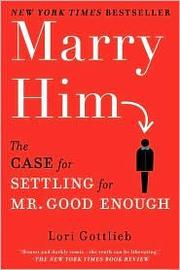
A candid, research-backed challenge to unrealistic romantic checklists; it reframes what to actually look for in a long-term partner and pairs well with the self-knowledge from Stage 1.

Written by a behavioral scientist and dating coach, this book directly addresses app-era pitfalls — choice overload, the paradox of options, and the specific cognitive biases that derail modern daters. Read after Gottlieb to apply behavioral science to your refined criteria.
Communicate Early & Authentically
IntermediateLearn to express needs, set expectations, and navigate conflict from the very first dates — building honesty and emotional safety before deeper investment.
▸ Study plan for this stage
Pace: 8–10 weeks total: ~2.5–3 weeks per book at roughly 20–25 pages/day. Week 1–3: Nonviolent Communication (observe → feel → need → request framework); Week 4–6: Crucial Conversations (high-stakes dialogue skills); Week 7–10: Hold Me Tight (attachment-based emotional safety and bonding conversations). A
- Nonviolent Communication's four-component model: Observations, Feelings, Needs, and Requests — and how to apply each on early dates without blame or judgment
- Distinguishing 'jackal' (evaluative, blaming) language from 'giraffe' (empathic, needs-based) language as described by Rosenberg, and catching your own default patterns
- The concept of 'empathic listening' from Nonviolent Communication — fully receiving a partner's experience before responding or problem-solving
- Patterson's 'Pool of Shared Meaning' from Crucial Conversations — how honest, safe dialogue builds a richer mutual understanding than guarded small talk
- Recognizing when a conversation turns 'crucial' (high stakes, differing opinions, strong emotions) and using Patterson's STATE skills (Share facts, Tell your story, Ask for others' paths, Talk tentatively, Encourage testing) to stay productive
- Creating psychological safety in dialogue — Patterson's concept of Mutual Purpose and Mutual Respect as preconditions for authentic early-relationship conversations
- Sue Johnson's Demon Dialogues (Find the Bad Guy, Protest Polka, Freeze and Flee) — identifying destructive conflict cycles before they become entrenched in a new relationship
- Johnson's 'Hold Me Tight' conversations — seven transformative dialogues that build secure emotional bonds, and how to initiate them proactively rather than reactively
- After reading Nonviolent Communication, can you translate a common early-dating complaint (e.g., 'You never text back') into a full four-part NVC statement — observation, feeling, need, and concrete request?
- How does Rosenberg differentiate a 'need' from a 'strategy,' and why does that distinction matter when expressing yourself to someone you've just started dating?
- According to Crucial Conversations, what are the warning signs that a conversation has become unsafe, and what specific moves (e.g., Contrasting, CRIB) can you use to restore safety without dropping the topic?
- How does Patterson's idea of 'Start with Heart' apply to setting expectations on early dates — what does it mean to examine your own motives before entering a difficult conversation?
- What are Johnson's three 'Demon Dialogues,' how do they typically surface in new relationships, and what does she say is the underlying attachment fear driving each one?
- Using Johnson's framework, what is a 'Hold Me Tight' conversation, and what would initiating one look like after a first or second conflict with a new partner?
- NVC Translation Drill (Rosenberg): Write down 5 things you've said or thought during past dating conflicts. Rewrite each one using the full Observation–Feeling–Need–Request structure. Read both versions aloud and notice the emotional difference.
- Feelings & Needs Inventory (Rosenberg): Using the feelings and needs lists from Nonviolent Communication, spend 10 minutes after each date journaling: What did I observe? What did I feel? What need was met or unmet? What request, if any, do I want to make next time?
- Crucial Conversation Rehearsal (Patterson): Identify one 'crucial conversation' you've been avoiding in a current or recent relationship (e.g., exclusivity, communication pace, a boundary). Script it using the STATE framework, then role-play it with a trusted friend who gives feedback on safety and clarity.
- Mutual Purpose Statement Practice (Patterson): Before a date or relationship check-in, write a one-sentence Mutual Purpose statement — what you both want from the conversation. Practice opening the conversation with it and observe how it changes the tone.
- Demon Dialogue Mapping (Johnson): Think of a recurring argument pattern from a past or current relationship. Draw a simple cycle diagram labeling each person's trigger, action, and the other's reaction. Identify which of Johnson's three Demon Dialogues it most resembles and name the underlying attachment fear for each person.
- Hold Me Tight Letter (Johnson): Write an unsent letter to a current or recent partner using Johnson's 'Recognizing the Demon Dialogue' conversation structure — describe the cycle, your own role in it, your deeper fear, and what you actually need from them. Even if unsent, this builds the emotional vocabulary for real conversations.
Next up: Mastering early honest communication and emotional safety in this stage equips the reader with the relational foundation — shared language, conflict skills, and attachment awareness — needed to explore deeper commitment, long-term compatibility, and intentional partnership in the next stage of the curriculum.

Provides the foundational language for expressing feelings and needs without blame — essential vocabulary for every difficult early-dating conversation that follows.
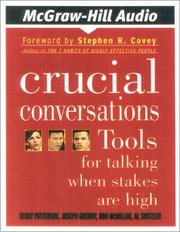
Translates communication principles into high-stakes real-world dialogues (exclusivity talks, dealbreaker conversations) — best read after Rosenberg so you have the emotional vocabulary to apply the tactical framework.

Introduces Emotionally Focused Therapy and the concept of 'demon dialogues' — the negative cycles couples fall into early. Reading this now helps you recognize and interrupt those patterns before they become entrenched.
Building a Lasting Partnership
ExpertMove from dating to consciously co-creating a secure, resilient relationship — understanding love's long arc, conflict as connection, and the daily practices that sustain intimacy.
▸ Study plan for this stage
Pace: 10–12 weeks total. Book 1 ("The Seven Principles for Making Marriage Work"): Weeks 1–4, ~25–30 pages/day. Book 2 ("Mating in Captivity"): Weeks 5–8, ~20–25 pages/day. Book 3 ("The Relationship Cure"): Weeks 9–12, ~20–25 pages/day. Allow 2–3 buffer days per book for reflection and exercises.
- Gottman's Four Horsemen (criticism, contempt, defensiveness, stonewalling) and their antidotes — the foundation of recognizing destructive conflict patterns before they calcify
- Love Maps, Fondness & Admiration, and Turning Toward: the three foundational levels of Gottman's Sound Relationship House that predict long-term stability
- Perpetual vs. solvable problems — understanding that ~69% of relationship conflicts are perpetual and the goal is dialogue, not resolution
- Emotional bids and bidding theory from 'The Relationship Cure': how micro-moments of turning toward, turning away, or turning against bids determine the emotional climate of a relationship
- Perel's core tension between security and desire — why the very things that create attachment (familiarity, safety, permanence) can erode erotic charge, and how to hold both simultaneously
- The role of mystery, separateness, and individual identity in sustaining long-term desire, as explored in 'Mating in Captivity'
- Shared meaning and rituals of connection: how couples co-create a culture, mythology, and legacy that deepens partnership beyond day-to-day logistics
- Emotional attunement vs. emotional flooding: recognizing physiological escalation (Gottman) and developing self-soothing practices to stay present in conflict
- According to Gottman in 'The Seven Principles,' what distinguishes a 'master' couple from a 'disaster' couple, and which of the Four Horsemen is the single greatest predictor of relationship breakdown — and why?
- How does Gottman's concept of 'turning toward bids' in 'The Relationship Cure' connect to the broader architecture of trust and intimacy built over time?
- Perel argues in 'Mating in Captivity' that love and desire have fundamentally different — even opposing — needs. What are those needs, and what practical strategies does she offer for reconciling them in a long-term partnership?
- What is the difference between a 'gridlocked' perpetual problem and a 'dialogue-managed' perpetual problem in Gottman's framework, and what moves a couple from one state to the other?
- How do the emotional bid patterns described in 'The Relationship Cure' show up in everyday, non-conflict moments — and why does Gottman argue these mundane interactions matter more than how couples fight?
- Drawing on all three books, how would you design a 'relationship maintenance' practice that addresses security (Gottman), desire (Perel), and emotional connection (Gottman's bid theory) simultaneously?
- Four Horsemen Audit (Book 1): For one week, keep a private journal after any disagreement with your partner. Label each communication move as one of the Four Horsemen or its antidote. At the end of the week, identify your personal default Horseman and write a concrete replacement script for it.
- Love Maps Interview (Book 1): Using Gottman's Love Maps card deck or a self-generated list of 20 questions, schedule a 45-minute 'Love Maps date' with your partner. Cover each other's current stressors, dreams, and inner world. Debrief: what surprised you? What had you assumed but never confirmed?
- Bid Tracking Log (Book 3): Over 5 days, track every emotional bid you make and receive — note whether the response was 'toward,' 'away,' or 'against.' At the end, calculate your personal 'bid acceptance rate' and discuss the log openly with your partner, focusing on one pattern to shift.
- Desire Mapping Exercise (Book 2): Inspired by Perel's framework, each partner independently writes two lists — (1) three conditions or contexts in which you feel most desired or alive in the relationship, and (2) three things that reliably kill erotic energy for you. Exchange lists and co-create one new ritual or date format that honors at least one item from each person's first list.
- Shared Meaning Ritual Design (Book 1): Identify one existing ritual in your relationship (morning routine, Sunday dinner, a recurring trip) and one that is missing. Using Gottman's Shared Meaning chapter as a guide, write a one-page 'relationship manifesto' — your shared symbols, values, and legacy goals — and revisit it together quarterly.
- Conflict Rehearsal with Softened Start-Up (Books 1 & 3): Choose a low-stakes recurring disagreement. Script a 'softened start-up' version of how you'd raise it (Gottman: 'I feel… about… I need…'), then role-play it with your partner or a trusted friend. Debrief on physiological responses — did you flood? Did you stay curious? Adjust the script until it feels authentic, not performative.
Next up: By mastering the internal architecture of a secure, desire-sustaining partnership — its conflict patterns, emotional bids, and shared meaning — the reader is now equipped to explore how relationships exist within and are shaped by larger external systems: family of origin, culture, and life transitions, which form the natural focus of a subsequent stage.
Gottman's decades of research distilled into actionable principles; read first in this stage because it gives you the empirical map of what healthy long-term relationships actually look like.
Challenges the assumption that security and desire are compatible by default, and shows how to sustain erotic and emotional aliveness in a committed relationship — a necessary counterweight to Gottman's stability focus.
Zooms in on the micro-moments of daily connection ('bids for connection') that either build or erode intimacy over time — the perfect capstone that ties together everything from attachment theory to communication into concrete daily habits.
Discussion
Keep reading
Paths that share books, cover the same subject, or open a related topic.