Understand modern art: from Monet to now
This curriculum moves from building a confident visual and historical vocabulary, through understanding the major movements and their logic, to finally engaging with the more challenging conceptual and critical territory of contemporary art. Each stage assumes the knowledge of the last, so reading in order matters — by the end, the learner will be able to walk into any gallery, from an Impressionist salon to a white-cube contemporary space, and genuinely engage with what they see and why it exists.
How to Look: Building a Visual Language
BeginnerDevelop the basic skills of looking at and describing art — learning to slow down, observe carefully, and articulate a response before knowing any art history.
▸ Study plan for this stage
Pace: 6–8 weeks total: Weeks 1–4 for "The Art Museum" (~20–25 pages/day, treating it as a slow visual browse rather than a linear read — spend at least 2–3 minutes with each full-page plate before reading any caption); Weeks 5–8 for "Ways of Seeing" (~15–20 pages/day across its 7 essays, re-reading each e
- Slow looking: resisting the urge to read labels or captions before forming a personal visual impression of a work
- Visual description vs. interpretation: separating what you literally see (line, color, composition, scale, texture) from what you think it means
- The 'survey gaze' vs. the 'sustained gaze': how 'The Art Museum' models encyclopedic breadth while rewarding deep attention to individual plates
- The constructed nature of seeing: Berger's argument that how we see is shaped by assumptions, cultural conditioning, and context — not neutral or innocent
- Mystification: how Berger shows that art-historical language can obscure rather than illuminate a work's meaning and social function
- The impact of reproduction: how a painting changes meaning when removed from its original context and reproduced in a book, on a screen, or with added text or music
- The male gaze and the tradition of the nude: Berger's analysis of how European oil painting constructed women as objects to be seen rather than subjects who see
- Ownership and oil paint: the relationship Berger draws between the technical conventions of oil painting and the depiction of possessions, wealth, and social status
- After spending two minutes with any single plate in 'The Art Museum' — before reading its caption — can you produce at least five specific, concrete visual observations (not feelings or guesses about meaning)?
- How does 'The Art Museum' use sequencing and juxtaposition across its pages, and what does placing two works side by side invite you to notice that you might miss looking at each alone?
- In your own words, what does Berger mean when he says 'Seeing comes before words'? How does the opening of 'Ways of Seeing' connect the act of looking to the act of knowing?
- What is 'mystification' according to Berger, and can you find one specific example from 'The Art Museum' — a caption or a curatorial grouping — that might illustrate it?
- How does the context in which you encounter an image (a museum wall, a page in 'The Art Museum', a phone screen) change what that image means or how much authority it carries, according to Berger's argument?
- Using Berger's framework of the 'surveyed' woman and the 'surveyor' man, look at three nudes in 'The Art Museum' and describe what you see differently now than you did before reading 'Ways of Seeing'.
- The Caption-Free Look: Each reading session with 'The Art Museum', choose one full-page plate and write a 10-sentence purely descriptive paragraph — no interpretation, no guessing the title — before flipping to any caption. Then read the caption and note what you missed, assumed, or got right.
- Visual Vocabulary Builder: Keep a running two-column log as you browse 'The Art Museum' — left column: a formal element you notice (e.g., 'diagonal composition', 'limited palette', 'flattened perspective'); right column: the emotional or psychological effect it seems to produce. Aim for 30 entries by the end of Week 4.
- The Reproduction Experiment (Berger in practice): Find one painting from 'The Art Museum' that genuinely moves you. Look at it in the book, then find it on your phone or laptop. Write a short paragraph on whether — and how — your experience of it changed. Use Berger's chapter on reproduction as your analytical lens.
- Rewrite the Mystification: Select three captions from 'The Art Museum' that feel opaque, overly reverent, or jargon-heavy. Rewrite each in plain language a curious 14-year-old could engage with, without dumbing it down — a direct application of Berger's critique.
- The Gaze Audit: Identify five depictions of women across 'The Art Museum' spanning different periods. For each, write three sentences applying Berger's 'Ways of Seeing' framework: Who is the implied viewer? How is the woman's body positioned in relation to that viewer? Does anything in the image push back against or complicate that dynamic?
- Side-by-Side Juxtaposition Journal: Choose any two works from 'The Art Museum' that are NOT placed near each other in the book but that you personally feel belong in conversation. Write one page explaining what looking at them together reveals — practicing the curatorial and comparative thinking both books model.
Next up: Mastering the habit of slow, language-rich, critically aware looking — now sharpened by Berger's insight that seeing is never neutral — gives the reader the perceptual and conceptual toolkit they need to begin absorbing art-historical context without being overwhelmed or passively accepting received narratives.

A visually rich, encyclopedic survey that exposes the beginner to an enormous range of works in a low-pressure format — ideal for building visual familiarity before diving into theory or history.

A short, provocative classic that teaches the learner to question what they see and why — it dismantles assumptions about art's 'naturalness' and is the single best primer for critical looking.
The Story of Modern Art: Impressionism to Abstraction
BeginnerUnderstand the sweep of art history from the mid-19th century through mid-20th century — the movements, the rebellions, and the logic connecting them.
▸ Study plan for this stage
Pace: 8–10 weeks, ~20–25 pages/day, 5 days/week — focusing especially on Chapters 19–28 (Impressionism through Abstract/Modern art), while reading the full book for historical context. Allow extra time on chapters covering Post-Impressionism, Cubism, and Expressionism, as these are conceptually dense for
- The 'making vs. seeing' tension: Gombrich's central thesis that art history is a story of problem-solving, not just self-expression — each movement responds to limitations left by the previous one
- Impressionism as rebellion: How Monet, Renoir, and Degas broke from academic painting by prioritizing light, color, and momentary perception over idealized form and narrative
- Post-Impressionism's divergence: How Cézanne, Van Gogh, Gauguin, and Seurat each took Impressionism's freedoms in radically different directions, planting seeds for 20th-century abstraction
- The logic of avant-garde movements: Understanding that Fauvism, Expressionism, Cubism, Futurism, Surrealism, and Abstract Expressionism are not random ruptures but logical (if radical) responses to prior movements and to social upheaval (WWI, WWII)
- Cubism's revolution: How Picasso and Braque shattered single-point perspective and introduced simultaneous viewpoints, fundamentally redefining what a picture can be
- The role of 'primitivism' and non-Western influence: How African masks, Japanese prints, and Oceanic art disrupted European conventions and energized modernist experimentation
- Abstraction as endpoint and question: How the drive to strip art of representation led to pure form and color (Kandinsky, Mondrian), and why Gombrich treats this as both a liberation and a loss
- Gombrich's own perspective: Recognizing that the book is itself a historical artifact — written with a particular (Western, formalist) viewpoint — and reading it critically as well as receptively
- According to Gombrich, what is the underlying logic that connects one art movement to the next? How does he frame art history as a chain of 'problems and solutions'?
- How did the Impressionists challenge the conventions of academic painting, and what specific technical innovations (brushwork, color, subject matter) defined their break?
- What did each of the four major Post-Impressionists — Cézanne, Van Gogh, Gauguin, and Seurat — contribute that was distinct, and how did each anticipate a different strand of 20th-century modernism?
- How does Gombrich explain Cubism? What problem was Picasso trying to solve, and why does Gombrich consider it one of the most consequential revolutions in Western art?
- What social and historical forces (industrialization, WWI, Freudian psychology) does Gombrich connect to the rise of Expressionism and Surrealism?
- Where does Gombrich seem most enthusiastic, and where does he seem most skeptical or uncomfortable? What does this reveal about his critical framework?
- Timeline wall: After finishing each major chapter on a movement, add it to a hand-drawn timeline on paper or a whiteboard. Include the movement's name, dates, 2–3 key artists, and one defining idea. By the end of the book, you'll have a visual map of the full arc.
- Side-by-side image comparison: For each movement Gombrich discusses, find two images online — one work from the movement and one from the tradition it was rebelling against (e.g., a Monet next to a Salon painting). Write 3–5 sentences on what specifically changed.
- The 'problem-solution' journal: As you read each chapter, write one paragraph answering: 'What artistic problem did this movement inherit, and what solution did it propose?' This directly practices Gombrich's own analytical method.
- Pick one artist per major movement and read their Wikipedia page or a short museum bio after finishing Gombrich's chapter on them. Note one fact or context Gombrich omits — this builds the habit of reading critically and seeking multiple sources.
- Visit a museum (in person or via a virtual tour, e.g., MoMA, the Met, or the Art Institute of Chicago's online collection) and find one work from each of these movements: Impressionism, Post-Impressionism, Cubism, and Surrealism. Write a short paragraph on each using Gombrich's vocabulary.
- Write a one-page 'letter from one artist to another': e.g., Cézanne writing to Picasso explaining what he was trying to do with form, or Monet writing to Van Gogh about color. This forces you to internalize each artist's distinct concerns in your own words.
Next up: Gombrich gives you the chronological skeleton and the 'why' behind each movement's rebellion; the next stage will put flesh on those bones by diving into individual artists, specific works, and the social worlds that shaped them in far greater depth.
The most widely read art history book ever written; its clear narrative voice and chronological structure give the beginner a confident historical backbone before tackling modern movements specifically.
Inside the Movements: Ideas Behind the Images
IntermediateGo beneath the surface of key movements — Cubism, Surrealism, Abstract Expressionism, Pop — understanding the philosophical and social forces that shaped them.
▸ Study plan for this stage
Pace: 10–12 weeks total, roughly 25–35 pages/day. Week 1–5: Chipp's "Theories of Modern Art" (dense primary sources; read slowly, annotating manifestos and artist statements). Week 6–8: Anfam's "Abstract Expressionism" (more focused; pair with image study). Week 9–11: Lippard's "Pop Art" (accessible prose
- The manifesto as artistic weapon: how Chipp's primary-source anthology shows movements defining themselves through written declarations (Cubist, Futurist, Dada, Surrealist, and Expressionist texts)
- Philosophical roots of fragmentation: Cubism's debt to Bergsonian time, multiple viewpoints, and the rejection of Renaissance perspective, as traced through artist statements in Chipp
- The unconscious as subject matter: Surrealism's Freudian and Jungian underpinnings — automatism, dream imagery, and the irrational — documented through Breton's and Ernst's writings in Chipp
- Gesture, scale, and the sublime: Anfam's account of how Abstract Expressionists (Pollock, de Kooning, Rothko, Newman) used physical process and monumental scale to externalize interior psychological states
- The two poles of Abstract Expressionism — gestural Action Painting vs. Color Field — and the distinct philosophies (existentialist vs. transcendental) Anfam identifies behind each
- Consumer culture as both subject and critique: Lippard's analysis of how Pop artists (Warhol, Lichtenstein, Oldenburg, Hamilton) appropriated mass-media imagery, questioning originality, authorship, and taste
- The role of social and political context: how post-WWII trauma shaped Abstract Expressionism (Anfam) and how Cold War consumerism and the media landscape shaped Pop (Lippard)
- Continuity and rupture across movements: how each movement simultaneously reacted against its predecessor and carried forward unresolved questions about representation, reality, and the role of the artist
- After reading Chipp, can you explain — in your own words and using specific artist statements from the anthology — how Cubism and Surrealism each challenged the idea that art should represent visible reality?
- Anfam distinguishes between Action Painting and Color Field painting as two philosophically distinct strands. What are those distinctions, and which artists and ideas does he associate with each?
- How does Anfam connect the biographical and historical context of the Abstract Expressionists (WWII, existentialism, the New York scene) to the formal choices visible in the work itself?
- Lippard argues that Pop Art has an ambiguous relationship with consumer culture — neither straightforwardly celebrating nor condemning it. What evidence and examples does she use to support this ambiguity?
- Tracing across all three books: how did the role of the written manifesto or theoretical statement shift from early modernism (Chipp) to Abstract Expressionism (Anfam) to Pop (Lippard)?
- Which social or philosophical forces appear in more than one of the three books, and how did different movements respond to the same force in contrasting ways?
- Manifesto close-reading: Choose three artist statements from Chipp (one Cubist, one Surrealist, one Expressionist). Write a one-page comparison identifying the core philosophical claim each artist makes about what art is FOR — then debate yourself: do the works you know actually fulfill those claims?
- Movement timeline wall: Create a visual timeline spanning 1905–1970 that maps the movements covered across all three books. For each movement, note: key dates, 2–3 central artists, one philosophical influence, and one social/historical event that shaped it. Use this as a running reference updated as you read.
- Formal-to-philosophical translation: Select one painting each from Abstract Expressionism and Pop Art. Write two short analyses (one per painting) that move from a formal observation (color, scale, mark, composition) to the philosophical or social idea Anfam or Lippard would say it embodies. Practice the habit of grounding interpretation in the text.
- Debate exercise — 'Is Pop Art critical or complicit?': After finishing Lippard, write a structured one-page argument on each side of this question using only evidence from her book. Then write a two-sentence verdict. This sharpens your ability to hold interpretive tension rather than flattening it.
- Cross-movement comparison essay (500–700 words): Choose one theme — e.g., 'the role of chance,' 'the body,' or 'the relationship to mass culture' — and trace how it appears differently across at least two movements using specific references to Chipp, Anfam, and/or Lippard. This is the core synthesis skill for the stage.
- Museum or archive visit (physical or virtual): Find at least one work each by a Cubist/Surrealist artist (from Chipp's context), an Abstract Expressionist (Anfam), and a Pop artist (Lippard). Spend 10 minutes with each and write a brief field note: what does the book help you see that you wouldn't have noticed before?
Next up: By internalizing the philosophical and social logic behind each major movement through Chipp, Anfam, and Lippard, the reader is now equipped to move from understanding art history as a sequence of styles to engaging with the more contested, pluralistic landscape of postmodernism and contemporary practice — where the very categories of "movement," "authorship," and "meaning" established in this sta
A landmark anthology of artists' own writings — manifestos, letters, interviews — letting the learner hear Picasso, Kandinsky, Pollock, and others explain their intentions in their own words.
A deep, authoritative study of the movement that defined postwar American art; reading it after Chipp's primary sources lets the learner connect artists' stated goals to the finished work.
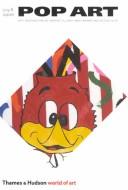
A canonical account of Pop by one of its sharpest critics — it bridges the gap between Abstract Expressionism and the conceptual turn, showing how art began to interrogate consumer culture.
The Conceptual Turn: When Ideas Became the Art
IntermediateUnderstand conceptual art and Minimalism — why the object was dematerialized, what 'the idea is the machine that makes the art' really means, and how this reshapes what art can be.
▸ Study plan for this stage
Pace: 6–8 weeks total. Week 1–4: Lippard's "Six Years" (~15–20 pages/day, including pauses to read primary documents and artist statements embedded in the text). Week 5–8: Hopkins's "After Modern Art," focusing on the Minimalism and Conceptual Art chapters (~25–30 pages/day, with slower re-reading of theo
- Dematerialization of the art object: the deliberate shift away from physical, commodity-based art toward ideas, instructions, language, and ephemeral actions — the central thesis of Lippard's 'Six Years'
- The idea as the artwork: Sol LeWitt's axiom that 'the idea is the machine that makes the art,' meaning execution is secondary or irrelevant to the work's meaning — explored through primary documents in Lippard
- Anti-form and process art: the rejection of fixed, finished objects in favor of materials in flux, chance, and time — documented across Lippard's anthology of statements and actions
- Minimalism as a conceptual precursor: Hopkins shows how Minimalist artists (Judd, Morris, Flavin) stripped art to its literal, non-relational presence, clearing the ground for Conceptual art's further dematerialization
- Institutional critique: artists using Conceptual strategies to expose and challenge the gallery, museum, and market systems that frame and commodify art — a thread running through both books
- Language as medium: text, propositions, and instructions functioning as complete artworks (Lawrence Weiner, Joseph Kosuth), examined through Lippard's primary sources and Hopkins's historical framing
- The viewer's role and phenomenology: Minimalism's insistence (via Hopkins) that the viewer's body and perception in real space complete the work, shifting authority from object to experience
- The art market paradox: Lippard's implicit and explicit tension — Conceptual art sought to escape commodification yet was rapidly absorbed by galleries and collectors, a contradiction Hopkins contextualizes historically
- According to Lippard's 'Six Years,' what social and political conditions of the late 1960s made the dematerialization of the art object feel urgent or necessary to artists at the time?
- How does Hopkins distinguish Minimalism from Conceptual art in 'After Modern Art' — what does Minimalism retain that Conceptual art abandons, and why does that distinction matter?
- What does Sol LeWitt mean by 'the idea is the machine that makes the art,' and how do the primary documents in Lippard's anthology (artist statements, instructions, proposals) demonstrate this principle in practice?
- In what ways did Conceptual artists use language — as title, as instruction, as the work itself — and what does this say about the relationship between art and meaning, as evidenced across both books?
- Lippard herself reflects critically on the period she documented. How does her editorial voice in 'Six Years' complicate or enrich the primary sources she presents, and what does she suggest the movement ultimately failed to achieve?
- Using Hopkins's broader historical arc in 'After Modern Art,' how did the institutional art world (galleries, museums, critics, collectors) respond to and ultimately absorb Conceptual art, and what does this reveal about the limits of artistic radicalism?
- Primary document close-read: Choose any three artist statements or proposals from Lippard's 'Six Years' and write a one-paragraph analysis of each — identify what 'the work' actually is, what material (if any) exists, and what the viewer is asked to do or think.
- Instruction-score exercise: Write your own Sol LeWitt-style instruction set for an artwork that has no physical object. Then swap with a friend or self-execute it, and reflect in writing on whether the result felt like 'art' — why or why not.
- Concept map: After finishing both books, draw a visual diagram connecting Minimalism → Conceptual Art → Institutional Critique, using at least one specific artist or work from each book as a node, with labeled arrows explaining the relationships.
- Museum or gallery visit (or virtual equivalent): Find one work in a collection that could be called Conceptual or Minimalist. Write a one-page response using vocabulary from both books — address dematerialization, viewer experience, and institutional framing.
- Lippard vs. Hopkins comparison essay (500–700 words): Both authors cover overlapping territory but with radically different formats (anthology vs. survey history). Argue which format gives you a better understanding of what Conceptual art actually felt like to make and encounter, and why.
- Commodification thought experiment: Lippard documents artists trying to escape the art market. Using evidence from both books, write a short position paper (300–400 words) on whether Conceptual art succeeded or failed in that goal — and what the failure (or success) means for art today.
Next up: By understanding how Conceptual art dismantled the art object and exposed the institutional frameworks around it, the reader is now equipped to engage with the identity-driven, politically charged, and post-colonial art movements of the 1970s–90s, where artists inherited these dematerialized strategies and redirected them toward questions of gender, race, and power.
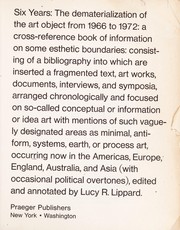
The definitive primary-source document of conceptual art from 1966–1972; having read the earlier stages, the learner now has the context to understand why this radical shift felt necessary.

A clear, scholarly synthesis that ties together Minimalism, Conceptualism, Feminism, and Postmodernism into a coherent narrative — essential for making sense of the late 20th century.
Contemporary Art: Engaging the Present
ExpertDevelop a critical framework for engaging with art made today — understanding the global art world, the role of the market, identity politics, and how to form and defend your own readings.
▸ Study plan for this stage
Pace: 8–10 weeks total: Weeks 1–6 for "Art since 1900" (~40–45 pages/day, focusing on post-1960 sections for depth while surveying earlier chapters for context); Weeks 7–10 for "What Are You Looking At?" (~25–30 pages/day, reading reflectively and pausing to apply Gompertz's frameworks to works encountere
- Periodization and historiography: how Foster et al. construct art history through overlapping 'nodes' (psychoanalysis, Marxism, formalism, poststructuralism) rather than a single linear narrative
- The avant-garde and neo-avant-garde: the tension between genuine rupture and institutional absorption, central to Foster's analysis of movements from Dada through to relational aesthetics
- Identity politics and representation: how race, gender, sexuality, and postcolonial experience became primary artistic and critical concerns from the 1980s onward, as traced in 'Art since 1900'
- The global art world: the decentralization of the Western canon and the emergence of biennials, international markets, and non-Western contemporary practices
- The role of the art market and institutions: how galleries, auction houses, collectors, and museums shape what gets made, shown, and historicized — a thread Gompertz demystifies accessibly
- Critical vocabulary in practice: Gompertz's guided 'looking' method as a tool for forming independent readings of unfamiliar contemporary works
- Postmodernism and its aftermath: appropriation, simulation, the death of the author, and what comes 'after' postmodernism in the 21st century
- Forming and defending an interpretation: synthesizing formal analysis, contextual knowledge, and personal response into a defensible critical argument
- How does Foster's multi-framework methodology (psychoanalytic, Marxist, formalist, poststructuralist) change the way you read a single artwork compared to a purely chronological art history?
- What does 'Art since 1900' reveal about the relationship between the neo-avant-garde and the original avant-garde — and why does this debate matter for evaluating art made today?
- Using Gompertz's accessible framework from 'What Are You Looking At?', how would you walk a non-specialist through a challenging contemporary work — and where does his approach complement or fall short of Foster's critical rigor?
- How have identity politics transformed both the subjects of contemporary art and the criteria by which it is judged, according to the post-1980 sections of 'Art since 1900'?
- In what ways do the art market and institutional structures (biennials, major galleries, art fairs) function as both enablers and constraints on contemporary artistic practice?
- After completing both books, what is YOUR critical framework for engaging with a work of art you have never seen before — and how would you defend a reading of it to a skeptic?
- Framework mapping: After finishing the post-1960 chapters of 'Art since 1900', create a one-page diagram showing how Foster's four theoretical lenses (psychoanalysis, Marxism, formalism, poststructuralism) apply to a single movement (e.g., Conceptual Art or Pictures Generation). Label which lens feels most and least convincing to you, and write two sentences justifying each choice.
- Parallel close-looking: Choose one artwork discussed in 'Art since 1900' and write two short analyses — one using Foster's theoretical apparatus, one using Gompertz's plain-language 'what do you see / what does it make you feel / what might it mean' method. Compare the results: what does each approach reveal or obscure?
- Market audit: Research one living artist prominently discussed or implied in either book (e.g., Cindy Sherman, Kara Walker, Damien Hirst). Track their market trajectory (auction records, gallery representation, biennial appearances) and write a one-paragraph argument for how institutional and market forces have shaped the reception of their work.
- Identity politics case study: Select one artwork from the post-1980 section of 'Art since 1900' that engages race, gender, or postcolonial identity. Write a 400-word critical response that (a) situates it in its historical moment using Foster, and (b) explains how you would present it to a general audience using Gompertz's accessible vocabulary.
- Gallery or museum visit (or virtual equivalent): Visit a contemporary exhibition and select one work made after 2000. Without reading the wall text first, apply your synthesized framework from both books to form an interpretation. Then read the wall text and artist statement. Write a reflection on where your reading aligned, diverged, and why.
- Defend your reading: Write a 500-word critical essay arguing for a specific interpretation of one contemporary artwork of your choice. Share it with a peer or reading group and ask them to challenge it. Revise the essay once in response to the strongest objection raised — practicing the core skill of defending and refining a critical position.
Next up: By building a rigorous, personally owned critical framework through Foster's theoretical depth and Gompertz's accessible practice, the reader is now equipped to engage primary sources — artists' writings, manifestos, and criticism — and to tackle more specialized studies in any contemporary movement, medium, or cultural context they wish to pursue next.
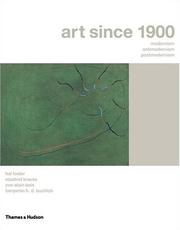
The most rigorous scholarly survey of 20th- and 21st-century art, written by four leading critics using psychoanalytic, social, and formal lenses — it rewards the learner who has built up through earlier stages.

A witty, demystifying guide to contemporary art that serves as a capstone — it synthesizes everything the learner now knows and gives practical tools for engaging confidently with living artists and current exhibitions.
Discussion
Keep reading
Paths that share books, cover the same subject, or open a related topic.