Understanding Plato: the best books to grasp his dialogues and ideas
This curriculum takes a beginner from their very first encounter with Plato all the way to a sophisticated grasp of his metaphysics, ethics, political philosophy, and lasting legacy. Each stage builds on the last: you first learn how to read Plato, then you read him directly in an accessible order, then you wrestle with his hardest ideas, and finally you see how those ideas echo through 2,500 years of Western thought.
Getting Your Bearings
BeginnerUnderstand who Plato was, how to read a philosophical dialogue, and what questions drove his entire project — before opening a single primary text.
▸ Study plan for this stage
Pace: 4–5 weeks, ~25–30 pages/day. Start with Annas (shorter, ~120 pages) over 1 week, then Gottlieb's relevant chapters (~200 pages) over 3–4 weeks, with overlap for review and note-taking.
- Plato's life, historical context, and relationship to Socrates and Athens—why his biography matters for understanding his philosophy
- The dialogue form as a philosophical method: how Socratic questioning, aporia (puzzlement), and dramatic structure convey ideas
- The central problems driving Plato's work: the nature of knowledge, virtue, justice, the soul, and the Forms
- How to read a Platonic dialogue: recognizing Socrates' role, identifying dramatic irony, and distinguishing Plato's views from those of characters
- The intellectual landscape of ancient Greece: pre-Socratic philosophy, sophistry, and how Plato positioned himself against these traditions
- The connection between Plato's ethics and metaphysics: why questions about the Good lead to questions about reality itself
- Who was Plato, and what major events in his life shaped his philosophical project?
- What is the Socratic method, and how does Plato use the dialogue form to enact it on the page?
- What are the main philosophical problems Plato grappled with throughout his career?
- How do you identify what Plato actually believes versus what his characters argue in a dialogue?
- What was the intellectual and political context of Athens that motivated Plato's philosophy?
- How does Plato's theory of the Forms (or Ideas) attempt to solve problems about knowledge and reality?
- Create a timeline of Plato's life (using Annas) alongside major events in Athens; note how political upheaval (esp. Socrates' trial) appears in his work.
- Write a one-page summary of the Socratic method based on Annas's description; then identify 2–3 key features you'll watch for when reading dialogues.
- Read Gottlieb's account of pre-Socratic philosophy and sophistry; create a comparison chart showing how Plato's project differs from and responds to these traditions.
- Outline the central philosophical questions Plato addresses (knowledge, virtue, justice, the soul, the Forms); note which ones appear in both Annas and Gottlieb.
- Practice 'dialogue annotation': take a short passage Annas or Gottlieb quotes from a Platonic dialogue and mark (a) what Socrates asks, (b) what the interlocutor claims, (c) where confusion arises.
- Write a 2–3 paragraph reflection: 'Why would Plato choose the dialogue form rather than write treatises?' Use specific examples from both books.
Next up: This stage equips you with the biographical, historical, and methodological context needed to enter Plato's actual dialogues with confidence—you'll recognize the Socratic method in action, understand the problems he's wrestling with, and know how to read for his philosophical voice beneath the dramatic surface.

A concise, authoritative orientation to Plato's life, methods, and major themes. Reading this first gives beginners a mental map so nothing in the primary texts comes as a shock.
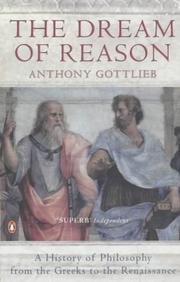
Places Plato inside the broader story of Greek thought, showing why his questions about knowledge, reality, and justice felt urgent. Reading it second gives essential historical and intellectual context.
First Encounter with the Dialogues
BeginnerRead Plato in his own words, starting with the most accessible dialogues, and grasp the Socratic method, the examined life, and Plato's early ethical thinking.
▸ Study plan for this stage
Pace: 4–5 weeks, ~25–30 pages/day, with 2–3 days per week for reflection and note-taking
- The Socratic method: questioning as a path to truth, refutation (elenchus) as a tool for exposing ignorance
- The examined life: Socrates' conviction that the unexamined life is not worth living, and why self-knowledge matters
- Socratic irony: Socrates' claim of ignorance and his subtle exposure of others' false certainty
- Early Platonic ethics: virtue as knowledge, the unity of virtues, and the connection between knowing the good and doing it
- Socrates' defense and death: his commitment to philosophy over safety, and the philosophical life as the highest good
- The dialogue form itself: how Plato uses conversation, character, and dramatic context to teach philosophy
- Piety, justice, and courage: the specific virtues examined in the Five Dialogues and their relationship to the good life
- The immortality of the soul and the afterlife: introduced in the Phaedo extracts as motivation for philosophical living
- What is the Socratic method, and how does Socrates use questioning and refutation to advance philosophical inquiry?
- Why does Socrates claim to know nothing, and how is this claim connected to his superiority over those who think they know?
- What does Socrates mean by 'the examined life,' and why does he believe it is essential to human flourishing?
- How does Plato present virtue in the early dialogues—is it teachable, is it knowledge, and can it be lost?
- Why does Socrates choose death over escape in the Apology and Crito, and what does this reveal about his values?
- How does the dialogue form itself (characters, setting, dramatic irony) serve Plato's philosophical purposes in these texts?
- Read the Euthyphro dialogue and map out Socrates' questions step-by-step; identify where Euthyphro's confidence breaks down and why
- Write a 2–3 page dialogue of your own in Platonic style, where a character claims knowledge of a virtue (courage, friendship, wisdom) and Socrates questions them until they recognize their ignorance
- Create a chart comparing the five dialogues in 'Five Dialogues': list the virtue examined, the main character(s), whether the dialogue reaches a definition, and what Socrates concludes about his own knowledge
- Annotate the Apology passage where Socrates explains his mission; note every instance of irony and explain how it serves his defense
- Reread the Crito and write a response from Crito's perspective, arguing why Socrates should escape; then write Socrates' philosophical counter-argument using only ideas from the text
- Select one key passage from the Phaedo extracts (on the soul's immortality or the philosopher's preparation for death) and write a 1–2 page reflection on how it deepens your understanding of why Socrates accepts his fate
Next up: This stage establishes your direct familiarity with Socrates' voice and method, and introduces the core ethical questions Plato will develop more systematically in the middle dialogues; you are now ready to encounter Plato's own metaphysical theories (the Forms, the tripartite soul) that emerge as answers to the problems raised here.

Collects Euthyphro, Apology, Crito, Meno, and Phaedo in G.M.A. Grube's clear translation — the perfect entry point. The Apology alone is the single best introduction to Socrates, and the sequence naturally builds toward the immortality of the soul.
Plato's most literary and emotionally alive dialogue, introducing the ascent toward Beauty and the Form of the Good through a series of speeches on love. Reading it after the Five Dialogues, when you already know Socrates, makes its climax land with full force.
The Republic and the Theory of Forms
IntermediateMaster Plato's central and most ambitious work — his theory of justice, the allegory of the cave, the divided line, the philosopher-king, and the fully developed Theory of Forms.
▸ Study plan for this stage
Pace: 4–5 weeks, ~25–30 pages/day. McAleer's book is approximately 150–180 pages of dense philosophical commentary, best absorbed in focused daily sessions with regular review breaks.
- The Theory of Forms: Plato's metaphysical claim that non-physical abstract objects (Forms/Ideas) represent the most fundamental reality, while the physical world is a mere shadow or imperfect copy
- The Allegory of the Cave: The parable of prisoners chained in a cave watching shadows, representing the journey from ignorance to enlightenment and the difficulty of perceiving true reality
- The Divided Line: Plato's epistemological framework dividing reality and knowledge into four levels (images, physical objects, mathematical objects, and Forms), illustrating degrees of reality and understanding
- Justice as Harmony: Plato's definition of justice in the individual and state as the proper ordering and harmony of the soul's three parts (reason, spirit, appetite) or the state's three classes (rulers, auxiliaries, producers)
- The Philosopher-King: The ideal ruler who possesses both wisdom and virtue, having ascended to knowledge of the Form of the Good and returned to govern justly
- The Form of the Good: The highest Form, which gives reality and intelligibility to all other Forms and is the source of all value and truth
- The Tripartite Soul: Plato's psychological model dividing the human soul into three parts with distinct functions and virtues, foundational to understanding individual and political justice
- Critique of Democracy and Defense of Aristocracy: Plato's argument that rule by the many leads to chaos, while rule by the wise few ensures justice and order
- What is the Theory of Forms, and how does Plato argue that Forms are more real than physical objects?
- Explain the Allegory of the Cave: what does each element (prisoners, shadows, fire, exit) represent, and what does the allegory teach about human nature and enlightenment?
- What is the Divided Line, and how do the four levels of reality and knowledge relate to degrees of truth and understanding?
- How does Plato define justice in the individual soul, and what role do the three parts of the soul (reason, spirit, appetite) play in achieving it?
- Who is the philosopher-king, and why does Plato argue that philosophers should rule the ideal state?
- What is the Form of the Good, and why is it central to Plato's entire philosophical system?
- Create a visual diagram of the Divided Line with all four levels labeled, including examples of objects/knowledge at each level, and explain how each level relates to reality and understanding
- Write a detailed analysis (500–750 words) of the Allegory of the Cave, explaining what each element symbolizes and how it illustrates Plato's epistemology and metaphysics
- Map out the tripartite soul using a diagram or chart, showing the three parts, their functions, virtues, and how they must be ordered for justice; then apply this model to a contemporary political or personal scenario
- Construct a dialogue (Socratic method style) between yourself and a skeptic who questions whether Forms actually exist; defend Plato's position using McAleer's arguments
- Compare and contrast Plato's definition of justice (harmony of the soul/state) with at least one modern conception of justice; identify what Plato's theory illuminates and what it may miss
- Create a detailed character profile of the philosopher-king based on McAleer's analysis, including their education, virtues, motivations, and why Plato believes they are fit to rule
Next up: This stage establishes Plato's foundational metaphysical and ethical framework—the Theory of Forms and the nature of justice—which will enable you to critically examine how later philosophers (Aristotle, the Stoics, medieval thinkers) either build upon, refine, or reject these core ideas.

A book-by-book guide written specifically to be read alongside or immediately after the Republic, unpacking the arguments, the allegories, and the objections. It bridges the gap between reading and truly understanding.
Harder Dialogues and Deeper Metaphysics
IntermediateEngage with Plato's more challenging and self-critical later dialogues, deepening your understanding of the Forms, knowledge, language, and the soul.
▸ Study plan for this stage
Pace: 8–10 weeks, ~25–30 pages/day (alternating between Theaetetus and Parmenides in 3–4 week blocks, with 1–2 weeks for review and synthesis)
- Knowledge as justified true belief and its insufficiency: Theaetetus's three definitions and Plato's refutation of each
- The problem of false belief and non-being: how we can think or speak of what does not exist
- The theory of Forms under pressure: Parmenides's critique of participation, the Third Man argument, and the self-predication problem
- The One and the Many: Parmenides's logical exercise exploring contradictions in assuming unity or plurality
- Becoming vs. Being: the ontological status of sensible particulars and their relationship to eternal Forms
- The limits of language and thought: how naming, definition, and discourse relate to reality in both dialogues
- The soul's role in knowledge and perception: the distinction between sensation and intellection
- What are the three definitions of knowledge that Theaetetus proposes, and why does Plato reject each one?
- How does the problem of false belief (in Theaetetus) challenge the assumption that we can think or speak of what is not?
- What is the Third Man argument in Parmenides, and why does it threaten the coherence of the Theory of Forms?
- How does Parmenides's logical exercise (the second part of the dialogue) explore the consequences of assuming the One is or is not?
- What is the relationship between the Forms and sensible particulars, and how do Theaetetus and Parmenides complicate this relationship?
- How do Theaetetus and Parmenides each address the limits of human knowledge and the role of the soul in knowing?
- Map out Theaetetus's three definitions of knowledge (perception, true opinion, true opinion with logos) on a single page; for each, write one sentence explaining Plato's refutation and one sentence on why the refutation matters
- Write a dialogue (300–400 words) in which you play Socrates challenging a friend's definition of knowledge using examples from Theaetetus
- Create a visual diagram showing the Third Man argument: draw the Form of Largeness, particular large things, and the Form that supposedly explains their largeness, then annotate where the infinite regress begins
- Work through one section of Parmenides's logical exercise (e.g., 'If the One is') and write out the logical chain of conclusions in your own words, identifying where contradictions emerge
- Compare and contrast how Theaetetus and Parmenides each treat the problem of non-being and false belief; write a 2–3 page synthesis essay
- Debate with a study partner: one person defends the Theory of Forms using Plato's earlier arguments (from Phaedo or Republic), the other uses Parmenides's objections; record key points of tension
Next up: By wrestling with Plato's self-critical examination of the Forms and knowledge in these dialogues, you will be prepared to explore how Plato reconstructs metaphysics and epistemology in later works, or to engage with post-Platonic philosophy's responses to these aporias.

Plato's sustained investigation into the nature of knowledge itself. Placed here because it demands comfort with Socratic argument and rewards readers who already have a firm grip on the Forms and their problems.

Plato's most rigorous and unsettling dialogue, in which he subjects his own Theory of Forms to devastating criticism. Essential for understanding that Plato was a living thinker, not a dogmatist — best saved until you know the theory well enough to feel the force of the attack.
Legacy and Enduring Influence
ExpertUnderstand how Plato's ideas were interpreted, transformed, and transmitted through Neoplatonism, Christianity, and modern philosophy — and evaluate his overall achievement critically.
▸ Study plan for this stage
Pace: 8–10 weeks, ~40–50 pages/day (accounting for Popper's dense argumentative prose and extensive historical context)
- Popper's critique of Plato as a proto-totalitarian thinker and the 'open society' vs. 'closed society' distinction
- The relationship between Platonic essentialism and historical determinism as roots of totalitarianism
- How Plato's Theory of Forms and political philosophy were misappropriated by later ideologies
- The tension between Plato's rationalism and Popper's empiricism and falsifiability as competing epistemologies
- Neoplatonism and Christian theology as interpretive frameworks that transformed Platonic thought
- The historical transmission of Platonic ideas through medieval and modern philosophy
- Critical evaluation of Plato's legacy: which ideas remain valuable and which are dangerous
- Popper's own philosophical commitments (open society, democratic pluralism, critical rationalism) as an alternative to Platonic authoritarianism
- What does Popper mean by the 'open society' and 'closed society,' and how does he connect Plato to the latter?
- How does Popper argue that Plato's Theory of Forms leads to or supports totalitarian thinking?
- What is the relationship between essentialism and historicism in Popper's critique, and why does he see both as dangerous?
- How did Neoplatonism and Christian theology reinterpret Platonic ideas, and what were the consequences of these reinterpretations?
- What does Popper identify as Plato's genuine philosophical achievements, and where does he believe Plato went fundamentally wrong?
- How does Popper's falsifiability principle and critical rationalism offer an alternative to Platonic epistemology?
- Create a detailed comparison chart mapping Popper's 'open society' principles against Plato's political vision from the Republic and Laws, noting specific textual examples from Popper's analysis
- Write a 2,000-word essay defending or critiquing Popper's claim that Plato is a proto-totalitarian, using specific passages from Popper and your own philosophical reasoning
- Trace one major Platonic concept (e.g., the Form of the Good, the philosopher-king ideal) through Popper's account of its transmission via Neoplatonism and Christianity, documenting how its meaning shifted
- Construct a dialogue between Popper and Plato on the nature of knowledge, justice, and the ideal state, using actual arguments from Popper's text and your knowledge of Platonic thought
- Analyze Popper's critique of historicism and essentialism by identifying 20th-century political movements he implicitly references; research how these movements actually invoked Platonic or pseudo-Platonic ideas
- Develop a 'Platonic response' to Popper's main criticisms—what might Plato or a Platonist say in defense, and how would you evaluate the strength of that response?
Next up: This stage equips you to recognize how philosophical ideas are weaponized, misinterpreted, and embedded in political ideologies across centuries, preparing you to evaluate Plato's true philosophical merit independent of his historical misuse and to engage with later thinkers who either defend or further critique Platonic thought.

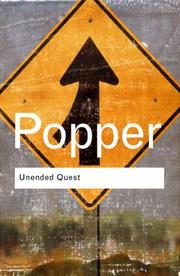
Popper's famous and controversial attack on Plato as a proto-totalitarian thinker forces you to defend or revise everything you have learned. Reading it last turns the whole curriculum into an active debate rather than passive absorption.
Discussion
Keep reading
Paths that share books, cover the same subject, or open a related topic.