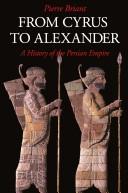
From Cyrus to Alexander
Pierre Briant · 2002 · 1206 pages
As an Amazon Associate we earn from qualifying purchases. Some book links are affiliate links; you pay the same price and we may earn a small commission.
About this book
Around 550 B.C.E. the Persian people--who were previously practically unknown in the annals of history--emerged from their base in southern Iran (Fars) and engaged in a monumental adventure that, under the leadership of Cyrus the Great and his successors, culminated in the creation of an immense Empire that stretched from central Asia to Upper Egypt, from the Indus to the Danube. The Persian (or Achaemenid, named for its reigning dynasty) Empire assimilated an astonishing diversity of lands, peoples, languages, and cultures. This conquest of Near Eastern lands completely altered the history of the world: for the first time, a monolithic State as vast as the future Roman Empire arose, expanded, and matured in the course of more than two centuries (530-330) and endured until the death of Alexander the Great (323), who from a geopolitical perspective was "the last of the Achaemenids." Even today, the remains of the Empire-the terraces, palaces, reliefs, paintings, and enameled bricks of Pasargadae, Persepolis, and Susa; the impressive royal tombs of Naqsh-i Rustam; the monumental statue of Darius the Great-serve to remind visitors of the power and unprecedented luxury of the Great Kings and their loyal courtiers (the "Faithful Ones"). Though long eclipsed and overshadowed by the towering prestige of the "ancient Orient" and "eternal Greece," Achaemenid history has emerged into fresh light during the last two decades. Freed from the tattered rags of "Oriental decadence" and "Asia
Appears in these reading paths

Ancient Persia: the best books on the Achaemenid Empire and beyond
Related reading guides
Reader reviews
Ratings and notes from readers — tagged with how deep into the subject they were.
Loading reviews…