Anarchism suffers from its cartoon, a synonym for disorder and bomb-throwing. The actual tradition is a rich body of political philosophy asking a hard question, whether human beings can cooperate and flourish without coercive hierarchy. Reading in order matters because the classic texts assume a context. Meet the idea plainly first, then the founding theorists, then the history and imagination that tested it.
Approached fairly, this is a serious argument worth understanding whether or not you accept it.
Meeting the idea
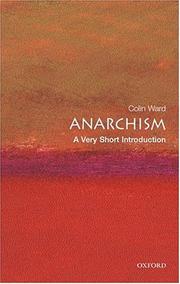
Start with Anarchism, Colin Ward's calm, practical introduction that presents it as an everyday principle of self-organization rather than a fantasy. It clears away the caricature. Then go to the founders. What Is Property?, Pierre-Joseph Proudhon's foundational text and the source of the famous phrase, and God and the state, Mikhail Bakunin's fierce critique of authority, lay out the early poles of the tradition.
The classic theorists
The warmest and most influential thread runs through Kropotkin. The conquest of bread and other writings sketches his vision of a cooperative economy, while Mutual Aid, his study of cooperation in nature and human society, is his enduring scientific and moral argument. Add Anarchism and Other Essays, Emma Goldman's vivid case connecting anarchism to freedom in everyday life.
History and imagination
For the bigger map, Anarchism: From Theory to Practice, Daniel Guerin's clear synthesis, organizes the tradition's ideas, and Demanding the Impossible, Peter Marshall's vast history, is the comprehensive reference. Two books from Murray Bookchin, The Spanish Anarchists, his history of the movement's most serious real-world experiment, and Post-scarcity anarchism, his rethinking for a modern industrial age, show the idea meeting reality and technology.
Close with fiction. The Dispossessed, Ursula K. Le Guin's novel of an anarchist world in all its promise and friction, is the most honest thought experiment in the tradition, admiring but never naive.
Read in this arc, anarchism becomes a coherent conversation about freedom and cooperation rather than a slur. Follow the full path to take the books in order.
Follow the full reading path →
Ready to learn something deeply?
Build a reading path — free