Two problems make this subject hard to read your way into. The first is that alchemy attracts occult publishing, so a genuinely scholarly history sits on the same shelf as symbol-decoding and spiritual self-help, and the covers do not help you tell them apart. The second is that the history of chemistry proper is usually taught backwards — as a march of correct answers — when the interesting thing is how competent, careful people worked productively with a theory we now consider wrong.
So the order below moves in three stages: popular books that give you the chemistry and the appetite, scholarship that treats alchemy as laboratory practice rather than metaphor, and then the primary texts, which read very differently from any book written about them.
Get the chemistry in your hands first
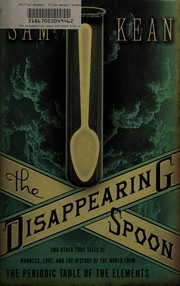
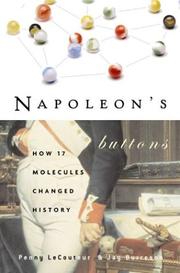
Start with Uncle Tungsten. Oliver Sacks writes about a wartime London boyhood spent with metals, and it does the one thing no history can: it makes the elements feel like objects you could hold. It is the better entry than the obvious alternative, The Disappearing Spoon, which is enormously enjoyable but built from anecdotes — it will leave you with stories rather than a shape. Read Sam Kean second, when the periodic table already means something. Napoleon's Buttons by Penny LeCouteur and Jay Burreson takes seventeen molecules and traces their effects on history; the structures are drawn out but no chemistry background is assumed.
The serious history of alchemy
The secrets of alchemy by Lawrence Principe is the pivot of this whole path and the book to buy if you buy only one. Principe is a chemist as well as a historian, and he reconstructed alchemical recipes in the lab — including the famous glass-tree of Diana — which lets him show that the notoriously obscure language was often deliberate code for real reproducible procedures.
Read it before the two books that will otherwise mislead you. Alchemy: The Secret Art by Stanislas Klossowski de Rola is essentially a picture book of alchemical emblems with commentary: valuable as a visual source, not a history. The forge and the crucible by Mircea Eliade is a history-of-religions argument that treats alchemy as spiritual transformation. It is a serious book by a serious scholar, but its approach has been substantially displaced by the practice-centred historians, and taking it as the current view will misinform you. Historians of science and historians of religion genuinely disagree here about what alchemy primarily was; Principe gives you the equipment to follow the disagreement.
Distilling Knowledge by Bruce T. Moran is short and complements Principe directly, on how the chymical tradition fed the scientific revolution. The aspiring adept, Principe again, is the specialist monograph showing that Robert Boyle — the supposed founder of modern chemistry — practised alchemy seriously all his life.
Primary sources and the modern story
The sceptical chymist is Boyle's own 1661 dialogue and is heavy going: seventeenth-century prose, a debate between named speakers, and no concessions to you. Elements of Chemistry is Lavoisier from 1789, and the contrast is the point — it is recognisably a textbook, with a table of simple substances and a new nomenclature. Reading them back to back is the fastest way to feel what actually changed. Antoine Lavoisier by Arthur Donovan is the scholarly biography that supplies the context, including the tax-farm work that sent him to the guillotine.
Finish with the narrative histories. Mendeleyev's Dream by Paul Strathern is a light, fast run from the Greeks to the periodic table. The Norton history of chemistry by W. H. Brock is the opposite: the standard one-volume scholarly history, dense and organised by problem rather than by hero. The Alchemy of Air by Thomas Hager tells the Haber-Bosch story — the fixing of nitrogen from air, which feeds much of the world and also armed a war.
Take the path in order and the mystical shelf stops being confusing, because you will know what the historians actually found.
Follow the full ordered path here: How to Read the History of Chemistry, from Alchemy Onwards.
Ready to learn something deeply?
Build a reading path — free