Agatha Christie Reading Order: Where to Start
This curriculum guides you through Agatha Christie's work in a carefully sequenced path — starting with her most iconic and accessible novels, then deepening into each major series in order, and finally exploring her celebrated standalones. Each stage builds familiarity with Christie's style, her recurring detectives, and her increasingly complex plotting techniques.
Meet the Detectives: The Perfect Entry Points
BeginnerGet hooked on Christie's voice and meet her two greatest detectives — Hercule Poirot and Miss Marple — through their most beloved and accessible introductions.
▸ Study plan for this stage
Pace: 6–8 weeks total: Week 1–2 — "The Mysterious Affair at Styles" (~20–25 pages/day, ~30 min/session); Week 3–4 — "The Murder at the Vicarage" (~20–25 pages/day, ~30 min/session); Week 5–7 — "And Then There Were None" (~25–30 pages/day, ~35 min/session); Week 8 — review, reflection, and exercises. Read
- Hercule Poirot's 'little grey cells': his method of pure psychological and logical deduction over physical clues, introduced in 'The Mysterious Affair at Styles'
- The unreliable narrator effect: how Christie uses Hastings in 'Styles' to guide — and deliberately mislead — the reader's attention
- Miss Marple's 'village analogy' method: her technique in 'The Murder at the Vicarage' of solving crimes by comparing suspects to people she has known in St. Mary Mead
- Christie's use of the 'closed circle' of suspects: a confined setting (Styles Court, the village of St. Mary Mead, Soldier Island) that limits the suspect pool and builds claustrophobic tension
- The 'least likely suspect' principle: Christie's signature misdirection, planting the solution in plain sight while directing suspicion elsewhere
- Atmosphere as a narrative tool: how each book's setting — a country house, an English village, a remote island — shapes tone, pacing, and the psychology of its characters
- The nursery rhyme as structural scaffold: how 'And Then There Were None' uses 'Ten Little Soldier Boys' to create dread, inevitability, and dark irony
- Fair-play detection: Christie's contract with the reader — all clues are present in the text, and a careful reader can, in theory, solve the mystery before the reveal
- In 'The Mysterious Affair at Styles,' what specific verbal and physical clues does Poirot notice that Hastings overlooks, and what does this reveal about the difference between observation and mere looking?
- How does Miss Marple's outsider-yet-insider status in 'The Murder at the Vicarage' — a seemingly harmless elderly woman in her own village — give her an investigative advantage that a professional detective might not have?
- In 'And Then There Were None,' Christie abandons a single detective figure entirely. How does the absence of a Poirot or Marple change the reader's experience of suspense and trust — and who, if anyone, fills the 'detective' role?
- Across all three books, how does Christie use setting as more than a backdrop — in what ways do Styles Court, St. Mary Mead, and Soldier Island actively shape the plot and the psychology of the characters?
- Identify one moment in each book where Christie plants a clue in plain sight that only becomes obvious in retrospect. What technique does she use to hide it from the reader the first time through?
- How does Christie's narrative voice differ across the three books (first-person via Hastings, first-person via Clement, shifting third-person), and how does each choice affect your sympathy, suspicion, and sense of reliability?
- The Clue Audit: After finishing each book, go back and find at least three clues Christie planted before the reveal. Write one sentence for each explaining exactly how she disguised it — was it buried in dialogue, hidden by a red herring, or stated so plainly it seemed unimportant?
- Character Suspicion Tracker: While reading 'And Then There Were None,' keep a running list after each chapter of your top three suspects and your reason for each. After finishing, compare your early guesses to the solution — trace the exact moment Christie steered you wrong.
- Detective Comparison Essay (300–400 words): Write an informal comparison of Poirot's method in 'Styles' and Marple's method in 'The Murder at the Vicarage.' Focus on HOW each detective thinks, not just what they discover. What does each method say about Christie's view of human nature?
- Setting Sketch: Choose one of the three settings (Styles Court, St. Mary Mead, Soldier Island) and draw or write a detailed description of it as you imagine it. Then find every passage in the text that references the setting and annotate how the physical space creates tension or reveals character.
- The Re-Read Test: Re-read only the final two chapters of 'The Mysterious Affair at Styles' immediately after finishing the book. Annotate every sentence in Poirot's explanation where you can now point back to an earlier scene that confirmed it. This trains the 'fair-play' reading eye.
- Voice Swap Exercise: Take a short scene from 'And Then There Were None' (the dinner scene on the first night works well) and rewrite it as if Hastings from 'Styles' were narrating it. How does the narrator's personality change what gets noticed, emphasized, or dismissed?
Next up: By internalizing Poirot's logical method, Marple's psychological intuition, and Christie's structural tricks across these three foundational books, the reader has built the 'Christie eye' — the habit of suspicion, close reading, and pattern recognition — that is essential for tackling her more complex, layered, and daring works in the next stage.

This is Christie's debut novel and the very first Poirot mystery — the ideal starting point to meet the Belgian detective and understand his 'little grey cells' method from the very beginning.

This is Miss Marple's first full novel, introducing St. Mary Mead and Jane Marple's deceptively sharp mind — read it here so you have both detectives established before going deeper.

Christie's best-selling standalone and the world's best-selling mystery novel — it features no series detective, making it a pure, thrilling showcase of her plotting genius and a great confidence-builder.
The Poirot Classics: The Essential Cases
BeginnerRead the most celebrated Poirot novels in the order Christie wrote them, building a deep understanding of his character, methods, and the evolution of the series.
▸ Study plan for this stage
Pace: 6–8 weeks total: Week 1–2 — "The Murder of Roger Ackroyd" (~25–30 pages/day); Week 3–4 — "Murder on the Orient Express" (~25–30 pages/day); Week 5–6 — "Death on the Nile" (~25–30 pages/day); Weeks 7–8 — review, reflection, and exercises across all three novels.
- The 'little grey cells': Poirot's method of pure psychological and logical deduction over physical clues — observe how he prioritizes motive and character over forensic evidence across all three novels
- The unreliable narrator: 'The Murder of Roger Ackroyd' is a landmark experiment in first-person narration; understanding how Christie manipulates reader trust through Dr. Sheppard's account is foundational to appreciating her craft
- The closed-circle mystery: all three novels confine suspects in a bounded space (a village, a snowbound train, a Nile steamship), and readers should understand how Christie uses geography and isolation as structural and dramatic tools
- Misdirection and the 'least likely suspect' principle: Christie systematically plants red herrings and engineers reader assumptions — track how each novel's solution subverts the most obvious suspect
- Character as clue: in Christie's world, personality, social class, nationality, and personal history are evidence — note how Poirot 'reads' people in each book as carefully as a crime scene
- The evolution of Poirot's moral compass: from the relatively contained justice of 'Roger Ackroyd' to the collective guilt verdict of 'Orient Express' to the tragic love-and-murder triangle of 'Death on the Nile', Poirot's ethical reasoning grows more complex and ambiguous
- Christie's use of ensemble casts: each novel features a large cast of suspects with distinct voices — study how Christie differentiates characters efficiently and uses their interactions to generate suspense
- The role of confession and revelation: all three novels culminate in a dramatic unmasking scene — compare how Poirot stages each revelation and what it reveals about his personality and sense of theatre
- In 'The Murder of Roger Ackroyd', what specific narrative technique does Christie use to deceive the reader, and at what point on re-reading does the deception become visible? What does this reveal about the contract between author and reader in detective fiction?
- How does the snowbound Orient Express function as more than just a setting — in what ways does the train's physical isolation shape the plot mechanics, the psychology of the suspects, and Poirot's investigative approach?
- In 'Death on the Nile', Poirot witnesses the destructive power of obsessive love before the murder even occurs. How does this foreknowledge affect his investigation, and does it compromise his objectivity?
- Compare the moral verdicts Poirot delivers at the end of each novel. In which case does he act most as a traditional agent of justice, and in which does he most resemble a judge exercising personal discretion — and what does Christie seem to endorse?
- Christie populates all three novels with large casts of suspects from varied social backgrounds. Choose one novel and explain how class, nationality, or social role is used as both a red herring and a genuine clue.
- How does Poirot's relationship with his 'Watson' figures (Captain Hastings is absent in two of these novels) change across the three books, and what does Christie gain narratively by sometimes removing that confidant entirely?
- Re-read the final chapter of 'The Murder of Roger Ackroyd' and then go back to Chapter 1. Annotate every sentence where Dr. Sheppard's narration is technically truthful but deliberately misleading. Write a one-page analysis of Christie's technique of 'concealment through omission'.
- Create a suspect grid for each novel: list every suspect, their stated alibi, their motive, and the one clue that either incriminates or exonerates them. After finishing each book, check your grid against the solution — note where Christie planted the decisive clue and whether you marked it correctly.
- Write a 300–500 word 'Poirot's case notes' entry for one novel, written in Poirot's voice, summarizing his psychological profile of the killer before the reveal. Focus on using his language of character and motive rather than physical evidence.
- Map the geography of confinement: draw a simple diagram of the key location in each novel (the village of King's Abbot, the Orient Express carriage layout, the Karnak steamship deck plan). Use the text to place suspects and key events on your map, then identify which spatial relationships Christie exploits for the plot.
- Comparative essay (500–700 words): Choose the moral dilemma Poirot faces in either 'Murder on the Orient Express' or 'Death on the Nile' and argue whether his final decision was just. Use specific scenes from the text as evidence, and consider what a conventional detective (one bound strictly by law) would have done differently.
- Before reading the solution of each novel, write down your own 'accusation' — your prime suspect and your reasoning. After finishing, review your prediction: identify the exact moment Christie planted the clue that should have changed your mind, and reflect on why the misdirection worked on you.
Next up: Mastering these three landmark cases gives the reader a firm grasp of Poirot's core methods and Christie's structural playbook, making them ready to explore either Christie's parallel Miss Marple series — where many of the same techniques are redeployed through a radically different detective persona — or deeper cuts in the Poirot canon where Christie pushes his character into even darker psycholo
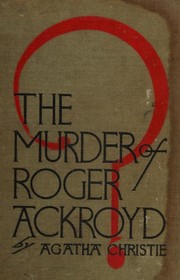
Widely considered one of the greatest mystery novels ever written, this 1926 landmark features a jaw-dropping twist that redefined the genre — your Poirot foundation makes the reveal hit even harder.
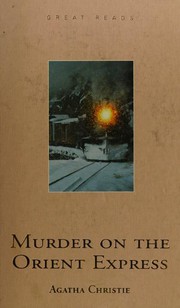
Perhaps Christie's most famous novel, this is Poirot at his theatrical best — a closed-circle mystery with an unforgettable solution that rewards the reader who now knows Poirot well.
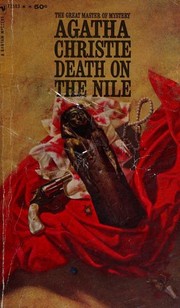
A rich, sun-drenched thriller set in Egypt with a large cast of suspects — reading it after Orient Express lets you appreciate how Christie varies her settings and misdirection techniques.
Miss Marple in Full: The Village Sleuth Deepens
IntermediateFollow Miss Marple through her most important cases in sequence, appreciating how Christie develops her as a character and sharpens her social observation across the decades.
▸ Study plan for this stage
Pace: 6–8 weeks total; roughly 2–2.5 weeks per novel. Each book runs ~200–250 pages, so aim for 15–20 pages per sitting, 4–5 sittings per week. Read each novel in one sustained arc before moving to the next, then spend 2–3 days on reflection and exercises before continuing.
- Miss Marple's 'village analogy' method: her habit of mapping every new crime onto a parallel situation from St. Mary Mead, and how Christie deepens this technique across the three novels
- Social observation as detection: Miss Marple reads class signals, domestic routines, and small behavioural inconsistencies as clues — trace how this sharpens from 'A Murder Is Announced' through 'At Bertram's Hotel'
- The post-war English village and its disruption: 'A Murder Is Announced' is set in a community still adjusting to WWII upheaval; identity fraud and displaced persons are central — connect this historical context to the plot mechanics
- Mirrors, performance, and false surfaces: 'They Do It with Mirrors' literalises the theme of misdirection through the theatrical Serrocold household; analyse how Christie uses the 'magician's trick' of drawing the eye away from the real crime
- Nostalgia vs. reality in 'At Bertram's Hotel': the hotel presents a perfectly preserved Edwardian England that turns out to be a criminal façade — examine Christie's critique of sentimentality and false memory
- Character development across decades: compare Miss Marple's age, physical frailty, and emotional register in each book to see how Christie gradually acknowledges her detective's mortality without diminishing her acuity
- The role of female networks and domestic knowledge: in all three books Miss Marple's intelligence comes partly through other women (Dolly Bantry, Ruth Van Rydock, Bess Sedgwick) — map these relationships and what each woman contributes
- Christie's structural plotting: study how each novel plants its alibi-breaking or identity-concealing device, and how the 'impossible' or 'overlooked' clue is seeded early and paid off at the denouement
- In 'A Murder Is Announced', the killer's plan depends on a confusion of identity rooted in wartime displacement. What specific village analogy does Miss Marple use to crack the case, and why is it convincing rather than merely whimsical?
- In 'They Do It with Mirrors', the murder is committed in plain sight of multiple witnesses yet goes unnoticed. How does Christie construct this misdirection, and what does Miss Marple perceive that everyone else misses?
- How does Miss Marple's relationship with Ruth Van Rydock in 'They Do It with Mirrors' differ from her relationship with Dolly Bantry in 'A Murder Is Announced', and what does each friendship reveal about Miss Marple's social world and emotional life?
- By 'At Bertram's Hotel', Miss Marple is visibly older and is sent on holiday rather than stumbling into a case. How does Christie use the hotel's artificial nostalgia as both a plot device and a commentary on Miss Marple's own relationship with the past?
- Across all three novels, Christie repeatedly uses the idea that the 'obvious' suspect or reading of events is a deliberate plant. Choose one novel and trace, chapter by chapter, how Christie lays the false trail and where she hides the true one.
- How does Miss Marple's method of social observation — reading people through the lens of village 'types' — both empower and limit her as a detective? Use evidence from at least two of the three novels.
- Village Analogy Journal: Each time Miss Marple makes a St. Mary Mead comparison in any of the three novels, write it down verbatim. After finishing all three books, categorise the analogies (by type of person, type of crime, type of deception) and write a one-paragraph analysis of whether the pattern reveals anything about Miss Marple's worldview.
- Clue Audit for 'They Do It with Mirrors': Re-read the chapter in which the murder occurs, this time annotating every sentence that contains a fair-play clue Christie has planted. Write a short 'prosecutor's brief' (one page) explaining how a careful reader could have solved it before the reveal.
- Character-Network Diagram: For 'A Murder Is Announced', draw a relationship map of all characters, marking each with their true identity vs. their assumed identity. Annotate the edges with what each character knows or conceals. Use this to write two sentences explaining why the killer's plan almost worked.
- Nostalgia Audit for 'At Bertram's Hotel': Make two columns — 'Details that signal genuine Edwardian charm' and 'Details that signal something is wrong.' Work through the novel and populate both columns as you read. After the reveal, review your second column: how many warning signs did you catch in real time?
- Comparative Character Essay (500 words): Argue whether Miss Marple becomes more or less confident in her own judgement across the arc from 'A Murder Is Announced' to 'At Bertram's Hotel'. Use at least three specific scenes or quotations, one from each novel.
- Rewrite the Denouement: Choose one of the three novels and rewrite Miss Marple's final explanation scene (1–2 pages) as if she were explaining it to a sceptical police officer who dismisses village analogies. This forces you to translate her intuitive reasoning into explicit, evidence-based argument — and reveals how much of her method is implicit.
Next up: Mastering Miss Marple's social-observation method and Christie's identity-and-misdirection plotting in these three novels builds the analytical vocabulary needed to tackle Christie's broader body of work, where similar techniques are applied to radically different detectives, settings, and narrative structures.
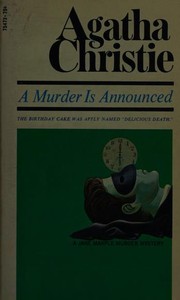
Considered Miss Marple's finest novel and a post-WWII masterpiece — the premise (a murder announced in the local paper) is brilliantly original and shows Marple at the height of her powers.
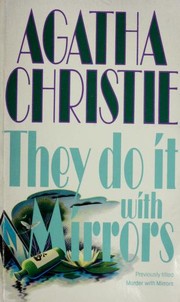
A tightly constructed Marple mystery set in a reform school that showcases Christie's skill at hiding the solution in plain sight — a natural next step after the complexity of A Murder Is Announced.
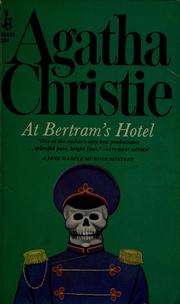
A later Marple novel with a melancholy, reflective tone as Jane revisits a beloved London hotel — it rewards readers who know Marple well and shows Christie's evolving, more atmospheric style.
Poirot's Greatest Challenges: The Late Masterworks
IntermediateTackle the most ambitious and emotionally complex Poirot novels, where Christie pushes the boundaries of the detective genre and gives Poirot genuine moral weight.
▸ Study plan for this stage
Pace: 6–8 weeks total: Week 1–2 — Evil Under the Sun (~30 pages/day); Week 3–4 — Crooked House (~25 pages/day, slower pace for its denser psychological texture); Week 5–7 — Curtain (~20 pages/day, savoring the finale); Week 8 — review, reflection, and exercises
- The 'closed world' mystery perfected: how Evil Under the Sun uses a holiday resort as a pressure cooker that forces every suspect into proximity and strips away alibis
- Misdirection through character sympathy: Christie's manipulation of reader empathy in Evil Under the Sun to make the least-suspected characters feel innocent
- The 'poisoned house' as metaphor: how Crooked House uses the Leonides family mansion as a symbol of inherited corruption, moral rot, and the danger of a dynasty built on compromise
- The unreliable narrator's emotional blind spot: how the first-person narrator in Crooked House is compromised by love, and what that costs the reader in objectivity
- Guilt beyond the law — Christie's willingness in Crooked House to place the killer entirely outside conventional moral categories, challenging the genre's usual reassurance
- Poirot as moral agent, not just detective: how Curtain transforms Poirot from puzzle-solver into judge, jury, and reluctant executioner, giving him genuine ethical weight
- The farewell to the 'golden age' contract: how Curtain deliberately dismantles the cozy conventions Christie herself established — the detective's infallibility, the reader's safety, the tidy resolution
- Mortality, legacy, and sacrifice: the elegiac tone of Curtain and what Christie communicates by writing — and then withholding — Poirot's death for decades
- In Evil Under the Sun, how does Christie engineer the central alibi trick, and what assumptions about time, place, and identity does the reader have to accept for the deception to work?
- How does the setting of the Jolly Roger Hotel in Evil Under the Sun function as more than a backdrop — what does the 'holiday' atmosphere specifically enable Christie to do with her suspects and red herrings?
- In Crooked House, why is the identity of the killer considered one of Christie's most shocking reveals, and how does the novel's moral framework differ from a standard detective story where justice is cleanly served?
- How does the first-person narration in Crooked House shape — and distort — the reader's perception of the Leonides family, and where can you identify specific moments where the narrator's bias is most dangerous?
- In Curtain, Poirot identifies a murderer who has never technically committed a murder themselves — explain this concept and argue whether you think Poirot's final action is morally justified or a betrayal of his own principles.
- How does Curtain recontextualize the entire Poirot canon by returning to Styles? What does Christie gain — emotionally and structurally — by ending where everything began?
- Alibi Diagram for Evil Under the Sun: Draw a timeline of the murder day and map every suspect's claimed movements. Identify the exact moment the central alibi trick is sprung and annotate where Christie plants — and conceals — the clues that make it work.
- Sympathy Tracking Journal: As you read Evil Under the Sun, keep a running log after each chapter of which character you most and least suspect, and why. After the reveal, go back and identify the three specific techniques Christie used to manipulate your sympathies away from the truth.
- Crooked House Family Tree and Moral Audit: Create a detailed family tree of the Leonides household. Beside each character, note one morally compromising trait or secret. Then write a short paragraph arguing which character — aside from the killer — bears the most moral responsibility for the tragedy.
- Unreliable Narrator Close Reading: Select two scenes in Crooked House where the narrator describes Sophia or another key character. Rewrite each scene from a neutral, third-person perspective. Compare the two versions and write a reflection on what emotional information is gained or lost.
- Poirot's Moral Case File for Curtain: Write a one-page internal monologue from Poirot's point of view at the moment he makes his final decision. Draw on evidence from the text to justify his reasoning, then write a one-paragraph rebuttal from Hastings' perspective challenging that decision.
- Comparative Essay — The Three Endings: Write a 500-word essay comparing how each of the three books resolves its central crime. Focus specifically on whether justice is achieved, who delivers it, and whether the reader is left reassured or unsettled — arguing which ending is the most morally honest.
Next up: By confronting Christie's most morally complex and genre-defying work in the Poirot series, the reader is now equipped to step back and evaluate her entire career as a literary achievement — examining her craft, her cultural legacy, and her place in the broader history of crime fiction.

A sun-soaked, perfectly constructed puzzle set at a seaside resort — it's a masterclass in misdirection and a joy to read after you've learned to second-guess Christie's tricks.
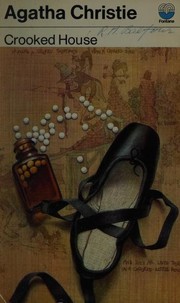
One of Christie's own personal favorites, this dark standalone-adjacent thriller features one of her most shocking endings — by this stage you're ready for her most unsettling work.

Written during WWII and published in 1975 as Poirot's final case, this is the emotional and literary culmination of the entire series — save it for last as Christie intended.
Discussion
Keep reading
Paths that share books, cover the same subject, or open a related topic.