Miss Marple Reading Order: Where to Start
This curriculum follows Agatha Christie's Miss Marple canon in the order Christie wrote it, beginning with the short stories that introduced the character, then moving through the twelve novels in sequence. Reading in this order lets you watch Miss Marple evolve from a village gossip into a fully-formed detective icon, and appreciate how Christie's plotting and themes deepen over time.
Meet Miss Marple – The Original Short Stories
BeginnerGet acquainted with Miss Marple's character, her 'village parallel' method of detection, and Christie's clean, accessible prose before tackling the novels.
▸ Study plan for this stage
Pace: 3–4 weeks, ~15–20 pages/day (the book is ~250 pages across 13 stories); read 3–4 stories per sitting, 2–3 sittings per week, leaving time for reflection exercises between sessions
- Miss Marple's 'village parallel' method: she solves crimes by drawing analogies between the case at hand and similar human behaviour she has observed in St. Mary Mead, demonstrating that small-village life is a microcosm of all human nature
- The Tuesday Night Club framing device: stories are told aloud by various narrators and Miss Marple must out-deduce them, establishing her as a deceptively sharp mind beneath a gentle, elderly exterior
- Characterisation through underestimation: other characters (and the reader) repeatedly dismiss Miss Marple as a fussy old spinster, and Christie uses this gap between perception and reality as a structural engine of surprise
- Christie's clean, economical prose style: short sentences, dialogue-driven exposition, minimal description — ideal for studying how to convey character and clue efficiently
- Fair-play detection: Christie plants all necessary clues in plain sight before the solution; learning to spot them in short-story form builds the skill needed for her novels
- The ensemble cast as a foil: each guest narrator (Raymond West, Dr. Pender, Sir Henry Clithering, etc.) represents a different worldview, and Miss Marple's village wisdom consistently trumps professional or cosmopolitan expertise
- Motive, means, and opportunity in miniature: the short-story format forces Christie to compress the classic detective-fiction triangle, making each element easier to isolate and study
- The role of gossip and social observation as legitimate investigative tools: Miss Marple treats hearsay, rumour, and character assessment as evidence, challenging the reader to take 'soft' data seriously
- Can you name at least three specific 'village parallels' Miss Marple uses across the stories, and explain which aspect of human nature each one illustrates?
- How does the Tuesday Night Club format shape the reader's experience — what does hearing a story second-hand before Miss Marple solves it add to the tension?
- In what ways does Christie embed the key clue in plain sight in at least two of the thirteen stories, and why might a first-time reader overlook it?
- How do the other club members' reactions to Miss Marple's solutions reveal Christie's commentary on gender, age, and social authority in 1920s–30s England?
- What distinguishes Miss Marple's reasoning process from that of a 'professional' detective like a police inspector, and what does Christie suggest are the advantages of her approach?
- After reading all thirteen stories, how would you describe Christie's prose style in your own words — and which specific techniques make it feel accessible without being simplistic?
- Village Parallel Journal: After each story, write one paragraph identifying Miss Marple's village analogy. Then invent your own — think of a real-world situation you know well and map it onto the crime in that story. This trains the analogical thinking at the heart of her method.
- Clue Audit: Re-read one story immediately after finishing it and highlight every sentence that contains a genuine clue. Annotate whether you noticed it on first reading and why or why not. Do this for at least four stories across the collection.
- Character Dossier: Keep a running one-page dossier on Miss Marple herself — update it after every story with new traits, habits, phrases, or opinions revealed. By story thirteen you should have a detailed portrait built entirely from textual evidence.
- Narrative Voice Comparison: Pick two stories told by different guest narrators (e.g., Raymond West vs. Sir Henry Clithering). Write a short comparison (200–300 words) of how the narrator's personality colours the telling, and consider how this affects what details the reader receives.
- Predict-Before-Reveal Exercise: At the midpoint of each story (before Miss Marple speaks her solution), pause and write down your own solution with your reasoning. After finishing, compare your logic to Miss Marple's and note where your thinking diverged.
- Prose Style Imitation: Choose one page of Christie's prose you admire and rewrite a short scene from it in a deliberately over-written style (florid adjectives, long sentences). Then rewrite it in Christie's actual style. Reflecting on the contrast will make her economy of language concrete and memorable.
Next up: Mastering Miss Marple's village-parallel logic and Christie's clue-planting technique in these self-contained short stories gives you the analytical vocabulary and character familiarity needed to track her reasoning across the longer, more complex arcs of the full-length novels.
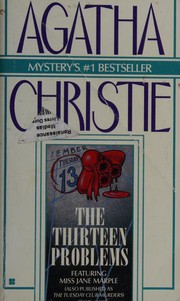
This is where Miss Marple was born — thirteen linked short stories in which she and a group of friends each present an unsolved mystery. Reading it first gives you the character's voice, her deceptively gentle manner, and her core detective philosophy in bite-sized, beginner-friendly pieces.
The First Four Novels – Village Roots
BeginnerRead the first four Miss Marple novels in publication order, building fluency with Christie's structure and Miss Marple's world of St. Mary Mead.
▸ Study plan for this stage
Pace: 8–10 weeks total (~4 books at roughly 2–2.5 weeks each); aim for 20–25 pages per sitting, 4–5 sittings per week. Suggested pace: Week 1–2: The Murder at the Vicarage; Week 3–4: The Body in the Library; Week 5–6: The Moving Finger; Week 7–8: A Murder Is Announced; Week 9–10: review, reflection, and e
- Miss Marple's 'village analogy' method: solving crimes by mapping suspects onto familiar St. Mary Mead archetypes rather than relying on forensic evidence
- The role of St. Mary Mead as a moral microcosm — Christie uses the village to argue that human nature is universal and that evil is not confined to cities or strangers
- The 'cosy' mystery structure: a closed or semi-closed community, a shocking disruption (the murder), methodical social observation, and a drawing-room-style revelation
- Miss Marple as an unreliable-seeming narrator's ally — other characters consistently underestimate her age, gender, and gossip-prone manner, which Christie weaponises as a plot device
- Christie's use of multiple first-person and third-person perspectives across the four novels (e.g., Reverend Clement narrates Vicarage; Jerry Burton narrates Moving Finger) and how point-of-view shapes what the reader is allowed to know
- Red herrings and misdirection: how Christie plants false suspects and misleading clues in each novel, and the difference between a fair-play clue and a deliberate deception
- The outsider-versus-insider dynamic: in The Body in the Library and A Murder Is Announced, murders occur away from or at the edge of St. Mary Mead, testing whether Miss Marple's village wisdom still applies in unfamiliar settings
- Recurring social themes — class anxiety, the disruption of post-war English society, the danger of surfaces and respectability — as seen especially in A Murder Is Announced
- In The Murder at the Vicarage, how does Christie use Reverend Clement as narrator to both reveal and conceal information, and what does his perspective prevent the reader from seeing directly?
- Miss Marple solves the mystery in The Body in the Library partly by recognising that the staged crime scene is 'wrong' in a specific social sense. What village analogy does she use, and why does it point her toward the truth?
- In The Moving Finger, Jerry Burton is an outsider convalescing in Lymstock. How does his outsider status serve Christie structurally, and in what ways does Miss Marple's late arrival in the novel change its momentum?
- A Murder Is Announced opens with a newspaper advertisement announcing a murder — a radical departure from the classic 'body discovered' opening. How does this device affect reader expectations and the novel's central mystery about identity?
- Across all four novels, how does Christie signal that Miss Marple's 'rambling' conversational style is actually a deliberate investigative technique? Cite at least one specific scene from two different books.
- How does Christie's portrayal of post-war English village life evolve from The Murder at the Vicarage (1930) to A Murder Is Announced (1950), and what social anxieties does that shift reflect?
- Clue Mapping: After finishing each novel, draw a simple two-column table — 'Clues Christie Showed Fairly' vs. 'Misdirections Christie Planted.' Compare your tables across all four books to spot her evolving technique.
- Village Analogy Journal: Each time Miss Marple makes a comparison to a St. Mary Mead person or event, write it down with the page number. By the end of stage, categorise them: which analogies involve class, which involve gender, which involve moral character? Look for patterns.
- Narrator Swap Exercise: Choose one chapter from The Murder at the Vicarage (narrated by Clement) and one from The Moving Finger (narrated by Jerry Burton). Rewrite a single paragraph from Miss Marple's point of view. What new information could she plausibly reveal — or hide?
- Suspect Dossiers: For each novel, create a one-page dossier per main suspect (3–4 suspects per book) listing: motive, opportunity, alibi, and the one clue Christie plants that either incriminates or exonerates them. Review after the reveal to assess how fairly each was presented.
- The Announcement Exercise (A Murder Is Announced): Before reading past the first chapter, write your own prediction of what the newspaper advertisement means and who placed it. Seal it (or save it in a document), then compare your theory to Christie's actual solution and analyse where your reasoning went right or wrong.
- Comparative Essay (300–400 words): Write a short response to the question — 'Is St. Mary Mead a safe place or a dangerous one?' — drawing on specific events from at least three of the four novels. This prepares you to think thematically rather than just plot-by-plot.
Next up: Mastering Miss Marple's village-analogy logic and Christie's fair-play clue structure in these four foundational novels equips the reader to tackle the more complex, psychologically layered cases ahead, where Christie will push Miss Marple into increasingly unfamiliar settings and moral ambiguities that demand a deeper understanding of her methods.

The first Miss Marple novel (1930) and the essential starting point — it establishes St. Mary Mead, the supporting cast, and Miss Marple as an amateur sleuth. The vicar's first-person narration makes it especially welcoming for new readers.

A classic 'impossible situation' mystery that playfully subverts the country-house genre. Reading it second shows how Christie builds on familiar tropes while keeping you guessing.

Told from an outsider's perspective, this novel deepens your understanding of how Miss Marple reads a community — perfect for consolidating the 'village parallel' method before the more complex mid-period books.
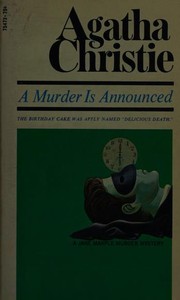
Widely considered one of Christie's finest novels and a fan favourite. The post-war setting and large cast of suspects mark a step up in complexity — a natural bridge to the intermediate stage.
The Middle Novels – Christie at Full Stretch
IntermediateWork through the mid-period novels where Christie experiments with structure, setting, and darker themes, and Miss Marple's role becomes more varied and surprising.
▸ Study plan for this stage
Pace: 6–8 weeks total; read roughly 25–35 pages per day. Suggested pacing: "They Do It with Mirrors" (Week 1–2), "A Pocket Full of Rye" (Week 2–3), "4:50 from Paddington" (Week 4–5), "The Mystery of the Blue Train" (Week 6–8). Allow 2–3 days between novels for reflection and exercises.
- Structural experimentation: Christie uses institutional settings (a reformatory in 'They Do It with Mirrors') and ensemble casts to obscure the killer, moving beyond the classic country-house formula.
- The nursery-rhyme / literary framework as a murder blueprint: 'A Pocket Full of Rye' demonstrates how a pre-existing cultural text can both structure a killer's methodology and serve as Miss Marple's key to unravelling it.
- Miss Marple as an outsider-investigator: In '4:50 from Paddington' Christie delegates the legwork to Lucy Eyelesbarrow, showing how Miss Marple can direct an investigation remotely and expanding her toolkit beyond direct observation.
- Darker psychological themes: These novels move toward greed, institutional corruption, and the exploitation of the vulnerable (the Crackenthorpe family dynamics in '4:50 from Paddington'; the Fortescue household in 'A Pocket Full of Rye') as primary murder motives.
- Setting as character and misdirection: The train journey in 'The Mystery of the Blue Train' and the moving train witness scene in '4:50 from Paddington' use transit and transience to destabilize the reader's sense of a fixed, knowable crime scene.
- The 'village parallel' technique: Miss Marple consistently maps the unfamiliar world of each novel onto analogous people and situations from St. Mary Mead, and these novels test that technique against more complex, cosmopolitan environments.
- Victimology and inheritance: Across all four novels, the identity and vulnerability of the victim is as carefully constructed as the killer's identity — Christie uses wills, estates, and family money as the engine of plot.
- Red herrings through character sympathy: Christie manipulates reader sympathy for morally ambiguous characters (e.g., the philanthropist Lewis Serrocold in 'They Do It with Mirrors') to plant the most effective misdirections of the mid-period.
- In 'They Do It with Mirrors,' how does the reformatory setting function as both a practical cover for murder and a thematic statement about performance and deception — and how does Miss Marple see through it?
- How does the nursery rhyme 'Sing a Song of Sixpence' in 'A Pocket Full of Rye' serve simultaneously as the killer's script and Miss Marple's decoder, and what does this reveal about Christie's view of pattern recognition as detection?
- In '4:50 from Paddington,' what is the narrative and thematic purpose of Lucy Eyelesbarrow, and how does her presence change — or reinforce — Miss Marple's traditional role as the observant village spinster?
- Across 'They Do It with Mirrors' and 'A Pocket Full of Rye,' how does Christie use the domestic household (its staff, routines, and hierarchies) as both the site of crime and the source of its solution?
- How does 'The Mystery of the Blue Train' use the luxury train journey and its international cast of passengers to complicate the 'closed circle of suspects' convention Christie helped establish?
- Comparing all four novels, how does Miss Marple's method of analogical reasoning (mapping strangers onto St. Mary Mead villagers) succeed or strain when applied to wealthier, more mobile, or more psychologically complex social worlds?
- Structural diagram: For each novel, draw a timeline of events as the reader experiences them versus the actual chronological order of events. Annotate where Christie withholds or reorders information and note the effect on suspense.
- Nursery-rhyme mapping ('A Pocket Full of Rye'): Write out the full text of 'Sing a Song of Sixpence' and map each line to a murder event or plot beat in the novel. Then write a short paragraph on whether the rhyme helps or misleads the reader more than it helps Miss Marple.
- Delegation analysis ('4:50 from Paddington'): List every piece of information Miss Marple learns directly versus every piece she learns through Lucy Eyelesbarrow. Argue in 200 words whether Miss Marple could have solved the case without a proxy — and what Christie gains narratively by using one.
- Victim profile comparison: Write a one-page comparative profile of the primary victims across all four novels (Gulbrandsen, Rex Fortescue, the body on the train, and Ruth Kettering). Identify what they have in common structurally (wealth, vulnerability, family conflict) and what Christie varies to keep each mystery fresh.
- Red-herring log: As you read 'They Do It with Mirrors,' keep a running list of every detail that pointed you toward a wrong suspect. After finishing, categorize each red herring: Was it a false clue planted in the text, a character Christie made sympathetic, or an assumption you brought as a reader?
- Setting essay: In 300–400 words, compare how the train setting in 'The Mystery of the Blue Train' and the train-witness opening of '4:50 from Paddington' each use mobility and transience to create a different kind of mystery problem. Consider: what does a moving setting deny the detective that a fixed setting provides?
Next up: Mastering how Christie stretches Miss Marple's methods across varied structures and darker themes in these mid-period novels prepares the reader to appreciate the late-period works, where Christie pushes even further into unreliable narration, meta-fictional self-awareness, and Miss Marple's own mortality and legacy.
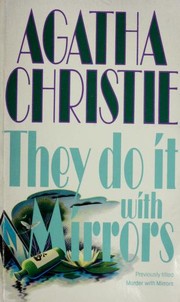
Miss Marple investigates a reform school for young criminals — a more socially engaged setting that rewards readers now comfortable with Christie's misdirection techniques.

A nursery-rhyme-structured plot with a deeply personal motive for Miss Marple. It shows a more emotionally driven side of the detective and is a good mid-series checkpoint.
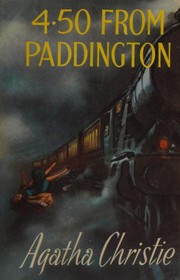
One of the most beloved entries, featuring Miss Marple's friend Lucy Eyelesbarrow as a proxy investigator. The dual-detective structure adds a new layer of complexity and fun.

A second short-story collection gathering further Miss Marple tales written across different periods, offering a change of pace between novels and reinforcing her methods with fresh puzzles.
The Later Novels – An Older, Wiser Marple
IntermediateComplete the remaining novels in sequence, experiencing how Christie portrays an ageing Miss Marple confronting a changing world, with plots that are richer and sometimes darker.
▸ Study plan for this stage
Pace: 6–7 weeks total (~25–30 pages/day, 5 days/week): Week 1–2 for "The Mirror Crack'd from Side to Side," Week 3 for "A Caribbean Mystery," Week 4–5 for "At Bertram's Hotel," and Week 6–7 for "Nemesis." Reserve one day per week for reflection notes and discussion.
- An Ageing Detective in a Changing World: Tracking how Christie uses Miss Marple's physical decline and restricted mobility across all four novels — from St. Mary Mead's suburban sprawl in 'The Mirror Crack'd' to the Caribbean resort and the nostalgic cocoon of Bertram's Hotel — as a deliberate narra
- Nostalgia vs. Modernity: Examining Christie's ambivalence toward post-war change. 'The Mirror Crack'd' mourns the loss of the old village; 'At Bertram's Hotel' exposes nostalgia itself as a dangerous illusion and potential criminal cover; 'A Caribbean Mystery' drops Marple into an entirely alien env
- The 'Nemesis' Archetype: Understanding how 'Nemesis' reframes Marple not merely as a clever amateur but as an instrument of divine justice. The novel's title is programmatic — Marple is explicitly cast as an avenging force, completing a thematic arc seeded in the earlier books.
- Village Analogy in Exotic Settings: How Marple applies her St. Mary Mead 'index of human nature' to a Caribbean hotel ('A Caribbean Mystery') and a London institution ('At Bertram's Hotel'), demonstrating that her method is portable and universal, not parochial.
- Darker Plotting and Moral Complexity: Recognising that these later novels deal with grimmer subject matter — the poisoning of an innocent bystander in 'The Mirror Crack'd,' organised crime and cold-blooded murder in 'At Bertram's Hotel,' and the uncovering of a decades-old injustice in 'Nemesis' — c
- Celebrity, Glamour, and Poison: Analysing the role of Marina Gregg in 'The Mirror Crack'd' — how fame, tragedy, and guilt intersect — and what Christie is saying about the post-war cult of celebrity.
- Institutions as Characters: Reading Bertram's Hotel not just as a setting but as a character in its own right — a facade of Edwardian perfection concealing criminal machinery — and comparing it to the Golden Palm Hotel in 'A Caribbean Mystery.'
- Memory, Justice, and the Dead: Exploring how 'Nemesis' is structurally unique — Marple investigates on behalf of a dead man (Mr. Rafiel) for a victim she never met — and what this says about Christie's mature view of justice as something owed to the past, not just the present.
- In 'The Mirror Crack'd from Side to Side,' why is the actual intended victim different from who is first assumed, and how does Marina Gregg's personal tragedy form the psychological core of the solution? What does this reveal about Christie's use of motive over method?
- How does Miss Marple's position as a tourist and outsider in 'A Caribbean Mystery' both disadvantage and empower her as a detective, and in what ways does Major Palgrave's death mirror the 'someone-knows-something' structure found in earlier Marple novels?
- In 'At Bertram's Hotel,' Christie argues that the past cannot truly be recovered — only counterfeited. How does the hotel's criminal operation serve as a metaphor for this theme, and how does Miss Marple's own nostalgia get complicated by what she discovers?
- Across all four novels, how does Christie handle Miss Marple's physical ageing without diminishing her intellectual authority? Identify at least two specific scenes or passages — one from 'The Mirror Crack'd' or 'A Caribbean Mystery' and one from 'Nemesis' — that illustrate this balance.
- In 'Nemesis,' Miss Marple operates without a client in the conventional sense and without a clearly defined crime at the outset. How does this structural departure affect the pacing and tone of the novel compared to the other three books in this stage?
- Comparing 'A Caribbean Mystery' and 'At Bertram's Hotel': both novels place Marple in artificial, managed environments (a resort, a heritage hotel). What do these settings share thematically, and how do the criminals in each exploit the false sense of safety those environments create?
- Ageing Detective Journal: After finishing each novel, write a short paragraph (150–200 words) from Miss Marple's first-person perspective reflecting on how her age shaped her experience of the case — what it cost her physically, and what wisdom it gave her that a younger detective would lack. Compare all four entries at the end of the stage.
- Setting Autopsy: For 'At Bertram's Hotel,' draw or diagram the hotel's public facade versus its criminal underside. Label which characters belong to which layer and annotate how Christie reveals the gap between appearance and reality chapter by chapter.
- Motive Map for 'The Mirror Crack'd': Create a character web centring on Marina Gregg. Draw lines connecting her to every other significant character, label each relationship, and mark the emotional or material motive each person has. Then identify the moment in the text where Christie plants the decisive clue.
- Comparative Theme Essay (500–700 words): Write an essay arguing either FOR or AGAINST the following claim: 'In these four novels, Christie is more interested in social criticism than in puzzle-plotting.' Use specific evidence from at least three of the four books.
- The Nemesis Test: 'Nemesis' ends with a strong moral statement about justice. After finishing it, find two or three earlier moments in the other three novels where Marple acts as a moral force rather than just a detective. Write a one-page reflection on whether 'Nemesis' is a logical culmination of the arc begun in 'The Mirror Crack'd.'
- Reading Aloud / Dialogue Study: Select one scene from 'A Caribbean Mystery' in which Marple gathers information through seemingly idle conversation. Read it aloud, then rewrite the same scene from the perspective of the person being questioned — what do they think is happening? This exercise sharpens awareness of Christie's technique of concealment through social performance.
Next up: Completing these four novels — in which Marple evolves from village observer to near-mythic instrument of justice — prepares the reader to engage with Christie's short fiction and the broader Marple canon in context, appreciating how the character's thematic depth was built incrementally and how the short stories both anticipate and echo the concerns of the later novels.
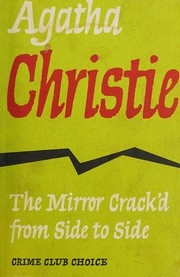
A pivotal novel in which Miss Marple reflects on how St. Mary Mead has changed — and solves a murder in a celebrity milieu. The elegiac tone marks the beginning of the late period.
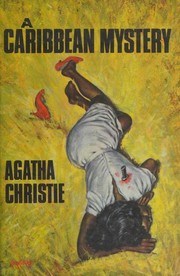
Miss Marple on holiday in the West Indies — a fresh setting that strips away her home-village advantage and proves her genius is universal. A page-turning, sun-drenched puzzle.
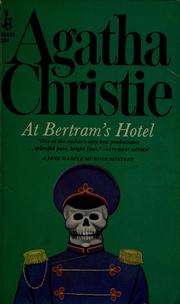
A meditation on nostalgia and deception set in a suspiciously perfect old-fashioned London hotel. Thematically rich and rewards readers who have followed Miss Marple's full arc.

A direct sequel to A Caribbean Mystery and one of Christie's most unusual novels — Miss Marple is sent on a mystery tour with no brief except to 'recognise evil.' A must-read for understanding the character's moral depth.
The Final Novels & Farewell
ExpertFinish the canon with Christie's last two Miss Marple novels, written in her eighties, and appreciate the full arc of one of fiction's greatest detectives.
▸ Study plan for this stage
Pace: 3–4 weeks total: Week 1 — read Sleeping Murder at a leisurely pace (~25–30 pages/day, savoring it as Miss Marple's "last" case written first); Weeks 2–3 — read all 8 stories in Miss Marple's Final Cases, 2–3 stories per sitting with reflection time between; Week 4 — review, re-read key passages, and
- The paradox of 'last written, first set': Sleeping Murder was written during WWII as Christie's intended farewell but published posthumously in 1976, creating a unique tension between authorial intent and publication history.
- Gwenda Reed as a surrogate detective: how the young newcomer's instinctive dread and recovered childhood memories drive the plot, while Miss Marple operates as a wise, guiding presence rather than the sole investigator.
- The 'buried memory' as a mystery device: Sleeping Murder's central conceit — that a repressed traumatic memory is both the clue and the danger — and how it differs from Christie's usual puzzle structures.
- Miss Marple's physical and temporal aging across the short stories: the Final Cases stories span different periods of her life, and Christie subtly adjusts her energy, mobility, and narrative centrality story by story.
- The village-as-lens in miniature form: how the short stories compress the St. Mary Mead worldview into tight spaces, testing whether the 'parallel village' method works at shorter length.
- Christie's thematic preoccupation with evil hidden beneath the respectable surface, brought to its fullest expression in these late works — villains who are charming, trusted, and domestic.
- The elegiac tone: both Sleeping Murder and several Final Cases stories carry a valedictory mood — Christie writing as if aware she is closing a door — and how that shapes pacing, sentiment, and resolution.
- Synthesizing the full Miss Marple canon: recognizing recurring motifs (the dangerous young man, the overlooked woman, the deceptive countryside) and how these final works confirm, subvert, or complete them.
- In Sleeping Murder, why does Miss Marple warn Gwenda NOT to investigate further, and what does this caution reveal about how Christie has evolved Miss Marple's character from her earlier, more eager incarnation?
- How does the recovered-memory plot structure in Sleeping Murder both serve and complicate the classic 'fair play' detective fiction contract with the reader?
- Across the eight stories in Miss Marple's Final Cases, which stories feel most central to Miss Marple's identity as a detective, and which feel more like general Christie mysteries in which she happens to appear — and why does that distinction matter?
- How does Christie use Gwenda and Giles Reed's outsider perspective in Sleeping Murder to replicate the function that Miss Marple's village observations usually serve?
- What does the posthumous publication of Sleeping Murder — Christie's deliberate 'sealed away' farewell — add to the reading experience, and how might it have felt different had it been published in the 1940s as intended?
- Looking across the entire Miss Marple canon you have now completed, what single quality or method most consistently defines Miss Marple as a detective, and how do these final works either crown or quietly complicate that definition?
- Write a 500-word 'authorial postscript' from Christie's imagined perspective explaining why she chose to seal Sleeping Murder away rather than publish it immediately — draw only on textual evidence from the novel itself to support your invented reasoning.
- Create a comparative character map: place Gwenda Reed (Sleeping Murder) alongside Miss Marple and identify every scene where their roles as 'detective' overlap, diverge, or transfer — then write a paragraph arguing who the true protagonist of the novel is.
- Read the eight Final Cases stories and rank them on two axes: (1) how central Miss Marple is to the solution, and (2) how strongly the story reflects the 'St. Mary Mead worldview.' Plot them on a simple 2×2 grid and write a one-sentence insight about each quadrant.
- Conduct a 'closing motif audit': go back through Sleeping Murder and flag every moment of domestic detail, garden imagery, or teatime scene. Then do the same for two stories from Final Cases. Write a short essay on how Christie uses the ordinary and cozy to frame the sinister in these late works.
- Write your own 'Miss Marple's Final Case' — a one-page synopsis of an original mystery that honors the character's core method, her age, and the elegiac tone of this stage, set in a world she would recognizably inhabit.
- Draft a 'Canon Retrospective' — a structured one-page reflection covering: (a) how Miss Marple changed from her first appearance to these final works, (b) one motif that never changed, and (c) your personal verdict on whether Sleeping Murder is a satisfying farewell.
Next up: Completing the full Miss Marple canon here equips the reader with a panoramic view of Christie's craft and themes, making them ideally prepared to move into comparative or critical study — whether that means exploring Hercule Poirot's parallel arc, Christie's standalone thrillers, or secondary scholarship on Golden Age detective fiction as a genre.
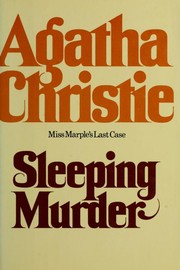
Written during WWII but published posthumously as Miss Marple's 'last case,' it is a haunting, psychologically rich mystery — reading it last gives it the valedictory weight Christie intended.
![Miss Marple's Final Cases and Two Other Stories [8 stories]](https://covers.openlibrary.org/b/id/10317450-M.jpg)
The final short-story collection, gathering remaining tales not included in The Thirteen Problems. Reading it at the very end rounds out the complete canon and offers a quiet, satisfying farewell to St. Mary Mead.
Discussion
Keep reading
Paths that share books, cover the same subject, or open a related topic.