Hercule Poirot Reading Order: Where to Start
This curriculum follows Hercule Poirot through Agatha Christie's novels in publication order, starting with the most accessible and iconic cases to build familiarity with Poirot's methods and voice, then deepening into the richer, more complex middle-period masterworks, and finally arriving at the grand, emotionally resonant finales Christie saved for last. Each stage builds the reader's intuition for Christie's plotting style, red herrings, and Poirot's "little grey cells" so that the later, more layered novels land with full force.
Meet the Little Grey Cells — Foundations
BeginnerGet introduced to Poirot's character, his partnership with Hastings, and Christie's core puzzle-mystery formula in its most welcoming form.
▸ Study plan for this stage
Pace: 8–10 weeks total: Week 1–3 — "The Mysterious Affair at Styles" (~25–30 pages/day); Week 4–6 — "Murder on the Links" (~25–30 pages/day); Week 7–9 — "Poirot Investigates" (read 2–3 short stories per sitting, ~4–5 sittings/week); Week 10 — review, reflection, and exercises.
- The 'little grey cells' method: Poirot's insistence on psychological reasoning and armchair deduction over physical clue-hunting, first demonstrated in The Mysterious Affair at Styles
- The Hastings narrator lens: understanding how Captain Hastings functions as a Watson-figure whose limited perspective controls what the reader sees and suspects, shaping dramatic irony across all three books
- Christie's fair-play puzzle contract: all clues are planted in plain sight for the reader, as seen in the poison-and-will mechanics of Styles and the golf-course crime scene in Murder on the Links
- Character as motive: Christie's insistence that understanding who a person IS unlocks why they killed, illustrated by Poirot's psychological profiling of suspects in both novels
- The short-story mystery formula: how Poirot Investigates distills the Poirot method into compact episodes, each showcasing a single deceptive premise and a swift 'little grey cells' resolution
- Red herrings and misdirection: Christie's deliberate layering of false suspects and misleading evidence, most elaborately constructed in Murder on the Links
- The Poirot–Hastings dynamic as comedy and contrast: Poirot's fastidious, cerebral style played against Hastings's impulsive romanticism for both humor and narrative function
- Setting as atmosphere and constraint: the closed-world principle (the country house in Styles, the French coastal estate in Murder on the Links) that limits suspects and heightens tension
- In The Mysterious Affair at Styles, what specific clues does Poirot observe that Hastings overlooks, and how does this gap illustrate the 'little grey cells' philosophy?
- How does Christie use Hastings's romantic attraction to female suspects in Murder on the Links to mislead both him and the reader — and what does this reveal about the fair-play contract?
- Across Poirot Investigates, which story do you find most structurally elegant, and can you map out exactly where the key clue was hidden in plain sight?
- How does the closed-world setting of Styles Court function as a narrative device — who can and cannot be the murderer, and why does geography matter to Christie's plotting?
- What distinguishes Poirot's investigative method from a purely evidence-based detective like Sherlock Holmes, based on what you have read in these three books?
- By the end of these three books, how would you describe Poirot's personality in your own words — and which specific scenes best support your description?
- The Clue Audit: As you read The Mysterious Affair at Styles, keep a running list of every detail Poirot notices or comments on. After finishing, go back and mark which ones were load-bearing clues. Calculate what percentage you flagged as important on first read.
- Suspect Dossiers: For Murder on the Links, create a one-page character sheet for each suspect listing: their stated alibi, their relationship to the victim, one reason they could be guilty, and one reason they couldn't. Update each sheet as new information arrives, then compare your final verdict to Poirot's.
- Story Deconstruction (Poirot Investigates): Choose any two stories from the collection and write a one-paragraph 'formula breakdown' for each — identify the hook, the false solution, the hidden clue, and the reveal. Then compare the two to find what they share structurally.
- Rewrite the Opening: Take the first chapter of The Mysterious Affair at Styles and rewrite it from Poirot's point of view instead of Hastings's. What details would Poirot emphasize that Hastings glosses over? This exercise sharpens awareness of the narrator's bias.
- The 'Grey Cells' Monologue: After finishing all three books, write a short (300–400 word) monologue in Poirot's voice explaining his method to a skeptical Scotland Yard inspector. Draw only on evidence from these three books — specific cases, specific moments.
- Misdirection Map: In Murder on the Links, diagram Christie's red herrings as a flowchart — each false lead as a branch, with a note on exactly which piece of information was designed to push you down that branch. Identify the moment the narrative 'corrects' each one.
Next up: Mastering Poirot's foundational method and his dynamic with Hastings in these accessible early works equips the reader to appreciate how Christie begins to complicate, subvert, and deepen that formula in her more structurally ambitious novels ahead.

The very first Poirot novel (1920) — start here to meet Poirot and Hastings exactly as Christie introduced them, and to understand the classic country-house murder setup that defines the series.

The second novel deepens the Poirot–Hastings dynamic and introduces a more romantic, continental atmosphere; reading it second cements the partnership before Hastings fades from later books.

This short-story collection lets a beginner sample a wide variety of case types quickly, reinforcing Poirot's methods and Christie's bag of tricks without the commitment of a full novel.
The Golden Age Cases — Essential Reads
BeginnerExperience the three novels most critics and readers consider Christie's absolute masterworks — the cases every Poirot reader must know.
▸ Study plan for this stage
Pace: 6–8 weeks total: Week 1–2 — The Murder of Roger Ackroyd (~20–25 pages/day; ~270 pages); Week 3–4 — Murder on the Orient Express (~20 pages/day; ~260 pages); Week 5–6 — Death on the Nile (~25 pages/day; ~340 pages); Week 7–8 — review, reflection, and exercises.
- The Unreliable Narrator: How Roger Ackroyd weaponizes first-person narration — Dr. Sheppard's account is technically truthful yet profoundly deceptive, establishing that in Christie's world the storyteller itself can be the trap.
- Fair-Play Detection: Christie's implicit contract with the reader — every clue needed to solve the case is present in the text; learning to distinguish genuine clues from deliberate red herrings across all three novels.
- The Closed-Circle Mystery: Each book confines suspects within a bounded space (a village, a snowbound train, a Nile steamer), and understanding how physical isolation shapes both motive and method.
- Poirot's 'Little Grey Cells' Method: Contrasting Poirot's armchair, psychology-first reasoning with physical evidence-gathering — he solves crimes by understanding human nature before he examines a crime scene.
- The Ensemble Suspect Cast: How Christie constructs large casts (Orient Express's twelve passengers, the Nile's tourist party) so that every character carries plausible motive, opportunity, and a secret — and how Poirot systematically eliminates each.
- Misdirection and the Double Bluff: Orient Express and Death on the Nile both plant an 'obvious' solution early; recognising Christie's layered misdirection — the first answer is never the final answer.
- Moral Ambiguity in Justice: All three novels end with Poirot making an ethical judgment that goes beyond mere legal guilt — exploring how Christie uses him to interrogate whether law and justice are the same thing.
- Christie's Prose Economy: How spare, dialogue-driven prose and strategic chapter breaks control the release of information and sustain suspense across three very different settings.
- In The Murder of Roger Ackroyd, what specific narrative technique does Christie use to deceive the reader, and what textual clues — visible on re-reading — signal the truth about Dr. Sheppard's role?
- How does the closed setting of the Orient Express both restrict and expand the pool of suspects, and what is the logical significance of the train being snowbound at the moment of the murder?
- Poirot interviews every suspect aboard the Orient Express before drawing any conclusions. What does this reveal about his method, and how does it differ from relying on physical forensic evidence?
- In Death on the Nile, Jacqueline de Bellefort is established as the most obvious suspect very early. How does Christie use this apparent obviousness as a structural tool, and what does the true solution reveal about the nature of misdirection?
- All three novels end with Poirot choosing how — or whether — to deliver justice to the authorities. Compare his decisions across the three books: what consistent moral philosophy, if any, emerges?
- How does Christie use the 'fair-play' convention differently in each of the three novels — and in which book do you feel the contract with the reader is most boldly tested?
- The Re-Read Audit: After finishing The Murder of Roger Ackroyd, re-read chapters 1–5 with a highlighter. Mark every sentence that is technically true but misleading. Write a one-page annotation explaining how Christie engineered each deception within the rules of fair play.
- Suspect Grid: For Murder on the Orient Express, build a table with all twelve suspects as rows and the columns: Motive / Opportunity / Alibi / Secret / Poirot's Key Insight. Fill it in as you read. At the midpoint, write your own verdict before finishing the novel, then compare it to Poirot's.
- Setting-as-Character Essay: Write 300–500 words on how one of the three physical settings (King's Abbot village, the Orient Express, the SS Karnak) actively enables the crime. Consider what could NOT have happened if the setting were different.
- Clue vs. Red Herring Log: Keep a running two-column reading journal across all three books — one column for details you believe are genuine clues, one for suspected red herrings. After each book, score your accuracy and reflect on what fooled you and why.
- The Moral Verdict Debate: Write a short (one-page) personal response to Poirot's final decision in each novel. Do you agree with his choice? Would a modern detective — or a modern court — reach the same outcome? Use specific details from the text to support your position.
- Christie's Blueprint Reverse-Outline: Choose one of the three novels and work backwards from the solution to map Christie's plotting decisions — where she planted each clue, when she introduced each red herring, and how she timed the reveals. Present this as a chapter-by-chapter timeline.
Next up: Mastering these three masterworks gives the reader a firm command of Christie's core toolkit — the unreliable narrator, the closed circle, the moral verdict — which provides the critical vocabulary needed to appreciate how Poirot evolves, experiments, and occasionally subverts his own formula in the broader and more varied cases that follow.
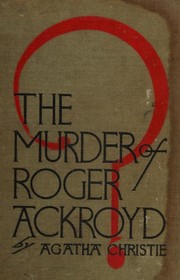
One of the most famous mystery novels ever written; its audacious narrative twist is best appreciated now that you trust Christie's rules — reading it too early spoils the impact, too late and the legend precedes it.
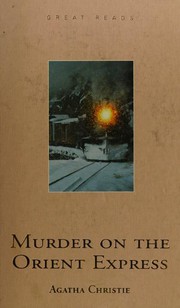
The most iconic Poirot case in popular culture; its closed-setting puzzle and shocking solution are a perfect mid-curriculum milestone that rewards the pattern-recognition skills built so far.
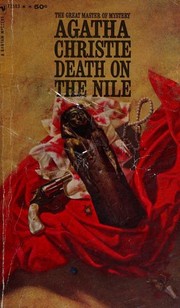
A lush, psychologically rich thriller set in Egypt; it shows Christie at the height of her powers with character motivation and misdirection, a natural step up in complexity from Orient Express.
Deeper Waters — The Darker Middle Period
IntermediateExplore the more psychologically complex and morally ambiguous Poirot novels of the 1940s–50s, where Christie pushes the genre's boundaries.
▸ Study plan for this stage
Pace: 6–8 weeks total; roughly 2–2.5 weeks per book. "And Then There Were None" (~300 pp): ~20 pages/day. "Five Little Pigs" (~250 pp): ~18 pages/day. "Crooked House" (~220 pp): ~20 pages/day. Set aside one full "reflection day" at the end of each book before moving on.
- Moral ambiguity and collective guilt — in 'And Then There Were None,' every victim is also a perpetrator; justice exists outside the law
- The unreliable past — 'Five Little Pigs' is built entirely on memory, showing how the same events yield contradictory truths depending on the witness
- Psychological portraiture over plot mechanics — Christie uses the five retrospective accounts in 'Five Little Pigs' to reveal character depth rather than just clues
- The poisoned family unit — 'Crooked House' presents the Leonides household as a microcosm of dysfunction, where love and murder coexist intimately
- The killer as victim and victim as killer — all three novels blur the line between perpetrator and innocent, challenging the reader's sympathy
- Christie's structural experimentation — 'And Then There Were None' abandons the detective figure almost entirely; 'Five Little Pigs' inverts the timeline; 'Crooked House' withholds the murderer's identity in a deeply unsettling way
- The limits of Poirot's 'little grey cells' — in 'Five Little Pigs' Poirot cannot witness the crime and must reconstruct truth from flawed human memory, testing the boundaries of pure reason
- Tone and atmosphere as narrative tools — each novel uses setting (the island, the retrospective drawing-room, the sprawling estate) to reinforce its moral universe
- In 'And Then There Were None,' how does Christie sustain suspense and reader identification when every character is morally compromised — and what does the novel ultimately argue about human justice versus divine justice?
- How do the five retrospective accounts in 'Five Little Pigs' each reframe the guilt or innocence of Caroline Crale, and what does the cumulative effect reveal about the reliability of memory and love?
- In 'Crooked House,' Christie herself called the ending her most satisfying — why is the identity of the killer so deliberately shocking, and how does it redefine everything the reader assumed about innocence?
- Across all three books, how does Christie use physical or social isolation (a cut-off island, a closed past, a sealed family home) as a structural and thematic device?
- How does Poirot's role differ across these three novels — particularly the near-absence of a detective figure in 'And Then There Were None' — and what does that variation say about Christie's evolving view of the detective genre?
- Which of the three novels do you find most morally disturbing, and can you articulate precisely why using evidence from the text?
- Character guilt matrix: For each book, draw a grid listing every major character against a set of moral charges (deception, selfishness, complicity, violence). Fill in evidence from the text. Compare how guilt is distributed — is any character truly innocent?
- 'Five Little Pigs' unreliable narrator audit: After finishing the five accounts, write a one-page synthesis identifying the single most important fact each narrator distorts or omits, and explain what personal motive drives the distortion.
- Structural diagram: Map the plot architecture of all three novels side by side — timeline, point-of-view shifts, when the murder occurs relative to the narrative start. Write a short paragraph on what each structural choice achieves that a conventional mystery would not.
- Rewrite the ending: Choose one of the three novels and write a 300–400 word alternative final scene in which the 'wrong' character is revealed as the killer. Then write a brief reflection on why Christie's actual choice is more thematically resonant.
- Setting as argument: Write a comparative paragraph (250–300 words) on how the three isolated settings — Soldier Island, the retrospective drawing-room of memory, and Three Gables — each function as a moral trap for the characters inside them.
- Reading journal — the sympathy test: After each chapter of 'Crooked House,' note which character you most suspect and how your sympathy shifts. At the end, review your notes and write a reflection on how Christie manipulated your emotional allegiances throughout.
Next up: Mastering how Christie destabilizes guilt, memory, and the detective's authority in these three novels equips the reader to appreciate her late-period work, where those same themes are refined into even more introspective and elegiac explorations of Poirot's own mortality and legacy.
Though Poirot does not appear, this is Christie's darkest and best-selling novel; reading it here gives essential context for how her moral universe darkened — directly influencing the late Poirot books.
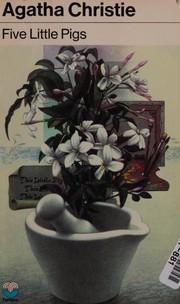
A retrospective murder mystery told through five conflicting testimonies — a structural masterpiece that demands the reader's full analytical engagement and marks Christie's shift toward literary ambition.
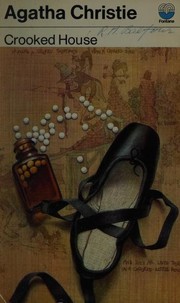
Christie's own personal favourite among her novels; its deeply unsettling solution and morally complex characters prepare the reader emotionally for the finale stage ahead.
Save for Last — The Grand Farewell
ExpertRead the two novels Christie deliberately held back for the end of Poirot's life — books that only fully resonate after knowing the character deeply.
▸ Study plan for this stage
Pace: 1–2 weeks, ~20–25 pages/day — read slowly and deliberately; this is a short novel (~250 pages) but demands pauses for reflection, re-reading of key scenes, and emotional processing. Do not rush.
- The full arc of Hercule Poirot as a character: from his debut in 'The Mysterious Affair at Styles' (set at Styles Court) to his death in the same house — Christie's deliberate structural symmetry closing the circle of his life
- Poirot as moral philosopher: his agonizing decision to commit an act he considers murder in order to prevent further murders, and what this reveals about the tension between law, justice, and personal ethics
- The manipulation of the reader's trust: Christie weaponizes the reader's deep familiarity with Poirot and Hastings as a narrative device, making the final revelation land with maximum emotional force
- Hastings as unreliable narrator: his limitations, blind spots, and emotional biases are not incidental — they are the engine of the mystery, and re-reading his narration after the reveal exposes how thoroughly he was (and the reader was) deceived
- The 'X' figure and the concept of the indirect murderer: Christie's most intellectually daring villain construct, a person who inspires others to kill without ever committing murder themselves
- Poirot's physical decline vs. his mental supremacy: the deliberate contrast between his frail, invalid body and his still-razor-sharp 'little grey cells' as a meditation on aging, mortality, and identity
- The ethics of a 'good death' and self-sacrifice: Poirot knowingly risks — and ultimately accepts — his own death as the price of his final act of justice, raising questions about heroism and sin
- Christie's meta-authorial farewell: written during WWII and locked away, 'Curtain' is Christie's private goodbye to her greatest creation, and reading it with that biographical context transforms every page
- How does Christie use the return to Styles Court to create a sense of full-circle closure, and why is this setting choice so emotionally and structurally significant for a reader who has followed Poirot from the beginning?
- What is the nature of 'X's' method of causing murder, and why does Poirot argue this makes X more dangerous and more guilty than any conventional killer — even though X never pulls a trigger?
- In what ways does Hastings' narration actively mislead the reader, and which specific scenes or observations take on a completely different meaning once the truth about Poirot's plan is revealed?
- How does Poirot justify his final act to himself, and do you find his reasoning morally convincing? Where does Christie seem to stand on the question?
- What does Poirot's physical condition throughout 'Curtain' add to the novel's themes, and how does Christie use his frailty to both deceive the reader and deepen the emotional weight of the ending?
- Why do you think Christie chose to write and seal this novel during World War II rather than publish it immediately, and how does that biographical context shape your reading of it as a farewell?
- The Circle Audit: Before reading, skim or re-read the opening chapters of 'The Mysterious Affair at Styles' (Poirot's debut). As you read 'Curtain', keep a running list of every deliberate echo, callback, or inversion of that first novel — settings, character dynamics, plot beats. Write a one-page reflection on what Christie gained by ending where she began.
- The Unreliable Narrator Log: As you read, keep a dedicated notebook column for every observation Hastings makes that feels slightly 'off,' overly emotional, or suspiciously convenient. After finishing, return to this log and annotate each entry with what it actually meant — build your own 'true version' of events alongside Hastings' version.
- The Ethics Tribunal: Write a 400–600 word essay putting Poirot on trial for his final act. Argue both sides — prosecution and defense — using only evidence from the text. Conclude with your own verdict and a one-paragraph explanation of where you stand.
- The X Dossier: Construct a character profile of 'X' as if you were Poirot building a case file: methods, psychology, evidence (direct and circumstantial), and the philosophical argument for why X bears full moral responsibility. This exercise forces close reading of how Christie constructed her most unusual villain.
- The Farewell Letter Close-Read: Locate and re-read Poirot's explanatory letter to Hastings at the novel's end at least twice — once immediately after finishing, and once 2–3 days later. Write a short journal entry each time recording what strikes you differently on the second reading, and what you think Christie most wanted readers to feel in that moment.
- The Full-Series Reflection: Write a one-to-two page personal essay titled 'Who Was Hercule Poirot?' drawing on everything you have read across the entire curriculum. Use 'Curtain' as your anchor text but bring in specific moments from earlier novels to support your portrait of the man. This is your capstone document for the entire reading journey.
Next up: Having witnessed Poirot's death and Christie's most intimate farewell to him, the reader is now positioned to step back from the stories themselves and engage with Poirot as a cultural and literary phenomenon — exploring critical essays, adaptations, and Christie's own craft, with the emotional and intellectual depth that only comes from having read the full arc.

Written during WWII and locked in a safe for decades, this is Poirot's final case and Christie's planned last word on the character — it must be read last, as its emotional and thematic weight depends entirely on everything that came before.
Discussion
Keep reading
Paths that share books, cover the same subject, or open a related topic.