The Thursday Murder Club Reading Order: Where to Start
Richard Osman's Thursday Murder Club is four novels that must be read in sequence, and the reason is not the mysteries — each case is self-contained — but the people. The residents of Coopers Chase age across the quartet, one of them is losing her memory, and the fourth book is largely about grief. This path reads the four in order, adds what Osman wrote next, and then goes back to the cosy crime tradition the club is standing on.
The Quartet, in Order
BeginnerRead all four Thursday Murder Club novels in publication order. ORDER CHOSEN: publication order, and here it is not optional — the mysteries stand alone but the cast does not. Elizabeth's husband Stephen declines across the four books, relationships form and end, and the emotional payoff in book four is built entirely out of the three before it.
▸ Study plan for this stage
Pace: Four to six weeks for 1,554 pages, and the four books are almost the same length — 382, 404, 368 and 400 pages — so the pace is genuinely even, roughly a book a week at 60 pages an evening. Read them in publication order, which here is not optional: each mystery is self-contained but the cast is not
- Joyce's diary as the narrative device, established in book one and carrying the voice of the whole series
- Four amateurs with four different professional pasts — intelligence, nursing, psychiatry, the union — and how the plots are constructed to need each of them
- The cosy contract: a comic surface over a real crime, and where Osman lets the two touch
- Ageing as continuous plot rather than characterisation, with the cast measurably older by book four
- Elizabeth and Stephen's marriage as the emotional spine that the mysteries hang off
- Self-contained cases inside a continuous emotional arc, and why that combination forces publication order
- Joyce narrates part of each book in diary form and the rest is third person. What can the diary do that the narration cannot, and vice versa?
- Each of the four members solves something the others could not. Pick one book and identify the specific contribution of each.
- Osman keeps the comedy running through genuinely grim material. Find the scene where you thought the balance was closest to breaking.
- The Bullet That Missed changes what the series is about. Where exactly, and what warns you it is coming?
- The Last Devil to Die is a real ending for the emotional arc but not for the cast. What does that leave a fifth book able to do?
- Keep a note of Stephen's condition as it is described in each of the four books; laid out in sequence, the progression is the series' real plot and it is easy to miss book by book.
- For one novel, list every clue as it appears and mark whether it was fair — the mysteries are constructed properly and it is worth checking.
- Track how much page space each of the four members gets in book one versus book four; the redistribution is deliberate.
- After finishing, go back to the first chapter of The Thursday Murder Club and note how differently the retirement village reads.
Next up: With the quartet closed, the next stage looks at what Osman did after it — the same voice with a new cast, no retirement village, and a very different shape of plot.

Four residents of a Kent retirement village who meet on Thursdays to review cold cases get a live one. Start here — it introduces Joyce's diary as the narrative device, and the whole series is written in the voice it establishes.

Elizabeth's past in the intelligence services arrives at Coopers Chase along with stolen diamonds. Second, and the book that shows the series is not going to be four variations on the same trick.

A decade-old murder of a local television journalist. Third, and the point where Stephen's decline moves from background to foreground — reading it out of order robs the fourth book of most of its effect.

An antiques dealer, heroin, and the death of a friend. Fourth and the most serious book of the four; it is a genuine ending to the quartet's emotional arc and should be read only once the other three are behind you.
What Osman Wrote Next
BeginnerSee where Osman took the formula after the quartet — a new cast, a new premise, and no retirement village.
▸ Study plan for this stage
Pace: A week to ten days for 461 pages, the only book in this stage and the longest single Osman novel on the path. It reads at the same speed as the quartet — short chapters, the same comic voice — but the plot is thriller-shaped and mobile rather than village-bound, so it moves faster and has less of th
- A new cast built on a family relationship — a retired police officer and his daughter-in-law — rather than on a shared location
- What changes when the detectives can travel: the retirement village was a constraint doing real structural work
- Osman's comic voice as a portable asset, separable from the characters who first carried it
- Bodyguarding and private security as a professional world, against the club's amateurism
- Series openers versus series continuations, and what a first book has to spend its pages on
- How to tell whether you like an author or a cast, and why the answer changes what you read next
- The retirement village fixed the club in one place. What does Osman have to supply instead once his detectives can go anywhere?
- Is the voice here the same as Joyce's, or the same as the narration around Joyce? Point to a passage.
- Which of the quartet's pleasures survive the change of cast, and which do not?
- This is a first book in a series. What is it setting up that it does not yet use?
- On the evidence of this novel, were you reading Osman or reading the club?
- Take a page of dialogue from We Solve Murders and one from The Thursday Murder Club and mark the shared verbal tics; the voice is measurable and finding it is the exercise.
- List what the retirement village provided the quartet — cast, motive, constraint, comedy — and check each item against how the new book supplies it.
- Write a paragraph deciding whether you will follow this series when the next volume appears, with a reason drawn from a scene.
Next up: The next stage goes backwards instead of forwards, to the cosy crime tradition the club is standing on and to the character it is most obviously descended from.
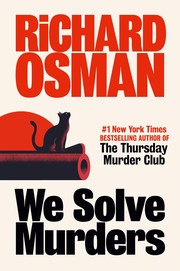
The first book of a separate series, with a retired police officer and his daughter-in-law, a private bodyguard. Read after the quartet: it is the same comic voice applied to a much more mobile, thriller-shaped plot, and it tells you whether you follow Osman or follow the club.
The Cosy Crime That Made the Club Possible
BeginnerRead the tradition Osman is working in, starting with the character the Thursday Murder Club is most obviously descended from — the elderly amateur nobody takes seriously.
▸ Study plan for this stage
Pace: Two weeks for 713 pages, and everything in it is short: The Murder at the Vicarage and A Murder Is Announced are 256 pages each and Death of a Gossip is 201, the shortest book on the path. Read the two Christies first, in the order given — the 1930 Marple debut to see the source, then the better-plo
- The elderly amateur nobody takes seriously — the archetype the club is four versions of
- Village crime fiction as a closed community with a fixed cast of suspects, which is the same structural device as a retirement village
- Fair-play plotting: the reader given every clue the detective has
- The comic surface over a cruel crime, which is what A Murder Is Announced does better than almost anything else in the tradition
- The 1980s cosy revival and Hamish Macbeth as the link between Christie and the present wave
- What Osman kept from the tradition and what he replaced
- Miss Marple is underestimated by everyone she meets. Which of the club's four is the direct equivalent, and what does Osman do differently?
- A Murder Is Announced has a genuinely cruel crime under a comic surface. Where does Christie let the cruelty show, and how briefly?
- Both Christies are around 250 pages and the Osman novels are around 400. What is in the extra 150 pages?
- Death of a Gossip is fifty-five years later than the Marple debut. What has changed in what a cosy is allowed to contain?
- Is the village or the retirement village the better closed community for this kind of plot? Argue it.
- Solve The Murder at the Vicarage before the reveal, writing your solution down; Christie's fair-play standard is the one the modern books are measured against.
- List the suspects in A Murder Is Announced with their alibis, and mark the exact page where each alibi is undermined.
- Compare the opening chapter of The Murder at the Vicarage with the opening of The Thursday Murder Club and note how each establishes its community.
- Write down the three things Osman kept from Christie and the two he abandoned, citing a scene for each.
Next up: The last stage moves to the current shelf — the British cosy wave that followed Osman's success — so you have somewhere to go next.

Miss Marple's first novel, from 1930. Start here: Elizabeth, Joyce, Ron and Ibrahim are four Miss Marples, and the source shows exactly which parts Osman kept.
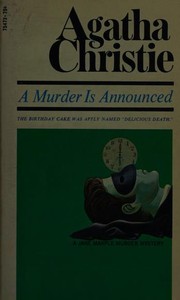
The best-plotted Marple, and the one closest in feel to Osman — a village, a comic surface, and a genuinely cruel crime underneath. Second because it demonstrates the tonal balance the modern books are all attempting.
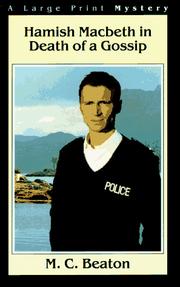
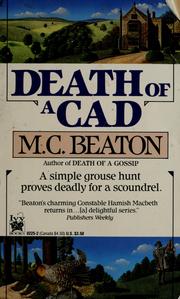
The first Hamish Macbeth, from 1985, and the bridge between Christie and the current cosy boom. Note that the author's legal name, Marion Chesney, appears on our catalogue record; M.C. Beaton was her pen name.
The Current Cosy Shelf
IntermediateFind the next series to start, chosen from the wave of British cosy crime that followed Osman's success and ordered from the closest match outward.
▸ Study plan for this stage
Pace: Four to five weeks. The Marlow Murder Club is 337 pages, The No. 1 Ladies' Detective Agency 240 and The Appeal 448; we hold no page count for our record of Murder Before Evensong, so budget it by its chapters instead. The four are ordered from the closest match to Osman outward, and there is no obli
- The amateur-team premise as a repeatable structure, and how much of Osman's success is the structure versus the voice
- Professional authenticity as a selling point — a former parish priest writing a rector, against a comic invention
- The community portrait as the real content of a cosy, with the mystery as the occasion for it
- A gentle detective novel that sells enormously without a corpse-per-chapter, which McCall Smith proved first
- Epistolary crime in The Appeal: the reader given the raw documents and cast as the investigator
- How to choose a series to commit to, using the first volume as evidence
- The Marlow Murder Club shares Osman's structure almost exactly. What does Thorogood do differently, and is the difference an improvement?
- Murder Before Evensong is written by someone who did the job. Which details could only have come from that, and do they change the book?
- Precious Ramotswe solves cases with almost no violence. What is the appeal of the series doing, if it is not suspense?
- The Appeal gives you documents rather than narration. What does the form force you to do that a normal mystery does not?
- Of these four, which series would you commit to, and what in the first book decided it?
- For The Appeal, keep your own notes as the documents arrive and write down your solution before the final section; the book is built to be played rather than read.
- Compare the amateur teams in The Marlow Murder Club and The Thursday Murder Club member by member, and mark which roles are the same.
- List what Murder Before Evensong tells you about running a parish that you did not know; the community portrait is where this book competes.
- Write a one-paragraph recommendation for a reader who has just finished The Last Devil to Die and asked what to read now, choosing one of these four and saying why not the others.
Next up: This is the end of the path: the quartet in the only order that works, what Osman did next, the tradition behind it and four current series to choose from — from here, follow the one you picked rather than sampling another opener.

Three women in a Thames-side town investigate a shooting. The closest direct comparison to Osman — same structure, same amateur-team premise — and the obvious first stop.
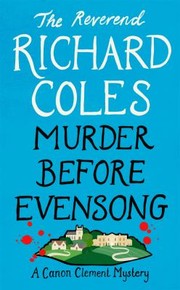
A 1980s village rector and a murder in his own church, written by a former parish priest. Second because the professional detail is real and it does the community-portrait half of Osman better than most imitators.
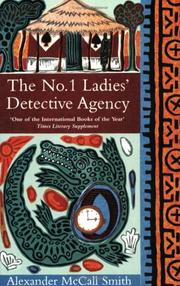
Precious Ramotswe in Botswana, from 1998, and the series that proved a gentle detective novel could sell in enormous numbers. It predates the current wave and is the warmest book on this path.

A murder told entirely through emails, texts and messages, with the reader cast as the investigator. Last because it is the least Osman-like: same amateur-sleuth appeal, radically different form, and a good place to leave the cosy shelf behind.
Discussion
Keep reading
Paths that share books, cover the same subject, or open a related topic.