Zen Buddhism: essential books on meditation and awakening
This curriculum moves from accessible introductions to Zen's history and spirit, through hands-on meditation and koan practice, and finally into the classical primary texts and advanced philosophical territory. Each stage builds the vocabulary, cultural context, and experiential grounding needed to absorb the next, so that by the end the reader can engage directly with Zen's most demanding teachings on emptiness and awakening.
First Steps: Spirit & Story
BeginnerGrasp what Zen is, where it came from, and why it matters — building an intuitive feel for its spirit before encountering formal doctrine or practice.
▸ Study plan for this stage
Pace: 4–5 weeks, ~25–30 pages/day. Start with Suzuki's shorter, more meditative work (2–3 weeks), then move to Watts' broader historical and philosophical survey (2–3 weeks). Allow time for reflection between books.
- Beginner's mind (shoshin): approaching Zen with openness and freedom from preconceptions, as emphasized throughout Suzuki's work
- Zen as direct experience, not intellectual understanding: the gap between concept and lived reality that both Suzuki and Watts highlight
- The historical journey of Zen from India through China to Japan: Watts' genealogy of Zen transmission and cultural adaptation
- Sitting practice (zazen) as the heart of Zen: Suzuki's central teaching that meditation is not a means to an end but the expression of Buddha-nature itself
- The paradox of Zen language and koans: how Zen uses words and stories to point beyond words, explored in both texts
- Zen's rejection of dualism and conceptual thinking: the non-dual vision that underlies Zen philosophy and practice
- The role of the teacher-student relationship in Zen transmission: how understanding passes directly from mind to mind, not through doctrine
- What does Suzuki mean by 'beginner's mind,' and why is this attitude central to Zen practice rather than a stage you outgrow?
- How does Watts trace Zen's evolution from Indian Buddhism through China and Japan, and what cultural shifts shaped it at each stage?
- Why does Zen emphasize direct experience over intellectual understanding, and what does this mean for how you approach learning about Zen itself?
- What is zazen (sitting meditation) in Suzuki's teaching, and how is it different from meditation as a technique to achieve a goal?
- How do koans and paradoxical language function in Zen, and what is Watts trying to convey when he discusses Zen's use of contradiction?
- What is the relationship between Zen and everyday life? How do both authors suggest Zen applies beyond the meditation hall?
- Daily zazen practice: Sit for 10–15 minutes each morning (or evening) following Suzuki's basic instructions from Part I of Zen Mind, Beginner's Mind. Keep a brief journal noting what 'beginner's mind' felt like in each session.
- Koan contemplation: Choose one koan mentioned in either book (e.g., 'What is the sound of one hand clapping?') and sit with it for 3–5 minutes daily without trying to solve it intellectually. Record any shifts in how you hold the question.
- Beginner's mind in daily life: Pick one routine activity (eating, walking, washing dishes) each week and perform it with full attention and openness, as if seeing it for the first time. Write a short reflection on what changed.
- Compare and contrast: After finishing both books, create a two-column chart comparing how Suzuki and Watts each explain what Zen is, its origins, and its purpose. Note where they agree and where their emphasis differs.
- Teach it back: Write a one-page letter to a friend explaining what Zen is and why it matters, using only ideas and examples from Suzuki and Watts. Avoid jargon; aim for clarity.
- Paradox journal: Collect 3–4 paradoxical statements or koans from your reading and explore in writing what each one is trying to point to. What happens when you stop trying to 'solve' them?
Next up: This stage builds an intuitive, felt sense of Zen's spirit and historical roots, preparing you to engage with formal Zen teachings, philosophy, and structured practice in the next stage—where you'll move from "What is Zen?" to "How do I practice it?" and "What does Zen teach?"
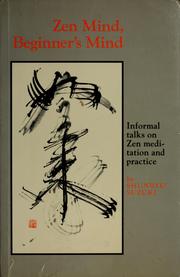
The single most beloved entry point into Zen in the English language. Its short, conversational chapters introduce the core attitude — openness, 'don't-know mind' — without requiring any prior knowledge.
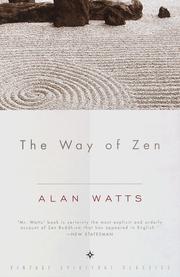
Provides the essential historical and philosophical background: the Indian roots, the journey through China (Ch'an) into Japan, and the key ideas of emptiness and non-duality — giving the beginner a map of the whole territory.
Sitting Down: Meditation & Mindfulness Practice
BeginnerDevelop a concrete, embodied understanding of Zen meditation (zazen) and mindfulness so that subsequent philosophical reading is grounded in actual practice.
▸ Study plan for this stage
Pace: 8–10 weeks, ~20–25 pages/day, with 4–5 days per week dedicated to reading and 2–3 days to meditation practice and reflection
- Zazen as the foundational Zen practice: sitting meditation without object or goal, distinct from concentration meditation
- Mindfulness (sati) as continuous, non-judgmental awareness of present-moment experience—breath, sensation, thought, emotion
- The relationship between mind and body in meditation: how posture, breath, and mental state are inseparable
- Working with hindrances and distractions: recognizing mental obstacles (restlessness, drowsiness, doubt, craving, aversion) without resistance
- Opening the hand of thought: releasing conceptual thinking and self-centered concerns to allow natural, unforced awareness
- The paradox of effort in Zen practice: how to sit with intention while letting go of striving and attachment to results
- Meditation as a way of being, not a technique to achieve a special state—the ordinariness of zazen
- What is the difference between mindfulness meditation and concentration meditation, and why does Gunaratana emphasize this distinction?
- How does Uchiyama describe the relationship between thought and meditation, and what does 'opening the hand of thought' mean in practice?
- What are the five hindrances to meditation practice, and how should a practitioner respond to them without judgment or force?
- Describe the proper posture and breath awareness in zazen according to these texts. Why are these physical elements important?
- How do Gunaratana and Uchiyama each address the paradox of trying hard to not try—the balance between effort and non-striving?
- What is the relationship between daily mindfulness (in activity) and formal zazen practice, and how do they reinforce each other?
- Establish a daily zazen practice: sit for 20–30 minutes each morning or evening, 5–6 days per week, maintaining proper posture and returning attention to breath whenever distraction arises
- Keep a meditation journal: after each sitting, record the duration, posture quality, primary hindrances encountered, and any shifts in awareness or mood—track patterns over 4–6 weeks
- Practice the body scan exercise from Gunaratana: systematically bring mindful attention through each part of the body during a 15-minute sitting, noting sensations without judgment
- Implement mindfulness in one daily activity: eat one meal, walk one route, or perform one household task with full present-moment awareness, noting how attention naturally wanders and gently returning it
- Sit with a specific hindrance: if drowsiness arises, practice opening your eyes or adjusting posture; if restlessness arises, count breaths; journal what you learn about your mind's patterns
- Read and discuss key passages aloud: select 3–4 passages from each book (especially Uchiyama's metaphors about 'opening the hand') and read them slowly, pausing to sit in silence and let the meaning settle
Next up: By grounding zazen and mindfulness in direct, embodied experience, you are now prepared to engage with Zen philosophy and history intellectually—understanding that concepts like Buddha-nature, emptiness, and enlightenment are not abstract ideas but pointers to the lived reality you have begun to taste on the cushion.
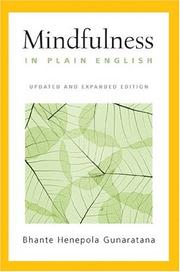
A clear, no-nonsense guide to seated meditation that bridges early Buddhism and Zen; reading it first gives the learner a working practice before encountering more abstract Zen instruction.
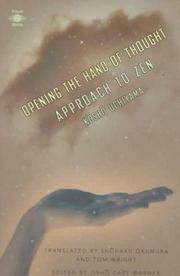
Written by a direct heir of Suzuki's Soto Zen lineage, this book deepens zazen instruction and introduces the concept of 'just sitting' (shikantaza) — the heart of Soto practice — with warmth and precision.
Going Deeper: Koans & the Awakening Tradition
IntermediateUnderstand what koans are, how they function as tools for awakening, and how the Rinzai and Soto schools approach enlightenment differently.
▸ Study plan for this stage
Pace: 6–8 weeks, ~40–50 pages/day. Start with "The Three Pillars of Zen" (4–5 weeks, emphasizing Part Two on practice and Part Three on enlightenment experiences), then move to "Zen Flesh, Zen Bones" (2–3 weeks, reading slowly to absorb the koans and stories).
- What a koan is: a paradoxical question or statement (e.g., 'What is the sound of one hand clapping?') designed to exhaust rational mind and trigger direct insight
- The function of koans in Rinzai Zen: systematic koan study (sanzen) with a teacher as the primary path to sudden awakening (satori)
- The Soto Zen approach: emphasis on shikantaza (just sitting) and gradual realization through zazen, with less reliance on koan practice
- The role of the teacher (roshi) and dokusan (private interview): how direct transmission and pointed questioning accelerate breakthrough
- Enlightenment experiences (kensho and satori): what they feel like, how they arise, and why they are not the end goal but a beginning
- The three pillars: zazen (meditation), teacher guidance, and group practice as interconnected supports for awakening
- Koan collections and their structure: how 'Zen Flesh, Zen Bones' preserves teaching stories, anecdotes, and classical koans across centuries
- The paradox of koans: why logical analysis fails and how surrender of intellect opens the gate to direct seeing
- What is a koan, and how does it differ from a riddle or philosophical puzzle?
- How do Rinzai and Soto schools differ in their approach to enlightenment, and what role do koans play in each tradition?
- What is the purpose of dokusan (private interview with a teacher), and how does the teacher use koans to guide a student toward breakthrough?
- Describe a kensho or satori experience as presented in 'The Three Pillars of Zen.' What conditions preceded it, and what changed in the person afterward?
- Why does intellectual analysis of a koan fail, and what mental state or surrender is required to work with a koan effectively?
- How do the teaching stories and anecdotes in 'Zen Flesh, Zen Bones' illustrate the principles of sudden awakening and the limitations of conceptual thinking?
- Select one koan from 'Zen Flesh, Zen Bones' (e.g., 'What is the sound of one hand clapping?' or 'The Gateless Gate') and sit with it in zazen for 10–15 minutes daily for one week. Write down any shifts in how you relate to it (not interpretations, but direct observations).
- Read a first-hand enlightenment account from Part Three of 'The Three Pillars of Zen' and write a 1–2 page reflection on the conditions that preceded the breakthrough and what the person noticed about their mind afterward.
- Practice shikantaza (just sitting) for 20–30 minutes three times per week. After each session, note whether your mind was drawn toward analyzing a koan or simply resting in awareness. Observe the difference.
- Choose a teaching story from 'Zen Flesh, Zen Bones' and rewrite it in your own words, then identify the core teaching it conveys. Share it with a practice partner or journal and discuss what it reveals about the limits of explanation.
- Attend a live zazen session at a Zen center (in-person or online) if possible, and observe how a teacher might use questioning or a koan in a brief dharma talk. Afterward, journal on how the teaching landed differently in a group setting versus reading alone.
- Create a comparison chart: list 3–4 koans from the books and note which school (Rinzai or Soto) would emphasize each, and why. Include a brief note on how each koan might function as a teaching tool.
Next up: This stage equips you with a deep understanding of koans and the two major Zen schools' paths to awakening, preparing you to explore how Zen ethics, aesthetics, and daily practice integrate enlightenment into ordinary life in the next stage.

A landmark text that covers both koan practice and intensive retreat (sesshin) through first-person accounts of awakening, making the experience of kensho vivid and concrete for the intermediate student.

A beloved anthology of koans, mondo (dialogues), and early Zen stories — including the full '101 Zen Stories' — that trains the reader to think in the non-linear, paradoxical mode koans demand.
The Classical Texts: Primary Sources
IntermediateRead the foundational scriptures and records that Zen masters themselves studied, developing direct familiarity with the tradition's own voice.
▸ Study plan for this stage
Pace: 8–10 weeks, ~40–50 pages/day, with 2–3 days per week reserved for reflection and practice
- The koan as a teaching device: how paradoxical questions and stories bypass conceptual mind to provoke direct insight
- The Blue Cliff Record's structure and lineage: understanding how Xuedou's cases and Yuanwu's commentaries model the master-student transmission
- Dōgen's philosophical approach: how 'practice and enlightenment are one' differs from gradual cultivation models
- Shikantaza (just sitting) and zazen: the role of sitting meditation as both method and realization in Dōgen's teaching
- The relationship between words and silence: how classical texts point beyond themselves to direct experience
- Zen language and expression: recognizing metaphor, paradox, and poetic compression as deliberate teaching tools
- Transmission outside the scriptures: understanding why Zen values direct pointing over doctrinal explanation
- What is a koan, and how does the Blue Cliff Record use koans to teach? Give an example from Cleary's text and explain what makes it effective as a teaching tool.
- How does Yuanwu's commentary function in the Blue Cliff Record? What does he add to Xuedou's cases, and why might a Zen student need both?
- What does Dōgen mean by 'practice and enlightenment are one,' and how does this differ from the idea that practice leads to enlightenment?
- Describe shikantaza as Dōgen presents it in Moon in a Dewdrop. What is the practitioner doing, and what is the relationship between effort and non-effort?
- How do the Blue Cliff Record and Moon in a Dewdrop use language differently, and what does each approach reveal about Zen teaching methods?
- Choose one case from the Blue Cliff Record and one passage from Dōgen. How does each text point toward direct experience rather than conceptual understanding?
- Sit with one koan from the Blue Cliff Record for one week: read Xuedou's case, sit with it during zazen (10–20 min daily), then read Yuanwu's commentary. Journal on how the commentary shifted your understanding.
- Create a 'koan map' for 3–4 cases from the Blue Cliff Record, noting the setting, the paradox or turning point, and what insight it seems to point toward. Compare your interpretations with Cleary's introduction.
- Practice shikantaza for 15–20 minutes daily during your reading of Moon in a Dewdrop, and keep a brief log of what 'just sitting' feels like in your body and mind. Note any shifts as you read Dōgen's descriptions.
- Select a passage from Moon in a Dewdrop that initially seems contradictory or unclear. Reread it 3 times over a week, then write a one-page reflection on how the meaning deepened or shifted without you 'solving' it intellectually.
- Compare a Blue Cliff Record case with a Dōgen passage on a similar theme (e.g., both addressing the nature of mind or practice). Write a short comparative analysis of how each text approaches the same territory.
- Attend a live Zen talk or watch a recorded dharma talk by a contemporary Zen teacher, then listen for how they reference or embody the teachings from these classical texts. Note the connections in a journal entry.
Next up: Mastery of these primary texts equips you to engage with later Zen commentaries and contemporary teachers who build on or reinterpret these classical foundations, allowing you to recognize lineage continuity and evaluate modern Zen practice against its historical roots.

The most celebrated koan collection in the Zen canon, compiled in Song-dynasty China. Reading it after the previous stage means the learner already has the conceptual and experiential scaffolding to appreciate its depth.

A carefully edited selection of Dogen's Shobogenzo — the philosophical masterwork of Japanese Soto Zen — introduced gently enough for an intermediate reader who now has solid grounding in practice and history.
Advanced Horizons: Emptiness, Non-Duality & Living Zen
ExpertIntegrate Zen's deepest philosophical teachings on emptiness (sunyata) and non-duality with everyday life, and situate Zen within the broader Mahayana Buddhist worldview.
▸ Study plan for this stage
Pace: 6–8 weeks, ~25–30 pages/day, with 2–3 days per week reserved for reflection and practice integration
- Sunyata (emptiness) as the absence of fixed, independent self-nature in all phenomena, not as nihilism or nothingness
- The Four Noble Truths and dependent origination as the logical foundation for understanding emptiness and non-duality
- Non-duality: the dissolution of subject-object separation and the interconnectedness of all things in lived experience
- The Middle Way as transcending both eternalism and nihilism, applied to psychological and spiritual practice
- Mindfulness and concentration (samadhi) as practical tools for directly perceiving emptiness and non-duality
- The cessation of craving and grasping as the path to liberation from suffering, rooted in understanding impermanence
- Zen practice within Mahayana Buddhism: bodhisattva ethics, compassion, and the integration of wisdom with everyday action
- The paradox of practice: effort and non-effort, seeking and non-seeking in the context of psychological transformation
- How does Thích Nhất Hạnh's presentation of the Four Noble Truths and dependent origination establish the foundation for understanding emptiness?
- What is the difference between intellectual understanding of non-duality and direct experiential realization, and how do the two books address this gap?
- How does Barry Magid's critique of the 'pursuit of happiness' relate to the Buddhist concept of craving and the cessation of suffering?
- What role does mindfulness play in perceiving the non-dual nature of reality, and how is this integrated into daily life according to these texts?
- How do the concepts of emptiness and non-duality challenge the Western psychological notion of a fixed, autonomous self?
- What is the relationship between Zen practice and Mahayana Buddhist ethics, particularly regarding compassion and the bodhisattva path?
- Daily mindfulness meditation (20–30 minutes): focus on observing the arising and passing of thoughts, emotions, and sensations without attachment, noting how the 'observer' itself is impermanent and empty of fixed identity
- Dependent origination contemplation: select a personal suffering or habit pattern and trace its causes and conditions backward and forward, identifying where you grasp or crave, and observe how this pattern has no independent, isolated origin
- Non-dual awareness practice: during routine activities (eating, walking, washing), practice dissolving the boundary between subject and object—notice how the 'doer' and 'doing' are inseparable, and how this shifts your sense of agency
- Journaling on craving and seeking: write about areas where you pursue happiness or avoid discomfort, then reread Magid's analysis and reflect on how this pursuit itself perpetuates suffering
- Bodhisattva intention practice: begin each day by setting the intention to act with compassion and wisdom for the benefit of all beings, then notice how this shifts your relationship to your own struggles and those of others
- Study circle or discussion group: meet weekly with others reading these texts to discuss key passages, share insights on emptiness and non-duality, and explore how these concepts challenge your habitual thinking patterns
Next up: This stage establishes the philosophical and experiential bedrock of Zen—the direct perception of emptiness and non-duality—preparing you to explore how this realization manifests in spontaneous action, authentic expression, and the paradoxes of Zen teaching methods in the next stage.

Masterfully unpacks the core Mahayana doctrines — interbeing, emptiness, the Four Noble Truths — that underpin all Zen thought, giving the advanced reader a rigorous philosophical foundation.
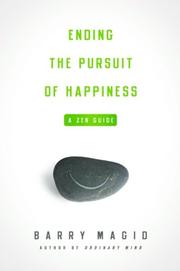
A contemporary Zen teacher and psychoanalyst examines what awakening actually looks like in an ordinary life, synthesizing everything the curriculum has built into a mature, integrated vision of Zen practice.
Discussion
Keep reading
Paths that share books, cover the same subject, or open a related topic.