Start with The Sailor Who Fell from Grace with the Sea. It is under two hundred pages, it is complete and merciless, and it contains the whole Mishima apparatus in miniature: beauty treated as something that must be preserved by violence, a boy who has decided that adult compromise is a kind of death, and prose that stays cool while describing terrible things. You will know within fifty pages whether you can read this writer.
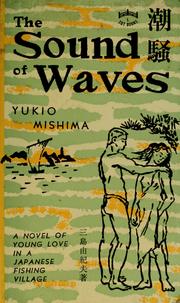
The commonly recommended alternative is The sound of waves, and it is a trap of a pleasant kind. It is a gentle pastoral romance between a fisherman and a diver on a small island, deliberately modelled on a Greek idyll, and it is genuinely lovely — but it is the least characteristic thing he wrote. Start there and the next book will feel like a different author. Read it second, as relief, once you know what he normally does.
The major standalone novels
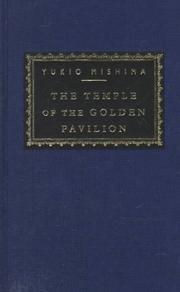
After the sailor, read The Temple of the Golden Pavilion. It is the central achievement outside the tetralogy: a stuttering acolyte becomes obsessed with a temple so beautiful he cannot live alongside it, based on the real burning of the Kinkaku-ji in 1950. It is slower than the first book and the interior argument does most of the work, but it is the novel to read if you read only one.
Then Confessions of a Mask, the early autobiographical novel that made his name at twenty-four — a young man cataloguing his desires and constructing a performance to conceal them. It is placed third here on purpose: read after the other two, you can see the machinery being assembled rather than simply reading a confession.
The Sea of Fertility, in order
The tetralogy is his last work and must be read in sequence: Spring Snow, Runaway Horses, The Temple of Dawn, The Decay of the Angel. One observer, Honda, runs through all four, watching what he believes to be the same soul reincarnated across sixty years of Japanese history.
Spring Snow is a doomed aristocratic love story and the most immediately enjoyable of the four; plenty of readers stop there and are satisfied. Runaway Horses switches to a young ultranationalist plotting assassination in the 1930s and is the most uncomfortable, since Mishima's sympathies and his subject are hard to separate.
The Temple of Dawn is the weak link and the place people quit. Its second half turns into a long doctrinal excursion on Buddhist theories of reincarnation with the narrative largely suspended, and it is heavy going by any standard. Push through it, because The Decay of the Angel — short, cold, and ending with a scene that retroactively questions everything in the previous three volumes — is the reason the whole edifice exists. Mishima delivered the final manuscript on the morning of his death in 1970.
The essays
Sun and Steel is a short, strange meditation on bodybuilding, words and the relation between them, and it is the clearest statement of his late programme. The way of the samurai is his commentary on Hagakure, the eighteenth-century samurai text. Both are inseparable from his political turn and his ritual suicide, and how far the politics should shape the reading of the fiction is genuinely disputed among critics. Read them last, when you have enough of the novels to judge for yourself, and read a biography beside them.
Where to stop
Two honest stopping points. After The Temple of the Golden Pavilion you have the major novelist and can leave it there. After Spring Snow you have the best-loved volume of the tetralogy, and abandoning the remaining three is a common and defensible choice — though it does mean missing the ending the whole sequence was built for.
Follow the full ordered path here: Yukio Mishima Reading Order: Where to Start.