Yu Hua Reading Order: Where to Start
Yu Hua began as an avant-garde writer of atrocity and became China's great chronicler of ordinary survival — the same violence, told plainly, by people who cannot afford to comment on it. Start with the two short novels that made him famous, move through the larger novels that carry the story into the reform era, then go back to the brutal early short fiction, and close with the essays that state directly what the novels only show.
Start Here
BeginnerMeet Yu Hua's plain style and his central subject: endurance across the Mao decades, narrated without complaint.
▸ Study plan for this stage
Pace: 3 weeks for about 520 pages. To Live (250pp) over 10 days — it reads very fast and you should slow yourself down. Chronicle of a Blood Merchant (272pp) over the next 10 days. Leave two or three days between them; To Live flattens most readers and Chronicle needs you upright.
- An honest warning that covers the whole path: Yu Hua writes about famine, political violence and the deaths of children, in quantity. To Live buries an entire family. Nothing is dwelt on and nothing is spared, and the plainness is what makes it land
- The plain style is the achievement, not a default. Yu Hua began as a difficult avant-garde writer and deliberately taught himself this deadpan; you will read the earlier, harder work in stage three and see the distance
- To Live is narrated twice over: a song collector meets an old peasant who tells his life, so the horrors arrive in the voice of a man who has already survived them and is not asking for sympathy
- Fugui loses everything through the civil war, the Great Leap Forward and the Cultural Revolution, and the novel's refusal to editorialise is the political act. The state is never denounced; it just keeps taking people
- Zhang Yimou's 1994 film of To Live won at Cannes and was banned in China; the film alters the ending significantly, so read first
- Chronicle of a Blood Merchant runs the same decades as comedy: a factory worker sells his blood whenever the family needs money, with a fixed ritual of water beforehand and fried pork liver and rice wine afterward, until his body will not supply any more
- Yu Hua grew up in a hospital compound in Zhejiang with two parents in medicine and later worked five years as a dentist. The clinical calm about bodies is where it comes from
- Unlike Mo Yan, Yu Hua has several English translators across his books — To Live is Michael Berry's — so the register shifts slightly from book to book. Expect that rather than reading it as inconsistency
- Why does To Live use a frame narrator at all? What would change if Fugui simply told his story to the reader?
- Fugui loses his family fortune in the opening chapters, and the novel later suggests this saved his life. What is Yu Hua doing with that irony?
- Which death in To Live is the cruellest, and is it cruel because of the politics or because of an accident?
- In Chronicle of a Blood Merchant, what does the blood-selling ritual do for Xu Sanguan psychologically, beyond the money?
- The Xu Sanguan book is funny about the same decades that To Live treats as tragedy. How does Yu Hua get the comedy, and does it cost him anything?
- Both novels end with an old man still going. What is Yu Hua's actual claim about endurance — is it admirable, or just what happens?
- Keep a running count of deaths in To Live and note the cause of each: politics, poverty, medicine, accident. The distribution is the argument
- Mark the sentences in To Live where the narration comes closest to commenting. There are very few and each one is placed deliberately
- In Chronicle, track the price of a bowl of blood and what it buys each time. The economics are the plot
- Read the pork liver and yellow rice wine order aloud each time it recurs. The repetition is a comic device and it is also how Yu Hua measures the man's decline
- Write two sentences on why the plainest possible prose suits this material better than an angry style would
Next up: You now have his method at its most controlled; the longer novels show what happens when he lets it expand into the reform era and the whole country.
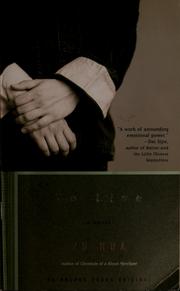
A landlord's son gambles away everything, then survives the civil war, the Great Leap Forward and the Cultural Revolution while burying his whole family. The essential first book — short, devastating and the one most readers never recover from.

A factory worker sells his blood whenever the family runs out of food, until his body runs out. Read straight after To Live: same period, same deadpan, and it turns the endurance into something closer to comedy.
The Major Novels
IntermediateFollow the arc from the Cultural Revolution into the boom years, in the longer and more satirical books.
▸ Study plan for this stage
Pace: 11–12 weeks for about 1,170 pages. Cries in the Drizzle (320pp) over 3 weeks — it is disordered and slow going. Brothers (641pp) over 5–6 weeks at 20–25 pages a day; it is the longest book on the path by far. The Seventh Day (213pp) over 2 weeks at the end, as relief.
- Cries in the Drizzle was his first novel and is the most experimental of the three: a boy given away to foster parents and later returned narrates his childhood out of chronological order, circling the same few humiliations
- Its disordering is memory rather than technique for its own sake — the sequence is emotional, not temporal, and the reader assembles the family history that the narrator will not state
- Read it after the two plain novels so that the disorder registers as a choice. Read it first and it just looks confusing
- Brothers is his most divisive book: two stepbrothers carried from the Cultural Revolution into the boom years, from a public beating that kills their father to hymen-restoration surgery and a national virgin beauty pageant
- It is deliberately vulgar in the second half and deliberately unbearable in the first, and the two halves are meant to be incompatible — that incompatibility is the novel's claim about what happened to China in forty years
- It sold enormously in China and was attacked by critics there for coarseness, which is a useful thing to know before deciding whether the coarseness is a failure
- The Seventh Day takes place in the seven days after the narrator's death, among the dead who have no burial plot and so cannot move on. Its episodes are drawn from the kind of incidents that circulate on the Chinese internet — demolitions, hospital scandals, disasters — assembled into an afterlife
- Together the three books complete the arc: childhood under Mao, the boom, and the dead left over by it
- In Cries in the Drizzle, what is the narrator refusing to tell you in order, and what does the disorder protect him from?
- The father in that novel is monstrous and comic at once. How does Yu Hua keep both registers running without picking one?
- In Brothers, where exactly does the tone break between the two halves, and is the break too abrupt?
- Li Guangtou wins at everything and Song Gang loses at everything. Is that schematic, and does the schema earn itself by the end?
- In The Seventh Day, why does Yu Hua use the unburied dead rather than living characters to tell these stories?
- Across the three, what has replaced the state as the source of harm — and is Yu Hua clearer or vaguer about that than he was in stage one?
- Reconstruct the chronology of Cries in the Drizzle on paper after finishing it, then ask what the real order was hiding
- In Brothers, mark the last page of the Cultural Revolution section. Reread that page after you finish the book
- Keep a list of the news-shaped episodes in The Seventh Day and note which feel invented and which feel reported. The blurring is intentional
- Compare a death scene in Brothers with a death scene in To Live. The difference in handling is the ten years between them
- Write one paragraph arguing that Brothers is a failure, and one arguing it is his most ambitious book. Both cases are available from the text
Next up: Having seen the plain style stretched to its limits, go back to where it came from — the early fiction, where nothing is plain and nothing is bearable.
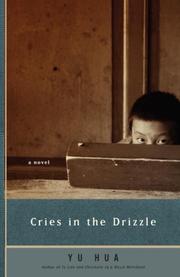
A boy sent away and returned narrates a rural childhood out of chronological order. His first novel and the most experimental of the three — read it once the plain style has become familiar, so the disordering registers as a choice.

Two stepbrothers go from the Cultural Revolution to hymen-restoration surgery and a national beauty pageant. Enormous, vulgar and divisive; it is the book where he tries to hold both Chinas in one novel.

A newly dead man wanders among the unburied, who tell him how modern China killed them. The most directly contemporary novel, and it works best as the answer to what Brothers set up.
The Early Short Fiction
IntermediateGo back to the 1980s avant-garde work and see the violence the later novels learned to make bearable.
▸ Study plan for this stage
Pace: 6–7 weeks for about 700 pages, and this is the stage to ration. The Past and the Punishments (277pp) over 3 weeks, one story a sitting and no more. Boy in the Twilight (208pp) over 2 weeks as a deliberate palate change. The April 3rd Incident (211pp) over 2 weeks last, if the experimental mode appea
- In the 1980s Yu Hua was an avant-garde writer of torture and formal games, admired and disliked for exactly that. The Past and the Punishments is the concentrated version: dismemberment, classical execution methods, and narratives built like machines
- The famous story here is set in the aftermath of the Cultural Revolution, in which a man who has lost his mind performs the ancient punishments on his own body in the street while the town looks away. It is the source code for everything the later novels do more gently
- The violence in these stories is cold rather than shocking. There is no interiority to buffer it, which is precisely what To Live added
- Boy in the Twilight is the tonal opposite and the reason it sits second here: thirteen stories of small-town cruelty and small-town tenderness, closer to the warmth of the novels
- The April 3rd Incident collects paranoid stories about unreliable perception, where the question is whether anything the narrator reports is happening at all. It is the furthest he ever got from the plain style
- Reading these after the novels rather than before is the whole point of the ordering: you are looking at raw material that you already know the finished use of
- If you only read one collection, read The Past and the Punishments. If you want to like Yu Hua more rather than understand him better, read Boy in the Twilight
- In the early stories, what is missing that To Live supplies — sympathy, interiority, or simply time?
- Does the coldness of the 1980s work read as a young writer's provocation or as a considered position?
- What is being punished, and by whom, in the story of the man performing executions on himself?
- Which stories in Boy in the Twilight could sit inside one of the novels without alteration, and which could not?
- In The April 3rd Incident, how does Yu Hua signal unreliability without ever confirming it?
- Having read the early and the late, was the turn to plainness a gain or a narrowing?
- Read one torture story and then a chapter of To Live the same evening. The comparison is the fastest way to see what the plain style is for
- Note the year of first publication for each early story. The turn happens over a very short span and the dates make it visible
- Stop after any story that is doing you harm. There is no completist obligation in this stage and the path works without it
- Pick the single early story that most clearly anticipates a later novel and write two sentences on what the novel added
- If you skip The April 3rd Incident, write down why. Knowing which Yu Hua you want is a legitimate outcome of this stage
Next up: The fiction has now shown you the same century from every angle it has; the essays are Yu Hua saying it directly, with no character standing in front of him.
Eight early stories of torture, dismemberment and cold formal games. Read after the novels, not before — this is the raw material that To Live tames.

Thirteen stories of small-town cruelty and small-town tenderness. The most balanced collection, and the closest the short fiction gets to the warmth of the novels.

Seven early stories of paranoia and unreliable perception. The most avant-garde of the three collections; save it for last if the experimental mode appeals.
The Essays
IntermediateHear Yu Hua speak in his own voice about the country the fiction describes.
▸ Study plan for this stage
Pace: 2 weeks for 225 pages. Ten essays, one or two a sitting — they are short, discrete and better with gaps. This is the shortest stage on the path and the one most people finish fastest.
- China in Ten Words builds ten essays on ten single words — among them people, leader, revolution, disparity, grassroots, copycat and bamboozle — and uses each as a lever on a piece of recent history
- The last two words are the sharpest: shanzhai, the knockoff economy, and huyou, roughly hoodwinking, which he treats as the governing spirit of the boom rather than as a joke about fake phones
- It was not published on the mainland. That fact belongs beside the Nobel-adjacent questions of who can say what in Chinese fiction, and it is the plainest evidence of what Yu Hua's novels have to encode
- The autobiographical passages fill in what you have been reading around all path long — the Cultural Revolution childhood, the hospital compound, the dentistry, the decision to become a writer
- The essays repeatedly return to the same events you met as fiction, told this time as memory, which lets you see exactly which parts of To Live and Brothers were transposed and which were invented
- His argument, made across all ten, is that the revolutionary era and the boom era are the same energy in different clothes. The novels dramatise that claim; here he states it
- Ending on non-fiction is deliberate. It is the only place he answers the question the fiction leaves open, which is what he actually thinks about the country he has spent ten books describing
- Which of the ten words does the most work, and which is the weakest chapter?
- Where do the memoir passages contradict the impression you had formed from the novels?
- What is his claim about the continuity between the Cultural Revolution and the boom, and does the evidence in the essays support it?
- The book cannot be published on the mainland. Which specific chapters would you guess are the reason?
- After reading the essays, does To Live look more political or less than it did in stage one?
- If you had to hand someone a single Yu Hua book, would it now be this one? Argue either way
- Pair each of the ten words with one book from this path. Most of them have a clear match, and the ones that do not are the interesting cases
- Reread the opening pages of To Live immediately after the essay on the people. It is a different book with that context
- Write the ten words out and add an eleventh you would choose from your own reading of him
- Put all ten books in publication order rather than reading order and mark where the plain style begins. The date is more precise than you would expect
- Write one paragraph comparing Yu Hua and Mo Yan on the same decades — one loud and mythic, one quiet and plain — and say which you find more truthful, with a reason from the text
Next up: That is the whole Yu Hua available in English, from the 1980s atrocities to the essays that explain them — and the natural next step is Mo Yan for the same history at full volume, or Yan Lianke for the generation that took the satire further.
Ten essays built on words like 'people', 'leader', 'copycat' and 'bamboozle', banned on the mainland. The best possible close: his childhood, the Cultural Revolution and the boom, explained without the cover of fiction.
Discussion
Keep reading
Paths that share books, cover the same subject, or open a related topic.