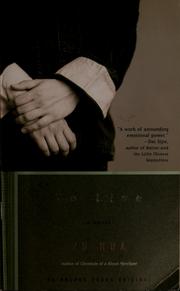
Start with To live. A landlord's son gambles away the family fortune, which turns out to save his life when the land reforms arrive, and then loses almost everyone he has across the civil war, the Great Leap Forward and the Cultural Revolution. It is under two hundred pages, it is told plainly by an old man to a passing stranger, and it is the most complete argument Yu Hua makes.
The obvious alternative is Brothers, his sprawling six-hundred-page satire of the reform era, and it is the book people argue about most. Start there and you get the grotesque comedy without the ground it stands on. Start with the short novel and Brothers becomes legible as the same writer working a different register.
Content, stated plainly
Yu Hua writes famine, the death of children, political humiliation and physical violence, and he writes them flatly — the prose does not rise to meet the horror, which is precisely what makes it land. To live kills people you have come to care about, repeatedly, without warning or consolation. His early short fiction is more explicitly violent still. None of this is decoration; the deadpan is the method. But readers looking for redemption arcs should know in advance that these books mostly decline to supply them.
The three major novels
After To live, read Chronicle of a Blood Merchant. A factory worker sells his blood at intervals to get his family through crises, and the book turns that into something close to black comedy without ever letting you forget the cost. It is warmer than the first novel and structurally simpler.
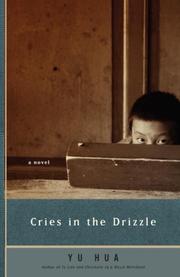
Then Cries in the Drizzle, an earlier and more fragmented book — a boy's childhood recalled out of sequence, closer to Yu Hua's experimental beginnings than to the two famous novels. Read it third, when the plainness of the later style makes the contrast informative rather than confusing.
Brothers comes fourth. Two stepbrothers move from the Cultural Revolution into the boom years, one becoming an entrepreneur of spectacular vulgarity. The opening scene, involving a public latrine, is notorious and is a deliberate filter. Many readers find the second half excessive; others think the excess is the point, since the era it satirises was excessive. Both readings are defensible.
The stories and the essays
The seventh day is late and lighter in touch: a newly dead man wanders a bureaucratic afterlife assembled from news stories. It divides readers, and it is the most schematic of the novels.
For the early work, The past and the punishments collects the avant-garde short fiction from the late 1980s — formally aggressive, deliberately cruel, and unlike anything in the novels. The April 3rd incident gathers more from that period. Boy in the Twilight is later and more human-scaled, and is the easiest of the three collections to recommend to someone who liked To live.
China in ten words is nonfiction and the best single explanation of what he is doing. Ten essays, each built on one word — leader, revolution, disparity, copycat — moving between memoir and argument. It has not been published in mainland China. Read it after the novels, when you can see which of his own experiences turn up in them.
Where to stop
To live, Chronicle of a Blood Merchant and China in ten words are a complete Yu Hua for most readers. Add Brothers if you want the maximalist version and The past and the punishments if you want to see where he began. The full ordered sequence is on our reading path. His novels have reached English through several different translators over three decades, so some tonal variation between books belongs to the translation rather than the writing.
Follow the full ordered path here: Yu Hua Reading Order: Where to Start.