Woodlot Management: The Best Books to Read, in Order
A woodlot is a slow system with a memory: what you see standing today was set by grazing, logging and fire decades before you arrived. This path starts by teaching you to read that history off the ground, then works through the owner's manuals and the silviculture behind them, then the cutting itself — felling safely, firewood, coppice — and ends with the productive woodland traditions that treat a wood as something to live from rather than merely maintain.
Read the woods before you cut anything
BeginnerWalk a stand and reconstruct its history from stone walls, stump scars, multiple stems, pillow-and-cradle ground and species mix — and hold off on management decisions until you know what the wood has already been through
▸ Study plan for this stage
Pace: Four to six weeks, and every week includes a walk. Tools this stage assumes: boots, a compass, a map or aerial photograph of your ground, and nothing else — you are not cutting anything yet, which is the point. Tom Wessels's Reading the forested landscape (199 pages) is the first book and reads in a
- Stone walls, wire in trunks and open-grown branch structure as evidence of former pasture
- Multiple stems from one base as the signature of past cutting
- Pillow-and-cradle ground as the record of old windthrow
- Stump scars, charcoal and even-aged cohorts as evidence of fire and logging
- Species mix as a consequence of disturbance history rather than of site alone
- Leopold's land ethic: managing for the whole system rather than for one output
- What disturbance produced the stand you are standing in, and what is your evidence?
- What does a row of multiple-stemmed trees tell you, and what does it not?
- How do you distinguish old pasture from old woodland from the trees alone?
- What does an even-aged cohort imply about a date, and how would you narrow it?
- What is Leopold arguing for, and how would it change a decision you were about to make on your ground?
- Walk your whole boundary once with Forest Forensics in hand and write a disturbance history for each distinct stand.
- Photograph five pieces of evidence — a wall, a scar, a multiple stem, a pillow-and-cradle, an open-grown crown — and caption each with what it proves.
- Count rings on one stump or a cut round and set the dates against the history you reconstructed.
- Write one page on what the previous owners did to this wood, before writing anything about what you will do.
Next up: Knowing what the wood has already been through is the only sound basis for the management plan the next stage teaches you to write.
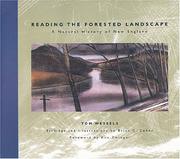
The best possible first book: Wessels teaches forest forensics as detective work, so a stone wall in the trees or a row of multiple-stemmed maples becomes evidence of a pasture, a blowdown or a fire. It changes what you see on your own land within one walk.
The pocket key to the previous book — a decision tree you carry into the woods and use in the field. Read it second and use it immediately; it is the practice half of Wessels's method.

Leopold owned a worn-out Wisconsin farm and wrote the land ethic out of trying to repair it, including the famous good-oak essay on reading a woodlot's history through a saw cut. Placed here to set the standard for why you would manage a wood at all.
The owner's manual
IntermediateWrite a working management plan for your own acreage: stand inventory, objectives, crop-tree selection, invasive species, deer pressure, boundaries, taxes and where a professional forester is worth paying for
▸ Study plan for this stage
Pace: Two to three months for 841 pages, working towards one document — a written management plan for your own acreage. Mollie Beattie's Working with your woodland (295 pages) goes first and is the clearest explanation of how a plan is structured, unusual in starting from the owner's objectives rather tha
- A management plan as a document with objectives, inventory, prescriptions and a schedule
- Cruising a stand: plots, basal area, and estimating volume rather than guessing it
- Crop-tree selection — choosing the trees you are managing for and releasing them
- Deer pressure as a regeneration problem measurable by what is missing below browse height
- Invasive species identification and the order in which to attack them
- Timber sale contracts, boundaries, taxes, and when a consulting forester pays for himself
- What are your actual objectives for this wood, in priority order, and what do they imply for the next ten years?
- What is the basal area of your best stand, and how did you measure it?
- Which trees on your ground are crop trees, and what would releasing them involve?
- What should a timber sale contract say about damage, access, payment and slash, on VanBrakle's account?
- What is missing from the understorey, and is deer browse the reason?
- Run inventory plots across one stand using Hilts's method and calculate basal area and rough volume.
- Mark twenty crop trees in the field and record why each was chosen.
- Draft the full management plan for your ground following Beattie's structure, and leave the prescriptions blank for now.
- Map and identify every invasive species on the property and rank them by how fast they will spread.
Next up: A plan needs prescriptions, and the next stage is the reasoning that decides which cut is the right one.
The standard landowner's guide, and unusual in taking the owner's actual objectives — timber, wildlife, recreation, firewood — as the starting point rather than assuming timber. Still the clearest explanation of how a management plan is structured.

The modern and more approachable version for the owner of a few acres rather than a few hundred: crop trees, invasives, deer, trails, and a realistic account of what a timber sale contract should say. Read it alongside Beattie, which it updates.

Hilts and Mitchell write for the Great Lakes and northeastern owner and are the most concrete of the three on inventory method — how to actually cruise a stand and estimate what is standing there. The practical bridge into the silviculture stage.
Silviculture — the reasoning behind the marking
IntermediateChoose a regeneration and thinning system on the evidence of your own site — shelterwood, group selection, single-tree selection, clearcut — and be able to defend the choice against a forester's alternative
▸ Study plan for this stage
Pace: Three to five months, and the two books are not remotely comparable — 873 pages, of which 681 are a university textbook. Chris Starr's Woodland Management (192 pages) goes first and reads in a fortnight: a concise British treatment of stand establishment, thinning, species choice and harvesting that
- Regeneration methods as a set of choices with different light, seed source and deer consequences
- Shade tolerance as the property that decides which method suits which species
- Thinning from below against crown thinning, and what each does to the residual stand
- Rotation, stocking and stand density as quantities rather than impressions
- Even-aged against uneven-aged management, and what each commits you to over decades
- Why the same prescription is right on one site and wrong on the next
- Which regeneration method suits your dominant species, and what does its shade tolerance dictate?
- What would a shelterwood look like on your ground, in three entries, and over how many years?
- How does deer pressure change which method can succeed?
- What is the difference in the residual stand between thinning from below and a crown thinning?
- If a forester proposed a cut on your land tomorrow, what three questions would you now ask?
- Write the prescriptions into the management plan you drafted, naming the regeneration method for each stand and defending the choice.
- Mark a hypothetical thinning on one acre — flag the trees you would remove — then walk it again a week later and change your mind where you were wrong.
- Take one Nyland regeneration chapter and apply it in writing to your worst stand.
- Ask a consulting forester or extension forester to walk one stand with you, and compare their prescription with yours.
Next up: A prescription is only paper until someone runs a saw, which is the next stage and the most dangerous one.

A concise British treatment of stand establishment, thinning, species choice and harvesting that is far more accessible than a full silviculture text while still being about the reasoning rather than the recipe.
Published as Silviculture: Concepts and Applications, and the university text the landowner guides are simplifying. Demanding, and the point at which you can evaluate a proposed cut instead of accepting it. Read the regeneration-method chapters even if you read nothing else.
Felling, firewood and the working saw
IntermediateFell, limb and buck a tree without hurting yourself — hinge, notch, back cut, escape route, barber chair — and process, stack and season firewood that actually burns
▸ Study plan for this stage
Pace: One season at least, and read before the first chainsaw day rather than after. This stage assumes equipment the earlier ones did not: a chainsaw sized to your timber, full protective equipment — chaps, helmet with visor and hearing protection, gloves, boots — wedges, a felling lever or breaking bar,
- The hinge: notch, back cut, and the wood you deliberately leave to control the fall
- Escape route, lean assessment and the hazards overhead before the saw starts
- Barber chair, spring poles and stems under tension as the specific ways felling kills
- Limbing and bucking under tension, and reading which side of the log is compressed
- Moisture content and seasoning time, and why stack geometry and siting change both
- Coppicing as a system: cutting on rotation so the stool regrows, rather than a harvest
- What is the hinge doing, and what happens to the fall if it is cut too thin on one side?
- How do you assess lean, wind and overhead hazard before the first cut, and what would make you walk away?
- What creates a barber chair, and what technique prevents it?
- What moisture content should firewood reach, how long does that take for your species, and how would you know?
- What does coppicing require of the stool and the site, and which of your species will coppice at all?
- Take a chainsaw safety course, or work your first felling day alongside someone competent; do not make this your first solo project.
- Fell three small trees of increasing size, each time writing down your lean assessment and escape route before cutting and comparing it with what happened.
- Split, stack and season one cord following Mytting, and measure moisture content at three points over the season.
- Cut one small coppice stool and record its regrowth through the following year.
Next up: Cutting on rotation is the doorway into the last stage, where a wood is treated as something to live from rather than merely maintain.

The clearest book in print on directional felling and the mechanics of the hinge, written for people who will do this alone in a wood with nobody to help. Read it before your first chainsaw day, not after, and take the plunge-cut and barber-chair sections seriously.
Mytting's book on cutting, splitting, stacking and drying firewood, which sounds slight and is genuinely the best account of moisture content, stack geometry and seasoning time anywhere. The natural companion to a thinning operation that produces cordwood.

Catalogued as Coppicing & Coppice Crafts. The introduction to cutting on rotation so the stool regrows — a management system rather than a harvest, and the bridge into the productive-woodland stage that closes the path.
The productive woodland
IntermediateDesign a woodland that yields continuously — coppice rotations, timber-frame material, greenwood craft stock, mushrooms, nuts and forage — and understand the labour and market realities that decide whether any of it pays
▸ Study plan for this stage
Pace: Years, honestly — a coppice rotation is measured in them, and no schedule shortens it. Ben Law's The Woodland Way (231 pages) is the first and most important: his account of running a Sussex coppice woodland as a livelihood, with rotation, permaculture design, charcoal, chestnut products, and the ec
- Coppice rotation length matched to product: what a hurdle, a bean pole and a charcoal cord each need
- Cants and rotation blocks, so something is cut every year rather than everything at once
- Green woodworking as the reason to grow a particular stem rather than the other way round
- Forest farming in the understorey — shiitake, ramps, ginseng, nuts — and the canopy decisions it depends on
- Labour and market realities: what the products actually sell for and what they cost in time
- Designing a wood that yields continuously instead of periodically
- What rotation length does each product you are interested in require, and does your species mix support it?
- How would you lay out cants so that you cut something every year?
- What does forest farming require of the canopy, and which of your stands could carry it?
- Which of Law's economics translate to your region and which are specific to British markets and grants?
- What would you actually do with the material — sell it, use it, or burn it — and does that decision change the rotation?
- Lay out and map a coppice rotation on your ground with cants numbered by year of cut.
- Make one green-wood product from your own material — a hurdle panel, a gate hurdle, a besom — and record how much stem it consumed.
- Inoculate a batch of shiitake logs from thinnings and follow them through a full fruiting cycle.
- Cost one product honestly, including your own hours, and decide whether you would do it again.
- Revise the management plan you wrote in stage two so that its prescriptions and this stage's rotations are the same document.
Next up: The path ends here: the wood keeps the schedule from now on, and the next revision of your plan should be written from what the ground actually did.
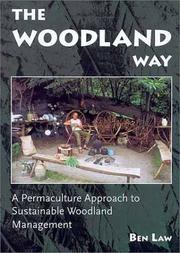
Law's account of running a Sussex coppice woodland as a livelihood: rotation, permaculture design, charcoal, chestnut products and the economics that make or break it. The most complete argument in the path for a wood as a working system.

The products side of the same practice — hurdles, gates, besoms, charcoal, riven material — and what species and age of stem each craft actually wants. Read it after The Woodland Way, whose rotations it explains the purpose of.

Mudge and Gabriel on forest farming in the understorey: shiitake logs, ginseng, ramps, nuts and the light and moisture conditions each needs. The right last book because it makes the canopy decisions of every earlier stage into a production choice.
Discussion
Keep reading
Paths that share books, cover the same subject, or open a related topic.