The Best Books on Wicca and Modern Paganism
This curriculum takes the reader from zero knowledge of Wicca and modern paganism through its historical roots, core theology, and living practice, before arriving at scholarly and advanced perspectives. Each stage builds the vocabulary, ritual literacy, and critical thinking needed for the next, so that by the end the reader has both a practitioner's feel for the tradition and an informed, historically grounded understanding of how it came to be.
Foundations: What Is Wicca & Modern Paganism?
BeginnerUnderstand what Wicca and contemporary paganism are, where they came from, and how they differ from older religions — building the essential vocabulary and mental map for everything that follows.
▸ Study plan for this stage
Pace: 4–5 weeks, ~25–30 pages/day. Start with Cunningham's "Wicca" (Week 1–2, ~150 pages), then move to Starhawk's "The Spiral Dance" (Week 3–5, ~300+ pages). Build in 2–3 review days per week.
- Wicca as a modern, nature-based religion distinct from historical witchcraft and older pagan traditions
- The Wiccan cosmology: the God and Goddess, the Wheel of the Year, and the concept of divine immanence
- Core Wiccan practices: casting circles, calling quarters, raising energy, and ritual structure as taught in Cunningham
- The threefold law and karma in Wiccan ethics and magical responsibility
- Starhawk's vision of Wicca as feminist spirituality and collective practice, emphasizing the Goddess and women's empowerment
- The difference between Wicca (a specific religion with initiatory roots) and broader modern paganism (diverse earth-centered traditions)
- Practical magic and spellwork: intention, will, and the mechanics of how magic is believed to work in both authors' frameworks
- Community, covens, and solitary practice: different paths within contemporary Wicca
- What are the historical origins of Wicca, and how does it differ from pre-Christian paganism or historical witchcraft?
- Describe the Wiccan cosmology: who or what are the God and Goddess, and how do they relate to practitioners?
- What is the Wheel of the Year, and why is it central to Wiccan practice and spirituality?
- Explain the threefold law and its role in Wiccan ethics. How does it influence magical practice?
- What are the basic steps in casting a circle and calling quarters, and what is their purpose in Wiccan ritual?
- How does Starhawk's approach to Wicca in 'The Spiral Dance' emphasize feminist spirituality and collective practice?
- What is the relationship between will, intention, and energy in magical practice according to these texts?
- How do solitary practitioners and covens differ, and what are the advantages and challenges of each path?
- Read Cunningham's introduction and early chapters carefully, then write a one-page summary explaining what Wicca is *not* (addressing common misconceptions)
- Map out the Wheel of the Year by hand, labeling the eight sabbats and their themes; reflect on how they connect to natural cycles in your own location
- Practice a simple grounding and centering meditation (as described in Cunningham) daily for one week; journal on how it affects your awareness
- Design a personal altar space or sketch one on paper, incorporating elements Cunningham recommends (representations of God/Goddess, elements, tools); explain your choices
- Read a ritual from Cunningham and a different one from Starhawk, then write a comparative analysis of their structure, tone, and emphasis
- Conduct a simple solo circle-casting exercise in a safe space, following Cunningham's instructions step-by-step, then reflect on what you learned
- Create a glossary of 20–25 key terms from both books (e.g., 'sabbat,' 'esbat,' 'Book of Shadows,' 'athame,' 'threefold law') with definitions in your own words
Next up: This stage establishes the vocabulary, history, and philosophical foundations of Wicca and modern paganism, preparing you to explore specific practices—such as divination, herbalism, moon phases, and advanced ritual work—in subsequent stages.
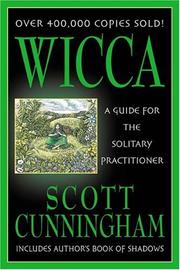
The single most widely-read entry point into Wicca; Cunningham's warm, non-dogmatic style defines core concepts (the Goddess and God, the Wheel of the Year, magic) without overwhelming a newcomer.
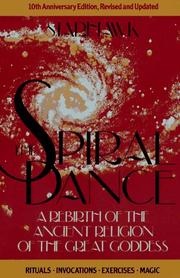
A landmark text that shaped modern Wicca and feminist paganism; reading it second gives the reader a richer, more goddess-centered theological perspective to contrast with Cunningham's accessible overview.
History: Where Did Modern Paganism Come From?
BeginnerTrace the real historical origins of Wicca and modern paganism — from Gerald Gardner and Aleister Crowley through the 20th-century revival — separating myth from documented history.
▸ Study plan for this stage
Pace: 6–8 weeks, ~25–30 pages/day (approximately 2 weeks per book with time for reflection and note-taking)
- The 'Witch-Cult Hypothesis' and Margaret Murray's discredited theory: how it shaped early Wiccan narratives and why historians now reject it
- Gerald Gardner's role as Wicca's founder: his documented claims, the Gardnerian Book of Shadows, and the evidence for his actual sources versus his public narrative
- Aleister Crowley's influence on Wiccan ritual and philosophy: identifying which elements of Crowley's work were incorporated into Gardnerian practice
- The 1951 repeal of the Witchcraft Act and its role in enabling public Wiccan emergence in Britain
- The distinction between historical witchcraft (persecution, folk practice) and modern Wicca as a 20th-century religious movement
- How Hutton's scholarly methodology separates documented evidence from romantic reconstruction in paganism's origin story
- The role of 1960s counterculture and second-wave feminism in Wicca's rapid expansion beyond Gardner's original coven structure
- Primary source literacy: how to evaluate Gardner's own claims in 'Witchcraft Today' against Hutton's historical analysis
- What was Margaret Murray's 'Witch-Cult Hypothesis' and why do modern historians, including Hutton, reject it as a foundation for understanding Wicca?
- What evidence does Hutton present for Gerald Gardner's actual sources when founding Wicca, and how does this differ from Gardner's own claims in 'Witchcraft Today'?
- Identify at least three specific elements or rituals from Aleister Crowley's work that appear in Gardnerian Wicca. What does this tell us about Gardner's sources?
- How did the 1951 repeal of the Witchcraft Act change the trajectory of Wicca's public development in Britain?
- What is the difference between historical witchcraft (as persecution and folk practice) and modern Wicca as a religious movement, and why is this distinction important?
- Based on Hutton's evidence, what can we say with confidence about Wicca's origins, and what remains speculative or unverifiable?
- Create a timeline chart: Plot key events from both books (Gardner's initiation claims, Crowley's publications, the 1951 Witchcraft Act repeal, Wicca's public emergence) with annotations on what Hutton identifies as documented vs. claimed.
- Source-tracing exercise: Select 3–4 rituals or concepts from Gardner's 'Witchcraft Today' and cross-reference them with Hutton's citations to Crowley and other sources. Document what you find.
- Critical reading journal: As you read Hutton, note instances where he explicitly states 'no evidence exists for' or 'this claim is unverifiable.' Collect at least 10 examples and reflect on why historians must make these distinctions.
- Comparative analysis: Write a 2–3 page essay comparing Gardner's narrative of Wicca's origins (in his own book) with Hutton's historical reconstruction. What claims does Gardner make that Hutton supports, challenges, or leaves unresolved?
- Primary source annotation: Read a passage from 'Witchcraft Today' (e.g., Gardner's account of his initiation or his claims about historical witchcraft) and annotate it with Hutton's counter-evidence or scholarly context from 'The Triumph of the Moon.'
- Myth vs. history worksheet: Create a two-column chart listing common myths about Wicca's origins (e.g., 'Wicca is an ancient religion,' 'All witches were Wiccans') and what the historical evidence actually shows according to Hutton.
Next up: By grounding yourself in the documented history of Wicca's 20th-century origins, you'll be prepared to explore how these historical foundations shaped modern Wiccan theology, practice, and diversity—moving from "where it came from" to "what it actually teaches and does."
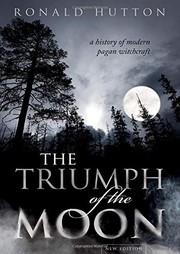
The definitive, rigorously researched academic history of modern pagan witchcraft in Britain; Hutton's work is essential for understanding that Wicca is a modern creation, not an ancient survival, and why that matters.
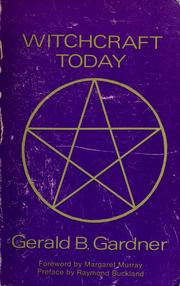
Gardner's own 1954 founding text belongs here so the reader can see the tradition's origin in its own words, now armed with Hutton's historical context to read it critically.
Beliefs & Theology: The Pagan Worldview
IntermediateDevelop a nuanced understanding of pagan theology, ethics, and cosmology — including polytheism, animism, the divine feminine and masculine, and how pagans think about deity and nature.
▸ Study plan for this stage
Pace: 8–10 weeks, ~25–30 pages/day. Start with "Drawing down the Moon" (4–5 weeks, ~20 pages/day), then move to "A World Full of Gods" (4–5 weeks, ~25–30 pages/day). Allow 1 week for review and integration.
- Polytheism vs. monotheism: how pagans conceptualize multiple deities and their relationship to nature and human experience
- Animism and the sacred in nature: understanding how pagans perceive divinity as immanent in natural phenomena, not transcendent
- The divine feminine and masculine: exploring goddess and god worship, balance, and their roles in pagan cosmology
- Immanence vs. transcendence: the theological difference between paganism and Abrahamic religions, and what it means for pagan practice
- Deity as archetype and/or literal being: how different pagan traditions understand whether gods are psychological constructs, literal entities, or both
- Ethics rooted in interconnection: how pagan theology generates moral frameworks based on relationship with nature and community
- The Craft as spiritual path: understanding Wicca specifically as a theological and ethical system within broader paganism
- Cosmology and the sacred: how pagans map the universe, understand cycles, and locate humanity within a living cosmos
- How do pagan conceptions of deity differ fundamentally from monotheistic ones, and what does Adler argue about the diversity of pagan belief?
- What is animism, and how does it shape pagan theology and practice according to both Adler and Greer?
- How do pagans understand the relationship between the divine feminine and masculine, and why is this balance significant in pagan cosmology?
- What does Greer mean by a 'world full of gods,' and how does this polytheistic framework differ from henotheism or pantheism?
- How do pagan ethics emerge from theological beliefs about nature, interconnection, and divinity?
- What are the key differences between understanding deity as psychological archetype versus as a literal, independent being, and how do different pagan traditions navigate this?
- How does Wiccan theology specifically (as discussed in Adler) fit within the broader pagan theological landscape?
- What is the significance of immanence in pagan theology, and how does it shape how pagans approach spirituality and magic?
- Create a comparative theology chart: map out how different pagan traditions discussed in Adler (Wiccan, Reconstructionist, eclectic, etc.) understand deity, nature, and the sacred. Identify common threads and divergences.
- Write a 2–3 page reflection on animism: describe a natural place or object and practice perceiving it as Adler and Greer suggest pagans do—as alive, ensouled, and potentially divine. Reflect on how this shifts your understanding of nature.
- Develop a personal polytheistic pantheon: choose 3–5 deities or divine forces from any pagan tradition and write short profiles explaining their domains, characteristics, and how they relate to each other and to you. This cements the concept of multiple, interdependent divine beings.
- Analyze a pagan ethical teaching: select one pagan ethical principle (e.g., the Wiccan Rede, the Threefold Law, or a Reconstructionist value) and trace it back to the theological beliefs Adler and Greer discuss. Show how theology generates ethics.
- Create a visual cosmology: draw or diagram how a pagan tradition (Wiccan, Heathen, Reconstructionist, etc.) understands the structure of the universe, the placement of deities, nature, and humanity. Annotate with concepts from both books.
- Debate exercise: prepare arguments for and against the proposition 'Pagan gods are psychological archetypes, not literal beings.' Use specific examples and quotes from Adler and Greer to support both sides, then reflect on how this debate matters for pagan practice.
- Interview or correspondence project: if possible, contact a practicing pagan and ask them how they personally understand deity, nature, and ethics. Compare their answers to the theological frameworks in Adler and Greer.
Next up: This stage establishes the theological and cosmological foundations of paganism, preparing you to explore how these beliefs translate into ritual practice, magical theory, and community structures in the next stage.
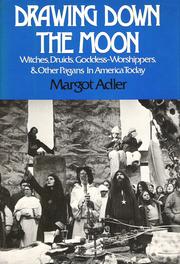
A sweeping, journalistic survey of the entire modern pagan movement in North America; Adler maps the diversity of traditions, beliefs, and communities, giving the reader a panoramic theological picture.
A serious philosophical defense of polytheism that challenges monotheist assumptions; it deepens the reader's ability to think rigorously about pagan theology rather than simply accepting or rejecting it.
Practice: Ritual, Magic & the Living Tradition
IntermediateMove from understanding to doing — learning how rituals are constructed, how magic is understood and worked, and how the Wheel of the Year and other practices are lived out in real pagan life.
▸ Study plan for this stage
Pace: 4–5 weeks, ~25–30 pages/day (approximately 150–180 pages total)
- Valiente's philosophy of witchcraft as a living, evolving practice rooted in personal experience and intuition rather than rigid dogma
- The structure and purpose of ritual: how to construct meaningful ceremonies that align intention with action
- Magic as natural law and personal responsibility: understanding the ethical framework and consequences of magical work
- The Craft as a solitary and group practice: adapting rituals and traditions for different contexts and covens
- Seasonal cycles and the Wheel of the Year as lived experience: celebrating sabbats and esbats with practical meaning
- The role of the priestess/priest and the democratization of spiritual authority in modern witchcraft
- Practical techniques: visualization, energy raising, grounding, and the integration of craft into daily life
- What is Valiente's core argument about the relationship between tradition and innovation in witchcraft practice?
- How does Valiente approach the construction of rituals, and what elements does she consider essential versus flexible?
- What ethical principles does Valiente emphasize regarding magical work and personal responsibility?
- How does Valiente distinguish between solitary practice and coven work, and what are the advantages and challenges of each?
- What is the significance of the Wheel of the Year in Valiente's vision of witchcraft as a lived tradition?
- How does Valiente address the role of intuition and personal experience in developing one's own magical practice?
- Design and write out a simple ritual for a personal intention (e.g., protection, clarity, gratitude), following Valiente's principles of structure and meaningful symbolism
- Create a one-year calendar marking the eight sabbats and thirteen esbats; for each, write 2–3 sentences on how you would personally celebrate it and what it means to you
- Practice a basic grounding and centering exercise daily for one week; journal on how your awareness and energy shift with consistent practice
- Adapt one existing ritual from the book for your own context (solitary vs. group, indoor vs. outdoor, etc.); document your choices and reasoning
- Explore your personal relationship with magic: write a reflection on what magic means to you, what ethical boundaries matter to you, and how you see yourself working within the Craft
- Gather materials and create a simple altar or sacred space reflecting the season; photograph or sketch it and reflect on how the physical space supports your practice
Next up: This stage grounds you in the practical and philosophical foundations of witchcraft as a living tradition, preparing you to explore deeper specialized practices—such as herbalism, divination, or advanced magical theory—and to understand how individual practitioners build coherent, personally meaningful paths within the broader pagan community.
Valiente, who co-wrote much of Gardnerian Wicca's core liturgy, offers an authoritative and practical guide to craft practice; her insider perspective makes this an indispensable complement to Penczak's structured course.
Advanced: Scholarship, Diversity & Critical Perspectives
ExpertEngage with academic scholarship, the diversity of pagan paths beyond Wicca, and critical questions about identity, gender, ecology, and the future of the movement.
▸ Study plan for this stage
Pace: 6–8 weeks, ~40–50 pages/day (approximately 300–350 pages total)
- Wicca as a historically constructed religion with documented origins in 1950s Britain, not ancient survival
- The diversity of modern pagan paths and how they diverge from Wiccan theology, practice, and organizational structures
- Gender roles and the Goddess/God dyad as central to Wiccan identity, and how different traditions reimagine or reject this framework
- Ecological spirituality as both a defining feature and contested aspect of modern paganism
- The role of secrecy, initiation, and lineage in establishing religious authority and community boundaries
- How academic scholarship challenges popular myths about paganism's antiquity and authenticity
- The relationship between individual spiritual experience and collective religious identity in pagan movements
- Critical examination of who gets included or excluded in 'pagan' identity and why
- What does Clifton's historical evidence reveal about the actual origins of Wicca, and how does this challenge popular narratives about ancient roots?
- How do different pagan traditions discussed in the book diverge from Wiccan theology, practice, and community structures?
- What role do gender and the Goddess/God dyad play in Wiccan identity, and how have some practitioners challenged or reimagined these concepts?
- How does Clifton address the relationship between ecological spirituality and modern paganism, and what tensions or contradictions does he identify?
- What are the functions and consequences of secrecy, initiation, and lineage claims in establishing religious authority within pagan communities?
- How does Clifton's scholarship model a critical approach to studying new religious movements, and what methodological insights can you apply to other traditions?
- Create a detailed timeline of Wicca's documented origins (1950s–present) based on Clifton's evidence, noting key figures, texts, and organizational developments that contradict popular 'ancient roots' claims
- Map the diversity of pagan paths discussed in the book: for each tradition, note its theological differences from Wicca, its approach to gender/deity, and its community structures
- Analyze Clifton's treatment of gender and the Goddess/God dyad: identify passages where he documents how different practitioners have negotiated, challenged, or reimagined these concepts, then write a short reflection on what this reveals about religious identity as fluid rather than fixed
- Trace Clifton's discussion of ecological spirituality throughout the book: collect quotes and examples, then evaluate whether paganism's environmental commitments are inherent to the tradition or constructed retrospectively
- Examine Clifton's use of sources and methodology: identify how he handles oral history, published accounts, and insider/outsider perspectives, and reflect on how this scholarly approach differs from devotional or polemical accounts of paganism
- Conduct a close reading of Clifton's treatment of secrecy and initiation: identify the functions he attributes to these practices (authority-building, boundary-maintenance, spiritual efficacy) and consider the trade-offs between community protection and inclusivity
Next up: This stage establishes a rigorous, historically grounded foundation for understanding modern paganism's actual diversity and internal tensions, preparing you to engage with specialized scholarship on specific pagan paths, contemporary debates about authenticity and appropriation, and the future directions of the movement.
A scholarly history of Wicca and paganism in America that brings academic rigor to the American context, rounding out Hutton's British focus and raising critical questions about how the tradition has evolved.
Discussion
Keep reading
Paths that share books, cover the same subject, or open a related topic.