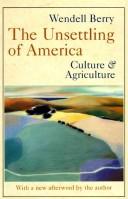
Start with The Unsettling of America. The obvious alternative is Jayber Crow, which is the novel that converts people and the book most often handed to a newcomer, and the essays are still the better opening. Berry has published in three modes for sixty years — essays, poems and the Port William novels — and they are all making the same case. The essays state it as argument, the novels test it against people who have to live it, and the poems compress it until it stops being an argument at all. Beginning with the argument means everything afterwards reads as consequence rather than as scenery.
The Unsettling of America came out in 1977 and is a sustained attack on industrial agriculture and the culture that produced it. It reads slowly because Berry argues by accumulation rather than by point — a single chapter can take an hour — and fifteen to twenty pages a sitting is the honest pace.
The essays
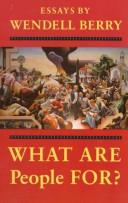
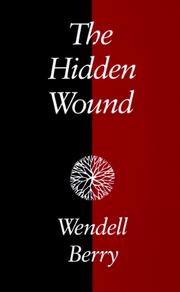
Three books, roughly 580 pages, six to eight weeks. After The Unsettling of America, read What are people for?, a collection that ranges from agriculture to literary criticism to a much-quoted refusal to buy a computer, and shows the range of what he means by the argument. Then The hidden wound, written in 1968, which is Berry examining racism through his own family's history as slaveholders in Kentucky. It is short, uncomfortable and the least characteristic book in the path, and it is where the moral seriousness of everything else comes from.
The Port William novels
Jayber Crow, Hannah Coulter, The memory of Old Jack and Nathan Coulter, in that order rather than in the chronological order of the events they describe. This matters. Berry wrote these across five decades and out of sequence, and Jayber Crow is the one that converts readers — a barber narrating the life of a small Kentucky town across the twentieth century — while Nathan Coulter, though it was published first, is the slightest and is not the book to start on.
They read faster than the essays but should not be rushed. Berry's fiction is deliberately undramatic; its effects are cumulative, and a reader waiting for a plot to arrive will conclude that nothing does. Hannah Coulter in particular is a widowed woman narrating a whole life in 190 pages, and its power comes entirely from accumulation.
The poetry
Four to six months for three thin books, and that is not a mistake. The country of marriage, The Peace of Wild Things and Other Poems and A timbered choir run to 53, 134 and 228 pages and read as slowly as anything in this path. Read a few poems at a sitting, aloud, and stop.
A timbered choir in particular is a book to keep by a chair. It collects twenty years of Sabbath poems, written on Sunday walks, and reading it straight through in a week produces almost nothing. Berry's poems are plain, unshowy and rhythmically quiet, which means they reward the voice and evaporate under speed. The Peace of Wild Things and Other Poems is the best single entry point if you want one book of the poetry rather than three.
Deeper cuts
Life Is a Miracle is short, combative and philosophically dense — an argument against scientific reductionism, framed as a response to a single book, and it rewards note-taking. A Place on Earth is the one Berry novel that genuinely requires patience: slow and diffuse by design, and best saved for when you already care about this place and these people. Read the essay first.
Where to stop
The Unsettling of America, Jayber Crow and The Peace of Wild Things and Other Poems is a complete introduction — one book in each mode, and the case made three ways. Most readers who go further do so because the fiction took hold, in which case the remaining Port William books are the natural continuation.
More author reading orders are on Discover.
Follow the full ordered path here: Wendell Berry Reading Order: Where to Start.