Interpreter and translator: the best books to break into the career
This curriculum takes you from the fundamental craft of translation and interpreting all the way through professional certification, specialization, and client-building — a complete career arc. Each stage builds on the last: you first develop linguistic intuition and craft, then master professional practice and ethics, then specialize and grow a sustainable freelance business.
Foundations of the Craft
BeginnerUnderstand what translation and interpreting actually are as disciplines, develop core linguistic intuition, and grasp the fundamental differences between the two professions.
▸ Study plan for this stage
Pace: 8–10 weeks, ~40–50 pages/day (approximately 2–3 weeks per book with time for reflection and exercises)
- Translation is not mechanical word-substitution but a complex act of interpretation, judgment, and cultural mediation
- The fundamental differences between interpreting (real-time, oral, ephemeral) and translation (written, revisable, permanent)
- Linguistic relativity and how languages encode meaning differently—what's easy to say in one language may be impossible in another
- The translator's paradox: the goal of transparency (making translation invisible) versus the reality that all translation involves loss, gain, and interpretation
- Domestication versus foreignization as strategic choices in how translators position themselves toward source and target cultures
- The ethical and political dimensions of translation—how translator choices shape what readers understand about other cultures
- Core translator competencies: linguistic mastery, cultural knowledge, subject-matter expertise, and decision-making under constraint
- The cognitive and emotional demands of interpreting: managing real-time processing, memory, stress, and cultural code-switching
- What does Bellos mean by 'translation is not about words, it's about meaning'? Give a concrete example from the book and explain why this distinction matters.
- How do interpreting and translation differ in their constraints, demands, and the types of errors each can accommodate? Which profession do you think is harder and why?
- What is Venuti's concept of 'invisibility' in translation, and why does he argue it is both a goal and a problem? How does this relate to the translator's ethical responsibility?
- Explain the difference between domestication and foreignization strategies. When would a translator choose each, and what are the trade-offs?
- According to Robinson, what are the core competencies a translator must develop, and how do they differ from those required of an interpreter?
- How do the three books collectively argue that translation and interpreting are not neutral, transparent activities? What evidence do they provide?
- Close-reading exercise: Select one untranslatable concept from Bellos (e.g., a word or phrase that resists direct translation) and research how different translators have handled it across multiple language pairs. Write a 500-word analysis of the choices made and their cultural implications.
- Practical translation experiment: Translate a short passage (200–300 words) from a language you know into English, then translate it back into the source language. Compare the original and back-translation. What was lost, gained, or distorted? Reflect on whether you used domestication or foreignization strategies.
- Interpreting simulation: Record yourself interpreting a 3–5 minute TED talk or news segment into another language (or English if you're a non-native speaker). Listen back and identify moments where you struggled with real-time processing, cultural references, or terminology. Write notes on what you learned about the cognitive demands.
- Invisibility analysis: Find two published translations of the same source text (e.g., a poem, short story, or philosophical passage) and compare them side-by-side. Annotate where translators made different choices and whether those choices made the translation more 'visible' or 'invisible' to you as a reader.
- Cultural mediation case study: Choose a translated work you've read and research the translator's stated approach (interview, translator's note, or published essay). Did they domesticate or foreignize? How did their choices affect your understanding of the source culture? Write a 750-word reflection.
- Competency self-assessment: Based on Robinson's framework, evaluate your current strengths and gaps across linguistic mastery, cultural knowledge, subject-matter expertise, and decision-making. Create a 6-month development plan targeting your weakest area.
Next up: This stage equips you with the conceptual and ethical foundations—understanding *why* translation matters and *how* it works—preparing you to move into the next stage, which will likely focus on practical techniques, specialized fields (legal, medical, literary), and building real-world translation and interpreting skills.
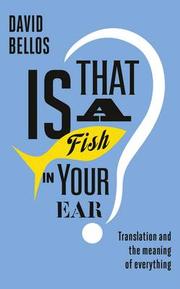
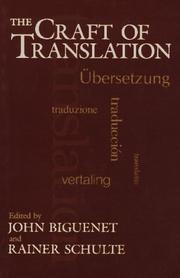
A brilliant, accessible entry point that explores what translation really means — culturally, linguistically, and philosophically — without being academic. It builds the conceptual vocabulary every beginner needs before touching technique.
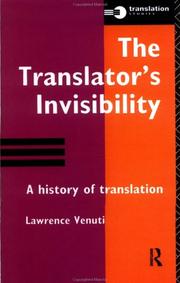
Introduces the foundational tension between domestication and foreignization — the central debate of the field. Reading this second gives the beginner a theoretical framework to hang all future craft decisions on.
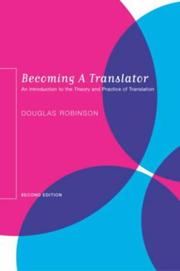
A practical, encouraging guide written directly for newcomers to the profession. It bridges the gap between linguistic theory and real-world translation work, making it the perfect capstone for this foundational stage.
Craft & Technique
BeginnerDevelop hands-on translation and interpreting skills, learn the core techniques of consecutive and simultaneous interpreting, and understand how meaning is transferred across languages with precision.
▸ Study plan for this stage
Pace: 8–10 weeks, ~25–30 pages/day (approximately 4–5 weeks per book, accounting for note-taking and reflection on practical examples)
- Equivalence and meaning transfer: understanding Baker's four levels of equivalence (word, phrase, sentence, text) and how meaning shifts across language pairs
- Semantic fields and lexical gaps: recognizing that words don't have one-to-one equivalents and developing strategies to bridge untranslatable concepts
- Consecutive interpreting mechanics: mastering note-taking systems, memory techniques, and the cognitive load of listening while preparing to speak
- Simultaneous interpreting techniques: understanding ear-voice span, anticipation, and the unique challenges of real-time language processing
- Reformulation and paraphrasing: learning to convey intent rather than word-for-word meaning, a core skill in both translation and interpreting
- Cognitive processing in interpreting: recognizing how attention, working memory, and language automaticity interact during live interpretation
- Ethical and practical decision-making: applying translation theory to real-world choices about fidelity, fluency, and audience comprehension
- What are Baker's four levels of equivalence, and how would you apply them to resolve a translation problem in a text you're working with?
- Explain the concept of lexical gaps with a concrete example from a language pair you know. What strategies would you use to bridge the gap?
- Describe the consecutive interpreting process: what are the key cognitive challenges, and how do note-taking systems help manage them?
- What is ear-voice span in simultaneous interpreting, and why does it matter for maintaining accuracy and fluency?
- How do the translation theory principles in Baker differ from or complement the practical techniques Jones describes for conference interpreting?
- When faced with an untranslatable cultural reference or idiom, what decision-making framework would you use to choose between literal translation, paraphrasing, or explanation?
- Comparative analysis: Select 3–5 passages from 'In Other Words' and identify which of Baker's equivalence levels each example demonstrates. Write brief annotations explaining the translation choice.
- Lexical gap mapping: Choose a specific domain (e.g., legal, medical, cultural) and create a chart of 10–15 terms from English and another language that have no direct equivalents. Propose translation solutions for each.
- Consecutive interpreting simulation: Record yourself reading a 2–3 minute speech in your source language, then practice interpreting it into your target language using a note-taking system (Rozan's or another method). Compare your output to the original for accuracy and completeness.
- Ear-voice span practice: Listen to a 3–5 minute audio segment in your target language and practice speaking simultaneously while maintaining a 2–3 word delay. Record and review for fluency and accuracy.
- Reformulation exercises: Take 5 complex sentences from 'Conference Interpreting Explained' and rewrite them 3 different ways (literal, paraphrased, and simplified) to understand how meaning can be preserved across different formulations.
- Mock conference interpreting: Arrange a practice session with a partner or mentor where you interpret a 10–15 minute presentation consecutively, then (in a separate session) simultaneously. Record and self-assess using Jones's criteria for quality.
Next up: This stage grounds you in translation theory and interpreting mechanics, equipping you with the conceptual frameworks and hands-on techniques needed to move into the next stage, where you'll apply these skills to specialized domains, build language-pair expertise, and develop professional-level speed and accuracy under real-world conditions.
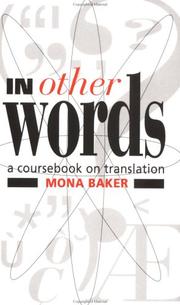
The most widely used textbook in translator training programs worldwide. It systematically teaches equivalence, cohesion, and pragmatics — the technical building blocks of accurate translation.
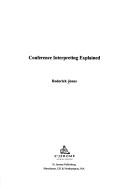
The clearest practical introduction to conference interpreting, covering consecutive and simultaneous modes. It belongs here because it applies the linguistic awareness built in Baker's book to the live, spoken dimension of the profession.
Professional Practice & Ethics
IntermediateUnderstand the professional standards, codes of ethics, certification pathways, and real-world working conditions that define a credible career in translation and interpreting.
▸ Study plan for this stage
Pace: 4–5 weeks, ~25–30 pages/day
- Community interpreting as a distinct professional field with unique ethical obligations and working conditions
- The interpreter's role boundaries: advocate vs. neutral conduit and when each applies in community settings
- Core ethical principles including confidentiality, impartiality, accuracy, and cultural competence in real-world scenarios
- Professional certification pathways and credentialing systems for community interpreters
- Managing power dynamics, cultural differences, and emotional labor in interpreted interactions
- Practical protocols for managing conflicts of interest, interpreter-initiated clarifications, and working with untrained interpreters
- Building professional identity and maintaining professional distance while serving vulnerable populations
- What distinguishes community interpreting from other interpreting specializations, and what unique ethical challenges does it present?
- How should an interpreter navigate the tension between remaining neutral and advocating for a client's needs in a community setting?
- What are the key components of a professional code of ethics for community interpreters, and how do they apply to real-world scenarios?
- What certification and credentialing pathways exist for community interpreters, and what do they require?
- How can interpreters effectively manage cultural brokering responsibilities without overstepping professional boundaries?
- What strategies help interpreters cope with emotional labor and maintain professional sustainability in community settings?
- Read and annotate Bancroft's case studies, identifying the ethical dilemma in each and the professional principle(s) at stake
- Write a personal code of ethics for community interpreting, then compare it against established professional codes (IMIA, NAJIT, or similar); note gaps and refinements
- Role-play three scenarios: (1) a client asking you to omit information, (2) discovering a conflict of interest mid-appointment, (3) a monolingual provider dismissing your interpretation—practice your response using Bancroft's frameworks
- Research and document the certification requirements in your country/region; create a roadmap for obtaining credentials if you pursue this path
- Analyze a community interpreting interaction (video, transcript, or your own experience) using Bancroft's role-boundary framework; identify where the interpreter succeeded or struggled
- Interview a practicing community interpreter about how they apply ethics in real situations; record insights on confidentiality, cultural brokering, and professional boundaries
Next up: This stage grounds you in the professional standards and ethical foundations that define credible community interpreting practice, preparing you to explore specialized interpreting contexts (legal, medical, educational) where these principles are tested and adapted in high-stakes environments.

The definitive training manual for community and medical interpreting — one of the most in-demand specializations. It covers ethics, role boundaries, and protocols that apply broadly across all interpreting settings.
Specialization
IntermediateExplore high-value specializations — legal, medical, and literary — and understand how to develop domain expertise that commands higher rates and more consistent work.
▸ Study plan for this stage
Pace: 4–5 weeks, ~25–30 pages/day, with 2–3 days per week dedicated to practical exercises and terminology building
- Legal translation as a specialized domain requiring mastery of source and target legal systems
- Equivalence vs. adaptation: understanding when direct translation fails and how to handle legal terminology gaps
- Structural and stylistic conventions of legal documents (contracts, statutes, court filings) across languages
- Terminology management and the critical role of legal glossaries and reference materials
- Cultural and jurisdictional differences that affect legal translation accuracy and enforceability
- Strategies for handling untranslatable concepts and legal neologisms
- Quality assurance and revision techniques specific to legal translation
- What are the key differences between legal translation and general translation, and why do these differences matter for accuracy and enforceability?
- How do you approach translating a legal term that has no direct equivalent in the target language or legal system?
- What structural and stylistic conventions must you follow when translating contracts versus statutes versus court documents?
- How do source and target legal systems differ, and how should these differences influence your translation choices?
- What role does terminology management play in building a sustainable legal translation practice, and how do you create and maintain a personal legal glossary?
- How would you quality-check a legal translation to ensure it meets professional standards and protects both translator and client?
- Create a personal legal translation glossary for a specific language pair and legal domain (e.g., contract law, intellectual property), with at least 50 terms, definitions, and usage examples
- Translate a short legal document (2–3 pages) from the book's examples or a real source, then revise it using the book's quality-assurance checklist
- Analyze 3–4 legal documents in both source and target languages (provided or found), identifying structural differences and explaining why they matter
- Research and document the key differences between two legal systems (e.g., common law vs. civil law) relevant to your language pair, then explain how these affect translation choices
- Conduct a terminology audit: find 10 legal terms in a source document, research their equivalents in the target legal system, and justify your translation choices
- Write a 1–2 page translation brief for a hypothetical legal client, outlining your approach, terminology strategy, and quality-assurance plan for a specific document type
- Practice translating a challenging legal passage (e.g., one with untranslatable concepts or cultural differences) and document your decision-making process
Next up: This stage equips you with the specialized knowledge and terminology management skills needed to command higher rates in legal translation; the next stage will expand this expertise to other high-value specializations (medical and literary translation) and teach you how to market and scale your specialization into a sustainable, profitable career.

Legal translation is one of the most lucrative and demanding specializations. This book systematically explains the challenges of legal language and how to navigate them, making it the ideal first specialization text.
Building a Freelance Career & Client Base
ExpertLaunch and grow a sustainable freelance translation or interpreting business — from pricing and marketing to finding direct clients and managing a professional reputation.
▸ Study plan for this stage
Pace: 8–10 weeks, ~40–50 pages/day (mix of reading and active note-taking)
- Positioning yourself as a specialist and building a unique value proposition in the translation/interpreting market
- Pricing strategies: rate-setting, value-based pricing, and negotiating contracts without undervaluing your work
- Direct client acquisition: networking, cold outreach, referral systems, and building long-term client relationships
- Marketing fundamentals: creating a professional brand, website, portfolio, and online presence tailored to target clients
- Business operations: contracts, invoicing, project management, and maintaining professional boundaries with clients
- Managing reputation and building trust through quality delivery, communication, and handling difficult clients
- Scaling your business: time management, subcontracting decisions, and growing revenue without burnout
- Financial sustainability: understanding costs, profit margins, and building a business model that supports your lifestyle
- What is your unique specialization or niche, and how does it differentiate you from other freelance translators/interpreters in your market?
- How do you determine your rates, and what factors (experience, specialization, market demand, costs) should influence your pricing decisions?
- What are three concrete strategies for finding direct clients, and how do you maintain relationships with them to generate repeat business?
- How should you present yourself online (website, portfolio, social media) to attract your ideal clients and establish credibility?
- What are the key elements of a professional contract, and why is it important to protect yourself legally and financially?
- How do you handle scope creep, difficult clients, or quality disputes while maintaining your professional reputation?
- Define your niche: Write a 1-page positioning statement identifying your target market, specialization(s), and unique value proposition based on your skills and interests.
- Create a pricing model: Research market rates in your language pair(s) and specialization, then calculate your own rates based on experience level, overhead costs, and desired income—document your reasoning.
- Build a prospect list: Identify 20–30 potential direct clients (companies, agencies, organizations) in your niche and research their translation/interpreting needs.
- Draft a cold outreach email: Write 2–3 sample emails pitching your services to prospects, then refine based on feedback or best practices from the books.
- Develop a professional online presence: Create or update a website, LinkedIn profile, or portfolio site showcasing your expertise, past work (anonymized if needed), and client testimonials.
- Write a contract template: Draft a simple service agreement covering scope, rates, payment terms, deadlines, and dispute resolution—adapt from samples in the books or online resources.
- Plan a referral system: Design a strategy for asking satisfied clients for referrals and incentivizing repeat business (e.g., loyalty discounts, referral bonuses).
- Conduct a financial projection: Create a 12-month budget estimating your costs (software, training, marketing, taxes) and projected income based on realistic client acquisition and project volume.
Next up: This stage equips you with the business fundamentals to launch and sustain a freelance career; the next stage will likely deepen your expertise in specialized domains (technical, legal, medical translation) or advanced interpreting skills, allowing you to command premium rates and serve high-value clients more effectively.

Written by two working professional translators, this is the most practical business guide in the field — covering rates, contracts, agency vs. direct client work, and marketing. It belongs last because it applies everything learned in prior stages.
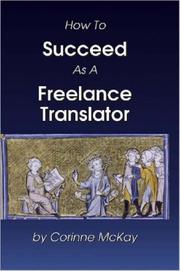
A step-by-step roadmap to building a client base, setting up a professional profile, and navigating the modern translation marketplace including CAT tools and online platforms. The perfect final read to launch an active career.
Discussion
Keep reading
Paths that share books, cover the same subject, or open a related topic.