Become a commercial pilot: the best books to start the career
This curriculum takes a beginner from zero aviation knowledge all the way to a confident, career-ready commercial pilot mindset. It starts with inspiring, big-picture narratives to build passion and vocabulary, moves through the core technical and regulatory knowledge required for each certificate, then finishes with the professional skills and cockpit wisdom that separate a licensed pilot from a true aviator.
Foundations — Falling in Love with Flying
BeginnerUnderstand what a pilot's life looks and feels like, absorb foundational aviation vocabulary, and build the motivation to commit to the training path ahead.
▸ Study plan for this stage
Pace: 6–8 weeks, ~40–50 pages/day. Read "Stick and Rudder" (first 3–4 weeks), then "Fate is the Hunter" (remaining 3–4 weeks). Allow time for reflection between books.
- The airplane as a living system: how lift, drag, and control surfaces respond to pilot input and environmental conditions
- Stick and Rudder's core thesis: flying is about understanding and feeling the airplane's behavior, not memorizing rules
- The pilot's mindset: situational awareness, humility in the face of weather and mechanical limits, and continuous learning
- Real-world aviation hazards and decision-making: how experienced pilots navigate risk, fatigue, and uncertainty
- The emotional and physical reality of a pilot's life: the rewards of flight and the weight of responsibility
- Foundational vocabulary: angle of attack, stall, slip, bank, trim, and how these concepts connect to actual control movements
- The evolution of pilot judgment: how experience builds intuition and prevents fatal mistakes
- Flying as a craft, not just a job: the deep satisfaction and discipline required to master aviation
- What does Langewiesche mean by 'flying the airplane' rather than 'following procedures,' and why is this distinction critical?
- Explain the relationship between angle of attack, lift, and stall. How would you recognize and recover from a stall based on Langewiesche's descriptions?
- What are the main hazards Gann encounters in 'Fate is the Hunter,' and what pilot decisions or errors contribute to them?
- How does Gann's portrayal of a pilot's daily life—fatigue, weather decisions, mechanical concerns—shape your understanding of the career?
- What role does intuition and 'feel' play in Langewiesche's philosophy, and how does Gann's experience validate or challenge this?
- Describe the emotional arc of becoming a pilot based on these two books. What motivates pilots to accept the risks and demands?
- Create a glossary of 20–30 aviation terms from 'Stick and Rudder' (e.g., angle of attack, slip, trim) with your own explanations in plain language.
- Sketch and label the four forces of flight (lift, weight, thrust, drag) and annotate how each responds to pilot control inputs described in Langewiesche.
- Write a 500-word reflection: 'A Day in the Life of a Pilot' based on Gann's stories. Include specific hazards, decisions, and emotional moments.
- Select three critical incidents from 'Fate is the Hunter' and analyze what the pilot did right or wrong. What would you have done differently?
- Watch a 10–15 minute video of a small aircraft in flight (e.g., stall demonstration or crosswind landing) and narrate it using Langewiesche's concepts of lift, drag, and control.
- Interview a local pilot (or find a podcast interview) and ask: 'What surprised you most about flying?' and 'What does Langewiesche's philosophy mean to you?' Compare their answers to the books.
Next up: This stage builds emotional investment and intuitive understanding of how airplanes actually behave, preparing you to dive into the technical and regulatory foundations of formal pilot training in the next stage.
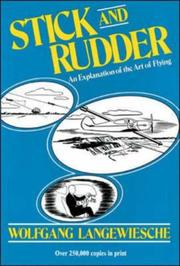
The single most celebrated book on the art of flying; it explains in plain language how an airplane actually flies, giving beginners the intuitive mental model every subsequent technical book assumes you already have.

A gripping memoir of early commercial aviation that humanizes the pilot career and illustrates — through vivid storytelling — the judgment, discipline, and respect for weather that define professional flying.
Student Pilot — Earning Your Private Certificate
BeginnerMaster the aeronautical knowledge, regulations, and flight maneuvers required to pass the Private Pilot written exam and checkride.
▸ Study plan for this stage
Pace: 8–10 weeks, ~40–50 pages/day (Rod Machado first: 4–5 weeks; FAA Handbook: 4–5 weeks)
- Aircraft systems and aerodynamics: lift, drag, thrust, weight, and how control surfaces affect flight
- Regulations and airspace: FAR Part 61 requirements, airspace classifications, and right-of-way rules
- Flight planning and navigation: VFR flight planning, reading sectional charts, dead reckoning, and GPS basics
- Weather interpretation: reading METARs and TAFs, understanding wind shear and thunderstorm hazards
- Engine operations and performance: power settings, fuel management, density altitude, and weight-and-balance calculations
- Flight maneuvers and procedures: slow flight, stalls, steep turns, emergency procedures, and crosswind landings
- Physiology and human factors: hypoxia, spatial disorientation, decision-making, and fatigue management
- Instrument interpretation: reading the six-pack instruments and understanding their limitations in VFR flight
- What are the four forces of flight, and how do control surfaces manipulate them during different phases of flight?
- What are the requirements for a Private Pilot certificate under FAR Part 61, and what are the limitations on operations?
- How do you plan a VFR cross-country flight, including calculating true airspeed, magnetic heading, and fuel requirements?
- How do you interpret a METAR and TAF, and what weather conditions prohibit VFR flight?
- What is density altitude, how is it calculated, and why does it affect aircraft performance?
- What are the procedures for recovering from a stall, and what are the common errors that lead to stall accidents?
- Complete all practice questions at the end of each chapter in Rod Machado's handbook; aim for 80%+ on first attempt
- Solve 10 weight-and-balance problems using real aircraft POH (Pilot's Operating Handbook) data
- Plan three full VFR cross-country flights using sectional charts, including fuel calculations and alternate airport selection
- Interpret 15 METAR and TAF reports; classify each as VFR, MVFR, IFR, or LIFR conditions
- Perform density altitude calculations for 8 different airport/weather scenarios and predict performance impact
- Practice stall recognition and recovery procedures in a simulator or aircraft with an instructor (minimum 5 sessions)
- Take the FAA's official Private Pilot Knowledge Test practice exam twice; score 80%+ both times before checkride
- Create flashcards for all acronyms (IMSAFE, ARROW, DECIDE, etc.) and regulations; review daily for 4 weeks
Next up: Mastering these fundamentals—regulations, aerodynamics, navigation, and emergency procedures—provides the knowledge foundation needed to transition to advanced training, where you'll integrate all these concepts into complex scenarios like night flying, high-altitude operations, and advanced weather decision-making.
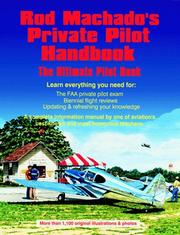
The most approachable and comprehensive ground-school textbook for the Private Pilot certificate; its humor and clear diagrams make dense FAA material digestible for a true beginner.
The FAA's own foundational reference (FAA-H-8083-25); reading it after Machado reinforces and officially codifies everything learned so far, and it is directly tested on the written exam.
Instrument & Commercial Ratings — Building the Professional Toolbox
IntermediateDevelop the instrument flying skills, weather knowledge, and commercial-level aeronautical decision-making needed to earn an Instrument Rating and Commercial Pilot Certificate.
▸ Study plan for this stage
Pace: 12–14 weeks, ~40–50 pages/day (with simulator/practical sessions 3–4 times per week)
- Instrument scan techniques and attitude indicator interpretation for maintaining aircraft control without visual reference
- IFR flight planning, navigation systems (VOR, NDB, GPS), and instrument approach procedures
- Aeronautical decision-making frameworks specific to instrument flight, including risk assessment and go/no-go criteria
- Meteorology fundamentals: weather systems, icing, thunderstorms, and how weather affects instrument flight operations
- Instrument approach procedures: precision approaches (ILS), non-precision approaches (VOR, NDB), and missed approach execution
- Cockpit resource management and single-pilot IFR operations under stress and workload
- Practical application of weather knowledge to real-world flight planning and in-flight decision-making
- How do you maintain aircraft control and orientation using only instruments, and what is the primary scan pattern for different flight phases?
- What are the key differences between precision and non-precision instrument approaches, and how do you execute a missed approach safely?
- How do you interpret weather reports (METAR, TAF, SIGMET) and use them to make go/no-go decisions for IFR flights?
- What are the hazards of icing, thunderstorms, and wind shear in instrument flight, and how do you avoid or mitigate them?
- How do you plan an IFR flight using charts, navigation systems, and alternates, and what are the regulatory minimums?
- What decision-making frameworks help you manage risk and workload as a single-pilot IFR operator?
- Complete 20+ hours of instrument simulator training covering basic attitude flying, standard rate turns, climbs, and descents without visual reference
- Fly 5–10 simulated IFR approaches (ILS, VOR, NDB) to minimums, including missed approach procedures and go-around scenarios
- Decode and interpret real METAR, TAF, and SIGMET reports; practice filing IFR flight plans with alternates and fuel calculations
- Study and brief 10 actual instrument approach plates (IAPs) for different airports, identifying procedure turns, descent rates, and missed approach points
- Conduct weather analysis for 5 real-world flight scenarios (e.g., icing forecast, thunderstorm avoidance) and document your go/no-go decision with reasoning
- Practice cross-check and scan drills in a simulator for 2–3 hours, focusing on instrument interpretation under high workload
- Fly at least 15 hours of actual instrument flight with a certified flight instructor, including real weather and approaches
Next up: This stage equips you with the technical and decision-making skills needed for the Commercial Pilot Certificate; the next stage will focus on advanced commercial maneuvers, multi-engine operations, and the final practical exam preparation.
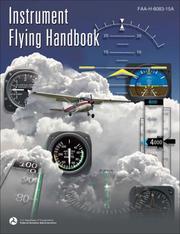
The authoritative FAA guide (FAA-H-8083-15) for the Instrument Rating; it must be read before the commercial stage because IFR proficiency is a prerequisite for any professional flying career.
Written by a legendary TWA captain, this book bridges the gap between textbook weather theory and real-world pilot decision-making — a critical skill tested on the instrument and commercial checkrides.

Complements the FAA handbook with clear explanations and practical scenarios, cementing instrument concepts before the learner moves on to commercial and multi-engine operations.
Professional Pilot — Systems, Safety & Airmanship
IntermediateUnderstand advanced aircraft systems, crew resource management, and the safety culture required to operate as a professional commercial pilot.
▸ Study plan for this stage
Pace: 6–8 weeks, ~25–35 pages/day (alternating between technical reference and narrative analysis)
- Chart symbology, airspace classifications, and navigation data interpretation from aeronautical charts
- Terrain and obstacle awareness using chart-based planning and real-world hazard identification
- The accident chain: how pilot error, decision-making, and situational awareness failures cascade into accidents
- Risk management frameworks and recognizing personal minimums vs. regulatory minimums
- Crew resource management principles and communication protocols in multi-crew operations
- The 'killing zone' concept: why mid-career pilots (500–2000 hours) face disproportionate accident risk
- Weather interpretation, performance planning, and go/no-go decision-making using chart data
- Safety culture: normalizing the discussion of mistakes, near-misses, and systemic vulnerabilities
- How do you interpret airspace classifications and special-use airspace symbols on an aeronautical chart, and why does this matter for flight planning?
- What is the 'killing zone' and why are pilots in the 500–2000 hour range statistically at higher risk? What factors contribute to this vulnerability?
- Describe the accident chain model presented in 'The Killing Zone.' How do individual decisions and organizational factors interact to create accidents?
- How should you use terrain and obstacle data from aeronautical charts to establish personal minimums that exceed regulatory requirements?
- What are the core principles of crew resource management, and how do communication breakdowns contribute to the accidents analyzed in 'The Killing Zone'?
- How does the safety culture of an airline or operation affect pilot decision-making and accident prevention?
- Obtain a real sectional chart for your region and practice identifying all airspace classes, special-use areas, terrain contours, and obstacles; annotate a planned cross-country route with chart-derived hazards
- Analyze 3–5 accident case studies from 'The Killing Zone' and map each to the accident chain model; identify the decision points where intervention could have prevented the accident
- Create a personal minimums checklist for a specific aircraft type, incorporating weather, terrain, and performance data from aeronautical charts; compare it to regulatory minimums and justify deviations
- Conduct a mock crew briefing with a study partner, practicing standard phraseology and CRM techniques; record and review for communication clarity and assertiveness
- Research and document a real accident or incident from your local area using NTSB or FAA data; trace the accident chain and identify systemic factors beyond pilot error
- Develop a 'safety culture audit' for a fictional or real flight operation; identify vulnerabilities in communication, reporting, and decision-making that could lead to accidents
Next up: This stage equips you with the technical foundation (chart reading, systems knowledge) and the human-factors mindset (accident prevention, CRM, safety culture) needed to transition into operational decision-making and advanced scenario training, where you'll apply these principles to real-time dilemmas under pressure.

Mastery of sectional and IFR charts is tested at every certificate level and used every day in professional operations; this official guide is the definitive reference.

A data-driven analysis of where and why pilots die; reading this at the intermediate stage instills the safety mindset and aeronautical decision-making habits that define a professional rather than a recreational pilot.
The Airline Career — Life in the Cockpit
ExpertUnderstand the realities of an airline career — hiring, seniority, CRM, jet operations, and the culture of the flight deck — so the reader can navigate the industry with eyes wide open.
▸ Study plan for this stage
Pace: 4–5 weeks, ~40–50 pages/day, with 2–3 days per week for reflection and exercises
- Airline hiring processes, qualifications, and the competitive landscape for pilot positions
- Seniority systems, bidding, and career progression within an airline structure
- Crew Resource Management (CRM) principles and their application in real flight operations
- The culture, hierarchy, and interpersonal dynamics of the flight deck
- Professionalism, decision-making, and risk management in commercial aviation
- Practical checklists and procedures that govern daily airline operations
- Mentorship, networking, and relationship-building as career advancement tools
- The realities of scheduling, fatigue, and work-life balance in airline flying
- What are the key qualifications and experience milestones required to be hired by a major airline, and how does the hiring process differ between regional and major carriers?
- How does the seniority system work in airlines, and what role does it play in pilot scheduling, pay, and career advancement?
- What is Crew Resource Management (CRM), and how does it change the way pilots interact with each other and with cabin crew in the cockpit?
- What are the unwritten rules and cultural norms of the flight deck, and how do pilots navigate hierarchy and authority?
- What practical checklists and decision-making frameworks does Cage recommend for success in an airline career?
- How should a new airline pilot balance professionalism, fatigue management, and personal relationships with colleagues to build a sustainable career?
- Create a personal hiring timeline: map out your current qualifications against major airline minimums (hours, ratings, medical), identify gaps, and set 12–24 month milestones to close them.
- Study and annotate Cage's checklists: extract 5–10 key operational or career checklists from the book and rewrite them in your own words, then apply one to a decision you're facing in your flight training or career.
- Interview a current airline pilot (or watch recorded interviews): ask them about their hiring experience, seniority progression, and CRM culture; compare their answers to Cage's framework.
- Role-play a CRM scenario: with a study partner, act out a flight deck situation (e.g., disagreement on procedure, fatigue concern, or authority challenge) and practice assertive communication using CRM principles from the book.
- Analyze a seniority bid sheet: obtain or simulate an airline bid sheet (monthly schedule options); practice bidding strategically based on seniority level, work-life balance preferences, and career goals.
- Reflect and journal: after each major section, write 1–2 pages on how Cage's insights change your expectations of airline life and what you'll do differently as a result.
Next up: This stage grounds you in the human, cultural, and operational realities of airline flying; the next stage will likely deepen your technical mastery of jet systems, advanced procedures, and high-altitude operations, so you can translate these career insights into expert performance.
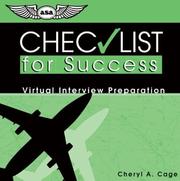
The go-to guide for pilots preparing airline applications and interviews; it covers résumé building, logbook presentation, and interview strategy — the practical career-launch steps after all ratings are earned.

Captain Sullenberger's memoir is the perfect capstone: it synthesizes a lifetime of airmanship, CRM, professionalism, and ethical decision-making into one compelling narrative that defines what it means to be a commercial pilot.
Discussion
Keep reading
Paths that share books, cover the same subject, or open a related topic.