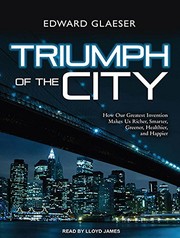
Urban economics asks one question: why do people keep paying more to live closer together, and where does the surplus go? Start with Edward Glaeser's Triumph of the City, the most readable statement of the agglomeration case by an economist who did much of the underlying research. It introduces nearly every mechanism the technical books later formalise, in 404 pages and without equations.
Then read the field in the order the argument builds: the popular case first, the formal apparatus second, the land-use fight third, and the housing and inequality problems that success creates last. This is the economics of cities, not their design — if you want street life and building form, you want a different reading list.
Why cities exist at all
Enrico Moretti's The new geography of jobs narrows Glaeser's argument to labour markets and makes it concrete: why innovation clusters, and why each high-skilled job appears to support several local service jobs. That multiplier is the cleanest explanation of why a handful of American metros pulled decisively ahead after 1980, and it is the bridge to /subjects/the-economics-of-innovation-and-growth.
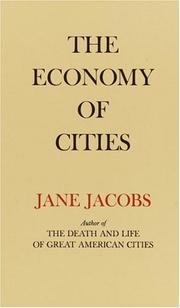
Jane Jacobs's The economy of cities is the 1969 argument that cities generate growth by improvising new work out of old rather than servicing a rural hinterland — the origin of what economists now label Jacobs externalities. Her famous book is about street design; this is the one about economics, which is why it is here.
The formal apparatus
This is textbook work, and skipping it is what produces confident urban commentary that cannot survive a question about land rent. Arthur O'Sullivan's Urban economics is the standard undergraduate text: agglomeration, bid-rent curves, the monocentric model, housing, local public finance and transport, with worked problems. Our record is a 738-page early edition of a book revised many times, so use it to identify the text and buy a current printing for the data.
Urban economics and real estate markets by Denise DiPasquale and William Wheaton connects the spatial theory to how property markets actually clear, including the four-quadrant model linking rents, asset prices, construction and stock. Read it alongside O'Sullivan if you care about real estate. Urban Economics and Urban Policy by Cheshire, Nathan and Overman applies the same tools to British policy — enterprise zones, greenbelts, regeneration schemes — and is unusually blunt about which interventions the evidence does not support. It is on the list because almost everything else here is American and the difference in land-use regimes is the point.
Land, rules and the shape of a city
Order without Design is the pivotal book on this path: Alain Bertaud, a career urban planner, arguing that planners should treat cities as labour markets and stop making decisions economists can show will raise housing costs. It is written from inside the profession it criticises, and it connects the models of the previous stage to the politics of the next.
Jacobs's Cities and the wealth of nations argues that city regions rather than nations are the real units of economic life. It is idiosyncratic and parts of it are unproven, and it is worth reading because it asks questions the standard models do not. Arbitrary Lines by M. Nolan Gray is the clearest short account of how American zoning works, where it came from, and the case for abolishing rather than reforming it — read it after Bertaud as the specific institutional target.
What success costs
Conor Dougherty's Golden Gates reports California's housing fight through developers, tenant organisers, YIMBY activists and legislators. Read it first in this stage: the abstractions land harder once you have met the people.
Neighborhood Defenders by Katherine Levine Einstein and colleagues is the empirical study of who actually turns up at local land-use meetings, built from thousands of meeting minutes, and finds them dominated by older, whiter homeowners opposing new housing. It is the best evidence on this path that participatory process and housing supply are in tension. Homelessness Is a Housing Problem by Gregg Colburn and Clayton Aldern tests the usual explanations across American metros and finds rents and vacancy rates predict homelessness far better than mental illness, addiction or weather.
The open questions
Richard Florida's The new urban crisis is a partial retraction of his own creative-class thesis, now arguing that the winner-take-all city concentrates advantage and pushes everyone else out. Glaeser and David Cutler's Survival of the City closes the path by putting the agglomeration case under stress: pandemics, remote work and urban public-health failure. Neither book settles its question, and the honest end state is being able to state the disagreement rather than the answer. Stage goals and reading schedules are at /paths/pt_ai_urban-economics.