Best Books to Understand Lacan, in Reading Order
This curriculum is designed for an expert-level reader who wants to move through Lacan systematically — from accessible secondary literature, through the foundational concepts (mirror stage, the three registers), into the primary texts (Écrits and the Seminars), and finally into clinical and applied Lacanian theory. Each stage builds the precise vocabulary and conceptual architecture needed to make the next stage genuinely productive rather than opaque.
Best Introductions Before the Primary Texts
IntermediateAcquire a reliable map of Lacan's entire system — the three registers (Real, Symbolic, Imaginary), the subject, the Other, objet a — through the clearest secondary literature available, so the primary texts can be read with orientation rather than bewilderment.
▸ Study plan for this stage
Pace: 12–14 weeks, ~25–30 pages/day (with 2–3 days per week for review and exercises). Week 1–4: Bowie (180 pages); Week 5–8: Žižek (120 pages); Week 9–12: Gallop (160 pages); Week 13–14: synthesis and integration exercises.
- The three registers (Real, Symbolic, Imaginary) and their structural relationships: how they interlock and why Lacan privileges the Symbolic order as the organizing principle of human subjectivity
- The subject as decentered and split ($): not a unified consciousness but an effect of language and the Symbolic order, always already divided by its entry into the symbolic
- The Other (A/Autre) as the locus of language, law, and desire: the symbolic structure that precedes and shapes the subject, not another person but the symbolic order itself
- Objet a (the object-cause of desire): the impossible, lost object that circulates beneath conscious desire and drives repetitive behavior; the real kernel of the fantasy
- The Imaginary register: the realm of images, identification, and the ego; the mirror stage and imaginary identification as foundational to the illusion of a unified self
- Lacan's critique of ego psychology and the American post-Freudians: why the ego is not the seat of strength but a defensive formation rooted in misrecognition
- The Real as the impossible remainder: what resists symbolization, the traumatic kernel that returns and cannot be fully integrated into the Symbolic order
- Desire versus demand versus need: how human desire emerges in the gap between biological need and symbolic demand, and why desire is always desire of the Other
- What are the three registers (Real, Symbolic, Imaginary) and how do they relate to each other? Why does Lacan argue that the Symbolic order is primary in organizing human experience?
- What does Lacan mean by the 'split subject' ($) and how does this differ from the Cartesian or phenomenological subject? Why is the subject an effect of language rather than its origin?
- Explain the distinction between the Other (A) as the symbolic order and the other (a) as imaginary counterpart. Why is this distinction crucial for understanding desire?
- What is objet a and why is it central to Lacanian psychoanalysis? How does it differ from the object of need or demand?
- How does Lacan's account of the mirror stage (in Bowie and Gallop) explain the formation of the ego and imaginary identification? What is the illusion at stake?
- Why does Lacan critique American ego psychology? What is at stake in his insistence that the ego is not the locus of strength or adaptation?
- After Bowie: Create a one-page visual diagram mapping the three registers (Real, Symbolic, Imaginary) with concrete examples from your own experience (e.g., a phobia, a fantasy, a traumatic memory) placed in each register. Annotate how they interact.
- After Bowie: Write a 500-word reflection on how Lacan's account of the mirror stage challenges your intuitive sense of the self as unified and self-present. Use a specific memory of self-recognition or misrecognition.
- After Žižek: Identify one of Žižek's concrete examples (ideology, cinema, popular culture) and write a 400-word analysis showing how objet a and the Real operate in that example. Explain what remains impossible or unsymbolizable.
- After Žižek: Create a comparison chart: Freud's unconscious vs. Lacan's Real; ego (Freud) vs. subject ($) (Lacan); object (Freud) vs. objet a (Lacan). Annotate the key shifts in each.
- After Gallop: Close-read a passage from Gallop (2–3 pages) where she discusses the Other or the Symbolic order. Write a 300-word summary and explain how her reading clarifies or complicates Bowie and Žižek.
- Synthesis exercise (Week 13–14): Write a 1000-word essay answering: 'Why is the Symbolic order primary for Lacan, and what does this tell us about human desire and subjectivity?' Use specific concepts and examples from all three books.
Next up: This stage equips you with a stable conceptual scaffold—the three registers, the split subject, the Other, objet a—so that when you encounter Lacan's primary texts (Écrits, seminars), you can recognize these structures in action rather than being lost in his notoriously dense prose and clinical examples.
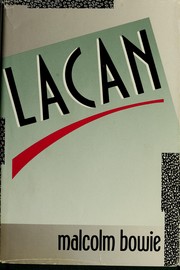
Bowie's short intellectual biography is widely regarded as the most lucid English-language introduction; it situates Lacan historically and conceptually without dumbing him down, ideal as a first map for an expert reader.
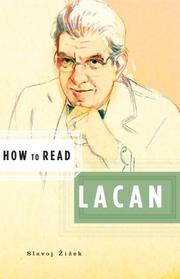
Žižek's entry in the Routledge Critical Thinkers series distills the core Lacanian concepts — the Real, the gaze, fantasy — with philosophical sharpness, bridging Lacan to Hegel and preparing the reader for the density of the Écrits.

Gallop performs close readings of key passages from the Écrits, modeling exactly the kind of slow, attentive reading the primary texts demand; placed here, it functions as a practical tutorial before the reader opens Lacan himself.
The Mirror Stage and the Symbolic: Core Primary Texts
ExpertRead Lacan's own foundational texts on the mirror stage, the function of language, and the constitution of the subject in the Symbolic order, building direct familiarity with his style and argumentation.
▸ Study plan for this stage
Pace: 8–10 weeks, ~20–25 pages/day (with re-reading of dense passages)
- The Mirror Stage as formative of the function of the I: how the infant's identification with its mirror image establishes the ego as fundamentally alienated and imaginary
- The Symbolic order as the realm of language, law, and difference: how entry into language constitutes the subject and structures desire
- The distinction between the Imaginary (dual, specular, imaginary identification) and the Symbolic (triadic, linguistic, structured by absence)
- The Real as that which resists symbolization: the gap between what can be represented and what exceeds representation
- Desire as structured by lack and mediated through the Other: how the subject's wants are articulated through the symbolic chain
- The function of the phallus as the signifier of lack and the pivot of sexual difference in the Symbolic order
- Lacan's critique of ego psychology and the imaginary lures of the ego: why the ego is not the agent of analysis
- The role of the analyst and transference in bringing the subject's relation to the Symbolic into question
- What is the Mirror Stage, and how does Lacan argue that it constitutes the ego as fundamentally alienated and imaginary rather than unified?
- How does Lacan distinguish between the Imaginary and the Symbolic orders, and what is the relationship between them in the constitution of the subject?
- What role does language play in Lacan's account of the subject, and how does entry into the Symbolic order transform human desire?
- What is the Real in Lacan's tripartite scheme, and how does it differ from both the Imaginary and the Symbolic?
- How does Lacan's concept of lack structure desire, and what is the function of the Other in mediating the subject's relation to what it wants?
- What is the phallus for Lacan, and why is it not simply the biological penis but a signifier of lack and sexual difference?
- Close reading: Select one key essay from Écrits 1 (e.g., 'The Mirror Stage' or 'The Function and Field of Speech and Language in Psychoanalysis') and annotate it paragraph by paragraph, identifying Lacan's main argument, his use of metaphor, and points of difficulty; write a 2–3 page summary of its core thesis
- Conceptual mapping: Create a visual diagram showing the relationships between the Imaginary, Symbolic, and Real, with concrete examples of how each order operates (e.g., the infant's jubilation before the mirror as Imaginary; the name-of-the-father as Symbolic; trauma or jouissance as Real)
- Comparative analysis: Read a passage from Écrits 1 on the Mirror Stage alongside a secondary source (e.g., a Stanford Encyclopedia entry or Žižek's introduction to Lacan) and write a 3–4 page essay explaining what Lacan is arguing and where secondary sources clarify or diverge from his text
- Dialogue reconstruction: Choose a difficult passage from Écrits 1 and rewrite it as a dialogue between Lacan and a psychoanalytic interlocutor, translating his dense prose into conversational exchange to test your understanding
- Case application: Take a brief clinical vignette (real or fictional) and analyze it using Lacanian concepts from Écrits 1—identify the patient's imaginary identifications, their relation to the Symbolic order, and where the Real intrudes; write 2–3 pages
- Seminar notes: As you read, keep a running notebook of key passages, definitions, and questions; weekly, synthesize your notes into a 1–2 page 'concept sheet' on one major idea (e.g., 'What is desire for Lacan?')
Next up: This stage grounds you in Lacan's foundational texts and his distinctive style, preparing you to engage with his later Seminars and more specialized topics (such as the clinic, the four discourses, or psychotic structure) with the conceptual vocabulary and argumentative rigor required for advanced Lacanian work.

The collected papers are the canonical primary source; after the preparatory stages, the reader should tackle the key essays in order — 'The Mirror Stage,' 'The Function and Field of Speech and Language,' 'The Agency of the Letter,' and 'The Subversion of the Subject' — which together constitute Lacan's systematic statement on the Imaginary and Symbolic registers.
Deeper into the Seminars: Desire, Ethics, and the Real
ExpertEngage with Lacan's mature elaborations of desire, jouissance, the ethics of psychoanalysis, and the Real — the concepts that define his later teaching and that are indispensable for any serious clinical or philosophical engagement.
▸ Study plan for this stage
Pace: 8–10 weeks, ~25–30 pages/day, with 2–3 days per week for reflection and note-taking. Allocate extra time for the dense middle sections on jouissance and the Thing.
- Desire as the fundamental human drive, distinct from need and demand, and its relation to the Other
- Jouissance: excessive enjoyment that exceeds the pleasure principle and resists symbolization
- The Thing (das Ding): the primordial object that structures desire and ethics, always lost and impossible to attain
- The Real as that which resists symbolization and the Symbolic order; the encounter with the Real in analysis
- Ethics of psychoanalysis as the ethics of desire: the analyst's position and the imperative to 'not give way on desire'
- The distinction between the Good (imaginary/symbolic) and the Real of ethics; sublimation as ethical act
- Transference and the analyst's desire: how the analyst's non-knowledge and position sustain the analysand's work
- The death drive and repetition as the underside of desire and the limits of the pleasure principle
- How does Lacan distinguish desire from need and demand, and why is this distinction crucial for psychoanalytic ethics?
- What is jouissance, and how does it differ from pleasure? What role does it play in the Real of human experience?
- What is das Ding (the Thing), and how does it function as the impossible object around which desire is organized?
- How does Lacan define the Real, and what does it mean to say that the Real resists symbolization?
- What is the analyst's ethical position in psychoanalysis, and what does it mean to 'not give way on desire'?
- How does sublimation function as an ethical act, and what distinguishes it from other defensive or adaptive mechanisms?
- Create a detailed glossary of key terms (desire, jouissance, the Thing, the Real, sublimation, transference) with definitions grounded in specific passages from the text; revisit and refine it weekly.
- Trace the concept of desire through 2–3 seminars: map how Lacan develops it from its relation to the Other, through jouissance, to the ethical imperative. Write a 3–4 page synthesis.
- Analyze a clinical vignette (from the text or from your own experience/imagination): identify the analysand's desire, the role of jouissance, and the ethical position the analyst must take. Write a 2–3 page case reflection.
- Compare Lacan's ethics of desire with one other ethical framework (Kantian, Aristotelian, or contemporary virtue ethics): what does Lacan's position add or challenge? Write a 4–5 page comparative essay.
- Engage in close reading: select one dense seminar session (e.g., on the Thing or on sublimation) and annotate it thoroughly, identifying Lacan's argumentative moves, his use of examples, and points of ambiguity. Discuss findings in a study group or journal.
- Reflect on your own desire and jouissance: keep a clinical-style journal for 2–3 weeks, noting moments where you encounter the gap between need, demand, and desire, or where you experience jouissance. Analyze these entries through Lacanian concepts.
Next up: This stage grounds you in Lacan's mature ethical and ontological vision, equipping you to engage with his later work on sexuality, the discourse of the analyst, and the clinic—preparing you to apply these concepts to concrete psychoanalytic practice and to grapple with contemporary Lacanian debates on trauma, the Real, and the limits of analysis.

Book VII introduces das Ding, jouissance, and the ethics of the act — the conceptual core of Lacan's departure from ego psychology and his grounding of psychoanalysis in an encounter with the Real rather than adaptation to reality.
Clinical Lacan: Theory into Practice
ExpertUnderstand how Lacanian concepts operate in the clinical setting — diagnosis, the analytic act, the end of analysis, and the ethics of the cure — through the best secondary clinical literature.
▸ Study plan for this stage
Pace: 8–10 weeks, ~40–50 pages/day, with 1–2 days per week for reflection and note-synthesis
- The Real, Symbolic, and Imaginary registers and their clinical manifestations in neurosis, psychosis, and perversion
- The structure of the symptom as a compromise formation anchored in the Symbolic order
- The analytic act: how the analyst's position (as objet petit a, as the subject supposed to know) enables the analysand's speech and transference
- Diagnosis in Lacanian terms: moving beyond nosology to structural analysis of the subject's relation to language and desire
- The end of analysis: traversal of the fantasy, separation from the analyst, and the ethics of subjective destitution
- The ethics of the cure: distinction between adaptation/normalization and authentic subjective change through recognition of desire
- Lacanian clinical technique: the use of silence, the cut, and interpretation as intervention in the symbolic chain
- The role of the Name-of-the-Father and foreclosure in understanding psychotic structure
- How do the three registers (Real, Symbolic, Imaginary) help explain the difference between neurotic, psychotic, and perverse structures, and what are the clinical implications of each?
- What is the analyst's function in Lacanian analysis, and how does the concept of objet petit a and the subject supposed to know shape the analytic act?
- How does Dor distinguish between symptom and sign in clinical practice, and why is this distinction crucial for Lacanian diagnosis?
- What does Dor mean by the 'end of analysis,' and how does traversal of the fantasy differ from mere symptom relief or adaptation?
- How should the Lacanian clinician approach interpretation and intervention, and what is the ethical difference between normalizing the subject and enabling authentic subjective change?
- What role does foreclosure of the Name-of-the-Father play in psychotic structure, and how does this inform clinical understanding and technique?
- Case study analysis: Select a clinical vignette from Dor's texts and map the analysand's speech onto the RSI registers—identify where the Real intrudes, where Symbolic order breaks down, and where Imaginary identifications trap the subject.
- Diagnostic mapping: Take 3–4 clinical presentations (neurosis, psychosis, perversion) and write a one-page structural analysis for each, explaining the subject's relation to the Name-of-the-Father, the status of the symptom, and the position of desire.
- Transference simulation: Role-play a brief analytic exchange (5–10 minutes) where one person is the analyst and another the analysand; afterward, analyze what happened in terms of the analyst's position, the cut, and how interpretation functioned (or failed).
- Interpretation exercise: Take a fragment of analysand speech (real or constructed) and write 2–3 different interpretations—one that normalizes/adapts, one that deepens symbolic elaboration, one that points to the Real. Reflect on the ethical difference.
- Fantasy traversal journal: As you read, keep a reflective log on your own fantasy structures (how you imagine yourself, your desire, your relation to authority/knowledge). Use Dor's framework to recognize where your own foreclosures or fixations lie.
- Clinical ethics debate: In a study group, debate a case where symptom relief conflicts with subjective authenticity—does the analyst prioritize the analysand's comfort or the traversal of fantasy? Ground your argument in Dor's ethical position.
Next up: This stage grounds Lacanian theory in the concrete clinical encounter, preparing you to engage with more specialized clinical applications (such as psychosis, trauma, or institutional analysis) and to critically evaluate contemporary Lacanian schools' divergent approaches to technique and ethics.
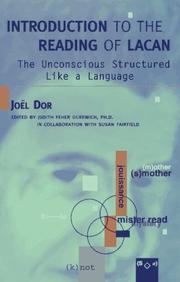
Dor's two-volume work is the most systematic clinical exposition of Lacanian theory available in English, covering structure, desire, and the three registers with direct reference to clinical practice; it synthesizes everything the prior stages have built.

This companion volume moves from theory to the clinic proper — neurosis, perversion, psychosis as clinical structures — and is the ideal capstone, translating the abstract architecture of Lacan's system into the concrete questions of analytic work.
Discussion
Keep reading
Paths that share books, cover the same subject, or open a related topic.