Derrida is genuinely difficult, and a large part of that difficulty is structural rather than stylistic. His texts are almost always close readings of somebody else — Plato, Rousseau, Husserl, Saussure, Austin, Marx — and the argument runs through the seams of the text he is reading. If you have not read the source, you are watching one half of a conversation.
The second obstacle is that the popular summary of deconstruction is wrong in a specific way. It is not the claim that texts mean whatever you want, nor that nothing is real. It is a much narrower argument about how Western philosophy has repeatedly privileged speech over writing, presence over absence, and the original over the copy, and about what happens to those hierarchies when you press on them. Getting that straight before you open the primary texts saves enormous frustration.
Build the vocabulary first
Derrida: A Very Short Introduction by Simon Glendinning is the fastest honest entry point. It spends most of its length explaining what deconstruction is not, which is precisely what a new reader needs, and it treats Derrida as a philosopher answerable to argument rather than a literary provocateur.
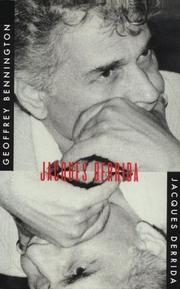
Geoffrey Bennington's Jacques Derrida is the more unusual companion — a systematic exposition running along the top of each page with Derrida's own autobiographical text beneath it. Read Bennington's half as your map. It is the best available account of how the concepts hold together as a system, and Derrida approved of it closely enough to write alongside it.
Read the 1967 trio
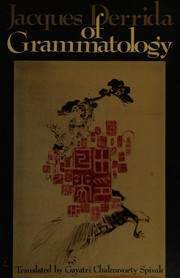
Then go to the primary work, all published in a single extraordinary year. Of grammatology is the central text: the long reading of Rousseau and Saussure where the critique of phonocentrism and the concept of the trace are worked out. It is the one to read slowly.
Writing and Difference is a collection of essays and is, for many readers, the easier way in — the pieces on Foucault, Levinas and Artaud each stand alone, so you can enter at whichever thinker you already know. Speech and Phenomena is the tightest of the three, a compact attack on Husserl's theory of signs. If you have no background in phenomenology it is the one to postpone rather than abandon; the argument is precise and the payoff is real once Husserl is familiar.
Then the polemics and the politics
Dissemination pushes the method into literary and Platonic material, including the famous reading of the pharmakon in the Phaedrus. Limited Inc is the record of Derrida's exchange with John Searle over speech-act theory, and it is unexpectedly readable, partly because it is bad-tempered. It is also the clearest demonstration of what Derrida thought he was doing methodologically, which makes it valuable well beyond its occasion.
Specters of Marx marks the later, explicitly political Derrida, written after 1989 against the triumphalism of the moment. Pair it with The Derrida-Habermas Reader, edited by Lasse Thomassen, which documents the long standoff between deconstruction and the German critical-theory tradition and its late partial rapprochement.
Two supplements close the path. Deconstruction and criticism shows what the Yale critics did with Derrida in literary study — useful history, though the American reception is not the same thing as the philosophy. Richard Beardsworth's Derrida and the Political takes on the hardest question the work faces: whether deconstruction can ground any positive political commitment at all. Beardsworth thinks the tension is real and unresolved, and says so.
Readers coming from psychoanalysis will find the Lacan path a useful parallel, since the two thinkers argued directly. Follow the full path to keep the sequence intact.
Follow the full ordered path here: How to Read Derrida, in Order.