Lacan is the one major theorist where reading the commentary before the primary text is not a shortcut but the accepted method. His written style is deliberately obstructive; he held that a text you can skim is a text you have defended yourself against, and the seminars were spoken performances transcribed afterwards rather than composed arguments. The result is a body of work almost nobody enters unassisted.
There is a second reason to sequence carefully. Lacan's ideas moved substantially across four decades — the mirror stage of the 1930s, the linguistic turn of the 1950s, and the late work on the real and on jouissance are not one coherent system, and readers who assume they are get badly confused. A good introduction will tell you which Lacan you are reading.
Three ways in, pick two
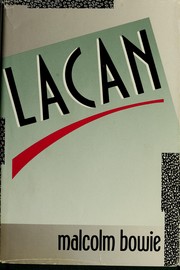
Malcolm Bowie's Lacan is the most elegant short introduction in English. Bowie is a literary scholar and writes like one, tracking how the concepts of the imaginary, the symbolic and the real develop chronologically rather than presenting them as a finished scheme. It is the best first book on this path.
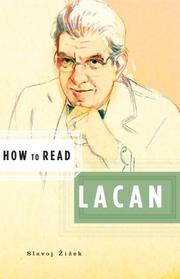
Slavoj Zizek's How to Read Lacan does something different: it takes short passages and runs them against film, jokes and politics. It will not give you a systematic account, but it conveys why anyone finds this material generative, and it is short. Jane Gallop's Reading Lacan is the third option and the most demanding of the three — a close, feminist reading that pays attention to how the writing works on the reader, which is exactly the question Lacan cared about. If you only have appetite for two, take Bowie and Gallop; Zizek is the accessible extra rather than the foundation.
Then the primary texts
Écrits 1 collects the canonical papers, including the mirror stage and the essays on the function of speech and the agency of the letter. Do not read it front to back. Take a single paper, read the corresponding chapter in Bowie or Gallop, then return. Expect several passes.
The Ethics of Psychoanalysis — Seminar VII — is the seminar most readers should take next, and many find it the most rewarding thing Lacan produced. It is where das Ding, the reading of Antigone, and the formula about not giving ground relative to one's desire all appear, and because it was delivered orally it retains an argumentative momentum the written papers lack.
Guides for the clinic and the concepts
Joël Dor's Introduction to the reading of Lacan is the systematic textbook of the path: a patient reconstruction of the linguistic apparatus, the signifier, metaphor and metonymy, and the structure of the unconscious. It is the book to hold beside the Écrits when a paper stalls.
Its companion, The clinical Lacan, turns to diagnosis and practice — neurosis, perversion and psychosis as structures rather than symptom checklists, and what the Lacanian analyst actually does in the session. It is written for clinicians and is the right closing text if you want to understand Lacanian practice rather than only Lacanian theory. Worth stating plainly: these books explain a clinical tradition, they do not qualify anyone to practise it, and none of them is a substitute for treatment or for supervised training.
If you are reading Lacan alongside French theory more broadly, the Derrida path covers the thinker who challenged him most directly. Follow the full path to keep these in sequence.
Follow the full ordered path here: The Best Lacan Books to Read First.