Best Books to Understand Derrida, in Reading Order
This curriculum is designed for an expert-level reader who wants a rigorous but clearly sequenced path into Derrida: starting with the best plain-language orientation, moving into Derrida's own foundational and then mature texts, and closing with the critical debates his work ignited. Each stage builds the conceptual vocabulary needed for the next, so that by the end the reader can engage Derrida and his interlocutors on equal terms.
Orientation: Derrida in Plain Language
BeginnerAcquire a clear, jargon-free map of deconstruction's core moves — différance, trace, supplement, logocentrism — before encountering Derrida's own notoriously dense prose.
▸ Study plan for this stage
Pace: 4–5 weeks, ~25–30 pages/day. Glendinning's VSI (~150 pages) over 5–6 days, then Bennington (~180 pages) over 2–3 weeks with reflection days interspersed.
- Logocentrism: the Western philosophical assumption that speech is more immediate and truthful than writing, and how Derrida challenges this hierarchy
- Différance: the play of difference and deferral that prevents meaning from being fully present or self-identical; the neologism that captures both 'difference' and 'deferral'
- Trace: the mark of what is absent or excluded within any sign or concept; how presence always contains traces of absence
- Supplement: the paradoxical logic where what is supposedly secondary or external proves essential and destabilizing to what is primary
- Binary oppositions: how Western thought organizes itself through hierarchical pairs (speech/writing, presence/absence, nature/culture) that deconstruction unsettles
- Deconstruction as a reading practice: not destruction but careful attention to how texts undermine their own claims and contain internal contradictions
- The impossibility of a stable, self-present meaning: how signs are always already caught in networks of difference that prevent closure
- Why Derrida matters: how deconstruction reshapes literary criticism, philosophy, law, and cultural analysis beyond academia
- What is logocentrism, and why does Derrida see it as a foundational problem in Western thought?
- Explain différance: what does the spelling 'différance' add to our understanding beyond the word 'difference'?
- What is the trace, and how does it challenge the idea that a sign can have a fully present, self-contained meaning?
- How does the logic of the supplement work, and why is it paradoxical? Give an example from Bennington or Glendinning.
- What is deconstruction as a reading method? Is it the same as 'destroying' a text's meaning?
- How do binary oppositions structure Western thought, and what does it mean to 'deconstruct' them?
- After Glendinning: write a one-page summary of logocentrism in your own words, then identify one example from your daily life where speech is assumed to be more 'true' than writing.
- Create a visual map (diagram or mind-map) showing how différance, trace, and supplement relate to each other and to the critique of logocentrism.
- Choose a binary opposition from Bennington's discussion (e.g., nature/culture, presence/absence) and trace how it appears in a text you know well (a novel, advertisement, or news article); note where the hierarchy breaks down.
- Write a short deconstructive reading (2–3 pages) of a simple text—a children's book, a famous quote, or a social media post—showing how it contains internal contradictions or traces of what it claims to exclude.
- Discuss with a study partner or in writing: what would it mean to read a text 'deconstructively'? How is this different from traditional literary analysis or philosophical critique?
- Compile a glossary of Derrida's key terms as you encounter them in both books, with definitions in plain language and one concrete example for each.
Next up: This stage equips you with a jargon-free conceptual toolkit and a felt sense of deconstruction's logic, preparing you to engage directly with Derrida's own essays and *Of Grammatology* without being overwhelmed by his notoriously difficult prose.

A compact, philosophically honest overview that situates Derrida in the Western tradition without oversimplifying; ideal as a first orientation for an expert reader who is new to this specific thinker.
Bennington's 'Derridabase' section offers the most systematic plain-language reconstruction of Derrida's system ever written, giving the reader a reliable conceptual scaffold before tackling primary texts.
Deconstruction in His Own Words: The Foundational Texts
IntermediateRead the three texts that launched deconstruction and established its core vocabulary, in the order Derrida himself developed the arguments.
▸ Study plan for this stage
Pace: 12–14 weeks, ~40–50 pages/day (accounting for re-reading and note-taking of dense philosophical prose)
- Trace and différance: how meaning is constituted through absence, deferral, and the spacing between signs rather than through presence
- Deconstruction as a method: reading texts to expose internal contradictions, hierarchies, and the undecidability at their foundations
- Logocentrism and phonocentrism: Western philosophy's privileging of speech over writing, and how this bias structures metaphysics
- The supplement: how what is deemed secondary or supplementary is actually constitutive and necessary to what is deemed primary
- Archi-writing: the concept that writing precedes speech and is the condition for all signification, not merely a derivative representation
- The undecidable: concepts that resist binary logic and cannot be resolved into stable oppositions (e.g., pharmakon, hymen)
- Iterability and citationality: how signs must be repeatable and context-dependent, making meaning never fully present or controllable
- Deconstruction's ethical and political stakes: how textual analysis opens onto questions of justice, responsibility, and the other
- What is différance, and how does Derrida distinguish it from 'difference'? Why is the written distinction important?
- How does Derrida use the concept of the trace to challenge the Western philosophical assumption that meaning originates in consciousness or presence?
- What is logocentrism, and how does Derrida argue that Western metaphysics has been structured by the privileging of speech over writing?
- Explain the logic of the supplement using examples from the texts: how does something deemed secondary become essential to what is deemed primary?
- What does Derrida mean by archi-writing, and how does this concept overturn the traditional hierarchy between speech and writing?
- How does the concept of iterability (repeatability) in language undermine the idea of a fully present, self-identical meaning?
- What is an undecidable in Derrida's sense, and how do concepts like pharmakon or hymen exemplify this? Why can't they be resolved into binary oppositions?
- How does deconstruction function as a reading practice? What does it mean to 'deconstruct' a text, and what does this reveal?
- Close-read a 5–10 page passage from each text, marking where Derrida introduces a key concept (trace, supplement, différance) and trace how it develops and complicates itself across the passage.
- Create a concept map showing the relationships between trace, différance, archi-writing, and iterability—use arrows to show how each concept depends on or modifies the others.
- Select one philosophical text that Derrida deconstructs in these books (e.g., Rousseau in Of Grammatology, Lévi-Strauss in Writing and Difference, Husserl in Speech and Phenomena) and write a 2–3 page analysis of how Derrida's deconstructive reading works on that text.
- Identify a binary opposition in a philosophical or literary text of your choice (e.g., nature/culture, presence/absence, speech/writing) and practice a deconstructive reading: show how the hierarchy is constructed, find moments where it destabilizes, and identify what is repressed.
- Write a glossary entry (300–500 words) for three key terms (e.g., différance, supplement, undecidable) that explains not just the definition but how Derrida develops and complicates each term across the three texts.
- Engage in a 'deconstructive dialogue': choose a passage from one of the texts and write a response that pushes back on Derrida's argument, then write a counter-response that shows how Derrida's logic might account for your objection.
Next up: This stage establishes the foundational vocabulary and methodological moves of deconstruction itself, preparing you to apply these concepts to specific domains—whether to literary interpretation, political theory, psychoanalysis, or ethics—in subsequent stages of the curriculum.

Derrida's most systematic work and the logical starting point: it introduces the critique of the sign, the metaphysics of presence, and the logic of the supplement through a close reading of Rousseau and Saussure.
A collection of essays written alongside Of Grammatology that shows deconstruction applied across structuralism, psychoanalysis, and phenomenology; reading it second reveals the range of the method.
Derrida's most focused philosophical argument — a rigorous dismantling of Husserl's theory of the sign — best read third, when the reader can appreciate how it underpins the broader claims of the other two books.
Derrida's Mature and Applied Work
IntermediateSee how Derrida extended deconstruction beyond linguistics into ethics, law, politics, and literature, demonstrating that it is a living practice rather than a fixed doctrine.
▸ Study plan for this stage
Pace: 8–10 weeks, ~40–50 pages/day (accounting for Derrida's density; expect slower progress on particularly difficult sections)
- Dissemination as a productive, non-totalizable force that resists singular meaning and authorial control
- The pharmakon (poison/cure) as an undecidable concept that cannot be reduced to binary opposition
- Iterability and the citational nature of language: how meaning is generated through repetition with difference
- The trace and hauntology: how what is absent or deferred structures presence and meaning
- Deconstruction as applied practice: moving from linguistic analysis to ethics, law, and political responsibility
- The aporia and the impossible decision: how genuine responsibility emerges only in the absence of calculable rules
- Spectrality and the spectral logic of Marxism: how the ghost of communism haunts the present
- Deconstruction's engagement with justice, law, and the event as irreducible to institutional frameworks
- How does Derrida's concept of dissemination differ from traditional hermeneutics, and what does it mean to say that texts resist a single, determinable meaning?
- What is the pharmakon, and why does Derrida argue it cannot be resolved into a binary opposition between poison and cure?
- How does iterability (the repeatability of signs) both enable and undermine the stability of meaning in language and law?
- What is hauntology, and how does Derrida use it to analyze the spectral presence of Marxism in the post-Cold War world?
- How does Derrida move from linguistic deconstruction to questions of ethics, justice, and political responsibility in these texts?
- What does Derrida mean by an 'impossible decision,' and why is this concept central to understanding responsibility and justice?
- Close reading exercise: Select one key passage from Dissemination (e.g., the analysis of Plato's pharmakon) and trace how Derrida deconstructs binary oppositions; write a 2–3 page analysis showing how the text resists a single interpretation.
- Comparative analysis: Read Derrida's response to Searle in Limited Inc alongside the original speech act theory debate; identify how iterability challenges Searle's framework and write a 2–page reflection on the implications.
- Concept mapping: Create a visual diagram showing how dissemination, the trace, iterability, and the pharmakon interconnect; annotate with specific examples from the texts.
- Applied deconstruction: Choose a legal text, contract, or political statement and apply Derridean analysis to show how it contains internal contradictions, undecidability, or spectral assumptions; write a 3–4 page deconstructive reading.
- Hauntology journal: As you read Specters of Marx, keep a reading journal tracking how Derrida uses spectral imagery; reflect on what 'haunting' reveals about the persistence of ideologies and historical trauma.
- Seminar-style discussion: Prepare a 10–15 minute presentation on one of the three books, focusing on how it extends deconstruction into a new domain (linguistics → ethics/law/politics); be ready to defend Derrida's method against objections.
Next up: This stage demonstrates that deconstruction is not merely a textual technique but a rigorous engagement with the most pressing problems of justice, law, and political futurity, preparing you to explore how Derrida's later work on forgiveness, hospitality, and the messianic addresses the ethical and political stakes of deconstruction in an increasingly globalized world.
Pushes deconstruction into the theory of the text and writing itself; 'Plato's Pharmacy' is essential reading for understanding how Derrida reads the philosophical tradition against itself.
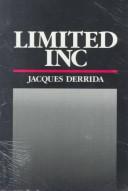
Contains Derrida's direct polemical exchange with John Searle over speech-act theory, making it the ideal bridge to the controversy stage — here Derrida is at his most argumentatively explicit.

Derrida's most politically engaged book, introducing 'hauntology' and demonstrating how deconstruction bears on justice and historical memory; a crucial text for understanding his later ethical turn.
The Arguments Deconstruction Provoked
ExpertEngage the major critical responses — analytic, Marxist, and literary-theoretical — that challenged deconstruction, so the reader can evaluate Derrida's legacy with full awareness of the debate.
▸ Study plan for this stage
Pace: 8–10 weeks, ~25–30 pages/day, with 2–3 days per week dedicated to comparative synthesis between the three texts
- Habermas's critique of deconstruction as undermining rational communicative action and democratic legitimacy
- The tension between Derridean undecidability and Habermasian consensus-building in discourse ethics
- Bloom's anxiety-of-influence framework and his defense of the literary canon against deconstructive reading practices
- The relationship between deconstruction and political commitment: how Beardsworth reconciles Derrida's apolitical reputation with his later political writings
- Marxist objections to deconstruction: charges of idealism, formalism, and evasion of material conditions
- The question of deconstruction's institutional effects: did it democratize or obscure literary and philosophical study?
- Derrida's responses to his critics and the evolution of his thinking toward explicit political engagement
- What is Habermas's core objection to Derrida's undecidability, and how does it relate to his theory of communicative action?
- How does Bloom use the anxiety of influence to defend canonical literature, and what does he see as deconstruction's threat to literary judgment?
- What does Beardsworth mean by 'the political' in Derrida, and how does he argue that Derrida was always already political despite appearances?
- What are the main Marxist criticisms of deconstruction, and how do they differ from Habermas's and Bloom's objections?
- How do the three critical perspectives (analytic, literary-theoretical, and political-Marxist) overlap or diverge in their assessment of deconstruction's value and limitations?
- What is at stake institutionally and intellectually in the deconstruction debate—what does the outcome tell us about the future of literary and philosophical study?
- Close-read Habermas's key passages on communicative rationality in the Derrida-Habermas Reader; write a 2–3 page summary of his critique, then identify where Derrida's replies diverge from Habermas's expectations
- Map Bloom's anxiety-of-influence model onto a canonical text (e.g., Shakespeare, Milton) and a deconstructive reading of the same text; write a comparative analysis showing where Bloom's and the deconstructive critic's judgments diverge
- Create a timeline of Derrida's political engagements (apartheid, nuclear war, democracy, hospitality, etc.) using Beardsworth's text; annotate each with the philosophical concepts Derrida deploys and assess whether they constitute a coherent political philosophy
- Debate exercise: prepare arguments for and against the claim that 'deconstruction is fundamentally apolitical' using evidence from all three texts; present both sides and identify which text makes the strongest case
- Write a comparative essay (4–5 pages) analyzing how Habermas, Bloom, and Beardsworth each define the stakes of the deconstruction debate—what is each critic most concerned about losing or gaining?
- Construct a glossary of contested terms (undecidability, différance, trace, aporia, etc.) as they are used and criticized across all three texts; note where critics misread or reframe Derrida's concepts
Next up: This stage equips you to recognize deconstruction not as a monolithic doctrine but as a contested intervention whose meaning and value depend on the framework—rational consensus, literary judgment, or political commitment—through which it is evaluated, preparing you to assess Derrida's own later work and contemporary applications with critical sophistication.

Collects the landmark exchange between Derrida and Habermas on modernity, reason, and ethics, presenting both sides of the most consequential philosophical debate deconstruction generated.

The Yale School's collective manifesto — featuring Derrida alongside Bloom, de Man, Hartman, and Miller — shows how deconstruction was received, transformed, and contested within literary criticism.

A rigorous advanced study of the political and ethical stakes of deconstruction, synthesizing the debates and offering a critical assessment that is ideal as a capstone to the entire curriculum.
Discussion
Keep reading
Paths that share books, cover the same subject, or open a related topic.