Understanding Confucius: essential books on the sage of Chinese thought
This curriculum takes a beginner from their first encounter with Confucius all the way to scholarly engagement with Confucian ethics, ritual, and philosophy. Each stage builds essential vocabulary and context before the next, moving from accessible introductions, through close reading of primary texts, into deeper explorations of virtue, ritual, filial piety, and the broader intellectual tradition Confucius shaped.
First Encounter: Who Was Confucius?
BeginnerGain a clear biographical, historical, and cultural orientation to Confucius and why he matters, before touching any primary text.
▸ Study plan for this stage
Pace: 4–5 weeks, ~25–30 pages/day. Week 1–2: "Confucius" by Schuman (approx. 150–180 pages); Week 3–5: "The Path" by Puett (approx. 250–300 pages), with 2–3 days for review and integration at the end.
- Confucius's life in the context of the Spring and Autumn Period: his family background, travels, and search for a ruler who would implement his ideas
- The core problem Confucius was trying to solve: social disorder and the breakdown of ritual propriety (li) in his time
- The concept of self-cultivation (修養) as the foundation for all other virtues and social harmony
- Ritual, relationships, and reciprocity as the practical mechanisms through which Confucian ethics operate in daily life
- How Confucius's teachings were preserved, transmitted, and reinterpreted by his disciples and later generations
- The distinction between Confucius as a historical figure and Confucius as a cultural icon whose meaning evolved over centuries
- The practical, this-worldly focus of Confucianism: ethics as embedded in family, governance, and social roles rather than metaphysics
- Why Confucius matters today: his influence on East Asian civilization and his relevance to contemporary questions about ethics, leadership, and social order
- What were the major events and challenges in Confucius's life, and how did they shape his philosophical outlook?
- What specific social and political problems was Confucius responding to in the Spring and Autumn Period?
- How does Confucius define virtue (德, de) and what role does self-cultivation play in achieving it?
- What is the relationship between ritual propriety (li), relationships, and social harmony in Confucian thought?
- How were Confucius's teachings preserved and transmitted after his death, and how did they change over time?
- Why is understanding Confucius as a historical person important before engaging with his philosophical ideas?
- Create a timeline of Confucius's life (birth, key travels, teaching periods, death) and annotate it with the major historical events of the Spring and Autumn Period. Identify 3–4 moments where historical circumstances directly influenced his thinking.
- Read Schuman's account of Confucius's travels and failed attempts to find a receptive ruler. Write a 1–2 page reflection on what this reveals about his character and his vision of how change happens in society.
- After reading both books, create a comparison chart: list 5–6 core Confucian concepts (e.g., li, de, ren, filial piety) and note how each book explains them and why each matters for understanding Confucius's relevance.
- Identify one modern social or leadership problem (e.g., institutional trust, family dynamics, workplace ethics). Write a brief analysis of how Confucian principles—as explained in Schuman and Puett—might address it. This bridges to deeper engagement with the texts.
- Discuss with a study partner or write a reflection: What surprised you most about Confucius as a historical person? How does knowing his biography change the way you approach his ideas?
- Create a visual map (diagram, mind map, or poster) showing how Confucius's core concerns (ritual, relationships, self-cultivation) interconnect and why they were radical or compelling in his time.
Next up: This stage establishes who Confucius was, why his ideas emerged, and why they matter—providing the historical and cultural scaffolding necessary to engage directly with his actual words and the philosophical debates they sparked in later Confucian thought.
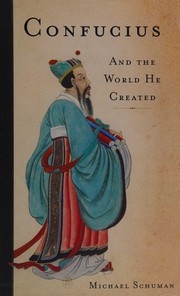
A highly readable, journalistic biography that places Confucius in his historical moment and traces his living legacy across Asia — the perfect first book for a complete beginner with no prior background.
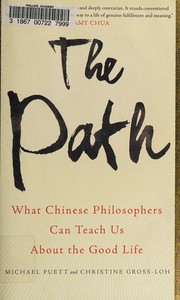
Written for a general audience, this book introduces core Confucian ideas (ritual, self-cultivation, relationships) in modern language, giving the beginner conceptual hooks before reading the Analects directly.
Core Concepts: Virtue, Ritual, and Filial Piety
IntermediateDevelop a rigorous understanding of the key Confucian concepts — ren (benevolence), li (ritual propriety), and xiao (filial piety) — and how they form a coherent ethical system.
▸ Study plan for this stage
Pace: 4–5 weeks, ~25–30 pages/day (approximately 150–170 pages/week across both texts)
- Ren (仁) as the foundational virtue of benevolence and humaneness, and its relationship to self-cultivation and social harmony
- Li (禮) as ritual propriety—the structured practices and ceremonies that embody and transmit ethical values across generations
- Xiao (孝) as filial piety—the primary expression of ren that extends outward to create concentric circles of ethical obligation
- The hierarchical but reciprocal nature of Confucian relationships, where ritual and virtue reinforce social order without coercion
- Ritual as both a performative and transformative practice that shapes character and maintains cosmic and social harmony
- The integration of inner virtue (ren) with outer form (li) as essential to authentic ethical conduct
- The role of exemplary persons (junzi) in modeling and transmitting these virtues through ritual practice and filial devotion
- How does Tu Weiming define ren, and what is its relationship to both self-cultivation and social responsibility?
- What is the functional role of li (ritual propriety) in Confucian ethics, and how does it differ from mere formalism or empty ceremony?
- How does xiao (filial piety) serve as the root of ren, and what does this reveal about the Confucian understanding of virtue as relational rather than abstract?
- According to Seligman, how does ritual create and maintain social bonds, and what happens when ritual loses its performative power or becomes purely instrumental?
- How do ren, li, and xiao work together as an integrated ethical system rather than as separate virtues?
- What is the role of the junzi (exemplary person) in embodying and transmitting these virtues, and how does this differ from rule-based or legalistic approaches to ethics?
- Close-read one passage from Tu on ren and one from Seligman on ritual; write a 500-word analysis of how they complement or complicate each other's arguments
- Create a visual map showing the relationships between ren, li, and xiao—use arrows, hierarchies, and annotations to show how each concept supports and reinforces the others
- Identify a modern social ritual (e.g., a family dinner, workplace meeting, or religious ceremony) and analyze it through the lens of Seligman's framework: What bonds does it create? What happens if the ritual becomes purely transactional?
- Write a reflective essay (800–1000 words) on a moment when you experienced filial obligation or familial duty; analyze it using Tu's concept of xiao as the root of ren and the foundation of ethical extension
- Engage in a structured debate or dialogue: one person argues that li is essential to virtue, the other that it can become empty formalism; use specific textual evidence from both Tu and Seligman
- Construct a detailed character study of the junzi based on Tu's account; then test this model against Seligman's understanding of how ritual practitioners embody and transmit values
Next up: This stage establishes the foundational ethical vocabulary and relational logic of Confucianism, preparing you to examine how these virtues were applied, contested, and adapted across different historical periods and schools of thought in subsequent stages.

Tu Weiming is one of the foremost modern Confucian scholars; this book unpacks self-cultivation, humaneness, and the inner logic of Confucian ethics in clear, philosophically precise prose.
Provides a deep, cross-cultural analysis of ritual as a mode of ethical life — directly illuminating why Confucius placed li at the center of moral cultivation and social harmony.
Roots and Tradition: The Broader Confucian Canon
IntermediateEncounter the classical texts that Confucius himself revered and that his followers developed, understanding how Confucianism grew into a full philosophical tradition.
▸ Study plan for this stage
Pace: 8–10 weeks, ~40–50 pages/day (focusing on Part 1: "The Foundations of Chinese Civilization" and Part 2: "The Classical Confucian Tradition," approximately 400–500 pages total for this stage)
- The Five Classics (I Ching, Shijing, Shuijing, Liji, Chunqiu) as foundational texts that Confucius studied and revered
- The role of ritual (li) and propriety in early Chinese civilization and Confucian thought
- How Confucius positioned himself as a transmitter rather than an innovator, connecting to ancient sage-kings
- The development of Confucianism beyond Confucius: Mencius's theory of human nature and Xunzi's emphasis on ritual and self-cultivation
- The concept of ren (humaneness/benevolence) and its evolution through the classical Confucian tradition
- The relationship between virtue, governance, and social harmony in classical Confucian texts
- How the Confucian canon became institutionalized and canonized in later dynasties
- What are the Five Classics, and why did Confucius consider them essential to study?
- How did Confucius view his own role as a thinker—as an innovator or as a transmitter of ancient wisdom?
- What is the concept of li (ritual/propriety), and how does it function in both early Chinese civilization and Confucian philosophy?
- How did Mencius and Xunzi develop and sometimes diverge from Confucius's core teachings, particularly regarding human nature?
- What is ren (humaneness), and how does it relate to proper governance and social order in the classical Confucian tradition?
- How did the Confucian texts transition from philosophical works into a canonized, institutionalized tradition?
- Create a visual map showing the Five Classics, their contents, and which passages Confucius likely studied—use De Bary's selections as your guide
- Compare three passages from the Analects with corresponding selections from the Five Classics to identify what Confucius was drawing upon or reinterpreting
- Write a 500-word essay explaining how Confucius's claim to be a 'transmitter, not a creator' shaped the entire Confucian tradition
- Trace the concept of ren through selections from Confucius, Mencius, and Xunzi in De Bary's text; note how each philosopher emphasizes different aspects
- Create a timeline showing key figures (Confucius, Mencius, Xunzi, early Han Confucians) and annotate major shifts in how Confucianism was understood
- Analyze a passage on ritual (li) from the Liji and explain how it reflects both pre-Confucian and Confucian values using De Bary's contextual notes
Next up: This stage establishes the classical textual foundation and philosophical diversity within early Confucianism, preparing you to explore how these ideas were adapted, challenged, and institutionalized across different dynasties and in dialogue with other traditions like Daoism and Buddhism.
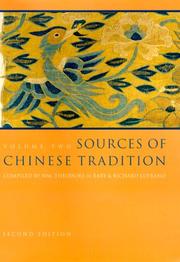
This landmark anthology places Confucius within the full sweep of Chinese intellectual history, providing essential primary source excerpts and scholarly framing that contextualizes everything read so far.
Scholarly Depth: Ethics, Politics, and Living Confucianism
ExpertEngage with serious philosophical and comparative scholarship on Confucian ethics, its political implications, and its relevance to contemporary moral life.
▸ Study plan for this stage
Pace: 8–10 weeks, ~40–50 pages/day (with 2–3 days per week for reflection and exercises)
- Confucian virtue ethics as a comprehensive moral framework grounded in self-cultivation (修養) and relational reciprocity
- The concept of ren (仁, humaneness) as the central virtue integrating all other virtues and its development through ritual propriety (li)
- Confucian perfectionism: the state's role in cultivating virtuous citizens and the relationship between personal moral development and political order
- The Confucian vision of hierarchical yet reciprocal relationships (ruler-subject, father-son, husband-wife) as the foundation for both ethics and governance
- Contemporary applications of Confucian ethics to modern moral dilemmas, including individual autonomy, justice, and social responsibility
- The tension between Confucian paternalism and liberal democratic values, and how perfectionism addresses this tension
- Comparative perspectives: how Confucian ethics differs from Western virtue ethics, deontology, and consequentialism
- Living Confucianism: translating classical philosophical principles into practical moral and political life in the 21st century
- How does Ivanhoe characterize the relationship between virtue, ritual, and moral development in the Confucian tradition, and what role does ren play in this framework?
- What is Confucian perfectionism according to Chan, and how does it differ from Western liberal perfectionism?
- How do Ivanhoe and Chan address the apparent tension between Confucian hierarchical relationships and modern values like equality and individual autonomy?
- What are the political implications of Confucian ethics as presented in these texts, particularly regarding the state's responsibility for moral cultivation?
- How can Confucian ethical principles be applied to contemporary moral problems (e.g., environmental ethics, professional responsibility, family obligations)?
- What does it mean to 'live Confucianism' in a modern context, and what practical challenges arise when translating classical ideals into contemporary life?
- Close reading journal: After each chapter of Ivanhoe, write a one-page summary identifying the key argument and one passage that challenges or clarifies your understanding of Confucian virtue ethics.
- Comparative analysis chart: Create a table comparing Confucian virtue ethics with Aristotelian virtue ethics and one other Western ethical framework (Kantian, utilitarian, etc.) across dimensions like the role of emotion, the goal of ethics, and the relationship to politics.
- Case study application: Select three contemporary moral dilemmas (e.g., whistleblowing in a family business, end-of-life care decisions, environmental responsibility) and analyze each through both Ivanhoe's and Chan's Confucian frameworks. Write 2–3 pages per case.
- Dialogue reconstruction: After reading Chan's discussion of Confucian perfectionism and liberal democracy, write a fictional dialogue between a Confucian perfectionist and a liberal democrat debating the state's role in moral education.
- Ritual and reciprocity mapping: Identify three relationships in your own life (professional, familial, or civic) and map how Confucian concepts of li (ritual propriety) and reciprocal obligation could reshape your understanding of those relationships.
- Synthesis essay: Write a 3,000–4,000 word essay addressing how Confucian ethics, as presented in both texts, can contribute to solving a pressing contemporary social or political problem (e.g., polarization, institutional trust, corporate ethics).
Next up: This stage equips you with a sophisticated understanding of Confucian philosophical foundations and their modern applications, preparing you to engage with specialized topics such as Confucian approaches to specific domains (aesthetics, ecology, gender), comparative religious studies, or the lived practices of Confucianism in East Asian societies today.

Ivanhoe offers a rigorous comparative study of Confucian and Mencian ethics, ideal for a reader now ready to engage with Confucianism as a living philosophical system rather than a historical artifact.

This advanced work argues for the contemporary political relevance of Confucian thought, synthesizing everything in the curriculum — virtue, ritual, hierarchy, and the common good — into a coherent modern framework.
Discussion
Keep reading
Paths that share books, cover the same subject, or open a related topic.