The Byzantine Empire: Rome's thousand-year sequel
This curriculum takes a complete beginner from their first encounter with Byzantium all the way to specialist-level analysis across four carefully sequenced stages. Each stage builds on the last: you first get the big story and the feel of the empire, then its defining institutions and crises, then its rich cultural and religious life, and finally the deep scholarly debates that reveal why Byzantium still matters to the modern world.
First Encounters — The Big Picture
BeginnerGrasp the sweep of Byzantine history — its Roman roots, its thousand-year arc, its key emperors, and its eventual fall — so that every later book has a mental map to hang on.
▸ Study plan for this stage
Pace: 8–10 weeks total. Weeks 1–5: "Lost to the West" (~20–25 pages/day, ~330 pages); Weeks 6–10: "Byzantium" by Herrin (~15–20 pages/day, ~360 pages). Read each book straight through before moving to the other, then spend the final 2–3 days of each book doing a chapter-by-chapter review of your notes.
- Continuity from Rome: Byzantium did not see itself as a 'new' empire but as the unbroken Roman Empire — Brownworth's narrative arc makes this identity crisis and pride central from page one.
- The role of Constantinople: The city's geography, wealth, and symbolic power as the 'New Rome' underpinned Byzantine survival for a millennium — both books treat it as almost a character in its own right.
- Dynastic cycles and strong emperors: Brownworth's emperor-by-emperor storytelling highlights how individual rulers (Justinian, Basil II, Constantine XI) could dramatically reverse or accelerate the empire's fortunes.
- The Eastern Church and religious controversy: Herrin foregrounds how theological disputes (Iconoclasm, the Great Schism) were inseparable from politics, identity, and imperial legitimacy.
- Existential threats and resilience: Both books trace repeated near-collapses — Persians, Arabs, Bulgars, Crusaders, Turks — and the adaptive strategies (diplomacy, Greek fire, religious unity) that bought centuries of survival.
- The Fourth Crusade as a turning point: The 1204 sack of Constantinople by fellow Christians appears in both books as the wound from which the empire never fully recovered.
- Byzantine cultural legacy: Herrin in particular stresses how Byzantium preserved Greek and Roman learning, shaped Orthodox Christianity, and civilized the Slavic world — making its fall in 1453 a loss for all of Western civilization.
- The Fall of Constantinople (1453): Both authors frame this as the end of an ancient world, not merely a military defeat, giving the reader a sense of historical tragedy and long-term consequence.
- According to Brownworth's narrative in 'Lost to the West,' why did the Byzantines never stop calling themselves Romans, and what political and psychological purpose did that identity serve?
- How does Herrin in 'Byzantium' explain the role of the Eastern Orthodox Church in holding the empire together — and sometimes tearing it apart — through crises like Iconoclasm?
- Trace the empire's territorial arc: using the two books as guides, at what moments did Byzantium reach its greatest extent, and what were the two or three pivotal losses that set it on an irreversible decline?
- Both Brownworth and Herrin treat the Fourth Crusade (1204) as catastrophic. What specific consequences — political, economic, and cultural — do they each emphasize, and where do their emphases differ?
- What strategies — military, diplomatic, and cultural — allowed Byzantium to survive for roughly a thousand years despite constant pressure on multiple frontiers?
- After reading both books, how would you describe the Byzantine Empire's legacy to a friend who had never heard of it? What did it give to the modern world?
- Build a living timeline: As you read 'Lost to the West,' create a one-page hand-drawn or digital timeline marking every emperor Brownworth profiles, color-coding reigns by whether the empire expanded, held steady, or contracted. Add Herrin's thematic events (Iconoclasm, Schism, 1204, 1453) when you reach her book.
- Emperor snapshot cards: For each major emperor in Brownworth (Justinian, Heraclius, Basil II, Alexios I, Constantine XI, etc.), write a 3×5 index card with: name/dates, one great achievement, one critical failure, and one sentence on their legacy. Shuffle and quiz yourself weekly.
- Map it out: After finishing 'Lost to the West,' sketch a rough map of the Mediterranean and mark Byzantine territory at three moments — Justinian's peak (~560 CE), after the Arab conquests (~700 CE), and just before 1453. Annotate what was lost and why.
- Dual-book comparison journal: Keep a running two-column journal — one column for Brownworth's narrative/dramatic moments, one for Herrin's thematic/cultural insights on the same period. At the end, write a one-page synthesis: what does each author's approach reveal that the other misses?
- The 'Why Did It Last?' essay: After finishing both books, write a 400–600 word personal essay answering: 'What single factor best explains why Byzantium survived as long as it did?' Force yourself to pick one and defend it using specific evidence from both texts.
- Teach-back session: Explain the fall of Constantinople in 1453 — its causes, the siege itself, and its aftermath — out loud to a friend, family member, or voice recorder, using only what you remember from both books. Note the gaps in your recall and re-read those sections.
Next up: With the full thousand-year arc now internalized as a mental map — anchored by Brownworth's vivid emperors and Herrin's cultural framework — the reader is ready to zoom into specific eras, institutions, or controversies with the context needed to understand why each detail matters.

A fast-paced, narrative-driven introduction told through the lives of the most dramatic emperors. It reads almost like a novel and gives beginners an immediate sense of excitement and continuity before tackling denser works.
Herrin organises the empire thematically rather than chronologically, filling in the cultural, religious, and social texture that pure narrative histories skip. Reading it second lets you attach Brownworth's story-line to real institutions and ideas.
The Full Narrative — Emperors, Crises, and Centuries
IntermediateFollow the complete political and military history in detail, understanding how the empire contracted, reformed, and survived repeated catastrophes across its full thousand-year lifespan.
▸ Study plan for this stage
Pace: 8–10 weeks total. Weeks 1–7: "A Short History of Byzantium" by Norwich (~25–30 pages/day, reading in chronological chunks — roughly one major dynasty or era per week: Constantinian/Theodosian → Justinianic → Heraclian/crisis → Macedonian golden age → Komnenian revival → Palaiologan decline). Weeks 8
- The dynastic cycle: how Byzantine imperial succession — through birth, usurpation, co-emperorship, and coup — shaped political stability and instability across a thousand years
- Territorial contraction as a structural theme: tracing the empire's shrinking footprint from Justinian's reconquests through the Arab conquests, the loss of Anatolia after Manzikert (1071), the Latin occupation after 1204, and the final rump state of the Palaiologans
- Military transformation: the evolution from the late Roman field army to the theme system, the Tagmata, the Komnenian pronoia system, and the empire's growing reliance on mercenaries and foreign allies in its final centuries
- Religious politics as statecraft: the role of theological controversies (Arianism, Monophysitism, Iconoclasm, the Photian Schism, the Union of Churches) in legitimizing or destabilizing imperial rule
- The 'Byzantine resilience' pattern: how the empire repeatedly absorbed catastrophic losses — Justinian's Plague, the Arab invasions, the Fourth Crusade — and reformed itself, as Norwich repeatedly illustrates through dynastic recoveries
- The Komnenian and Palaiologan eras as mirror images: the former representing a last great military and cultural revival, the latter a long twilight of diplomatic survival on diminishing resources
- Runciman's thesis on the Fall of 1453: the interplay of Ottoman military-technological superiority (the great cannon), Constantine XI's desperate diplomacy, Venetian and Genoese self-interest, and the failure of Western Christendom to mount a credible rescue
- The human and symbolic dimensions of the Fall: Runciman's narrative of the final siege as both a military event and a civilizational watershed, ending the direct institutional continuity with Rome
- According to Norwich, what are the three or four turning-point reigns that most decisively altered the empire's trajectory — and what made each a hinge moment rather than merely a crisis?
- How does Norwich characterize the theme system as a response to the Arab invasions, and what does its eventual decay reveal about the structural tensions between central authority and provincial military power?
- What pattern does Norwich identify in Byzantine dynastic transitions — and how did the institution of co-emperorship both stabilize and destabilize succession across different eras?
- According to Runciman, what combination of factors made the Ottoman siege of 1453 militarily decisive when earlier sieges of Constantinople had failed, and how much weight does he assign to technology versus diplomacy versus Western indifference?
- How does Runciman portray Constantine XI Palaiologos, and in what ways does his characterization of the last emperor reflect the broader tragedy of the Palaiologan dynasty as depicted in Norwich's final chapters?
- Taken together, do Norwich and Runciman present Byzantium's end as inevitable — a long structural decline — or as contingent, shaped by specific decisions and failures that could have gone otherwise? What evidence supports each reading?
- Build a single master timeline spanning both books: mark every major territorial loss and recovery on one axis, and every dynastic change on a parallel axis. Look for correlations — do territorial crises tend to precede or follow dynastic ruptures? Use Norwich's narrative to populate it, then add Runciman's 1453 events as the final entries.
- Draw a series of four sketch maps (no artistic skill required — rough outlines suffice) showing the empire's borders at: (1) Justinian's peak c. 555, (2) after the Arab conquests c. 700, (3) after the Fourth Crusade c. 1204, and (4) on the eve of the Fall c. 1450. Label each with the reigning emperor and two key military or political facts from Norwich.
- Write a one-page 'imperial obituary' for any three emperors of your choice from Norwich — one from the early period, one from the middle, one from the Palaiologan era. Each obituary should assess: what they inherited, what they achieved, what they failed at, and what they left behind.
- After finishing Runciman, write a structured 400-word argument either defending or rebutting this claim: 'The Fall of Constantinople was decided not on the walls in 1453, but in the council chambers of Venice, Rome, and Nicaea in the decades before.' Use specific evidence from both books.
- Create a 'crisis response' comparison table: choose four major crises from Norwich (e.g., Justinian's Plague, the Arab invasions, the Fourth Crusade, the Battle of Manzikert) and for each, record the nature of the crisis, the immediate imperial response, the long-term structural adaptation, and whether Norwich judges the response successful. Then add the 1453 crisis using Runciman's account as the
- Re-read Runciman's account of the final night (the last assault and the death of Constantine XI) and Norwich's closing pages on the Palaiologan dynasty back-to-back. Write a half-page reflection: how does reading the compressed dramatic narrative (Runciman) after the long panoramic history (Norwich) change your emotional and analytical response to the same events?
Next up: By mastering the full political and military arc through Norwich and experiencing its culmination through Runciman's focused narrative, the reader now has a confident chronological skeleton onto which deeper thematic studies — of Byzantine culture, religion, economy, and legacy — can be precisely hung.
Norwich's one-volume condensation of his celebrated trilogy is the gold-standard narrative history for the general reader — thorough, chronological, and beautifully written. The foundations from Stage 1 make its density manageable.

Runciman's masterful account of the empire's final siege provides an emotionally resonant close to the narrative arc and introduces the geopolitical stakes — Ottoman rise, Western indifference, Greek identity — that explain why the fall still echoes.
Faith, Culture, and Society — What Made Byzantium Byzantine
IntermediateUnderstand the Orthodox Church, iconoclasm, court culture, and daily life — the internal forces that shaped Byzantine identity and distinguished it from both Rome and the medieval West.
▸ Study plan for this stage
Pace: 10–13 weeks total, reading roughly 25–35 pages per day. Suggested pacing: "The Orthodox Church" (Ware) — 3 weeks; "The Secret History" (Procopius) — 2–3 weeks (shorter but dense with rhetoric and invective, deserving slow, critical reading); "The Byzantine World" (Stephenson) — 4–5 weeks (the longes
- The theology and ecclesiology of Eastern Orthodoxy as articulated by Ware — including the nature of the Trinity, theosis (deification), the role of councils, and the Great Schism of 1054 — as the doctrinal backbone of Byzantine identity
- The distinction between Orthodoxy and Western Christianity: Ware's treatment of the filioque controversy, papal authority vs. conciliar authority, and the different spiritual aesthetics (hesychasm, iconography as theology)
- Iconoclasm as a political and theological crisis: the two phases (726–787 and 815–843), the theological arguments for and against icons drawn from Ware, and the Triumph of Orthodoxy as a defining moment of Byzantine self-understanding
- Procopius's 'Secret History' as a primary source: understanding its genre (pamphleteering invective), its rhetorical strategies, and what it reveals — despite its bias — about court culture, imperial power, gender, and corruption under Justinian and Theodora
- The construction of imperial ideology: the emperor as God's viceroy on earth, the sacred ceremonial of the Great Palace, and the intertwining of religious and political authority (caesaropapism vs. symphonia)
- Byzantine social structure and daily life as reconstructed in Stephenson's 'The Byzantine World': urban vs. rural experience, the role of the Church in everyday life, charity, education, and the position of women
- Cultural production and identity: Byzantine art, architecture (Hagia Sophia as theological statement), literature, and the conscious preservation and transformation of Greco-Roman heritage as explored in Stephenson
- The concept of 'Romanness' (Romanitas) in a Byzantine key — how the Byzantines understood themselves as the true Rome, and how that self-image was sustained through law, language, liturgy, and court ritual
- According to Timothy Ware, what are the three or four most fundamental theological differences between Eastern Orthodoxy and Roman Catholicism, and how did each contribute to the Great Schism? Could the split have been avoided?
- How does Ware present the veneration of icons as a theological — not merely aesthetic — practice? Using his arguments, how would an Orthodox theologian have responded to an iconoclast emperor like Leo III?
- Procopius wrote both the official 'Wars' and the scandalous 'Secret History.' What does the contrast between these works tell us about the limits of official Byzantine historiography and the real anxieties of the educated elite under Justinian?
- What picture of Empress Theodora emerges from the 'Secret History,' and how should a careful reader weigh Procopius's misogynistic rhetoric against the genuine historical evidence of her power and influence?
- Drawing on Stephenson's 'The Byzantine World,' how did the Orthodox Church shape the rhythms of daily life for ordinary Byzantines — in the city, in the monastery, and in the countryside — in ways that had no real parallel in the medieval Latin West?
- How did Byzantine court ceremonial, as described in Stephenson, function as a form of political theology — and what does this reveal about the relationship between the emperor, the Church, and the people in Byzantine society?
- Theological mapping: After finishing Ware, draw a two-column comparison chart of Orthodox vs. Catholic doctrine on at least six points (filioque, papal primacy, purgatory, theosis, councils, iconography). Annotate each point with a page reference from Ware and a one-sentence 'so what?' explaining its political consequence for Byzantium.
- Close-reading exercise on Procopius: Select two passages from the 'Secret History' — one attacking Justinian, one attacking Theodora — and write a 400–600 word source analysis for each. Ask: What is Procopius's rhetorical strategy? What can we accept as likely true, what is almost certainly exaggerated, and what does the exaggeration itself reveal about Byzantine anxieties?
- Icon theology in practice: Find a high-resolution image of a Byzantine icon (e.g., the Pantocrator mosaic from Hagia Sophia or the Theotokos of Vladimir). Using Ware's theological framework, write a one-page 'reading' of the icon — what doctrinal statements is it making, and why would an iconoclast have found it threatening?
- Timeline of internal crises: Using all three books, construct a single annotated timeline from roughly 500–1200 CE that plots major religious controversies (iconoclasm, the Schism), court scandals or coups (drawn from Procopius and Stephenson), and cultural milestones (Hagia Sophia, the Triumph of Orthodoxy). Color-code by category and note where religious and political crises overlap.
- Debate preparation: Write a structured argument (one page each side) for the following proposition — 'The Byzantine emperor was, in practice, the true head of the Orthodox Church.' Use Ware for the theological counter-argument (symphonia vs. caesaropapism) and Procopius/Stephenson for historical evidence on both sides.
- Reflective journal entry: After completing all three books, write 500 words answering: 'What made a Byzantine person feel Byzantine?' Draw on Ware's theology, Procopius's court world, and Stephenson's social history to argue for the single most important glue holding Byzantine identity together — and defend your choice.
Next up: By internalizing the religious, cultural, and social forces that defined Byzantine identity from within, the reader is now equipped to understand how that identity was tested, adapted, and ultimately transformed by the external pressures — military threats, crusaders, and rival powers — that will form the focus of the next stage.
The standard introductory text on Eastern Orthodox Christianity, written by a bishop-scholar. Because faith was inseparable from Byzantine politics and identity, this book is essential before tackling theological controversies in deeper histories.
A primary source — the scandalous insider account of Justinian's court — that brings the empire viscerally to life. Reading a Byzantine voice directly at this stage sharpens critical thinking and shows how contemporaries experienced their own world.

A scholarly essay collection covering art, law, gender, economy, and frontier society. It broadens the picture beyond emperors and battles, consolidating everything learned so far into a rounded civilisational portrait.
Deep Scholarship — Debates, Legacy, and Why It Matters
ExpertEngage with the historiographical debates, the empire's long-term influence on Russia, the Balkans, and Islam, and the scholarly arguments that continue to define Byzantine studies.
▸ Study plan for this stage
Pace: 10–13 weeks total: ~3–4 weeks for "Justinian's Flea" (~30 pages/day), ~4 weeks for "The Byzantine Commonwealth" (~25 pages/day with note-taking pauses for dense historiographical argument), and ~3–4 weeks for "Byzantium and the Early Islamic Conquests" (~25 pages/day with primary-source cross-refere
- Pandemic as a historical force: Rosen's argument that the Justinianic Plague structurally undermined Byzantium's capacity to hold its reconquered territories, linking epidemiology to imperial decline
- Justinian's dual legacy: the codification of Roman law (Corpus Juris Civilis) and the theological-political tensions of Caesaropapism as foundations for later Byzantine identity
- The 'Byzantine Commonwealth' model: Obolensky's thesis that Byzantium projected power not primarily through military conquest but through a shared cultural-religious sphere — Orthodox Christianity, Greek letters, and imperial ceremonial — across Slavic and Balkan peoples
- Cultural diplomacy and soft power: how the conversion of Bulgaria, Serbia, Moravia, and Kievan Rus' created durable political and ecclesiastical dependencies on Constantinople long after the empire's fall
- The 'Third Rome' concept and Byzantine legacy in Russia: how Muscovite rulers appropriated Byzantine imperial symbolism, canon law, and Orthodox ecclesiology to legitimize their own authority
- Military and administrative fragmentation on the eastern frontier: Kaegi's granular analysis of why Byzantine armies failed to mount a coherent defense against the early Islamic conquests — command dysfunction, religious dissent among Monophysite populations, fiscal exhaustion, and strategic miscalc
- The role of internal religious diversity (Monophysitism, Nestorianism) in weakening Byzantine loyalty in Syria, Egypt, and Palestine, and how this shaped the relative ease of Arab consolidation
- Historiographical debate and methodology: how Rosen (narrative/scientific history), Obolensky (cultural-sphere macro-history), and Kaegi (military-operational microhistory) represent fundamentally different scholarly approaches to the same civilization — and what each approach reveals and conceals
- According to Rosen, how did the Justinianic Plague specifically constrain Justinian's reconquest ambitions, and what is the broader historiographical case for treating disease as a primary — rather than secondary — cause of imperial transformation?
- What are the defining criteria of Obolensky's 'Byzantine Commonwealth,' and how does he distinguish genuine cultural hegemony from mere political influence? Where does his model face the strongest scholarly criticism?
- How does Obolensky trace the transmission of Byzantine legal, liturgical, and artistic norms to Kievan Rus', and what evidence does he marshal to argue that this transmission was formative rather than superficial for Russian state identity?
- What specific military, logistical, and political failures does Kaegi identify as decisive in the Arab conquests of Syria and Egypt? How does he weigh Byzantine agency versus structural inevitability in his account?
- How do the religious fault lines within the Byzantine east — particularly Monophysite communities in Egypt and Syria — figure in Kaegi's explanation of the conquests, and how does this complicate triumphalist Islamic or declinist Byzantine narratives?
- Taken together, how do these three books construct a cumulative argument about Byzantine 'failure'? Do Rosen, Obolensky, and Kaegi ultimately agree on what the empire's most consequential weaknesses were, or do their methodological differences produce irreconcilable conclusions?
- Comparative thesis map: After finishing each book, write a single-page précis of the author's central argument and their primary evidence. Once all three are done, place the three précis side by side and draft a 500-word synthesis identifying where Rosen, Obolensky, and Kaegi agree, where they contradict, and what questions none of them fully resolves.
- Plague counterfactual essay: Drawing strictly on Rosen's evidence and argument, write a 600-word counterfactual: if the Justinianic Plague had not occurred (or had been far less severe), how plausible is it that Justinian's reconquest would have held? Use Rosen's own data to argue both sides, then commit to a verdict.
- Commonwealth mapping exercise: Using Obolensky's text, create an annotated map (hand-drawn or digital) of the Byzantine Commonwealth at its greatest extent. For each major node (Bulgaria, Serbia, Kievan Rus', etc.), annotate with: the mechanism of Byzantine cultural transmission (missionary, dynastic marriage, ecclesiastical), the approximate date of integration, and one specific example Obolensky
- Military failure post-mortem (Kaegi): Select one major engagement or campaign failure Kaegi analyzes (e.g., the Battle of the Yarmuk or the loss of Egypt) and write a structured 'staff college' post-mortem: What was the Byzantine strategic objective? What resources were available? What decisions proved fatal? What could realistically have been done differently? Ground every claim in Kaegi's text.
- Historiographical positioning paper: Write a 750-word essay placing all three authors in the broader landscape of Byzantine historiography. Research (briefly) one scholarly review of each book and incorporate that external critique. Argue which methodological approach — Rosen's narrative epidemiology, Obolensky's cultural-sphere thesis, or Kaegi's operational military history — you find most persu
- Legacy debate: Draft a structured debate outline (two sides, three arguments each) on the proposition: 'The Byzantine Empire's most consequential legacy was cultural and religious, not political or military.' Use specific evidence from all three books to populate both sides of the argument.
Next up: Mastering these three books equips the reader with the historiographical vocabulary, the competing causal frameworks, and the sense of Byzantine long-term influence needed to engage primary sources, specialized journal literature, or thematic deep-dives — the natural next frontier for anyone moving from advanced synthesis to original scholarly engagement with Byzantine studies.
Rosen uses the Justinianic Plague as a lens to examine how disease, theology, law, and military overreach interacted to shape the early empire's trajectory — a model of how to think about systemic historical causation.
The classic scholarly argument that Byzantium created a cultural and religious sphere — encompassing Russia, Serbia, Bulgaria, and Romania — whose influence outlasted the empire by centuries. This book explains why Byzantium matters to the modern world.
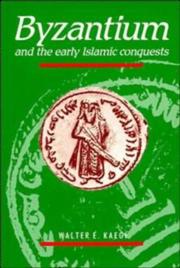
A rigorous specialist study of the empire's catastrophic seventh-century collision with Islam. It forces the reader to weigh evidence, challenge assumptions, and see Byzantium from the outside — the hallmark of advanced historical thinking.
Discussion
Keep reading
Paths that share books, cover the same subject, or open a related topic.