Best Books to Understand Gramsci, in Reading Order
This curriculum moves from accessible introductions to Gramsci's life and core ideas, through close engagement with the Prison Notebooks themselves, and finally into contemporary scholarly debates about how his concepts—hegemony, civil society, the organic intellectual—are deployed in politics, culture, and critical theory today. Because the learner starts at an intermediate level, the path skips purely introductory political theory and instead builds Gramscian vocabulary quickly before diving into primary sources and modern applications.
Into the Prison Notebooks
IntermediateRead Gramsci's own words in a structured way, mastering hegemony, civil society, the state, and the role of intellectuals directly from the source.
▸ Study plan for this stage
Pace: 6–8 weeks, ~25–30 pages/day, with 2–3 days per week for reflection and note-taking
- Hegemony as cultural and ideological dominance: how ruling groups maintain power through consent rather than coercion
- Civil society as the arena where hegemony is constructed: the role of schools, churches, media, and cultural institutions
- The state as both coercive apparatus and political society: the distinction between state and civil society in Gramsci's framework
- Organic intellectuals vs. traditional intellectuals: how intellectuals either reinforce or challenge hegemony
- The role of the working class and subaltern groups in creating counter-hegemony and alternative cultural formations
- Language, literature, and culture as sites of ideological struggle and hegemonic contestation
- The concept of 'common sense' as naturalized ideology that must be critically examined and transformed
- How does Gramsci define hegemony, and how does it differ from simple domination or coercion?
- What is the relationship between civil society and the state in Gramsci's analysis, and why is this distinction important for understanding power?
- Who are organic intellectuals, and what role do they play in either maintaining or challenging hegemony?
- How do cultural institutions (schools, churches, media) function as sites where hegemony is constructed and maintained?
- What does Gramsci mean by 'common sense,' and why is it a crucial concept for understanding ideology?
- How can subaltern groups develop counter-hegemonic consciousness and create alternative cultural formations?
- Create a concept map tracing the relationships between hegemony, civil society, the state, and intellectuals using direct quotes from the Prison Notebooks
- Analyze a contemporary cultural institution (a news outlet, educational system, or social media platform) through Gramsci's framework of hegemony and civil society—identify how it constructs or contests hegemony
- Write a 2–3 page reflection on a piece of 'common sense' in your own society (e.g., 'hard work guarantees success') and deconstruct it using Gramsci's method from the Prison Notebooks
- Compare and contrast Gramsci's treatment of organic vs. traditional intellectuals by identifying examples from the Cultural Writings and explaining how each type relates to hegemony
- Create an annotated timeline of Gramsci's key arguments as they develop across the Prison Notebooks selections, noting how his thinking on hegemony and civil society evolves
- Develop a case study: choose a historical or contemporary social movement and analyze how it either challenges or reinforces hegemony using Gramsci's concepts from both texts
Next up: Mastering Gramsci's own framework of hegemony, civil society, and intellectual agency directly from the source prepares you to engage with secondary interpretations and applications of his thought, and to evaluate how contemporary theorists have extended, critiqued, or adapted his ideas for modern contexts.
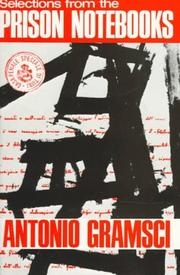
The essential primary source, edited and translated by Hoare and Nowell Smith with thematic groupings and editorial notes that make the fragmentary Notebooks navigable. Read the editors' introduction first, then the sections on intellectuals, hegemony, and the modern prince in order.

Complements the Prison Notebooks by showing how Gramsci applied his framework to literature, folklore, and popular culture—essential for understanding how hegemony operates at the level of everyday life and common sense.
Scholarly Guides to the Notebooks
IntermediateConsolidate and deepen your reading of the primary texts with the two most respected secondary guides, clarifying contested interpretations and filling gaps.
▸ Study plan for this stage
Pace: 4-5 weeks, ~40-50 pages/day, with 2-3 days per week for reflection and note-taking
- Hegemony as cultural and intellectual leadership, not mere domination
- The role of organic intellectuals in building counter-hegemonic movements
- The distinction between civil society and political society in Gramsci's framework
- The concept of the 'national-popular' and its strategic importance for revolutionary strategy
- Gramsci's critique of economism and mechanical materialism in Marxist theory
- The relationship between structure and superstructure in Gramsci's thought
- The prison notebooks as a fragmented but coherent theoretical project
- How Gramsci's ideas address the 'failure' of revolution in the West
- How does Gramsci's concept of hegemony differ from simple domination or coercion, and why does this distinction matter politically?
- What role do organic intellectuals play in Gramsci's theory, and how do they differ from traditional intellectuals?
- How does Gramsci's analysis of civil society and political society reshape Marxist understandings of state power?
- What does Gramsci mean by the 'national-popular,' and why is it strategically important for progressive movements?
- How does Simon interpret Gramsci's critique of economism, and what alternatives does Gramsci propose?
- How does Gramsci's prison writings address the historical question of why socialist revolution succeeded in Russia but not in the West?
- Create a detailed concept map showing the relationships between hegemony, civil society, political society, and the state as Simon presents them
- Write a 2-3 page analytical essay comparing Gramsci's organic intellectual with a contemporary public figure or activist, examining whether they fit Gramsci's criteria
- Develop a case study applying Gramsci's framework of hegemony to a specific historical movement or contemporary social struggle, identifying the role of intellectuals and cultural institutions
- Annotate key passages from Simon's text that define contested terms (hegemony, common sense, national-popular), creating a personal glossary with your own examples
- Construct a timeline or diagram showing how Simon traces the development of Gramsci's thought across the prison notebooks, identifying major shifts or clarifications
- Debate or write a critical response to Simon's interpretation of a major Gramscian concept, using evidence from both Simon and your prior reading of Gramsci's primary texts
Next up: Simon's systematic clarification of Gramsci's core concepts and his resolution of interpretive debates will prepare you to engage with the second scholarly guide, which will likely offer alternative or complementary perspectives, allowing you to develop a more nuanced, independent understanding of Gramsci's legacy and contemporary relevance.
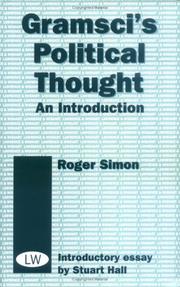
A clear, systematic secondary guide that walks through each major concept in logical order—ideal for consolidating your own reading of the Notebooks and resolving ambiguities before moving to advanced debates.
Critical Extensions and Debates
ExpertEngage with the major scholarly debates about what Gramsci's concepts really mean and how they have been extended, challenged, or revised by later theorists.
▸ Study plan for this stage
Pace: 6–8 weeks, ~40–50 pages/day (with 2–3 days per week for synthesis and note-taking)
- Hegemony as a contingent political articulation rather than a predetermined class phenomenon—how Laclau revises Gramsci's concept away from economism
- Discourse and antagonism as constitutive of political identity—the shift from material base to linguistic/discursive construction of social relations
- The floating signifier and empty signifier: how political meaning is constructed through chains of equivalence rather than fixed ideological content
- Post-Marxist critique of Gramsci: the rejection of class essentialism and the base-superstructure model in favor of radical contingency
- Populism as a logic of articulation—how diverse social demands can be unified under a hegemonic project without shared economic interests
- The limits of Gramsci's organicity thesis: why organic intellectuals and class consciousness cannot guarantee hegemonic success
- Antagonism vs. difference: how Laclau distinguishes between internal differences within a system and external antagonism that destabilizes it
- How does Laclau's concept of hegemony differ fundamentally from Gramsci's, and what does he identify as the limitations of Gramsci's approach?
- What role does discourse play in Laclau's theory, and how does this represent a departure from Gramsci's materialist framework?
- Explain the concept of the 'floating signifier' and how it functions in the construction of hegemonic blocs. Why is this important for understanding political articulation?
- How does Laclau use the concept of antagonism, and what does he mean by saying that antagonism cannot be fully represented within the social order?
- What is populism according to Laclau, and how does his theory of populism challenge traditional Marxist and Gramscian understandings of political movements?
- How does Laclau critique the notion of organic intellectuals and class consciousness as guarantees of hegemonic transformation?
- Create a comparative table: map Gramsci's key concepts (hegemony, organic intellectuals, common sense, war of position) against Laclau's revisions of each. Note where Laclau accepts, modifies, or rejects Gramsci's formulations.
- Analyze a contemporary political movement (e.g., a populist party, social movement, or coalition) using Laclau's framework: identify the floating signifiers, the chains of equivalence, the antagonism being articulated, and how diverse demands are unified under a hegemonic project.
- Write a 2,000-word critical essay: 'Does Laclau successfully overcome the economism in Gramsci's theory, or does he overcorrect by abandoning material analysis altogether?' Use specific textual evidence.
- Diagram the logic of articulation in a political case study: show how different social groups, demands, and identities are linked through equivalential chains and how a hegemonic signifier (e.g., 'the people,' 'the nation') emerges to unify them.
- Debate exercise (solo or in group): prepare arguments for and against the proposition 'Laclau's post-Marxist theory is more useful than Gramsci's for understanding 21st-century politics.' Ground your arguments in specific concepts from the text.
- Close reading: select 3–4 key passages from Laclau where he directly engages with or critiques Gramsci. Annotate them carefully, noting the specific Gramscian concept being challenged and Laclau's alternative formulation.
Next up: This stage equips you to recognize how post-Marxist and discourse-theoretical frameworks have fundamentally reframed Gramscian concepts, preparing you to engage with subsequent theoretical developments and to apply these contested ideas to contemporary political analysis.

The most influential post-Gramscian theoretical work of the twentieth century, which radicalizes and critiques the concept of hegemony through discourse theory. Reading it here shows exactly where Gramsci's framework ends and where it is pushed further.
Gramsci Now: Contemporary Applications
ExpertSee how Gramscian concepts are actively used today in cultural studies, international relations, postcolonial theory, and political strategy.
▸ Study plan for this stage
Pace: 4–5 weeks, ~25–30 pages/day, with 2–3 days per week dedicated to synthesis and application exercises
- Hegemony as a dynamic process of consent and coercion: how dominant groups maintain power through cultural and ideological means, not just force
- The role of intellectuals in constructing and contesting hegemony: organic intellectuals vs. traditional intellectuals and their political function
- Articulation and contingency: how political identities and alliances are constructed through discourse rather than determined by economic base
- Cultural struggle as a site of political contestation: how culture, meaning-making, and everyday practices are battlegrounds for power
- Gramsci's relevance to postcolonial contexts: how colonized and subaltern groups resist and construct counter-hegemonic projects
- The relationship between theory and strategy: how Gramscian analysis informs concrete political organizing and cultural intervention
- Gramsci beyond Marxism: how his ideas have been adapted, critiqued, and extended by poststructuralist, feminist, and postcolonial thinkers
- How does Mouffe's reading of Gramsci challenge traditional Marxist interpretations of base and superstructure, and what are the political implications?
- What is the distinction between organic and traditional intellectuals in Gramsci's work, and why does this distinction matter for understanding contemporary cultural and political movements?
- How does Crehan use ethnographic and anthropological examples to illustrate Gramscian concepts of hegemony and resistance in everyday cultural practice?
- In what ways can Gramscian hegemony theory be applied to postcolonial contexts, and what limitations or adaptations does Crehan identify?
- How do Mouffe and Crehan each understand the relationship between culture, ideology, and political strategy, and where do they diverge?
- What does it mean to conduct a 'war of position' in contemporary contexts, and how can intellectuals and activists use Gramscian analysis to build counter-hegemonic projects?
- Close-read one chapter from Mouffe on hegemony and articulation; annotate key passages and create a one-page synthesis explaining how her argument differs from traditional Marxist theory
- Select a contemporary cultural or political movement (e.g., climate activism, decolonial movements, digital culture wars). Map its hegemonic struggles using Gramscian concepts: identify organic intellectuals, sites of contestation, and strategies of consent-building
- Read one ethnographic case study from Crehan and write a 2–3 page analysis of how everyday cultural practices constitute either hegemonic or counter-hegemonic activity
- Conduct a mini-ethnographic observation: spend 1–2 hours in a cultural space (social media community, local organization, classroom, etc.) and document how meaning-making and power operate. Write a 1-page Gramscian analysis
- Create a comparative chart: list 3–4 key concepts from Mouffe and 3–4 from Crehan, noting how each author applies them differently and what this reveals about Gramsci's adaptability
- Debate or discussion exercise: prepare arguments for and against the proposition 'Gramsci's theory of hegemony is more useful for understanding cultural struggle than economic struggle in the 21st century'
Next up: This stage equips you to recognize Gramsci's concepts operating in real-world cultural and political contexts, preparing you to either specialize in a particular field of application (cultural studies, postcolonial theory, international relations) or to critically evaluate and extend Gramscian theory in dialogue with contemporary theoretical developments.

This edited collection brings together leading scholars to assess Gramsci's legacy across political theory, ideology, and the state—an ideal survey of how the concepts travel across disciplines.
Shows how anthropologists and cultural theorists have used Gramsci's ideas about common sense, folklore, and subaltern groups—a concrete demonstration of the concepts at work in contemporary research and the final payoff of the whole curriculum.
Discussion
Keep reading
Paths that share books, cover the same subject, or open a related topic.