Plant a pollinator-friendly garden
This curriculum takes a beginner from "what is a pollinator?" all the way to designing and stewarding a thriving native-plant habitat. Each stage builds on the last: first you learn to see the ecological relationships, then you learn the plants, then you design the garden, and finally you deepen your stewardship with advanced ecological and advocacy knowledge.
Foundations: Understanding Pollinators & Why They Matter
BeginnerUnderstand who pollinators are, the threats they face, and why native plants are the irreplaceable foundation of pollinator habitat — building the 'why' before the 'how'.
▸ Study plan for this stage
Pace: 3–4 weeks, ~20–25 pages/day — Buchmann's prose is rich and detail-dense, so a relaxed pace allows the science and storytelling to sink in. Read one chapter, then pause to reflect before moving on.
- The co-evolutionary relationship between flowering plants (angiosperms) and their pollinators — how flowers and pollinators shaped each other over millions of years
- The astonishing diversity of pollinators beyond honeybees: native bees, butterflies, moths, beetles, flies, wasps, hummingbirds, and bats, each with distinct roles
- Floral sensory signals — color, scent, shape, nectar guides, and timing — as a communication system evolved specifically to attract the right pollinators
- The concept of pollination syndromes: how a flower's traits reliably predict which pollinator it depends on
- The ecological and economic stakes of pollination: the majority of wild plant species and a significant portion of human food crops depend on animal pollinators
- Key threats to pollinators: habitat loss and fragmentation, pesticide exposure (especially neonicotinoids), introduced diseases (e.g., Varroa mite, Nosema), climate mismatch, and monoculture agriculture
- Why native plants are foundational: the deep, co-evolved nutritional and behavioral dependencies that specialist native bees have on specific native plant genera
- The concept of 'pollinator poverty' — landscapes stripped of floral diversity that leave pollinators nutritionally starved even when flowers are technically present
- Who are the major groups of animal pollinators, and how does each group interact differently with flowers according to Buchmann's account?
- What is a pollination syndrome, and why is it a useful (if imperfect) framework for understanding plant–pollinator relationships?
- How do flowers use scent, color, and shape as targeted signals, and why does this matter for understanding which pollinators a garden should support?
- What are the primary human-driven threats to pollinators that Buchmann identifies, and which does he treat as most urgent?
- Why are native plants described as irreplaceable rather than merely preferable for supporting native bee populations?
- What is the broader ecological consequence — beyond food production — if pollinator populations continue to decline?
- **Pollinator Observation Journal:** Spend 15–20 minutes on three separate days sitting near any flowering plant (garden, park, roadside) and log every visitor you see — body size, color, behavior, and which flower part it contacts. Compare your notes to Buchmann's descriptions of pollinator groups to attempt an ID.
- **Flower Dissection & Syndrome Matching:** Pick 4–5 different flowers (dandelion, clover, salvia, morning glory, etc.). Sketch each one, noting color, shape, scent, and nectar accessibility. Use Buchmann's pollination syndrome framework to predict which pollinator each flower is 'advertising' to, then verify with a field guide or iNaturalist.
- **Threat Map:** Draw a simple diagram or mind map of the threats Buchmann describes. For each threat, write one sentence explaining the mechanism of harm (e.g., 'Neonicotinoids impair navigation, so bees cannot return to the hive'). This forces active processing of cause-and-effect, not just memorization.
- **Native vs. Non-Native Plant Audit:** Walk through a nearby garden, nursery, or your own yard and photograph 10 plants. Use a plant ID app (iNaturalist, PlantNet) to determine which are native to your region. Reflect in writing: based on Buchmann's arguments, what does the ratio of native to non-native plants suggest about the habitat's value to specialist bees?
- **'Why It Matters' One-Pager:** Write a 300–400 word personal statement — as if explaining to a skeptical neighbor — arguing why pollinators deserve active protection. Draw exclusively on evidence and examples from *The Reason for Flowers*. This consolidates the 'why' that is the entire goal of this stage.
- **iNaturalist Pollinator Project:** Create a free iNaturalist account and start a personal observation project titled 'My Pollinator Foundations.' Upload at least 5 observations of pollinators or pollinator-attractive flowers during this stage. Connecting citizen science to Buchmann's themes reinforces that this knowledge is actionable, not merely academic.
Next up: Buchmann's deep 'why' — the co-evolutionary logic of plant–pollinator relationships and the urgency of their decline — gives the reader the motivational and conceptual foundation needed to make purposeful, evidence-based decisions when the curriculum shifts from understanding pollinators to actively designing habitat for them.

A warm, accessible introduction to the flower-pollinator relationship that builds essential vocabulary and wonder — perfect first reading before diving into gardening specifics.
The Plants: Choosing Natives for Your Region
IntermediateBuild a working knowledge of native plant selection — which species feed which pollinators, how to match plants to your soil and region, and how to read a plant's ecological role.
▸ Study plan for this stage
Pace: 8–10 weeks total: Week 1–3 — "The American Meadow Garden" (~25–30 pages/day, including time to study the plant palette sections slowly); Week 4–6 — "Native Plants of the Northeast" (~20–25 pages/day, used as a reference-style read with a field notebook open alongside); Week 7–10 — "Planting in a Pos
- Regional plant communities as the foundation of native plant selection — Greenlee's meadow plant palettes illustrate how grasses and forbs co-evolved with specific pollinators and climatic zones, making regional fit non-negotiable
- Grass-forb ratios and structural layering — Greenlee demonstrates how the proportion of grasses to flowering plants shapes habitat value, bloom succession, and pollinator diversity across seasons
- Species-level ecological roles — Leopold's species accounts reveal which natives serve as larval hosts, nectar sources, or pollen specialists, distinguishing plants that merely attract pollinators from those that sustain them
- Soil, hydrology, and microclimate matching — Leopold's habitat keys and Greenlee's site-assessment guidance teach readers to read a site's physical conditions before selecting any plant
- The 'designed plant community' concept — Rainer and West's framework in 'Planting in a Post-Wild World' reframes plant selection from individual specimens to interacting layers (canopy, matrix, seasonal theme, ground cover) that mimic natural community structure
- Matrix planting and the role of workhorse species — Rainer introduces the idea that a few high-performing, ecologically connected natives (the matrix) carry the habitat, while accent species add diversity and bloom interest
- Bloom succession and phenological planning — across all three books, the principle that pollinators need continuous forage from early spring through late fall demands deliberate sequencing of early, mid, and late-season natives
- Reading a plant's ecological signal — combining Leopold's natural history notes with Rainer's community-layer thinking trains the reader to ask not just 'will it grow here?' but 'what role does it play and for whom?'
- After working through Greenlee's regional meadow palettes, can you identify at least five grass-forb combinations appropriate to your specific region and explain why each pairing works ecologically?
- Using Leopold's species accounts, can you name three native plants in your area that function as specialist larval hosts (not just generalist nectar sources), and describe which pollinator species depend on them?
- How does Rainer's 'designed plant community' model differ from traditional ornamental planting design, and why does that difference matter for pollinator support?
- Can you assess a real or hypothetical garden site — its soil texture, drainage, sun exposure, and regional climate — and produce a short-list of natives from Leopold and Greenlee that are matched to those conditions?
- What is the 'matrix' in Rainer's framework, which species from your region would you choose as matrix plants, and what criteria guided that choice?
- How would you design a planting plan that provides continuous bloom from April through October using only natives discussed across these three books?
- Regional palette audit: While reading Greenlee, build a two-column chart — one column for grasses, one for forbs — listing every species he mentions that could plausibly grow in your region. Annotate each with its bloom time and the pollinator guilds it supports.
- Site-reading field exercise: Visit your own garden or a nearby natural area with Leopold's habitat key in hand. Record soil type, moisture level, light conditions, and any native plants already present. Cross-reference your observations with Leopold's species accounts to identify three to five plants that 'belong' on that site.
- Ecological role matrix: Create a grid with native plant species (drawn from all three books) along one axis and ecological functions along the other (larval host, specialist pollen source, generalist nectar, structural/nesting habitat). Fill in the grid as you read — this becomes a personal reference tool.
- Designed community sketch: After finishing Rainer, draft a simple planting plan for a 10×20 ft area using his layered community model. Label each plant by its layer (matrix, seasonal theme, ground cover), its bloom window, and the pollinator it primarily serves. Aim for zero bloom gaps.
- Comparative plant profile: Choose one genus that appears in both Leopold and Greenlee (e.g., Echinacea, Andropogon, or Monarda). Write a one-page profile synthesizing what each book says about its ecological role, regional range, soil preferences, and pollinator relationships — practicing the skill of reading across sources.
- Nursery or seed-source research: Using your regional palette chart and site-reading notes, identify three local native plant nurseries or seed suppliers. Verify that at least five of your chosen species are actually available in your region, noting any that are difficult to source — a practical constraint Rainer explicitly asks designers to reckon with.
Next up: By the end of this stage the reader can select regionally appropriate natives, understand their ecological roles, and think in terms of plant communities rather than individual specimens — precisely the plant literacy needed to move into the next stage, where those selections are translated into garden design, installation sequencing, and long-term management decisions.

Introduces native grasses and meadow plants as a system, teaching how to think in plant communities rather than individual specimens — a key conceptual leap for habitat gardeners.
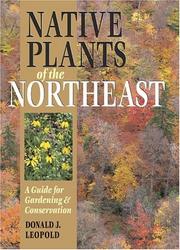
A rigorous, region-specific reference for plant selection that pairs ecological function with practical growing advice; read after Greenlee so you can apply community thinking to real plant lists.

Bridges ecology and garden design by teaching how to layer plants in functional, self-sustaining communities — the critical link between 'knowing plants' and 'designing a habitat'.
Designing the Garden: From Yard to Habitat
IntermediateApply ecological knowledge to real garden design — creating four-season structure, nesting sites, water, and corridors that sustain pollinators through their entire life cycles.
▸ Study plan for this stage
Pace: 4–5 weeks, ~20–25 pages/day — "Gardening for Butterflies" by Scott Hoffman Black runs roughly 260 pages; read in three phases: (1) Weeks 1–2: ecology and life-cycle chapters (understand butterfly needs before designing); (2) Week 3: plant selection and garden structure chapters; (3) Weeks 4–5: regio
- Four-season habitat continuity — ensuring bloom, shelter, and resources are available from early spring through late fall/overwintering so no life-cycle stage is left without support
- Host plants vs. nectar plants — the critical distinction between plants caterpillars must eat to survive (species-specific) and plants adults visit for energy, and why both must be present in the design
- Microhabitat layering — using vertical structure (groundcovers, perennials, shrubs, canopy) to provide basking spots, wind protection, pupation sites, and overwintering cover simultaneously
- Nesting and overwintering sites — leaving leaf litter, hollow stems, brush piles, and bare soil patches as intentional design elements rather than tidying them away
- Corridors and connectivity — designing beds and plantings that link to neighboring yards, parks, or wild edges so butterflies can move safely through fragmented landscapes
- Water and mineral sources — shallow puddling areas and damp sand/mud patches that supply moisture and salts essential to butterfly physiology
- Reducing and eliminating pesticide pressure — understanding how even 'selective' pesticides disrupt butterfly populations and how to manage pests through plant diversity and tolerance thresholds
- Regional and site-specific adaptation — matching plant palettes and design strategies to local climate, soil, and the specific butterfly species present in one's ecoregion
- After reading 'Gardening for Butterflies,' can you name at least five host-plant/butterfly pairings relevant to your region and explain why removing those plants eliminates that species from your yard entirely?
- How does Black argue that conventional 'tidy' garden maintenance (cutting stems in fall, raking all leaves, deadheading everything) actively harms butterfly populations, and what specific practices does he recommend instead?
- What design features — drawn directly from the book — would you include to support butterflies through all four life stages (egg, larva, pupa, adult) within a single garden space?
- How does the concept of habitat corridors apply at the scale of a residential yard, and what practical steps does Black suggest for connecting your garden to the broader landscape?
- What are the key differences in plant and structural needs between a butterfly garden optimized for spring/summer adults versus one that also supports overwintering species or pupae?
- How does Black address the tension between aesthetic garden design preferences (neat edges, uniform mulch, manicured beds) and the ecological requirements of butterflies, and what compromises or reframes does he offer?
- Site audit and life-cycle gap analysis: Walk your yard (or a nearby garden) in each of the four seasons — or simulate it with photos — and map where food, shelter, water, and nesting resources are absent. Use Black's life-cycle framework to label each gap by the stage it affects (larva, pupa, adult, overwintering).
- Host-plant inventory: Using the regional plant lists in 'Gardening for Butterflies,' identify 8–10 host plants native to your ecoregion. Cross-reference with what is currently in your yard or locally available at native plant nurseries, then create a prioritized planting list with the butterfly species each plant supports.
- Garden design sketch: Draw a scaled overhead plan of a real or hypothetical yard (even 10×20 ft works). Apply Black's layering principles — groundcover, perennial, shrub, small tree — and annotate each plant with its function: host, nectar, overwintering cover, basking surface, or corridor stepping stone.
- Puddling station build: Construct a simple butterfly puddling station (a shallow dish, sand, water, and a pinch of wood ash or sea salt) following the guidance in the book. Place it in a sunny, sheltered spot and observe and log any visitors over two weeks.
- Pesticide audit and replacement plan: Inventory every pesticide, herbicide, and fungicide currently used in your garden or household. For each one, use Black's framework to assess its risk to butterfly larvae and adults, then identify one organic or mechanical alternative for each.
- Overwintering habitat installation: Designate one 'messy corner' in your garden — leave hollow stems standing to at least 12 inches, pile leaf litter, and add a brush pile — documenting before/after photos and journaling observations through the following season to track any signs of pupae, eggs, or adult emergence.
Next up: Mastering butterfly-specific design in "Gardening for Butterflies" builds the spatial and ecological vocabulary — layered structure, host-plant specificity, corridor thinking — that the next stage will expand to the full pollinator community, including bees, moths, and beetles, each of which demands its own overlapping but distinct set of design responses.
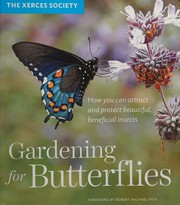
Published by the Xerces Society, this is the definitive how-to for butterfly habitat — host plants, nectar plants, overwintering structure — read here once you have design fundamentals in place.
Discussion
Keep reading
Paths that share books, cover the same subject, or open a related topic.