Forage wild food safely
This curriculum builds from zero foraging knowledge to confident, safety-first wild edible identification across four progressive stages. Each stage deepens botanical literacy, sharpens lookalike awareness, and expands the range of edibles you can reliably identify — always anchoring new knowledge in the safety principles established in the previous stage.
Foundations: Safety, Mindset & First Edibles
BeginnerUnderstand the core rules of safe foraging, develop a cautious identification mindset, and confidently recognize a small set of unmistakable beginner edibles.
▸ Study plan for this stage
Pace: 6–8 weeks total: Weeks 1–3 on "Forage, Harvest, Feast" (~25–30 pages/day, focusing on Viljoen's introductory safety chapters and the first 10–12 featured plants); Weeks 4–8 on "The Forager's Harvest" (~20–25 pages/day, reading Thayer's species accounts in full, including his extended identification
- The 'rule of one' identification standard: every single field mark must match before eating anything — Thayer's detailed species accounts model this discipline plant by plant
- Distinguishing edible plants from dangerous look-alikes using multiple confirmation points (habitat, season, smell, texture, taste test hierarchy), as demonstrated in Thayer's accounts of species like stinging nettle and wood sorrel
- Viljoen's 'forage-to-table' philosophy: understanding the full arc from ethical wild harvest to kitchen preparation, which frames why correct ID is non-negotiable
- Seasonal awareness and phenology — both authors emphasize that the same plant looks radically different across seasons, and beginners must learn growth stages, not just peak-season snapshots
- Ethical and sustainable harvesting principles: the 'take no more than 10%' guideline, avoiding polluted or sprayed sites, and leaving root systems intact, woven throughout Viljoen's plant entries
- Building a beginner's 'starter set' of unmistakable edibles — plants with no deadly look-alikes or with look-alikes easily ruled out (e.g., wood sorrel, garlic mustard, lamb's quarters, stinging nettle, elderflower as covered across both books)
- The mindset of conservative confidence: Thayer's narrative approach teaches readers to sit with uncertainty, revisit a plant multiple times, and only harvest when identification is beyond doubt
- Cross-referencing as a safety habit: using Viljoen's recipe-forward entries alongside Thayer's deep-dive identification narratives to triangulate knowledge from two independent sources
- According to Thayer's methodology in 'The Forager's Harvest', what is the correct process for confirming a plant's identity, and why is matching a single field mark insufficient?
- Viljoen structures 'Forage, Harvest, Feast' around seasonal and culinary context — how does this framing reinforce safe foraging habits beyond pure plant identification?
- Choose one species covered by both authors (e.g., stinging nettle or elderflower). What identification details does each author emphasize, and where do their descriptions complement each other?
- What environmental and site-based factors should a beginner assess before harvesting any plant, based on the guidance in these two books?
- How do both authors approach the topic of look-alikes, and what mental habits do they recommend to avoid misidentification errors?
- After reading both books, what distinguishes a 'beginner-safe' edible from one that requires more experience — and which specific plants from these texts fall into each category?
- 'Sit with a plant' exercise: Find one species covered in Thayer's 'The Forager's Harvest' (e.g., wood sorrel or lamb's quarters) growing near you. Visit it on three separate days across different conditions. Write a field note each time listing every observable characteristic — do not harvest until all of Thayer's listed field marks are confirmed.
- Dual-source ID card: For 5 plants featured in both books, create a hand-written index card listing the key ID features from Viljoen on one side and Thayer on the other. Note any differences in emphasis — this builds the cross-referencing habit.
- Kitchen-to-field reverse exercise: Pick one of Viljoen's recipes using a beginner edible. Read the recipe first, then go back to the identification section and ask: 'Would I be 100% certain enough to cook this?' Journal your confidence level and what gaps remain.
- Look-alike comparison chart: Using Thayer's species accounts, build a simple two-column chart for at least three plants — 'Target Species' vs. 'Dangerous Look-alike' — listing the specific features that separate them. Keep this chart in your field kit.
- Habitat scouting walk (no harvesting): Walk a local green space with both books' introductory chapters freshly read. Photograph at least 10 plants and attempt to identify them at home afterward. Score yourself honestly — this calibrates your current skill level before any harvesting begins.
- Seasonal journaling: Over the 6–8 weeks of this stage, keep a weekly one-page journal entry noting which plants from these two books are visible in your area, what growth stage they are in, and how that matches the seasonal guidance both authors provide.
Next up: Mastering the conservative identification mindset and a small roster of unmistakable edibles from Viljoen and Thayer gives the reader the safety foundation and field confidence needed to tackle a broader, more regionally specific plant vocabulary in the next stage — where species diversity increases and the identification challenges become meaningfully harder.

A welcoming, safety-conscious introduction that pairs identification with practical use, helping beginners build confidence without rushing into risky territory.
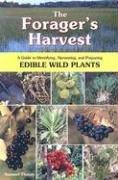
Thayer's meticulous, plant-by-plant approach teaches beginners HOW to identify — not just what to look for — and dedicates serious attention to dangerous lookalikes from the very first chapter.
Building Vocabulary: Botany & Field Skills
BeginnerLearn the botanical language (leaf shape, venation, plant families, growth habits) needed to use field guides accurately and distinguish similar-looking plants.
▸ Study plan for this stage
Pace: 4–5 weeks total. Week 1–2: Read "Botany in a Day" cover to cover (~20–25 pages/day), pausing to sketch every plant family pattern introduced. Week 3–4: Work through "Edible Wild Plants" by Peterson (~15–20 pages/day), using it as a field-guide application of Elpel's vocabulary. Week 5: Review and fi
- Plant family patterns (Elpel's core thesis): recognizing shared floral and structural traits across entire families (e.g., Mustard's 4 petals in a cross, Carrot/Apiaceae's compound umbel) rather than memorizing species one by one
- Leaf morphology vocabulary: simple vs. compound, opposite vs. alternate vs. whorled arrangement, leaf margin types (serrate, lobed, entire), and shape terms (lanceolate, ovate, palmate)
- Venation patterns: pinnate vs. palmate venation and how they correlate with plant families and identification
- Floral formula basics: petal and sepal counts, symmetry (radial vs. bilateral), and how Elpel uses these as fast family-level keys
- Growth habits and life cycles: annual, biennial, perennial; rosette, vine, shrub, and how Peterson's entries flag these for each species
- Peterson's field-guide system: how to read and cross-reference the visual thumb tabs, range maps, and descriptive text in 'Edible Wild Plants' using the botanical terms learned from Elpel
- Dangerous look-alikes and the critical importance of whole-plant ID: understanding why partial identification using only one feature is insufficient and potentially dangerous
- Habitat and seasonal context: how both books use habitat type and phenological stage (flower, fruit, vegetative) as identification aids
- After reading Elpel, can you name at least 6 plant families, state their defining floral or structural pattern, and give one edible example from each?
- Can you pick up Peterson's 'Edible Wild Plants,' open to any species page, and correctly define every botanical term used in the description (e.g., 'pinnately compound,' 'umbel,' 'clasping leaf')?
- How does Elpel's family-pattern approach change the way you use a field guide like Peterson's — what do you look for first, second, and third when identifying an unknown plant?
- What are the key distinguishing features that separate a safe edible in the Carrot family (Apiaceae) from a toxic look-alike, and why does Peterson flag this family as high-risk for beginners?
- Can you describe the complete leaf arrangement, leaf shape, venation, and growth habit of three plants found in Peterson's guide using only correct botanical terminology?
- Why is a range map in Peterson's guide an identification tool, not just background information — and what are its limitations?
- Sketch-a-family drill (Elpel-based): After each plant family chapter in 'Botany in a Day,' draw the idealized floral diagram from memory, label all parts with correct terms, then find and sketch one real or photographed specimen that matches the pattern.
- Leaf vocabulary flashcards: Create a two-sided flashcard deck of every bolded or defined term in Elpel's morphology sections (opposite, pinnate, umbel, bract, etc.); quiz yourself daily until you can define and draw each term without hesitation.
- Peterson cross-reference exercise: Choose 10 species from 'Edible Wild Plants' at random; for each one, identify which plant family (per Elpel) it belongs to, then verify by checking Elpel's family chapter — note whether Peterson's description matches Elpel's family pattern.
- Backyard or park observation walk: Bring both books outside and attempt to place every plant you encounter into one of Elpel's family patterns before looking it up — record your reasoning in a field notebook, noting which features were decisive.
- Look-alike comparison chart: Using Peterson's caution notes and Elpel's family descriptions, build a two-column chart for at least 3 edible/toxic pairs (e.g., wild carrot vs. poison hemlock), listing every feature that distinguishes them at each life stage.
- Verbal ID test: Have a friend or study partner hold up a plant photo (or a specimen); describe it aloud using only botanical vocabulary from Elpel before attempting to name it — practice until descriptions are fluent and complete before reaching for Peterson.
Next up: Mastering botanical language and family-pattern recognition in these two books gives the reader the precise descriptive toolkit needed to move confidently into field identification of specific regional species, where accurate vocabulary is the difference between a safe harvest and a dangerous mistake.
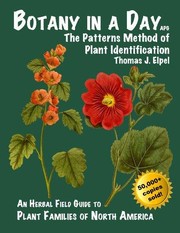
Teaches plant-family patterns rather than species-by-species memorization, giving foragers a systematic framework that dramatically improves lookalike detection.
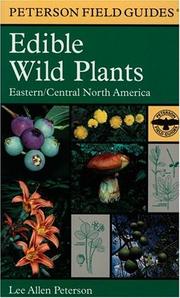
A classic Peterson Field Guide organized by visual features rather than plant families, reinforcing the botanical vocabulary from Elpel with hundreds of illustrated real-world examples.
Going Deeper: Expanding the Edible Range & Lookalike Mastery
IntermediateConfidently identify a broad range of edible plants across seasons, with a thorough understanding of the most dangerous lookalikes for each species.
▸ Study plan for this stage
Pace: 10–13 weeks total: ~5 weeks on "Nature's Garden" (Thayer is dense and detail-rich; aim for ~20–25 pages/day, revisiting species accounts slowly) + ~5–6 weeks on "Edible Wild Plants" by Kallas (~18–22 pages/day, with extra time spent on his "Continuum of Edibility" chapters and species comparisons).
- Thayer's philosophy of 'reliable identification' — understanding every diagnostic feature of a plant before harvesting, not just a few field marks
- Seasonal phenology: how the same edible plant looks radically different in spring, summer, fall, and winter, and how to track it across all growth stages
- Lookalike analysis: systematically comparing edible species against their toxic or inedible counterparts feature-by-feature (leaf shape, stem cross-section, smell, habitat, root structure)
- Kallas's 'Continuum of Edibility' framework — understanding that 'edible' is not binary but a spectrum involving preparation method, plant part, season, and individual tolerance
- Habitat and ecology as identification tools: understanding which plant communities, soil types, and moisture regimes each species favors
- Harvest ethics and sustainability: Thayer's detailed guidance on population impact, harvest rates, and leaving no trace across a wide range of species
- Processing and preparation knowledge as a safety layer: recognizing that some species (e.g., elderberries, nettles) require specific preparation to neutralize irritants or toxins
- Building a personal species dossier: synthesizing written descriptions, your own field photos, pressed specimens, and tasting notes into a reliable reference system
- For any species covered in Nature's Garden, can you name at least two dangerous or commonly confused lookalikes and list the specific features that distinguish the edible plant from each?
- How does Thayer's approach to identification differ from a simple field-guide checklist method, and why does he argue this difference matters for safety?
- Using Kallas's Continuum of Edibility, how would you evaluate a plant you've never eaten before — what questions would you ask about its preparation, the plant part, the season, and your own physiology?
- Pick three species from these books that look very different in spring versus late summer. How would you confidently re-identify each one outside its peak season?
- What ecological and habitat clues does Thayer use to locate species before he can even see the plant itself, and how can you apply this to a new foraging site?
- How do the preparation and processing instructions in both books function as a second line of defense against misidentification or toxicity?
- Species dossier project: For every species covered in both books, create a one-page dossier with your own field photos (multiple seasons if possible), a hand-drawn sketch of the key diagnostic features, a lookalike comparison table, and Kallas's edibility rating. Review and update these after each field outing.
- Lookalike drill: Choose five high-risk pairs covered across both books (e.g., wild carrot vs. poison hemlock, ramps vs. lily of the valley) and write out, from memory, every distinguishing feature. Then go into the field and find both plants side-by-side to verify your list.
- Phenology journal: Pick 4–6 species from Nature's Garden and visit the same patch monthly for the duration of this stage. Photograph and describe every change in leaf shape, color, stem, flower, and fruit — building a personal seasonal reference.
- Blind identification challenge: Have a friend or fellow forager collect 3–5 plant samples (no flowers or fruit) from species you've studied. Identify each using only vegetative features, then check your work against the books. Repeat monthly.
- Preparation safety test: Select three species from Kallas that require specific preparation (blanching, drying, cooking, etc.). Research the reason for each preparation step (what compound is neutralized, what changes), then prepare and eat a small amount, documenting your experience.
- Habitat scouting exercise: Before visiting a new site, use the habitat and ecology descriptions from both books to predict which species you are likely to find there. Then visit and score your predictions — this trains ecological intuition alongside plant ID skills.
Next up: Mastering a broad edible range and lookalike safety across seasons builds the species knowledge base and critical identification mindset needed to advance into more specialized or regionally focused foraging — such as fungi, marine plants, or medicinal uses — where the stakes and complexity increase further.

Thayer's follow-up to The Forager's Harvest goes deeper on identification nuance and dedicates extensive coverage to toxic confusion species — essential for moving beyond beginner-safe plants.

Organized by edibility category and risk level, this book explicitly teaches how to evaluate and rank the safety of unfamiliar plants, bridging intermediate identification with advanced judgment.
Advanced Practice: Fungi, Regional Depth & Expert Judgment
ExpertExtend safe foraging into wild mushrooms, apply expert-level identification discipline, and develop the regional and ecological knowledge needed for lifelong, independent foraging.
▸ Study plan for this stage
Pace: 10–14 weeks total. Weeks 1–9: "Mushrooms Demystified" (~50–60 pages/day, 4–5 days/week) — treat it as a reference text, not a cover-to-cover read; prioritize the introductory chapters on morphology and identification methodology, then work systematically through each major genus/family. Weeks 10–14:
- Fungal morphology mastery: cap shape, gill attachment, spore print color, stipe features, ring/volva presence, and flesh reaction to cutting or chemicals
- The 'deadly look-alike' discipline: systematically ruling out toxic species (Amanita phalloides, A. ocreata, Galerina marginata, etc.) before confirming any edible ID
- Spore print technique and microscopic/chemical spot-test methods (Melzer's reagent, KOH reactions) as described by Arora in Mushrooms Demystified
- Genus-level fluency: understanding the defining characteristics of key genera — Amanita, Boletus/Suillus, Cantharellus, Coprinus, Lactarius, Russula, Pleurotus, Morchella — and the logic of Arora's taxonomic organization
- Ecological context: mycorrhizal vs. saprotrophic vs. parasitic fungi, host-tree associations, substrate preferences, and how habitat narrows identification
- Regional and seasonal patterns: using 'All That the Rain Promises' to internalize how geography, elevation, and rainfall timing drive fruiting windows in western North America
- Expert judgment and the 'when in doubt, throw it out' principle: Arora's philosophy of conservative, evidence-based decision-making under uncertainty
- Field-to-table safety protocol: proper harvesting, spore-print confirmation in the field, avoiding cross-contamination in the basket, and correct cooking of conditionally edible species
- Using Arora's key in Mushrooms Demystified, what are the definitive morphological features that distinguish a Cantharellus (chanterelle) from a Hygrophoropsis aurantiaca (false chanterelle), and why does the distinction matter?
- Arora describes the Amanita genus in detail — what combination of features (volva, ring, spore print, habitat) must you verify before concluding a mushroom is NOT a deadly Amanita?
- How does 'All That the Rain Promises' use the concept of 'indicator trees' and regional rainfall events to predict where and when specific fungi will fruit in the Pacific West?
- What chemical or physical tests does Arora recommend in Mushrooms Demystified for resolving ambiguous identifications, and what are the limitations of each?
- How does Arora's treatment of Boletus in Mushrooms Demystified help you distinguish choice edibles (e.g., B. edulis) from toxic look-alikes (e.g., B. satanas), and what is the role of pore color and flesh-bluing in that decision?
- After completing both books, how would you design a personal regional checklist — drawing on the compact species accounts in 'All That the Rain Promises' — for the top 10 edible fungi in your specific geographic area?
- Morphology dissection log: For every mushroom you encounter in the field or market, perform and record a full Arora-style morphological description — cap, gills/pores, stipe, ring, volva, flesh color change, odor, taste (for safe species only), and spore print — before consulting any ID resource.
- Deadly look-alike drill: Choose five choice edibles covered in Mushrooms Demystified (e.g., chanterelle, king bolete, hen-of-the-woods, morel, oyster mushroom) and, for each, build a written 'elimination card' listing every dangerous look-alike Arora mentions and the single most reliable distinguishing feature.
- Spore print reference collection: Make spore prints from at least 10 different species, label them with collection data (date, location, substrate, host tree), and cross-reference the color against Arora's spore-print color key in Mushrooms Demystified.
- Regional fruiting calendar: Using the seasonal and geographic cues in 'All That the Rain Promises,' build a month-by-month fruiting calendar for your region, noting the indicator trees, elevation bands, and post-rain windows Arora associates with each target species.
- Guided foray with expert verification: Attend at least one organized foray (mycological society walk) during this stage; bring both books, make independent IDs in the field, then have an expert verify or correct each one — document every discrepancy and the reasoning behind the correction.
- Toxic species study session: Dedicate one full study session exclusively to Arora's accounts of deadly and seriously toxic fungi in Mushrooms Demystified (Amanita, Galerina, Cortinarius, etc.) — write a one-page summary of each toxin mechanism and the species that carry it, to be kept permanently in your foraging journal.
Next up: Mastering Arora's rigorous identification framework and regional ecological thinking in this stage equips the reader with the expert-level discipline and species fluency needed to pursue specialized or niche foraging topics — such as advanced ethnobotany, fermentation and preservation of wild foods, or foraging in entirely new biomes — with confidence and safety.
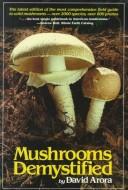
The definitive English-language mushroom reference — encyclopedic yet readable, with rigorous lookalike warnings throughout; best tackled after strong plant-foraging fundamentals are in place.

A compact, field-portable companion to Mushrooms Demystified that reinforces safe field identification habits and is designed to be used actively outdoors — cementing expert judgment through practice.
Discussion
Keep reading
Paths that share books, cover the same subject, or open a related topic.