Tom Wolfe in Order: The New Journalism First, Then the Novels
Wolfe invented a way of reporting — present tense, free indirect style, punctuation used like stage direction — and then spent thirty years writing novels in it. The novels make far more sense second, because the method was built for real people first. This path takes the reportage in the order it gets stranger, then the art and architecture polemics, then the fiction.
Start here: the New Journalism at full power
BeginnerSee what the method was invented to do, on a subject conventional reporting could not reach.
▸ Study plan for this stage
Pace: 6 weeks for about 850 pages. The Electric Kool-Aid Acid Test is 416 pages and takes three — the prose is doing so much work per sentence that a fast read turns into noise, so twenty pages a day suits it better than a binge. The Right Stuff is 436 and takes another three, though it will go faster bec
- Wolfe's core move is free indirect style applied to reporting. He writes from inside his subjects' heads — their vocabulary, their private nicknames, their contempt for outsiders — while never claiming to be one of them.
- The punctuation is a system, not an affectation. Ellipses hold a thought suspended, italics carry a word being said with a particular sneer, and repeated exclamation marks mark a collective mood rather than an author's excitement. Read them as stage directions.
- He never took the drug. The Electric Kool-Aid Acid Test reconstructs an interior state from tapes, letters, footage and interviews, and the fact that it was assembled from the outside is what makes it a journalistic achievement rather than a memoir.
- The bus trip, the Acid Tests and the phrase about being on the bus or off it are a group's self-mythology, and Wolfe reports the myth as the group's own operating reality rather than debunking it.
- The Right Stuff pulls the same technique onto a subject with real stakes and produces his best-built book. The argument — that courage in the test-pilot world is a status hierarchy with an unspoken entry test, and that the Mercury astronauts were slotted into a much older tradition — is genuinely pe
- The wives are given their own chapters in The Right Stuff, and that decision is what raises it above a hardware book. The domestic terror of the pilot's wife is treated as the same subject as the flying.
- Status is Wolfe's permanent subject. Every book on this path is finally about who is above whom and what everybody knows about it without saying it, and it is worth naming that now because it will not change.
- Where in The Electric Kool-Aid Acid Test can you find Wolfe's own judgement, and where can you not? What has he done to make his absence feel like a position rather than an evasion?
- The single-combat warrior idea structures The Right Stuff. State it in your own words and decide whether it is an insight or a conceit that has been made to fit.
- Pick a passage of The Right Stuff and identify whose vocabulary is being used. It is almost never Wolfe's; whose is it, and how did he get it?
- The Electric Kool-Aid Acid Test does not end in triumph. What does the last section think happened to the Pranksters, and is it a verdict?
- Both books are about elite groups with private languages. What does Wolfe do first when he arrives at one?
- Take one page of The Electric Kool-Aid Acid Test and rewrite it in flat wire-service prose. Then compare. This is the fastest way to see exactly what the punctuation is carrying, and nothing else demonstrates it as well.
- Mark every point-of-view shift in a single chapter of The Right Stuff. Wolfe moves between pilots, wives, engineers and press without any signalling device, and mapping one chapter shows you the machinery.
- Read the chapter on the wives in The Right Stuff, then read a contemporaneous magazine piece about the astronauts' families — the Life material is easy to find. The gap between the official version and Wolfe's is the book's whole justification.
- Keep a list of the coinages you meet across both books. Wolfe invents or popularises phrases at a rate that is itself a subject, and you will want the list when you reach the essays.
Next up: You have seen the technique used generously on people he admired; the short books turn the same instrument on people he did not.
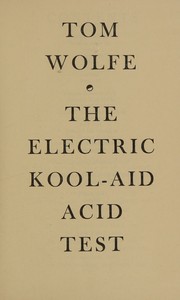
Wolfe rides with Ken Kesey and the Merry Pranksters and writes the prose from inside their heads rather than from the notebook. Still the best demonstration of what he was for.
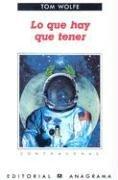
The Mercury astronauts and the test pilots before them, and the book where the pyrotechnics serve a genuinely moving argument about courage and its social organisation. His best book by most measures.
The short weapons
IntermediateRead the pieces where the same technique is turned into a scalpel.
▸ Study plan for this stage
Pace: 3 weeks for about 400 pages across three short books. Radical Chic and Mau-Mauing the Flak Catchers is 153 pages and is a week; The Painted Word is 121 and can be read in two evenings; From Bauhaus to Our House is 128 and the same. This stage is the lightest on the path in page count and the heavies
- Radical Chic reports a single fundraising party at a Manhattan apartment for the defence of Black Panther defendants, and Wolfe's method is to notice the catering and the servants. The essay's cruelty is in the specificity, not in the commentary.
- The essay made him permanent enemies among people who had previously enjoyed him, and it is the clearest case on the path of the technique being used as a weapon rather than a lens. Whether you think that is a betrayal of the method or its logical end is the argument to have.
- Mau-Mauing the Flak Catchers, bound with it here, is about the San Francisco poverty programme and the officials sent out to absorb anger on behalf of an institution. The phrase for those officials was Wolfe's coinage and it stuck.
- The Painted Word argues that modern art had become an illustration of critical theory — that the wall text now precedes and produces the painting. The critics he names were the reigning powers of the field and the essay is a direct assault on them.
- From Bauhaus to Our House runs the identical argument at modernist architecture: that a European workers'-housing aesthetic was adopted by American corporations and universities for reasons of prestige rather than use, and that nobody was allowed to say they disliked it.
- Both polemics are prosecutions. Wolfe is a superb prosecutor and not a disinterested one; he does not present the best version of the other side, and reading him as a settled verdict on twentieth-century art is a mistake he would not have discouraged.
- A catalogue note worth knowing: the record for Radical Chic and Mau-Mauing the Flak Catchers credits additional names alongside Wolfe. The pieces are his.
- In Radical Chic, what is the function of the food? Explain why the canapés carry more of the essay's argument than any of the reported speech.
- Wolfe reports the hosts' problem of which staff to hire for the evening. Is that detail evidence, or entrapment?
- The Painted Word claims the theory now precedes the object. Name one artwork you know and test the claim against it honestly.
- From Bauhaus to Our House says nobody was permitted to dislike the glass box. Who does Wolfe think enforced that, and by what mechanism?
- The same technique that made The Right Stuff generous makes Radical Chic merciless. What actually changed between them — the method, the subject, or Wolfe's position toward it?
- Read Radical Chic once for the argument and once counting only physical details of the apartment. The second pass is where the essay is built.
- Take the central claim of The Painted Word and try to falsify it with a specific work in a museum you can actually visit or look up. Wolfe's arguments are made to be tested against objects, and reading them without testing is doing him a favour he does not deserve.
- Find the building nearest you that fits Wolfe's description in From Bauhaus to Our House and stand in front of it with his account in mind. Decide whether the complaint survives contact.
- Keep a note of every group Wolfe names and mocks across these three books, and mark which ones had the power to answer back. It is the fairest measure of whether he punched in a consistent direction.
- Add the coinages from these essays to the list you started in stage one. Two of them entered general English, which is a claim about influence that can be checked rather than asserted.
Next up: You now know exactly what the method is and what it is for, which is the only position from which the question the novels raise — whether it survives being applied to invented people — can actually be judged.
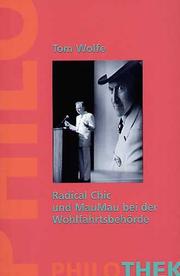
The Bernstein fundraiser for the Black Panthers, reported with a cruelty that made Wolfe permanent enemies. The record bundles it with Mau-Mauing the Flak Catchers and credits extra names; the piece is Wolfe's.
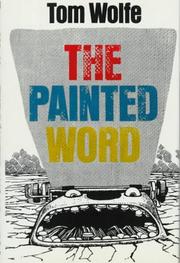
A short polemic arguing that modern art had become illustrations of critical theory. Art critics were furious and the argument has never quite gone away.
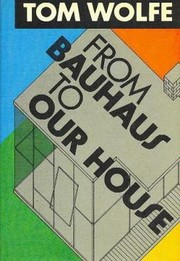
The same attack aimed at modernist architecture. Take both as arguments to test rather than conclusions — Wolfe is a brilliant prosecutor and not a disinterested one.
The novels
IntermediateWatch the reporter's method applied to invented people, and judge whether it survives the move.
▸ Study plan for this stage
Pace: 9 to 10 weeks for roughly 1,450 pages. The Bonfire of the Vanities is 690 pages and takes about four and a half — it is fast for its length because it is plotted like a thriller and cuts between storylines constantly. A Man in Full is 752 and takes five, and it genuinely sags in the middle, so about
- The Bonfire of the Vanities takes a bond trader, a Bronx courthouse, a drunken British reporter and a church-based political operator and runs them into each other. The structure is city-wide by design — nobody is the protagonist for long.
- Every technique in it has a source you have already read. The interior monologue in the courthouse chapters is the Right Stuff pilots' vocabulary transplanted; the party scenes are Radical Chic with the names invented.
- It was written for serial publication first and then substantially rewritten as a book, which is why it moves like a magazine and why some characters are stronger as types than as people.
- Wolfe's claim, made loudly after the novel's success, was that American fiction had abandoned social realism and that a reporter's methods could reclaim it. The novels are the demonstration attached to that claim.
- A Man in Full moves to Atlanta and adds race, real estate debt and a genuine philosophical strand — a warehouse worker's encounter with Stoicism, which is an odd and sincere thing to find in a Wolfe novel and is the part the parodies never mention.
- The novel provoked a public quarrel with Updike, Mailer and Irving about whether journalism-derived fiction is fiction at all. The dispute is more interesting than the winner, and both sides are arguing about something real.
- The honest test at the end of this path is whether Wolfe's people think. His reported subjects had interiors he could document; his invented ones have interiors he has to supply, and that is exactly where the argument about him lives.
- Sherman McCoy's wrong turn is the engine of Bonfire. How much of what follows is caused by him, and how much by institutions that would have produced the same outcome regardless?
- Peter Fallow is a journalist rendered with contempt by a journalist. What is Wolfe saying about his own trade?
- Pick a Bonfire set piece and name the piece of reportage it descends from. Then decide whether the invented version is better or worse than its source.
- The Stoic strand in A Man in Full is either the book's saving grace or a bolt-on. Argue both, then commit.
- Updike and Mailer said the method cannot produce real fiction. On the evidence of these two novels, what exactly is it good at and what is it bad at?
- Both novels are about a powerful man losing his position. Is Wolfe on his side?
- Keep a character sheet for Bonfire from the first chapter. Four separate worlds are running by page eighty and the novel does not pause to reintroduce anyone.
- Reread the Radical Chic party after finishing Bonfire's social set pieces, and mark the sentences that could have appeared in either. The continuity is the strongest single piece of evidence about how he worked.
- Track how often A Man in Full leaves Atlanta for the Oakland storyline and what its pacing does at each switch. This is where the book's structural problem is, and locating it precisely is more useful than a general complaint.
- Find the passages in each novel where a character's status anxiety is stated directly rather than dramatised. Compare the count with The Right Stuff, where he almost never had to state it.
- Finish by writing your own two-book recommendation for a reader who has time for exactly two Wolfes. Choosing between the reportage and the novels — and defending the choice — is the argument this whole path was built to let you have.
Next up: This is the end of the path — you have the method at its origin, at its sharpest, and at full length in fiction, and you can answer the question about it for yourself.
1980s New York — bond trading, the Bronx courts, the tabloid press — and the novel that made him a phenomenon. Read it after the reportage and you can see exactly which technique came from where.

Atlanta, real estate and race, and the novel that provoked a public argument with Updike, Mailer and Irving about whether Wolfe's journalism-derived method could produce real fiction. That dispute is worth knowing about; the path does not settle it.
Discussion
Keep reading
Paths that share books, cover the same subject, or open a related topic.