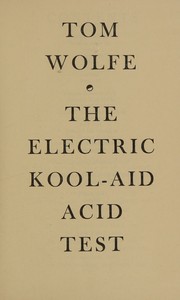
Start with The Right Stuff. The obvious alternative is The Electric Kool-Aid Acid Test, which is the more famous book and the one anthologised in every course on the 1960s — but it is also Wolfe at his most stylistically extreme, a sustained immersion in Ken Kesey's Merry Pranksters written in prose that imitates the experience it describes. If that is your first Wolfe, you learn what his mannerisms sound like before you learn what they are for. The Right Stuff is the disciplined version: the Mercury astronauts and the test pilots at Edwards, a straightforward story superbly told, using exactly the same techniques with the volume turned down.
Once you have read it, go back to The Electric Kool-Aid Acid Test and the difference between the two is the whole argument of his career.
The argument that connects everything
Wolfe's claim, made most directly in his 1973 anthology The New Journalism, which is not in our catalogue, was that reporters had left the novelist's best tools lying on the ground. He named four: build the piece scene by scene rather than in summary; record dialogue in full; move into a real person's point of view rather than staying outside it; and catalogue what he called status details — the furniture, brands, gestures and manners by which people signal position. Nothing in that list is invented; it is all reported. But applied together it produces prose that reads like fiction.
Hold that in mind and the second half of his career stops looking like a swerve. In 1989 he published an essay arguing that American novelists had retreated into interiority and abandoned the whole social landscape to journalists, and that somebody should go and report a novel the way you would report a magazine piece. The novels are the demonstration.
The reportage, in order
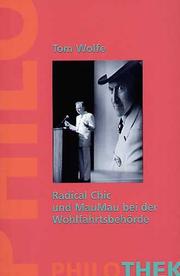
After the two above, read Radical Chic and Mau-Mauing the Flak Catchers. Our record is a single volume bundling two separate pieces: the first is the account of a 1970 fundraising party for the Black Panthers at Leonard Bernstein's apartment, the second is about poverty-programme confrontations in San Francisco. Both are savage, both were contested at the time, and the first is the piece that put a phrase into the language. It is short — an afternoon.
His first two collections, The Kandy-Kolored Tangerine-Flake Streamline Baby and The Pump House Gang, are not in our catalogue. They are where the style was invented, and worth finding, but they are not the best place to begin.
The two polemics
The painted word and From Bauhaus to our house are short, funny attacks on modern art and modern architecture respectively, arguing in both cases that theory had swallowed the work and the public had been shut out. Read them for the prose and for the pleasure of watching someone go after a consensus. Read them also knowing that art historians and architectural critics disputed his history at the time and largely still do; they are polemics, not surveys, and they are better company than authority.
The novels
The Bonfire of the Vanities is the novel the New Journalism argument was pointing at all along — a bond trader, a wrong turn in the Bronx, and a city's racial and legal machinery grinding around one accident. It was reported like a magazine piece and it holds up as a portrait of 1980s New York.
A Man in Full moved the same method to Atlanta: real estate, race, football, and a subplot about Stoicism that lands better than it sounds. It divided people sharply on publication, and the argument it started with Norman Mailer, John Updike and John Irving over whether reported social realism counted as literature is now more famous than the reviews were. His later novels, I Am Charlotte Simmons and Back to Blood, are not in our catalogue and are generally reckoned the weakest.
Where to stop
Stop after The Bonfire of the Vanities and you will have the reporter, the polemicist and the novelist, which is the whole writer. A Man in Full is for readers who want to see whether the method scaled. Very few people need to go further.
Follow the full ordered path here: Tom Wolfe in Order: The New Journalism First, Then the Novels.