Abstract Expressionism: The Best Books to Read, in Order
Abstract Expressionism is the moment American painting stopped answering to Paris, and the moment art criticism became as loud as the art. This path starts with picture books that put the canvases in front of you, moves through the standard narrative histories written by people who were in the room, then spends the middle of the path on the painters themselves, before ending with the critics, the Cold War politics and the arguments about what the movement actually meant.
See the paintings first
BeginnerRecognise the major figures and the visual difference between gesture painting and colour field, and know roughly what happened between 1943 and 1960
▸ Study plan for this stage
Pace: 1-2 weeks, and most of it spent looking rather than reading. Hess's Taschen volume is 96 large-format pages of plates with short texts and can be done in two sittings; Anfam's World of Art survey is 216 small-format pages of sustained argument and wants about a week at 30-40 pages a day. Read both w
- Gesture painting versus colour field, and why the split is a real difference in how the picture is made rather than a critic's convenience
- All-over composition and the collapse of figure and ground that Pollock's poured canvases force
- Scale as a decision: canvases sized to a standing body, not to a wall above a sofa
- The 1943-1960 spine Anfam builds - Art of This Century, the 1948-50 breakthrough years, the 1951 Ninth Street Show, Pollock's death in 1956
- The first-generation cast: Pollock, de Kooning, Rothko, Newman, Still, Kline, Motherwell, Krasner
- Anfam's organising claim that Abstract Expressionism has a development, where Hess's Taschen format presents it as a set of individual careers
- What visually separates a Rothko from a Newman, and both from a Kline, in under a minute of looking?
- What did Pollock's technique change about where a painting is physically made, and about where the viewer has to stand?
- Why does Anfam arrange the material as a development while Hess arranges it one painter per chapter, and what does each arrangement hide?
- Which artists get substantial space in Anfam but little or none in Hess, and what does that omission suggest about who the canon includes?
- What actually happened between 1943 and 1960 - name five events in order without checking?
- Work through Hess one painter per session: before reading the chapter, write two sentences describing the plate in front of you, then read and note everything you failed to see.
- Assemble a twenty-image chronology of 1943-1960 from the MoMA and Whitney online collections, sort it by eye into date order before reading the labels, then check yourself and record which decade-level mistakes you made.
- Look up the actual dimensions of Pollock's Autumn Rhythm and Rothko's No. 61 (Rust and Blue), mark those measurements out on a wall with tape, and stand at the distance the canvas implies.
- Keep a glossary of Anfam's working vocabulary - all-over, field, biomorphic, gesture, the sublime - with one specific named painting attached to each term as your example.
Next up: Once you can tell the painters apart on sight and place them roughly in time, you can read the narrative histories as arguments about a movement you already recognise rather than as introductions to it.

The Taschen Basic Art volume: cheap, heavily illustrated, one painter per short chapter. Read it first because everything later in this path assumes you can already picture a Pollock drip, a Rothko rectangle and a de Kooning Woman.
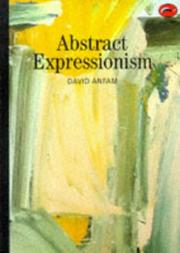
Anfam's Thames and Hudson World of Art survey is the compact scholarly counterpart to Hess: same territory, but organised as an argument about how the style developed rather than as a catalogue. Anfam is the movement's leading modern authority, so this is the frame the rest of the reading fits into.
The standard histories
IntermediateFollow the movement's development as its first historians told it, and notice how much of the received story was written by people personally close to the painters
▸ Study plan for this stage
Pace: 5-6 weeks. Sandler's The Triumph of American Painting is 300 readable pages and takes about ten days; Seitz's Abstract Expressionist Painting in America is 490 pages of a 1955 doctoral thesis and reads like one, so allow three weeks at 20-25 pages a day; Ashton's Life and Times of the New York Schoo
- The insider problem: Sandler, Seitz and Ashton all knew the artists, and the received history of the movement is largely their account of it
- Sandler's triumphalist frame - American painting inheriting the modernist line from Paris - and why the title itself is a claim
- Seitz's value as near-primary evidence: written in 1955 while the work was being made, published only decades later
- Ashton's widening of the subject from paintings to a downtown milieu - the Cedar Tavern, the Club, Eighth Street, the artists' co-op galleries
- The stock narrative shape (Surrealist emigres, automatism, the breakthrough, the triumph) and where each author places its turning point
- How the movement's own participants supplied the terms critics later used to describe them
- What does Sandler mean by triumph, over whom, and what evidence does he offer that the triumph occurred?
- What does Seitz, writing in 1955, treat as central that Sandler in 1970 treats as marginal, and vice versa?
- How does Ashton's account change the causal story when the unit of analysis becomes a downtown culture rather than a set of studios?
- Where does each of the three place the movement's decisive moment, and what is at stake in choosing 1943, 1947 or 1951?
- Which artists are consistently central across all three books, and which drift in and out depending on the author's own acquaintances?
- Build a single timeline in one document from all three books, colour-coding events by which author asserts them; the entries that only one book carries are your list of contested facts.
- Take one painting discussed by all three - Pollock's One: Number 31, 1950 is the easiest - and transcribe what each author says about it side by side, then say which account you find best supported.
- For each author, write down how they knew the artists (Sandler as a young critic and Club regular, Seitz as a scholar working on the doctorate, Ashton as a New York Times critic) and mark two passages where that proximity is clearly shaping the judgement.
- Read Seitz's 1955 chapter on Pollock and then Sandler's, and write a paragraph on what the fifteen intervening years and Pollock's death did to the tone.
Next up: Having the received story in your hands, in the voices of the people who wrote it, is what makes the biographies in the next stage readable as corrections rather than as gossip.

Still the foundational narrative history of Abstract Expressionism, written by a critic who knew the artists. Read it after the surveys because Sandler assumes you can already tell the painters apart, and read it critically, since its confident title is exactly the claim later books in this path contest.
Written in 1955 as the first serious academic study of the movement while it was still happening, and only published decades later. It is the closest thing to a primary source with footnotes, and it shows what the paintings looked like before the mythology settled.

Catalogued under its British title, Life and Times of the New York School; in the United States the same book is The New York School: A Cultural Reckoning. Ashton widens the lens from paintings to the whole downtown culture that produced them, which sets up the group biography in the next stage.
The painters
IntermediateKnow the individual careers well enough to see where the group narrative flattens real differences, and to see what the standard story left out
▸ Study plan for this stage
Pace: 4-6 months, and be honest with yourself about it: this stage is roughly 3,900 pages of biography. Gabriel's Ninth Street Women is 927 pages, Naifeh and Smith's Jackson Pollock 934, Stevens and Swan's De Kooning 752, Breslin's Mark Rothko 700, Levin's Lee Krasner 592. These are narrative prose and re
- What group narrative flattens: five careers with different training, different politics and completely different working methods
- Gabriel's central case that Krasner, Elaine de Kooning, Hartigan, Mitchell and Frankenthaler were participants the movement's own mythology wrote out
- Pollock's technique reconstructed from the inside - the Springs studio floor, the drip years 1947-50, and the return to the figure afterwards
- De Kooning as the counter-case: a painter who never abandoned the figure and who worked on for thirty years after the movement ended
- Rothko's shift from myth-and-symbol figuration to the mature rectangles, and Breslin's care about the gap between the man and the sacral aura the paintings acquired
- Krasner as the test case for Gabriel's thesis - serious painter and manager of the Pollock estate, and how those two roles interfered with each other
- Biography's specific danger in art history: the life supplying an explanation the paintings do not require
- What specifically did the standard histories in the previous stage leave out, and does Gabriel establish that it was an omission rather than a judgement?
- How did Pollock actually work in 1947-50, and what does Naifeh and Smith's evidence show about how much of it was controlled?
- Why does de Kooning's refusal to give up the figure matter for any general account of what Abstract Expressionism was?
- Where does Breslin resist the temptation to read Rothko's suicide backwards into the late paintings, and where does he give in to it?
- What did Krasner's management of the Pollock estate do to her own reputation as a painter, in Levin's account?
- Which of these five biographies changes your reading of a specific painting, and which only changes your reading of a person?
- Keep one running log across the whole stage on a single contested claim - that Pollock's drip paintings were controlled rather than accidental - recording every piece of evidence each biographer offers for or against, with page numbers.
- After Ninth Street Women, go back to Sandler and Seitz and count the pages given to Krasner, Hartigan, Mitchell and Frankenthaler in each; write down the numbers, because the argument is quantitative before it is interpretive.
- Find images of Krasner's Little Image paintings and Pollock's work of the same years side by side, and write 300 words on who is doing what to whom - then check your reading against Levin's.
- Take de Kooning's Woman I and Rothko's Chapel paintings and write a paragraph on each explaining what the biography tells you that the picture cannot, and what the picture tells you that the biography gets wrong.
- Build a single chronology 1940-1960 with all five lives in parallel columns; the years where all five intersect are the years the group narrative is actually describing.
Next up: Knowing the individual careers in detail is what lets you see the critics of the next stage not as commentators on a movement but as participants building one.

The book that restores Lee Krasner, Elaine de Kooning, Grace Hartigan, Joan Mitchell and Helen Frankenthaler to a story their own participants mythologised as male. Read it after the standard histories so you can feel exactly what those histories omitted.
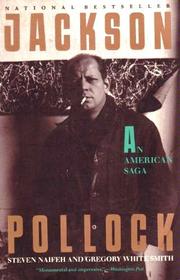
The Pulitzer-winning biography, exhaustive on Pollock's family, drinking and breakdown as well as the drip technique. Long, and best read once you already know why Pollock matters rather than as an introduction to him.

The companion Pulitzer winner, and the counterweight to Pollock: a painter who never abandoned the figure and who outlived the movement by thirty years. Together the two biographies define the poles the movement was argued between.
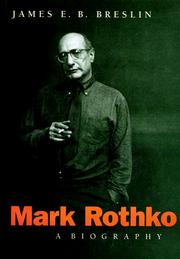
The standard life of Rothko, careful about the gap between the man and the sacral aura the paintings acquired. Placed here because colour field only makes sense against the gestural painting of the previous two books.

Krasner is the test case for everything Ninth Street Women argues, since she was both a serious painter and the person who managed Pollock's estate. Read it last in this stage as the bridge into the critical arguments that follow.
Critics, politics and the argument
IntermediateReconstruct the critical apparatus that made the movement famous, and evaluate the revisionist case that its global success was partly a Cold War export
▸ Study plan for this stage
Pace: 6-8 weeks, and the reading here is dense rather than long. Greenberg's Art and Culture is 278 pages of essays best taken two or three at a sitting over two weeks; Ross's Abstract Expressionism: Creators and Critics is a 288-page anthology to work through selectively over two weeks; Wolfe's The Paint
- Greenberg's formalist argument: medium specificity, flatness, and the claim that painting's history is the progressive elimination of what is not painting
- Rosenberg's rival action-painting account of the canvas as an arena, and the different kind of value it assigns
- Criticism as constitutive rather than descriptive - the critics did not report the movement, they helped define what counted as being in it
- Wolfe's polemic that painting became an illustration of theory, and the precise sense in which it is entertainment rather than scholarship
- Guilbaut's revisionist thesis: Abstract Expressionism as Cold War cultural capital, exported as evidence of American freedom
- The difference between showing that an institution promoted the work and showing that the promotion explains the work's character
- How the artists' own statements in the Ross anthology resist both the critics and the later politics
- State Greenberg's case for flatness in your own words, then name the painting in this path that fits it worst.
- Where do Greenberg and Rosenberg actually disagree, and where are they describing the same paintings with different vocabulary?
- What in The Painted Word is a fair hit, and where does Wolfe substitute a joke for an argument?
- What evidence does Guilbaut produce, and does it establish that the Cold War promotion shaped the painting, or only that it shaped the reception?
- After reading the artists' own statements in Ross's anthology, whose account of the work - Greenberg's, Rosenberg's, or the painters' - holds up best?
- Read Greenberg's Modernist Painting and Avant-Garde and Kitsch and apply his criteria literally to five paintings you can pull up online; write down which ones fail his test and what that failure says about the theory.
- Take one artist statement from Ross's anthology and one Greenberg essay on the same artist, and write a page on the gap between how the painter describes the work and how the critic uses it.
- Read The Painted Word in one sitting and list every claim Wolfe makes that Guilbaut later supports with archives, and every one he makes that nobody has ever supported.
- Track Guilbaut's evidence for a single episode - the touring exhibitions and the institutional funding behind them - and write 500 words assessing whether the documentation carries the thesis.
- Return to the Hess or Anfam plates from stage one and re-caption ten paintings, once in Greenberg's terms, once in Guilbaut's; the captions that resist both are the ones the path has taught you the most about.
Next up: You end the path able to argue about Abstract Expressionism on all three of its levels at once - the paintings, the people and the politics - which is exactly the position from which the postwar art that followed becomes readable.
The essays that built the case for flatness, medium specificity and Pollock's importance, by the critic who did more than anyone to make the movement matter. Read the primary criticism before reading anyone's account of it.

An anthology putting the artists' own statements alongside Greenberg, Rosenberg and their rivals, so you can see the critical fight as it was actually conducted. It is the natural follow-on once you have read Greenberg straight.
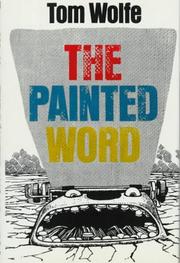
Wolfe's short, hostile, very funny polemic that modern painting had become an illustration of critical theory. It is not scholarship and should not be read as such, but it is the sharpest statement of the case against the critics you just read.

The revisionist classic: Abstract Expressionism as cultural capital in the early Cold War, promoted abroad as evidence of American freedom. Last in the path because the argument only bites once you know the paintings, the painters and the criticism it reinterprets.
Discussion
Keep reading
Paths that share books, cover the same subject, or open a related topic.