Two facts about the cigarette are connected. It is the most lethal consumer product ever manufactured, and it is the best-documented corporate deception in history — documented because the industry lost its lawsuits, and losing meant surrendering tens of millions of pages of internal memoranda that are now a public, searchable archive held at the University of California, San Francisco.
That changes what kind of reading this is. Most business history rests on interviews and inference. Here the central books quote the companies' own scientists telling their own executives what they knew about carcinogenicity and about nicotine's addictiveness, and when. The deception is on the record, not alleged, and the books that work directly from that record — Glantz, Proctor, Hilts and Orey — are the ones to weight most heavily. This is a history of an industry and a campaign against it, not a programme for quitting.
How tobacco became a global habit
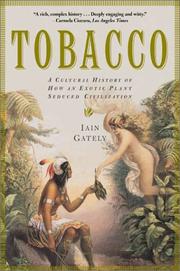
Tobacco is Iain Gately's broad narrative: a Mesoamerican ritual plant, European adoption, the colonial economies it built, and its spread worldwide. It makes the plant strange again before the modern argument starts. Smoke is a many-handed, heavily illustrated global cultural history that supplies the comparative frame Gately's Anglophone story lacks.
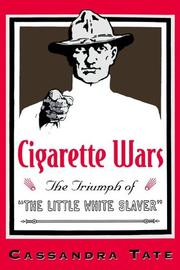
Cigarette Wars is the surprise of the stage. Cassandra Tate reconstructs the American anti-cigarette movement of roughly 1880 to 1930, which banned cigarettes in fifteen states on moral rather than medical grounds and then collapsed. The lesson is uncomfortable for the rest of the path: opposition to smoking long predated the evidence, and having the evidence is not what made the later campaign work.
The century of the cigarette
The Cigarette Century is the best single history of the subject, and the spine of this path — a medical historian on how the cigarette was manufactured into a mass product, how the science against it accumulated, and how the industry fought it in public relations, in Congress and in court. Ashes to ashes is the Pulitzer-winning corporate and legal history, longer and more granular on the companies and the litigation. Both are long and they overlap; if you read only one, read Brandt. Kluger was published in 1996, at the moment the industry's position finally broke, which is worth holding in mind as you read his ending.
The documents
The cigarette papers is where the archive begins. It is the analysis of the Brown and Williamson papers delivered anonymously to Stanton Glantz in 1994, showing that company's own research on addiction and disease. Start the stage here; everything after it depends on what this book opened.
Golden Holocaust is the most thorough scholarly use of the full document set released by the Master Settlement Agreement, and it is the book that reconstructs the deliberate manufacture of scientific doubt as a strategy. Robert Proctor argues for abolition of the cigarette, which is a position rather than a finding — the documentary chapters are the reason to read him. Smokescreen is a reporter's account of the same revelations as they broke, including the manipulation of nicotine delivery and the 1994 congressional hearings; our record for it carries no ISBN, so expect a used copy. Assuming the risk supplies the mechanism by which all of this became public: the Mississippi litigation, and the lawyers who finally found a theory that worked against an industry that had never lost a case.
Manufactured doubt as a template
The tobacco playbook — fund contrarian research, demand impossible certainty, frame regulation as an assault on freedom — was subsequently applied to lead, asbestos, industrial chemicals and climate. Cancer Wars comes first: Proctor's earlier book on how political and commercial interests shaped what got studied and what got called a carcinogen, which establishes that the contest was over the research agenda itself.
Doubt is their product is written by an epidemiologist who ran a United States regulatory agency, on the product-defence industry that grew out of tobacco's methods and now works for hire. It is the most operational account of the technique. Merchants of Doubt is the best-known statement of the thesis, tracing a small group of scientists from tobacco through acid rain and ozone to climate change; it has drawn methodological criticism for how tightly it draws those links, so read it last. State the limit honestly: the tobacco lineage is real and documented in specific cases, and it is also invoked loosely as a rhetorical move, and telling those apart is the point of the stage.
The counter-reading
Cigarettes are sublime is a literary critic's argument that the cigarette's appeal is aesthetic — that it belongs to the sublime rather than the merely pleasant, which is why health information never touched it. It is a deliberate provocation written against the grain of the field, and the most interesting objection to everything above. Nicotine is a memoir of a lifetime's smoking and of quitting, with no polemical purpose at all, and it answers Klein's question from the inside. Neither book disputes the medical evidence.
The stage goals, the schedule and the full ordering are at /paths/pt_ai_tobacco-and-the-fight-against-smoking.