The Spanish-American War: books to read, in order
The fighting lasted about ten weeks in 1898 and the consequences have not finished yet: the United States ended the year holding Cuba, Puerto Rico, Guam and the Philippines, and holding an argument about whether a republic could own colonies. The war is easy to read badly, because the two most available versions of it are both distortions — the American adventure story of the Maine, the yellow press and San Juan Hill, and the flat anti-imperialist reading in which nothing happened before Washington decided it should. This path takes the campaign narrative first, then hands the war to Louis Perez, who reconstructs the Cuban revolution that had been fighting Spain for three years before the United States arrived and that the American account writes out. Only then does it go to the press, the personalities and the fleet actions, and it finishes with the imperial question the war left open.
The War Itself
BeginnerEstablish the chronology and the theatres. By the end you should be able to explain the sequence from the Cuban insurgency through the Maine, the declaration, Manila Bay, the Santiago campaign and the Treaty of Paris, and name what the United States acquired.
▸ Study plan for this stage
Pace: Two books, 1,105 pages, and they are very unevenly weighted. Ivan Musicant's Empire by default is 740 pages — the long, complete single-volume narrative covering both oceans and the diplomacy around them, and the reason you will not have to re-learn the basics later. David Traxel's 1898 is 365 pages
- The Cuban insurgency already under way before any American involvement
- The destruction of the Maine and the inquiry that followed it
- The yellow press and the circulation war, as a force acting on policy rather than as the cause of it
- Manila Bay: a Pacific action fought over a war declared about the Caribbean
- The Santiago campaign and the naval battle that ended Spanish resistance in Cuba
- The Teller Amendment and what it promised about Cuba
- The Treaty of Paris and the four acquisitions: Cuba's status, Puerto Rico, Guam, the Philippines
- 1898 as a year of domestic argument about national identity, not only of foreign war
- Lay out the sequence from the Cuban insurgency to the Treaty of Paris and name the decision points.
- What did the inquiries conclude about the Maine, and what did the public take from them?
- Why was Manila Bay fought at all, given what the war was declared over?
- What exactly did the United States acquire, and what different legal status did each acquisition have?
- Traxel writes about the year rather than the war. Which of his non-military threads most changes how you read the war?
- Build a single timeline from Musicant with two columns, Caribbean and Pacific, and mark the points where a decision in one theatre was driven by the other.
- Count the pages Musicant gives to the ten weeks of fighting against the pages he gives to everything else, then write a sentence explaining the ratio.
- From Traxel, list five things happening in America in 1898 that had nothing to do with Spain, and for each say whether it made war more or less likely.
- Write out what you believe about the Maine before reading further. You will test it against Michael Blow's book in a later stage.
Next up: You now hold the standard American chronology in full, which is the necessary condition for the next stage, whose entire argument is about what that chronology leaves out.
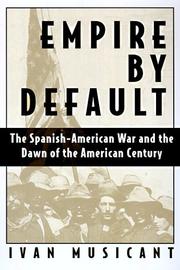
The most complete single-volume narrative of the war and the standard place to start. It covers both oceans and the diplomacy around them, and it is detailed enough that you will not need to re-read the basics later.
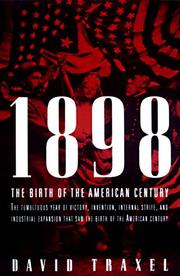
The year rather than the war: labour unrest, Klondike gold, the new mass press, Americans arguing about what kind of country they were becoming. Read it second, because the war makes far more sense as one event in that year than as a self-contained story.
The Cuban War the American Story Omits
IntermediateRecover the three-year Cuban war of independence that preceded American intervention, and understand the historiographical case that calling this 'the Spanish-American War' is itself an argument. You should be able to explain what the Cuban Liberation Army had achieved by 1898 and how the Treaty of Paris excluded it.
▸ Study plan for this stage
Pace: Two books by Louis A. Pérez, 534 pages between them, and the shorter is the more important. The war of 1898 is 182 pages and is the pivot of this whole path — a compact, argumentative book showing how American historians constructed a version of 1898 in which Cubans are absent or incapable, then rea
- The Cuban war of independence as a three-year conflict with its own leadership, strategy and casualties
- What the Cuban Liberation Army had achieved before American intervention
- The naming problem — that calling it 'the Spanish-American War' is itself a historiographical argument
- Intervention framed as rescue, and what that framing required historians to leave out
- The exclusion of Cuban representatives from the Treaty of Paris negotiations
- Metaphor as policy: Cuba figured as child, woman or fruit, and what each image licenses
- Reconcentration under Weyler, and the humanitarian case as it was actually used
- How a national historiography gets built, and what it takes to read against one
- What had the Cuban Liberation Army accomplished by 1898, and on what evidence does Pérez rest the claim?
- How were Cubans excluded from the Treaty of Paris, and what was the stated justification?
- State the argument implicit in the name 'the Spanish-American War'. What would each alternative name assert?
- Which specific metaphors does Pérez identify, and what did each one make thinkable?
- Go back to your stage-one timeline: what does it say about Cubans, and what does that omission do to the story?
- Re-read your own timeline from stage one and mark every entry in which a Cuban actor appears. Then add the Cuban events Pérez supplies and look at the shape of the two rows.
- Take one passage in Musicant describing the Cuban insurgents and set it beside Pérez's treatment of the same episode. Note the adjectives in each.
- Find three of the metaphors catalogued in Cuba in the American Imagination in the primary material you have already met — Roosevelt, the press, congressional debate — and copy each out with its source.
- Write a one-paragraph account of 1898 in which the Cuban revolution is the main subject and the American intervention is an event within it. Notice what you have to move.
Next up: Having seen how the story was constructed, you are in a position to go back to the men and the newspapers who built it, which is what the next stage puts in front of you.
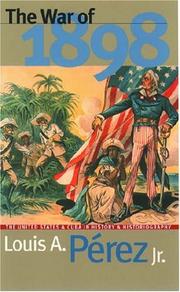
The pivot of this path. Perez shows how American historians constructed a version of 1898 in which Cubans are absent or incapable, and then reads the sources against it. Short, argumentative and the single most useful book here.

The companion volume, on the metaphors — Cuba as a child, a woman, a ripening fruit — that made intervention feel natural to Americans. Read after the first Perez; it explains where the omissions in stage one came from.
The Press, the Personalities and the Fleet
IntermediateUnderstand how the war was sold and who wanted it, and get the naval actions right, since Manila Bay and Santiago decided the war far more than any land engagement did.
▸ Study plan for this stage
Pace: Four books, 1,427 pages, and two of them share a title, so keep the authors attached. Evan Thomas's The war lovers is 476 pages, a group portrait of Roosevelt, Hearst and Henry Cabot Lodge set against William James arguing the other way; it is the most enjoyable book on this path and the best cure f
- The identifiable individuals who agitated for war, against the abstraction of 'public opinion'
- William James and the intellectual opposition, present from the beginning rather than after the fact
- The Hearst-Pulitzer circulation war as a commercial contest with foreign-policy consequences
- What correspondents actually filed, and the difference between invention, exaggeration and selection
- Roosevelt's account as self-authored reputation, written by a participant with a career in front of him
- Kettle Hill and San Juan Hill, and how the popular version of the charge was assembled
- The volunteer regiment as a social object — who joined the Rough Riders and why
- Naval power as the decisive factor in a war remembered for a cavalry charge
- Who, specifically, wanted this war, and what did each of them want it for?
- How much did the yellow press invent, on Milton's evidence, and how much did it merely amplify?
- Where does Roosevelt's own account differ from Gardner's reconstruction, and which differences are self-serving rather than mistaken?
- Thomas sets William James against Roosevelt. Is that a fair pairing, or a device?
- Why is a war decided at Manila Bay and Santiago remembered for a hill in Cuba?
- Read Roosevelt's account of the charge, then Gardner's, and write two columns: what both say, and what only Roosevelt says.
- Pick one dispatch discussed in Milton and trace it to how the same event appears in Musicant. Record what survived into the standard narrative.
- List the men in Thomas's group portrait with one sentence each on their motive. Then ask which of those motives the press could have created and which it merely served.
- Using Gardner, name five members of the regiment other than Roosevelt and what became of them.
- Set the Rough Riders material against Pérez: what were Cuban forces doing during the Santiago campaign, and how does either book on the regiment account for them?
Next up: With the myth and its makers separated out, the next stage supplies the operational record against which any of these claims can actually be checked.
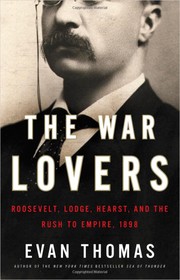
Roosevelt, Hearst and Henry Cabot Lodge as a group portrait of the men who agitated for war, set against William James arguing the other way. The most enjoyable book on the list and a good check on treating 'the yellow press' as a faceless force.

The correspondents themselves — what they actually filed, how much they invented, and how the Hearst-Pulitzer circulation war shaped coverage. Placed after Thomas so you can test his portrait against the reporting.
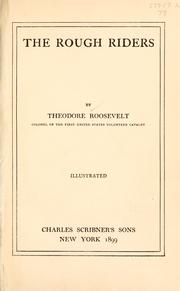
Roosevelt's own account, written immediately afterwards and the foundation of the popular memory of the war. Read it as a primary source on how the war was mythologised, not as a record of what happened on Kettle Hill.

The modern corrective, reconstructing the regiment from the letters and diaries of men other than its most famous member. Reading it directly after Roosevelt is the point.
Naval and Military Detail
IntermediateWork through the operational record, which is where most popular accounts are weakest, and be able to explain why the Spanish squadrons were destroyed so completely and how badly the American army performed logistically.
▸ Study plan for this stage
Pace: Three books, 1,519 pages, and they are three different kinds of source. David F. Trask's The war with Spain in 1898 is 654 pages and is the slow one by a distance — the scholarly operational standard, covering strategy, planning and command on both sides, considerably more precise than Musicant and
- Why the Spanish squadrons were destroyed so completely — gunnery, materiel and the condition of the ships
- American logistical failure at Tampa and in Cuba, and the death rate from disease that followed
- Command and planning on both sides, which is where the popular accounts are weakest
- A senior participant writing his own campaign, and what such testimony can and cannot establish
- The successive Maine inquiries and how their conclusions differ from one another
- The modern engineering assessments and the case against the external mine
- Naval strategy in two oceans conducted with no reliable communications between them
- The gap between operational competence and the war's outcome
- Why did the Spanish squadrons lose as totally as they did? Give material reasons, not moral ones.
- How badly did the American army perform logistically, and what did the failures cost in lives?
- Where does Wheeler's account of Santiago serve Wheeler, and how can you tell?
- Summarise the successive findings on the Maine and say which question each inquiry was actually able to answer.
- Having read Trask, name three things the narrative accounts in stage one left vague that now have precise answers.
- Did American strategy win this war, or did Spanish weakness lose it? Argue from Trask.
- Read Trask's account of Santiago with Wheeler's open beside it and mark every point where the participant and the historian diverge.
- Tabulate American deaths by cause from Trask and Blow. Set the battle figure against the disease figure and write one sentence on what the war was actually like.
- Follow the Maine through Blow's three phases — construction, explosion, inquiry — and write down at each stage what was believed and on what evidence.
- Take one naval engagement and reconstruct the movements from Trask on a chart, then check the popular version in Musicant against it.
- Return to what you wrote about the Maine at the end of stage one and revise it in light of Blow, keeping both versions.
Next up: The operational record settles what happened; the last stage takes up the question the war left open, which no amount of operational detail can answer.
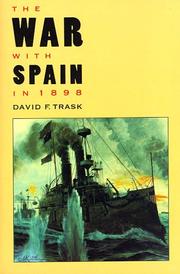
The scholarly operational standard, covering strategy, planning and command on both sides. Slower going than Musicant and considerably more precise; use it to check anything the narratives leave vague.

A participant's account of the decisive land campaign by one of its senior commanders, a former Confederate general. The catalogue record carries the date, 1898. Valuable as testimony and unreliable as analysis, which is exactly how to read it.
The Maine from construction to explosion to the successive inquiries, including the modern engineering assessments that undercut the mine theory. The clearest treatment of the incident the war is named for in the popular memory.
What the War Started
IntermediateTake up the imperial question directly and be able to state the anti-imperialist case and the reply to it, and trace the line from 1898 to the American overseas territories that still exist.
▸ Study plan for this stage
Pace: Two books, 631 pages, and the stage is the shortest on the path. Stephen Kinzer's The true flag is 321 pages and stages the debate over empire as the argument it was, with Roosevelt and Lodge on one side and Mark Twain and Carl Schurz on the other; it is the accessible route in and the natural bridg
- The constitutional question: whether a republic could govern territory it would never admit as states
- The Anti-Imperialist League, who joined it and what they actually argued
- Anti-imperialism on racial grounds, and why opposition to empire was not the same as opposition to hierarchy
- The imperialist case as its advocates made it — duty, markets, coaling stations, competition with other powers
- The Insular Cases and the invention of unincorporated territory
- The line from 1898 to the American overseas territories that still exist
- The Philippines as the point where the argument stopped being hypothetical
- Why the anti-imperialists lost the vote and what they nonetheless established
- State the anti-imperialist case in its strongest form, then state the reply to it in its strongest form.
- On what grounds did the anti-imperialists Beisner studies actually object, and how many of those grounds would you want to endorse?
- How did Kinzer's framing of the debate differ from Beisner's, and which of them is doing more work on the reader?
- Trace one territory acquired in 1898 to its present status. What decisions made in these years still govern it?
- Why did the debate not end when the treaty was ratified?
- Write the imperialist and anti-imperialist positions as a two-column brief, using only arguments made at the time and citing which book supplied each.
- Pick two of Beisner's twelve and summarise each man's stated reasons. Then mark which of those reasons Kinzer's account foregrounds and which it passes over.
- Take the four acquisitions of 1898 and write one line each on their legal status now. Note which required a later decision and which simply persisted.
- Return to Pérez from stage two and ask what the anti-imperialists said about Cuba specifically. Compare that with what the Teller Amendment promised.
- Draft the opening paragraph of a reading list on the Philippine-American War using what these two books tell you the argument had already become by then.
Next up: This closes the path with the question the war opened rather than with the treaty that ended it, which is the honest place to stop — and it points directly at the war in the Philippines that the empire debate produced.
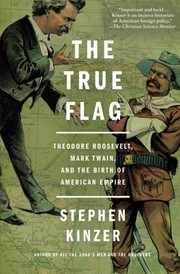
The 1898-1900 debate over empire staged as the argument it was, with Roosevelt and Lodge against Mark Twain and Carl Schurz. The most accessible route into the question and the natural bridge to the Philippine war that followed.

The scholarly study of the anti-imperialists, and honest about their limits — several opposed annexation on frankly racial grounds. Read after Kinzer, who is warmer toward them than the evidence fully supports.
Discussion
Keep reading
Paths that share books, cover the same subject, or open a related topic.